





The Beauty Pro Book Club: 4 Reads to Inspire Growth and Success
Four publications for beauty industry professionals to enhance their leadership skills, financial awareness, professional growth, and joy!
by Anne Moratto


 MENU
MENU SEARCH
A profile of Tips Nail Salon of Foster City, California

Paula Gilmore (left) and Strephanie Takahara
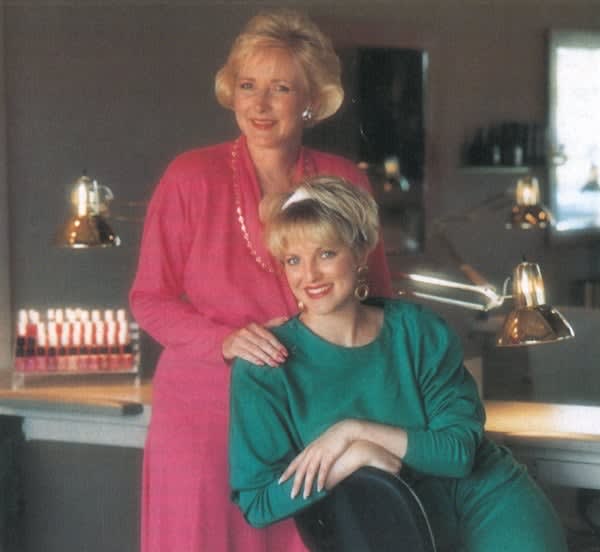
Paula Gilmore (left) and Strephanie Takahara
October 17, 1989. Paula Gilmore, Stephanie Takahara, and their staff were busy working in their two-week-old nail salon, Tips, in Foster City, California. There was the standard conversation with clients as well as a lot of talk about the World Series game, which was about to begin at San Francisco’s Candlestick Park.
Suddenly, there was a loud, rumbling noise. Products began to fall from the shelves of the retail display units, then the shelves themselves crashed to the ground as the earth trembled and nail technicians and clients dashed out of the salon.
None of the “Tipsters,” as Tips employees are called, or their clients were injured during the earthquake that rocked the San Francisco Bay Area and postponed the 1989 World Series last fall. Nor did the salon sustain any structural damage, although the retail shelves no longer stand as high as they did before the quake. Gilmore and Takahara realized that clients and employees could have been seriously injured by products falling from high shelves, and these are not women who take such lessons lightly.
Still, the aftermath of the quake brought increased business to the salon: Evidently many women broke their nails during the earthquake or cleaning up after it.
In her years as a nail technician and salon owner, Paula Gilmore has been in many “shaky” situations, but this was her first in-salon earthquake. She hopes it will also be her last. But the threat of earthquakes is something Californians live with, and the ’89 quake did not deter clients from going to Tips.
“Foster City is its own peninsula area really separate from San Francisco,” says Gilmore. Although Foster City, is located just south of San Francisco, many residents prefer getting services locally, rather than having to go into “the city” as the locals call it. “There aren’t a lot of nail salons in the area,” Gilmore continues. “We saw a need for one and we filled it. Foster City has proved to be a perfect choice of location for us.”
Speaking of perfect locations, Gilmore and Takahara have certainly found one. Tips is located in a picturesque, waterside shopping center. French doors open onto a waterfront deck. Clients have been known to sail their boats right up to the deck, disembark, and get their nails done.
The soothing, privileged feeling created by the waterside setting is continued inside the salon. The taupe color scheme is quiet and relaxing, as is the soft music that wafts through the salon. To ensure peace, and to satisfy insurance requirements, no children are allowed in the salon. In the interest of health and comfort, smoking is also prohibited.
Custom-designed, satellite shaped manicure stations seat three technicians and three clients each. The stations were designed to eliminate what Gilmore calls the “stall or slot feeling” of some salons. The stations make conversation between clients and technicians easier, and also make it easier for experienced technicians to oversee and help new technicians.
Gilmore and Takahara take training very seriously. “It’s very difficult to hire technicians who bring their clientele with them,” says Gilmore, explaining that clients are often reluctant to leave a salon. “We don’t even try to do that.” Instead, they’ve developed an apprenticeship program for new graduates of area schools.
“In California, there’s a pretty long waiting period between when you take your state board exam and when you actually get your license and can start doing nails,” Gilmore explains. “So we maintain a relationship with the schools in the area. We hire graduates who have passed the state board exam and are waiting for their licenses. They answer phones, get coffee, help with cleanup, remove polish—everything but actually doing nails. In return, we allow them to bring in their own models to practice on, and we help them perfect their techniques. And they get to observe professional technicians in action.
“Because they’ve had the additional training and because the clients in the salon are familiar with them already, it’s a lot easier for them to build a clientele when they do get their licenses.”
Gilmore and Takahara decided when they opened their salon that their technicians would be employees, rather than independent contractors. This designation makes it possible for the salon owners to set schedules and maintain more control over what goes on in the salon. This also ensures that, no matter which technician a client goes to, the service will be the same.
The partners pride themselves on developing their technicians. In addition to the apprenticeship program, they conduct one-on-one “goals and projections” meetings every four weeks, so management and staff stay focused on common goals. At these meetings, the salon owners and employees discuss what goals the technician wants to set as far as building clientele, increasing retail sales, and improving her services. Gilmore and Takahara give advice on how to meet those goals. Sales meetings are also held monthly, and rewards such as department store gift certificates are given for outstanding achievements.
Education is crucial to the salon’s success, according to the owners. To this end, in-salon workshops are held every six months to update and refine all procedures. Four full days per month are devoted to hands-on training for staff members who need to strengthen their skills. And attendance at area shows and seminars is strongly encouraged.
New technicians start out being paid a straight salary. Once they have developed a clientele, they work on a 50/50 commission structure, as long as the commission is greater than what the straight hourly salary would be.
It’s also important to Gilmore and Takahara that each “Tipster” feels a part of the business, not just an employee. To that end, they have developed a profit sharing plan.
“Every six months, 20 percent of the salon’s profits for that six month period are given back to the technicians,” explains Gilmore. “Of course, the employees has to have been working for that entire six-month period.” The periods begin in January and in June, so an employee who starts work in May will not be eligible to receive money in June, but she will be eligible the following January.
“Also, we’ve followed the lead of a lot of the big companies by sharing our profit and loss statements with our employees on a monthly basis,” says Gilmore. “When the staff sees the profit and loss statement, they know how the company is doing. A lot of times, your staff thinks the owners of the company are taking bags of money home from the salon every night, at the technicians’ expense. When they see this isn’t true, and when you are willing to tell them how the company is doing, they feel like they’re part of the company. That’s important because then it’s their business too; they’re not just employees.”
The salon owners also purchase all supplies, rather than technicians using their own products. And they handle all marketing and promotion, so the technicians can concentrate on satisfying their clientele, while Gilmore and Takahara help them build it.
Gilmore and Takahara have building clientele down to a science. Their previous salon experience taught them the importance of community involvement, so they are active members of the Foster City Chamber of Commerce. As members, they are able to receive a monthly listing of all newcomers to the area. “Whenever anybody gets their gas or water turned on, they go on that list at the chamber,” explains Gilmore. “We send a ‘Welcome to Foster City’ letter to each person on that list, inviting them to try out the salon at a discount.”
Membership in the Chamber of Commerce also enables the salon to display brochures at the chamber office, which is often the first place a newcomer will visit trying to become acquainted with the community.
In-addition to community involvement, Gilmore and Takahara make it a point to stay involved in the cosmetology industry. They are very active in Cosmenet, a Bay Area organization for salon owners.
“Our involvement in Cosmenet has been really beneficial ,” says Gilmore. “We can commiserate with other salon owners and share solutions as well as problems. It’s so important to network with other salons, to work together, but many salons don’t do it. They are so on guard against the competition. But by working together, you really empower each other by sharing problems and successes. It also gives you a lot more prestige.”
Involvement with Cosmenet has also helped attracting new clients, as well as new employees. Networking with other salons has resulted in mutually beneficial referral relationships. And a brochure put together by several salons, including Tips, urges new cosmetologists to “Team up with salons of the future” by applying at one of the Cosmenet member salons.
“We are successful because we are so geared to the professional woman,” says Gilmore. “And all our clients get individual attention. When a client comes in for her first appointment, her nails are evaluated and given a grade depending on their condition. Then the technician will custom diagnose and prescribe a treatment for the client based on that evaluation. We offer a large array of products, so if one product or treatment doesn’t work, we try something else. And we keep copious records on clients—what products we used, what condition their nails were in—much like a medical record. The client feels especially well taken care of.”
New clients receive a thank-you letter soon after their first appointment, inviting their comments about the service and the salon. Clients are also sent client referral cards to hand out to friends. As a reward for referring others, they receive “Tips Dollars,” redeemable for service or retail items at the salon.
“We also emphasize home care,” Gilmore continues. “We retail a variety of home products and encourage clients to take care of their nails at home.”
All technicians at Tips are encouraged to be proficient in a variety of nail services, from natural nail care to acrylic extensions to wraps. Tips also offers paraffin treatments. In addition, the salon recently hired a licensed esthetician to provide makeup and skin care services, and skin care products have been added to the retail line.
When clients come in the door at Tips, they are greeted by the salon coordinator, Dawna Schoebel. Their nail polish is removed and, if they are early, they are escorted to the waiting area, which overlooks the water. Tips provides complimentary iced tea, lemonade, or wine for waiting clients.
As at any salon, last-minute cancellations and no-shows are a major inconvenience at Tips. Gilmore and Takahara experimented with a cancellation fee charged to clients who failed to give 24-hour notice of cancellation, but found this to be unpopular. A more effective deterrent, they have discovered, is a confirmation phone call the day before the appointment.
“Clients appreciate the call, because a lot of times they mean to cancel an appointment and just forget,” says Gilmore. “Other times, they have completely forgotten they have an appointment and would have missed it if we hadn’t called.”
Salon coordinator Schoebel handles the confirmation calls. She also calls new clients after their first appointments to make sure they were fully satisfied with the service and to make sure any client complaints have been resolved to the customer’s satisfaction.
“Dawna takes our success and the happiness of our customers very personally,” says Gilmore.
So does everybody else at Tips. And that, ultimately, is the real key to the salon’s success.
Four publications for beauty industry professionals to enhance their leadership skills, financial awareness, professional growth, and joy!
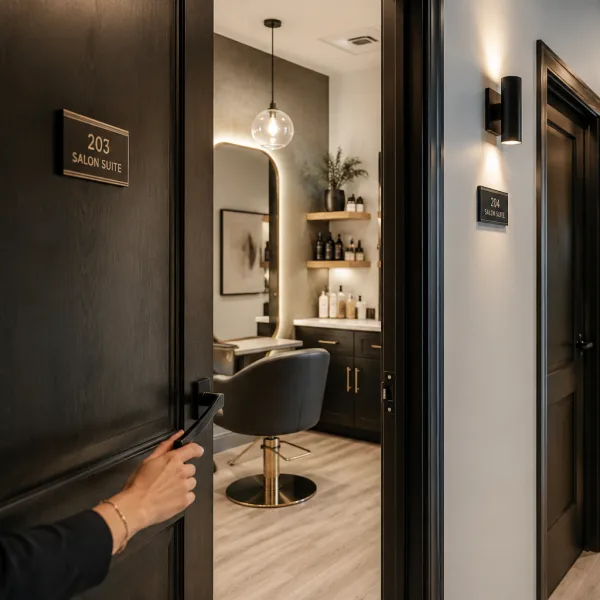
The most successful salon suites balance personality, function, and comfort. Megan Communale of My Salon Suite shares her best advice for designing a space that supports your business goals and leaves a lasting impression on every guest.

Square data shows that regular customers tip 11% higher and are shared across 32% of businesses in the same ZIP code, driving thousands of dollars in additional revenue per connection.

When Bowie Lau and Jeffrey Ching opened JBW Jeffrey Ching Salon in 2011, they weren’t just launching another luxury hair destination—they were building a business rooted in passion, artistry, and thoughtful growth.
Sponsored by Amex

Inside the Systems That Power an Elevated Salon Experience From seamless online booking to a team-first culture, J Gold Salon in Atlanta offers more than great hair—it delivers consistent, high-touch service with the help of partners like Boulevard and American Express.
Sponsored by Amex

Want to grow your career as a beauty professional? K18 Sales Manager Sabrina Sanborn shares advice on networking, mentorship, and self-advocacy—from attending hair shows to finding the right guidance to reach your goals.

A combination of clear policies, effective communication, and strong client relationships has helped me create a more reliable and efficient booking system.

Founded by Cleveland serial entrepreneur Shaura Rodgers, Nailtorious has grown to include a nail supply megastore, training facilities, and retail line for nail techs.

This period after the holidays can bring on a huge lull for hairstylists. We asked Cosmo Prof's team of professionals to offer their best advice on how to deal with the January-February slow period.

Key highlights include a push toward inclusive spaces for all abilities, an emphasis on maximizing livable square footage, and a continued love for modern farmhouse exteriors.
The busy holiday season is here, and with it comes jam-packed days, last-minute client requests and booming retail sales. For many salon owners, the highlight of the season is Small Business Saturday® (SBS). This year on Saturday, November 30, consumers can take their shopping into the small businesses in their communities.
Sponsored by Amex

Want to become savvy about your personal finances, but don't quite know where to start? Anna Manukyan identifies six important concepts for building a strong financial foundation.
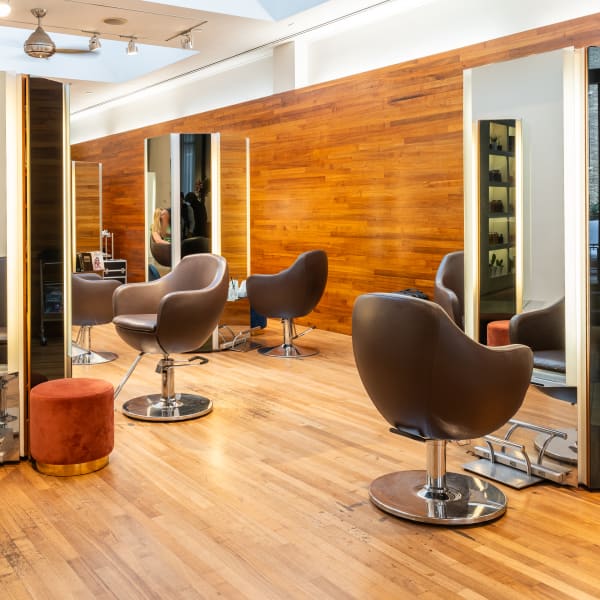
Salon owner Nuri Yurt had a dream of owning a salon on New York City’s Madison Avenue. "Through perseverance, hard work and stellar customer service, he and partner John Kaygisiz founded Toka Salon in 2007.
Sponsored by Amex

This guide is your one-stop shop for a plethora of technology tools, software and services created to keep your salon or spa thriving.

Anna Manukyan shares a breakdown of what different types of financial accounts should be used for.

Vagaro has consistently been at the forefront of salon software technology, helping businesses be more efficient, create more effective communication, and even improve company culture. Now, Connect by Vagaro, the platform’s two-way communication capability, and Vagaro’s new generative AI tools are giving owners new opportunities to grow and expand.
Sponsored by Vagaro

Young Nails' Greg, Habib, and Tracey discuss whether getting too close to clients can damage your business.