





The Beauty Pro Book Club: 4 Reads to Inspire Growth and Success
Four publications for beauty industry professionals to enhance their leadership skills, financial awareness, professional growth, and joy!
by Anne Moratto


 MENU
MENU SEARCH
An incentive-based compensation program that’s tied to pricing motivates nail technicians while increasing the salon’s bottom line. It’s a win/win situation for everyone.

Illustration by Lisa Cyr

Illustration by Lisa Cyr
Most salon compensation systems are based on some type of commission structure, and pay raises are given b simply increasing the commission percentage.
But how long can a salon operate under that type of structure before it no longer covers expenses? What happens when a busy nail technician can fit no more clients into her day and maxes out on what she can earn? Often, the nail technician will move to another salon, and the scenario shuts all over again.
One thing is clear. Salon owners who are paying more; than 50% commission cannot make a profit and in many instances cannot even cover their operating costs.
But nail technicians want to be paid well for their hard work, as well as for their extra efforts, such as retailing and participating in continuing education events and promotional activities for the salon — and rightfully so.
Offering the best of both worlds, Ada Menzies, owner of Finishing Touch salon in Boulder Colo., has devised a multilevel salary compensation system. Based on a 50% commission structure, the system takes into account other criteria, such as the technicians station occupancy, request rate, retail sales, attendance, citizenship, extracurricular activities, and continuing education. The compensation system is also tied into the salons pricing structure.
The advantages of this system to the salon owner are a consistent and controllable payroll and a motivation and rewards package for nail technicians that is based on their total salon participation and professionalism. And, best of all, clients (not salon owner) technicians’ raises through price increases.
There are advantages of a multilevel commission structure to the technician as well. This system allows nail technicians to grow at their own pace and take responsibility for their own raises. The nail technician can challenge herself and earn more money at the same time, with assistance from the salon owner in setting and meeting goals. A technician can virtually give herself a raise every nine to 12 weeks.
The multilevel system also provides a steady income, which can be particularly important during the quieter months after the first of the year and in the summer, as well as during the natural slowdown of a recession. A salary compensation program keeps income steady on those unexpected slow days when two feet of snow fall and every one cancels at once.
LOOK AT PRICING FIRST
According to Menzies, any evaluation of a salon compensation system must begin with an evaluation of its pricing structure. “Examine your service menu. A lacerate*** pricing works best for us. That means that we have separate charges for a manicure, nail repair, or nail art application. We don’t give anything away,” says Menzies.
Next, she commends a pricing structure based on the 16.5 rule, which computes service price based on a salon’s product cost. Says Menzies. “To run a profitable business, your product costs cannot exceed 6% of the service charge.” To figure your minimum charge per service, multiply your product cost for each service by 16.5. The figure is the lowest possible price you should charge for a service.
For example, if your product cost for a basic manicure is $1, multiply that by 16.5 the total is $16.50, which is the minimum you can charge for the basic manicure and still operate profitably.
At her salon, Menzies calls this lowest possible price category the “standby price” or “light touch”. New nail technicians charge the standby price. This price is also used for special promotions and for clients who want to book a service on the same day or add on a service when they’re already in the salon. “It lets us offer a legitimate lower price without running a sale.”
For senior technicians, the next stages’ pricing levels go up 20% to 30%. Menzies refers to these levels as “regular” and “high tech.”
SET CRITERIA FOR RAISES
It’s important to train technicians to look for pay increases in raised prices, not raised commissions. Menzies says, “Since my staff is paid salary, we don’t increase commissions to raise their pay. We set specific goals based on specific criteria.” The commission structure that Menzies employs ensures that technicians achieve a certain performance level, but it also puts them on course toward their total professional development. Consider these factors.
Station Occupancy. “This works like the hotel industry,” says Menzies. “Look at the percentage of time that the nail technician’s table is booked. You figure station occupancy by dividing hours booked by hours scheduled. For example, if the nail technician is scheduled for 40 hours per week and is prebooked for 30 of those hours, she has a 30-40 ratio, which equals a 75% station occupancy rate. [You can figure her percentage by dividing her prebooked hours by her scheduled hours, or 30 ÷ 40 = 75%]. When that technician is fully booked more than 85% of the time, you can raise her prices.”
Request Rate. “We want our staff to have an 80% request rate,” says Menzies. “That ensures that they are not just looking to our advertising budget to build their clientele. This is important to salon owners because once staff members are recruiting clients on their own, you can add staff.”
Retail. “Set percentage goals for retail sales,” says Menzies. “Since nail technicians have to work harder to retail than anyone in the salon, be realistic, but set goals that will give them a healthy increase. For example, the average salon retails around 8%, but that is not enough to keep your salon healthy. A goal of 15% is realistic for the nail technician and profitable for the salon.” Menzies helps her staff members set individual retail goals. Each has two goals — one to maintain her pay and one to earn a raise.
Attendance Some of the best stall members can miss too much work. During the first two years at Finishing Touch, staff members are allowed one week paid vacation and a second non-paid week of discretionary time they can take with no questions asked. Beyond that, they’re required to make up missed days. “Staff members with attendance problems are not in line for raises.” says Menzies.
Citizenship, “Its important for all staff members to get along with their coworkers and work in the spirit of managements direction.” says Menzies.
Extracurricular Activities. This category includes participating in benefits and fashion shows as well as high school and beauty school visits. Each staff member is required to attend at least one extracurricular event a year.
I want the stall involved with the company. The more they participate, the more it affects their raises.” says Menzies. “I had one staff member who was 1.5% below her retail goal, but she bad participated in every extracurricular activity we had that year, including all of our fashion shows and three beauty school visits, so she received her raise.”
Education. To stay al the regular level prices, staff members must attend two educational events outside the salon per year. To achieve and maintain the high-tech price structure, they have to attend at least three educational events.
“Everything is based on averages,” says Menzies. “A new staff member starts at $4 per hour and will be at light-touch pricing for eight to 12 weeks. During the 90-day probation period, clients can book in advance at light-touch prices. At the end of the 90 days, the nail technician moves to the regular price level and sets new goals.
“If her goal is $6 per hour, she has to generate at least $12 per hour and average at least 15% in retail sales over nine weeks,” explains Menzies. “At the halfway point, we will thoroughly analyze her progress to make sure she’s in the range. We can adjust her goal up or down. If she continues those numbers through the end of the nine weeks, she will receive her raise, and she can immediately set new goals.”
One Example
Helen, a Finishing Touch staff member, recently placed second in the state nail competition. Her trophy and medal were proudly displayed in the nail room, and her story ran on the front page of the salon’s newsletter.
“Prior to winning, Helen was stuck in the pay system,” say Menzies. “As soon as she placed in the competition, we raised her service price immediately, which increased our high-tech level across the board. Her basic manicure price was raised $3, and other services went up as much as &8.
“We made such a big deal about this that the clients were thrilled,” says Menzies. “She’s fully prebooked one month in advance now.”
This system also keeps clients loyal to the salon. “If they don’t want to pay a technician’s new high-tech price, they can pay the old price by booking with someone who is at the regular level. Or, they can try to book the same day and pay standby,” says Menzies.
Making The Transition
To introduce such a system gradually, Menzies suggests keeping worksheets for each nail technician to evaluate the criteria on which her raises will be based.
“You don’t have to be using a multilevel pricing system to introduce this compensation system,” says Menzies. She suggests trying it for three months or modifying it to fit your salon’s criteria. Within three months, you should be ready for multilevel pricing.
“Since the summer months are traditionally slower, this is a great time of year to introduce this system. It will also help you to book more services, such as pedicures, at the standby price.”
At Menzies’ salon, the receptionists keep the worksheets for all staff members, but everyone has access to them and they’re often discussed at staff meetings.
Celebrating The Payoff
When a staff member reaches a higher pricing level at Finishing Touch, it’s used as a promotional tool and a reason to celebrate.
“We send a release to the newspaper, and the technician wears a gold badge and posts a certificate at her station,” says Menzies. “Three staff members reached their next level right before the holiday, and our clients actually brought them congratulatory gifts.
“When someone attends and educational event we also announce it in our newsletter,” says Menzies. “This places the emphasis on what’s good for the salon, the technician, and the client. When the staff members achieve their raises, they’re proud of their accomplishments and our clients are proud of them, too.”
Education Drives Compensation
According to Bonnie Hill, director of human resources for the six-salon Gene Juarez Salons chain in Seattle, nail technician compensation is tied directly to continuing education. For example, during their first two years on staff, nail technicians must attend 10 classes. Five of the classes are required and five are elective.
A required class might include a seminar on how to prevent lifting, while electives range from stress management to financial management.
The salon chain hires outside speakers and also holds a variety of classes featuring in-salon personnel.
“The education is here and waiting. Basically, all they have to do is show up,” says Hill. She adds that in the future, nail technicians will have to meet specific continuing education requirements in order to receive their commission increases.
Don Bewley, owner o f Bewley’s Markfrank Salons in Rocky River and Solon, Ohio, concurs that education is the key to motivation for his staff.
“The more professional we consider ourselves, the more money we can charge. That professionalism can only come from education,” says Bewley, who is also a salon industry business educator.
At Bewley’s Markfrank Salons, not only is education tied into compensation, it literally comes with the paycheck.
“Every week, we include informative articles and educational information right in the paycheck envelopes. It might be an article on how to communicate with clients or how to better service clients,” says Bewley. “Most of these tips are contributed by my staff members, which really shows their commitment.”
Pricing Drives Compensation
“If you’re sold on a commission compensation system, raise prices, not commissions. And if you must raise commissions, do it prudently,” advises Michael Cole, president of Salon Development Corporation (St. Paul, Minn.).
Cole recommends a 50% commission on requests, but a much lower commission — as low as 25% — on new clients.
“If you hire a new nail technician with no clientele, the salon owner has to fill her chair at first,” says Cole. “The average cost to bring in a new client is $35, so the moment the nail technician turns a new client into a repeat client, she is increasing both her chairs and the salon’s business, while decreasing the salon’s cost. By paying a higher commission for repeat clients, the salon owner gives the nail technician an incentive to convert the client into a salon client.
“The challenging side of this system is that you have to have an incredible amount of control at the front desk, so you need a salon coordinator/receptionist who will really manage and organize the salon’s intake.”
As an alternative to this system, Cole suggests introducing several commission structures to the salon. The nail technician can advance to a higher commission after accomplishing several goals.
“For example, start a level 1’nail technician with no clientele at 40% commission, then set goals. As soon as she’s doing 30 clients a week, 20 of which are repeats/requests, raise her prices by 10% to 20%, and raise her commission by 2% to 5%. Raise her commission and prices again when she reaches 40 clients per week, 30 of which are repeats or requests.
“This provides a real incentive to the nail technician to retain clients with very reachable goals,” says Cole.
Four publications for beauty industry professionals to enhance their leadership skills, financial awareness, professional growth, and joy!
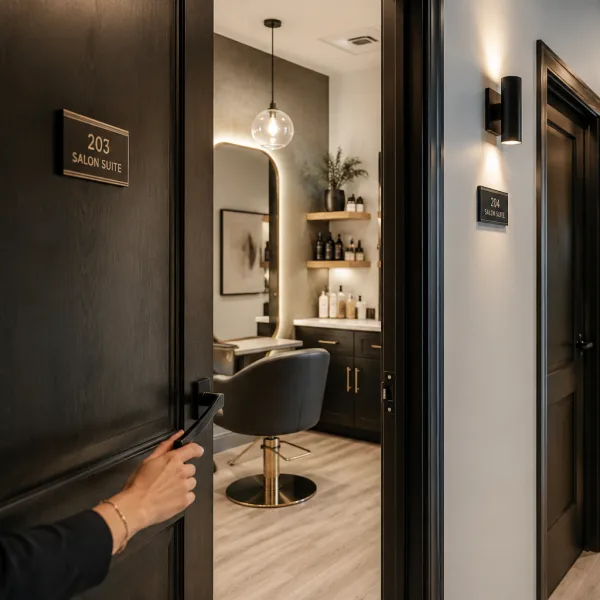
The most successful salon suites balance personality, function, and comfort. Megan Communale of My Salon Suite shares her best advice for designing a space that supports your business goals and leaves a lasting impression on every guest.
Square data shows that regular customers tip 11% higher and are shared across 32% of businesses in the same ZIP code, driving thousands of dollars in additional revenue per connection.
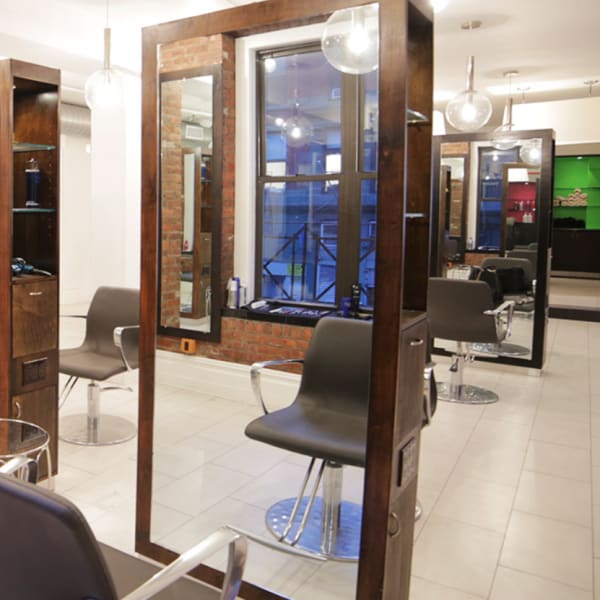
When Bowie Lau and Jeffrey Ching opened JBW Jeffrey Ching Salon in 2011, they weren’t just launching another luxury hair destination—they were building a business rooted in passion, artistry, and thoughtful growth.
Sponsored by Amex

Inside the Systems That Power an Elevated Salon Experience From seamless online booking to a team-first culture, J Gold Salon in Atlanta offers more than great hair—it delivers consistent, high-touch service with the help of partners like Boulevard and American Express.
Sponsored by Amex

Want to grow your career as a beauty professional? K18 Sales Manager Sabrina Sanborn shares advice on networking, mentorship, and self-advocacy—from attending hair shows to finding the right guidance to reach your goals.

A combination of clear policies, effective communication, and strong client relationships has helped me create a more reliable and efficient booking system.
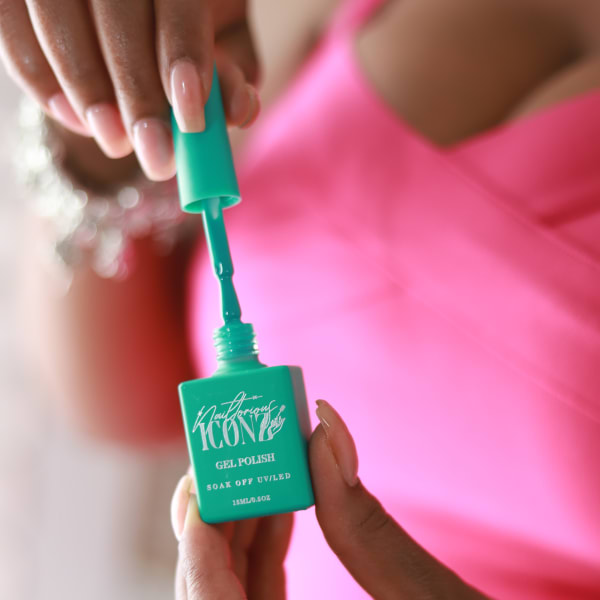
Founded by Cleveland serial entrepreneur Shaura Rodgers, Nailtorious has grown to include a nail supply megastore, training facilities, and retail line for nail techs.

This period after the holidays can bring on a huge lull for hairstylists. We asked Cosmo Prof's team of professionals to offer their best advice on how to deal with the January-February slow period.

Key highlights include a push toward inclusive spaces for all abilities, an emphasis on maximizing livable square footage, and a continued love for modern farmhouse exteriors.
The busy holiday season is here, and with it comes jam-packed days, last-minute client requests and booming retail sales. For many salon owners, the highlight of the season is Small Business Saturday® (SBS). This year on Saturday, November 30, consumers can take their shopping into the small businesses in their communities.
Sponsored by Amex

Want to become savvy about your personal finances, but don't quite know where to start? Anna Manukyan identifies six important concepts for building a strong financial foundation.
Salon owner Nuri Yurt had a dream of owning a salon on New York City’s Madison Avenue. "Through perseverance, hard work and stellar customer service, he and partner John Kaygisiz founded Toka Salon in 2007.
Sponsored by Amex

This guide is your one-stop shop for a plethora of technology tools, software and services created to keep your salon or spa thriving.

Anna Manukyan shares a breakdown of what different types of financial accounts should be used for.

Vagaro has consistently been at the forefront of salon software technology, helping businesses be more efficient, create more effective communication, and even improve company culture. Now, Connect by Vagaro, the platform’s two-way communication capability, and Vagaro’s new generative AI tools are giving owners new opportunities to grow and expand.
Sponsored by Vagaro

Young Nails' Greg, Habib, and Tracey discuss whether getting too close to clients can damage your business.