Q: I have a client who has very dry, rough, cracked hands. We have tried just about every brand of hand cream, lotion, and oil you could possibly think of. Is there any product that would help put moisture back in her skin and help soften her hands?
A: Dr. Rich: Scaling and flaking on the skin of the hands may be more than just dry skin. The most common condition that causes dry, scaly skin on the hands is an irritant hand eczema, often associated with or exacerbated by excessive exposure to detergents, solvents, and even water. Allergic contact dermatitis, atopic dermatitis, and psoriasis can also cause dryness of the hands and sometimes are difficult to distinguish from each other. A dermatologist can often determine the underlying cause and prescribe medication to help.
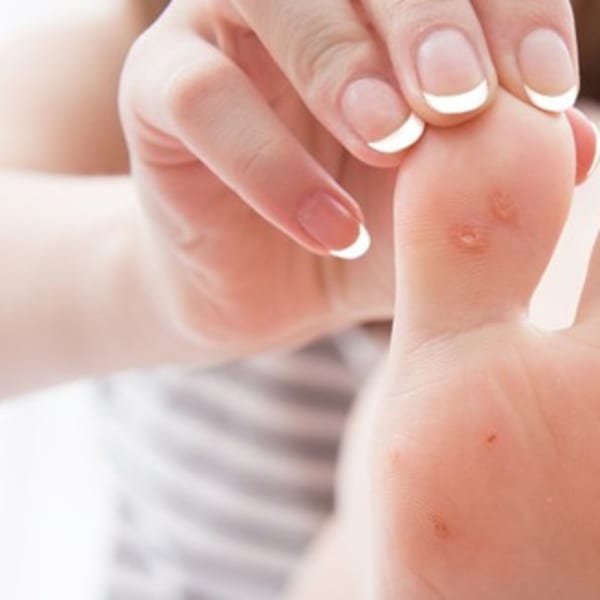
Occasionally, fungus can cause scaling of the hand. It is usually only one palm that is affected along with both feet (hence the name “two-foot/one-hand syndrome”). A quick and simple microscopic examination of some of the dry flakes of skin will confirm or exclude that diagnosis.
With dry hands, hand creams are helpful, especially medicated (but non-prescription) ones such as Am-Lactin. As a general guideline, greasy ointments are more effective than watery hand lotions. If the lotion is thin enough to pour, the main ingredient is water, which simply evaporates when you rub it on hands. Cortisone creams and ointments are often prescribed for hand eczema and psoriasis, and there are two new non-cortisone creams that may also be effective.
When someone comes to me for an acrylic fill and I wasn’t the one who put on the previous set, does it matter what product I use? Will my product adhere regardless?
Doug Schoon: It’s fine to rebalance (fill) existing artificial nails with other acrylic products. The newly applied product will adhere to die old. However, if the old product is yellow or of a different color, the clients will certainly notice the difference. It may be best to thin down the existing product and apply fresh product over the entire nail.
I have a client whose nails always seem to lift around the cuticles no matter what I do. It happens as soon as her fill is finished. I’ve etched the nail well, cleansed it more than once, and always use primer. Is she doomed to always have lifting, or am I doing something wrong?
Samuel Sweet: Lifting around the cuticle line so soon after product application is usually a sure-fire sign that product is getting onto the skin or cuticle. The most common reason for this is that some of the cuticle is remaining on the nail plate after preparation.
Be sure you thoroughly remove the cuticle from the nail plate with a professional cuticle remover and a disinfected metal cuticle pusher. I find plastic and wood pushers are very inefficient at removing the cuticle from the natural nail plate.
Another point to take into consideration is that the nailplate is only partially formed at or near the lunula. As a result, the natural nail plate is much more flexible, and the thicker your product is in this area, the more likely it is for the nail plate to peel or pull away from the enhancement.
Try to leave a greater free margin around the skin and ensure your application is thin and even.
If oil causes acrylic nails to lift, then why are we urged to use it and to tell clients to use cuticle oil?
Schoon: Oils on the nail plate can block adhesion, but they cannot dissolve the product once it has bonded to the nail plate. Even small amounts of oil on the nail plate will block areas where the product will normally adhere. But once product adhesion to the plate is established, oils will not break this bond. Applying a penetrating oil to an enhancement surface can be very useful. Penetrating oils, such as jojoba, can add flexibility and toughness to the enhancement. (An oil that won’t penetrate the skin, such as mineral oil, probably won’t penetrate enhancements or nail plates.) In short, remove oils from the nail plate to prevent lifting, add penetrating oils to the enhancement to increase product longevity. It is a tried-and-true combination that really works.
When I apply acrylic I sometimes get tiny white spots in my finished product I was told that this could be from contaminated powder. I also sometimes get bubbles with the white spots. I assume the bubbles are from too much liquid to powder.
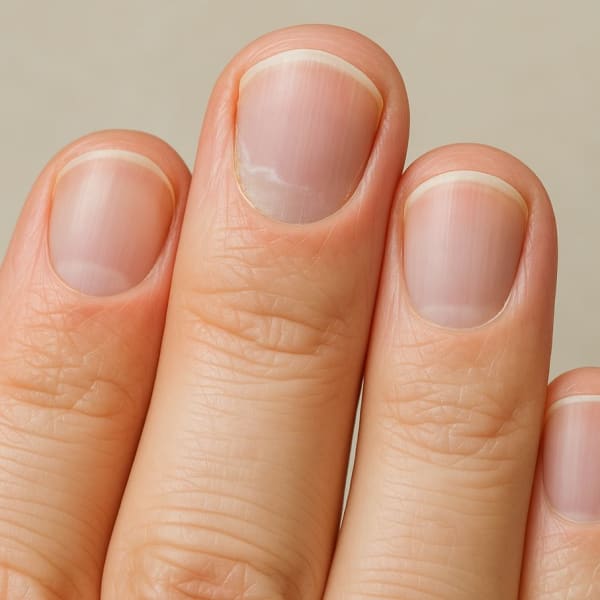
Sweet: The white spots and bubbles you are seeing are most likely one in the same. If a bubble is suspended in the enhancement and you file part way into it, that bubble will become packed with dust, looking like a white speck.
Working overly wet or dry with your mix ratio can cause bubbles to form, but your application method has a big role to play in bubble formation as well. If there is air trapped in your brush, it gets pushed out into your product as you work Ensure your brush is thoroughly and evenly saturated before you pick up your bead Try not to pull a line through your powder as you may have a tendency to pull air into your bead. Instead, try to just dip your brush in the powder.
Ensure your mix ratio is right. The wetter your mix, the more shrinkage and the more bubbles. On the other hand, the drier the mix, the less monomer can saturate the polymer, resulting in large voids where there is no liquid, also creating a bubble.