




The Beauty Pro Book Club: 4 Reads to Inspire Growth and Success
Four publications for beauty industry professionals to enhance their leadership skills, financial awareness, professional growth, and joy!
by Anne Moratto

 MENU
MENU SEARCH
Nail art pricing should be easy for both you and your clients to understand. Charge what your designs are worth with the help of these tips from successful techs.
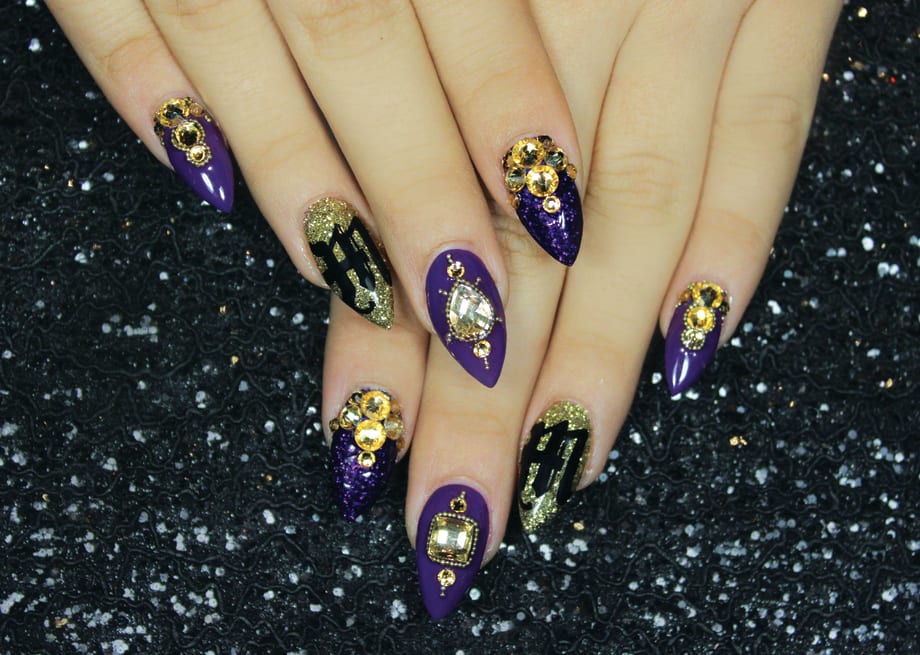
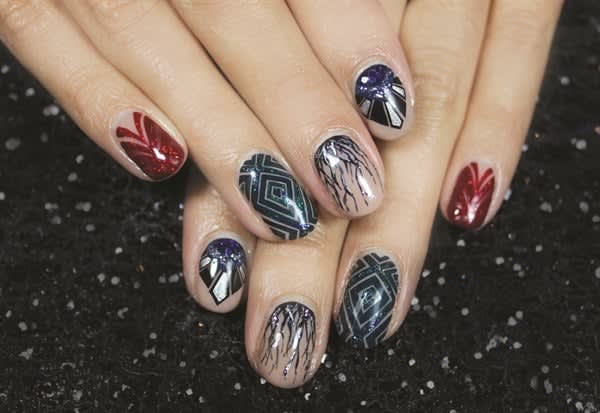
“Some clients pick out two or three designs and we switch up the position on each hand,” Lexi Martone says. This is an example of one of Martone’s recent high-end designs, for which she’s able to charge upwards of $115.
Most of your menu prices are probably fairly clear cut. You charge $20 for a basic manicure, $45 for a deluxe pedicure, an extra $15 for gel-polish, and so on, at flat prices that are the same for every client. But when it comes to ringing up your dizzying array of nail art designs, do you feel as though you’re whimsically plucking numbers from a Bingo blower? Sometimes you pull out the winning ball and make your booth rent. Other times, you work through lunch to finish a complex artistic feat...only to discover it’s just as well you skipped the afternoon meal because you can’t afford it.
Nail art pricing doesn’t have to be this way. No matter if your next client requests a design you’ve done a thousand times or brings in something new from Pinterest, you can price art in a consistent, fair way.
Timing Is Everything
The simplest method is to base the price on one factor only: the amount of time the design takes you. This method has the advantages of easy communication to clients, adaptability no matter how many fingernails the art will adorn, and inherently accounting for the design’s difficulty level (after all, if a design is more difficult, it will likely take you longer). The best way to work out a time-based rate is to determine your hourly rate (what you think your skill is worth, taking into account such factors as what the market will bear), then divide that by 60 to calculate your per-minute rate. Elaine Watson, vice president of marketing and sales for Star Nail International, offers this simple and effective pricing strategy from her days in the salon. “I would charge $1 per minute,” Watson says. “If the set took 10 minutes (be it one, two, or 10 nails) I would charge $10. If it took 30 minutes, I’d charge $30.” The $1 per minute strategy works out to a $60 hourly rate — not bad!
Of course, using the clock as your sole variable has drawbacks. If you’re an artist who sources expensive materials from all over the globe to incorporate into your clients’ full sets, then you may also want to account for product costs. Here’s a quick word problem to illustrate: Each nail gem cost you $2 and you want to charge your client $4 per gem (doubling your investment). Your hourly rate is $20 per hour, which comes out to $.33 per minute (divide 20 by 60). So if you spent five minutes applying 10 nail gems, calculate how much you’d charge the client. Answer: $41.65. That’s ($4 x 10 gems) + ($.33 x 5 minutes).
Lexi Martone, a nail tech at Finger Painted in Dix Hills, N.Y., and a NAILS Next Top Nail Artist 2013-2014 finalist, employs a variation of this strategy. “I base my prices on a combination of time/difficulty as well as the cost of the products,” Martone says. “I take cost into consideration with my 3-D designs and embellishments. Crystals, charms, and acrylics get pretty expensive so I need to make sure I’m covering their cost.”
Other considerations include the local market (such as neighboring salon prices), target demographics, and travel costs (if you offer mobile services).
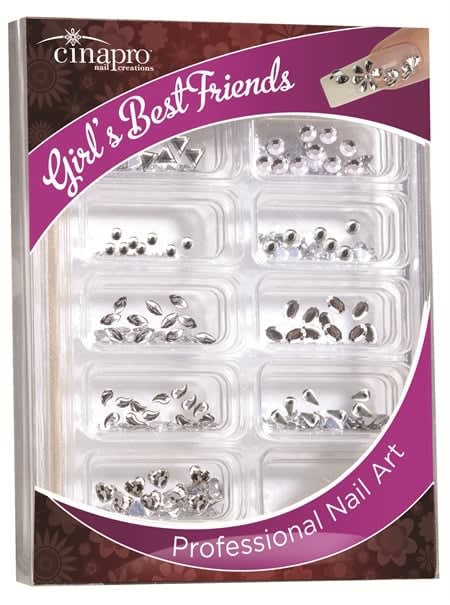
Some artists take product costs into account. Each stone in this Cinapro Girl’s Best Friends kit costs about 3 cents. You can charge clients 10 cents per stone and provide your client a detailed receipt that shows how many stones she chose at what cost.
All Inclusive or Add On?
Whether you choose to offer all-inclusive services or to itemize each rhinestone, you’ll need to establish a method to provide clarity to clients. “I used to charge a base manicure price plus a certain price per nail of art ($4 for this design, $7 for that, etc.), which worked when I still had a lot of clients who wanted plain manicures,” says Jane Moate, a freelance nail artist from Red Bank, N.J., and a NAILS Next Top Nail Artist 2013-2014 finalist. “I revised my pricing strategy when I started to exclusively get nail art clients. Now I discuss what my clients are looking for, go over options, and work out a full set price based on the amount of time it will take.”
Alternately, you may prefer to itemize the charges, which is the option Martone uses. “I charge per nail,” Martone says. “I start off with a base price for the starting service, such as a gel manicure or full set of enhancements, and build on from there. I add everything up and give a total at the end.”
10-Finger Discount
Should you offer the client a discount if she selects nail art for all 10 nails, versus just an accent nail or two? What about if the client wants 10 identical designs versus 10 unique looks? In general, no. However, you may find that by virtue of your general pricing strategy, the client will receive a discount by default (because after repeating a design nine times, you complete the 10th nail much more quickly.) AII educator Lynda Bartley of Lynda Bartley Nail Salon in Pflugerville, Texas, says, “I can offer a discount on the full set price, because I have all the materials out already.”
Martone explains, “I rarely get anyone who wants the same design on all 10 fingers. Maybe a variation of the same design but never exactly the same. I stick with the per nail pricing no matter if they are the same or different. If they are the same, they cost the same. If they’re different, then they’re priced differently.”
Moate agrees. “Most of my clients want all-different designs, or at least a few different designs repeated on their nails. Fewer want the exact same design on all 10 nails (like galaxy nails). My way of pricing nails doesn’t change: I still base it on time.”
Price Increases
Of course if you base your price in any part on time you run the risk of making less money for the same design as your speed increases (though, that’s not all bad — if your speed increases, you can also fit in more clients). You have a few options. You can switch over to difficulty-level pricing, meaning that even if the design takes you less time than it would other nail techs, the difficulty level (and hence, the price) has stayed the same. Bartley says, “Over time I have perfected my application and may be able to apply it faster. I don’t reduce my price and consider it a bonus.”
Or, you can raise your prices, either for select categories of designs (such as all hand-painted designs after taking a course in this skill) or across the board. Moate says, “I raised my prices once when I realized I had upped my skill level (through practice and education) to the point where I felt my time was worth more. I would do it again if I felt I had gotten to a higher level or if I was in higher demand and my time was worth more again.”
Martone adds: “When I first came out of school I started cheap because I wasn’t confident in what I was doing. I remember charging $30 for anything clients wanted because I was afraid things would fall off. Once I mastered my skills better, I amped up the prices. You don’t need to raise everything at once. If you feel more confident with a certain design or technique over another, then start with raising that price and work your way through them all.”
Crucial Communication
Once you establish a method for pricing nail art, it’s equally important you communicate the cost to clients. You don’t necessarily have to do this in writing, especially if you’re basing the final price on multiple choices the client will make, but you should do it before you apply the first colorful brushstroke. “I always communicate prices with clients during the consultation and during the actual work if any changes are requested,” Moate says.
Martone uses this tactic as well, though she finds that regular clients can estimate the price range of their desired art without her help. “I don’t have a menu or portfolio with set designs because I like creating something different every time,” Martone says. “New clients will typically send pictures and ask for a price estimate. Repeat clients get a feel for how much things cost and ask if they are unsure. My regulars don’t ask anymore and never have a problem with it.”
Regardless, you want to be in control of your hourly earnings, while giving your client say in what she is OK with paying for her nails. Watson says, “Customers aren’t going to get art if they don’t know what it will cost them in the end. How would you feel if you walked into a clothing store and wanted to buy several outfits but you couldn’t be told what they would cost until you had picked everything out? And you had no choice but to pay what you have now been quoted because it’s too late and there is no turning back?” Not very happy, we’d imagine — sort of like if you got stuck with a losing Bingo card. Eliminate the frustration by taking luck out of the equation entirely, and replace it with meaningful, clear variables such as time or product cost.
Itemized Bill Example
Lexi Martone spells every service out on a receipt, which makes it clear exactly what the client is paying for. For example, for a client who chose a full set of acrylics with gel-polish and two crystal-embellished nails, the receipt would say:
Full set: $45
Gel-polish: $10
Crystal nails: $10 (x 2) = $20
TOTAL: $75
Ring ’Em Up: Real Life Pricing

Jane Moate (low: $40): “This is a manicure that takes me about 30 minutes, from start to finish.”
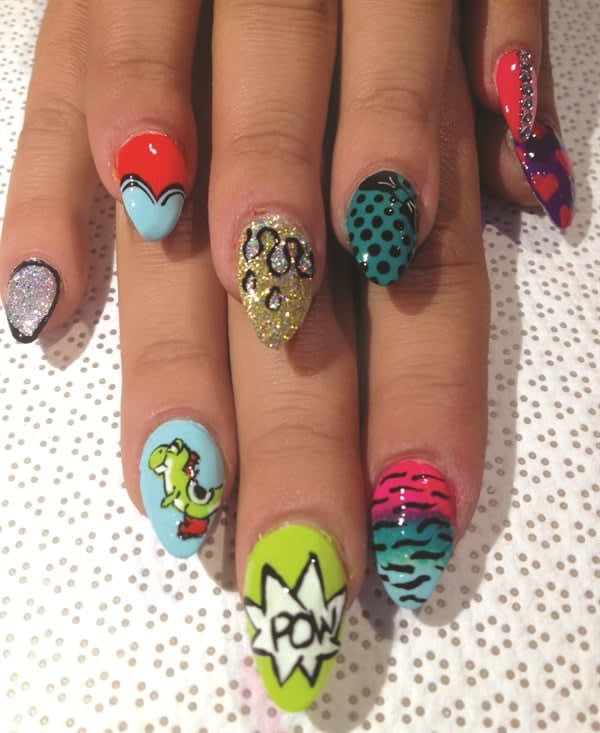
Jane Moate (mid $50-$60): “A lot of my clients look at my work and ask me to ‘go crazy,’ meaning do all 10 nails with a mix and match of my style. It usually takes me about 45 minutes to complete one of these manicures.”

Jane Moate (high $70 and up): “Anything that would take me an hour or more, such as something that involves a lot of lettering or recreations of paintings, is the highest price.”
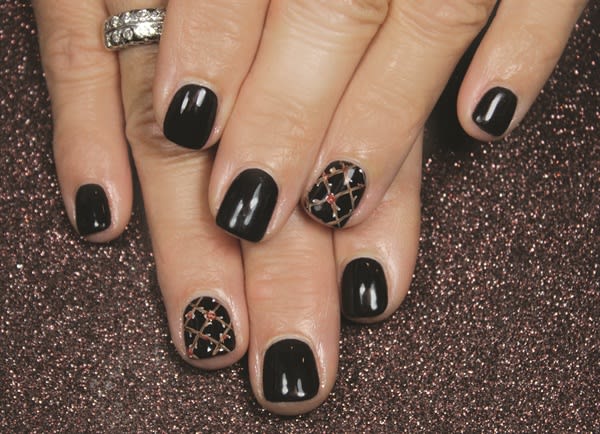
Lexi Martone (low $10-$20 on top of service cost): “I have a few clients who just do something simple on an accent nail.”
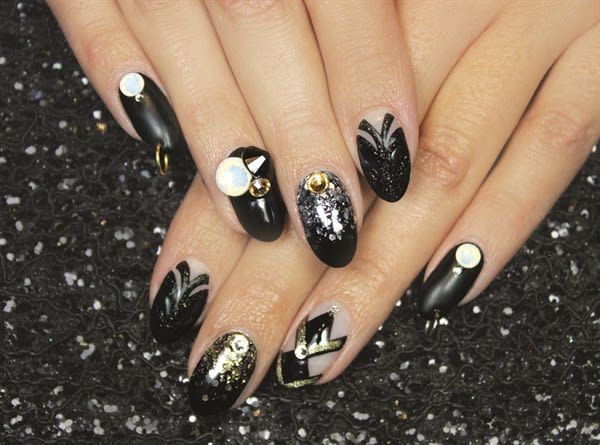
Lexi Martone (mid $40-$60 on top of service cost): “These clients get embellishments and 3-D, but aren’t too over-the-top and don’t have any extremely detailed hand painting.”
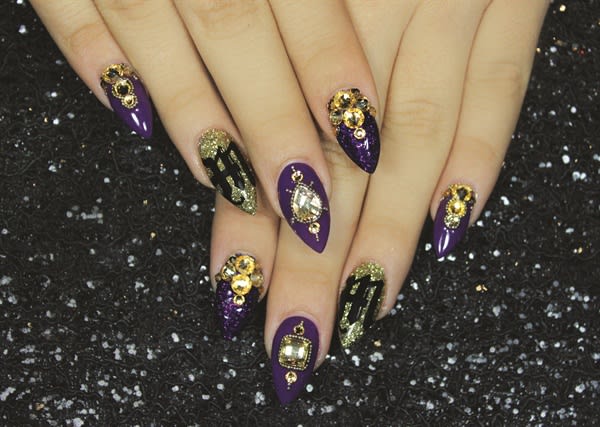
Lexi Martone (high $85-$100 on top of service cost): “These are heavily embellished and/or involve a lot of time-consuming hand-painted details.”
Four publications for beauty industry professionals to enhance their leadership skills, financial awareness, professional growth, and joy!
The most successful salon suites balance personality, function, and comfort. Megan Communale of My Salon Suite shares her best advice for designing a space that supports your business goals and leaves a lasting impression on every guest.
Square data shows that regular customers tip 11% higher and are shared across 32% of businesses in the same ZIP code, driving thousands of dollars in additional revenue per connection.
When Bowie Lau and Jeffrey Ching opened JBW Jeffrey Ching Salon in 2011, they weren’t just launching another luxury hair destination—they were building a business rooted in passion, artistry, and thoughtful growth.
Sponsored by Amex

Inside the Systems That Power an Elevated Salon Experience From seamless online booking to a team-first culture, J Gold Salon in Atlanta offers more than great hair—it delivers consistent, high-touch service with the help of partners like Boulevard and American Express.
Sponsored by Amex

Want to grow your career as a beauty professional? K18 Sales Manager Sabrina Sanborn shares advice on networking, mentorship, and self-advocacy—from attending hair shows to finding the right guidance to reach your goals.

A combination of clear policies, effective communication, and strong client relationships has helped me create a more reliable and efficient booking system.
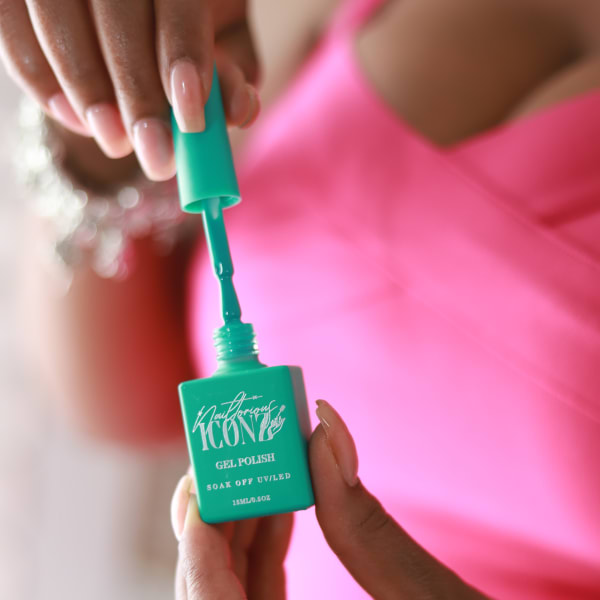
Founded by Cleveland serial entrepreneur Shaura Rodgers, Nailtorious has grown to include a nail supply megastore, training facilities, and retail line for nail techs.

This period after the holidays can bring on a huge lull for hairstylists. We asked Cosmo Prof's team of professionals to offer their best advice on how to deal with the January-February slow period.
Key highlights include a push toward inclusive spaces for all abilities, an emphasis on maximizing livable square footage, and a continued love for modern farmhouse exteriors.
The busy holiday season is here, and with it comes jam-packed days, last-minute client requests and booming retail sales. For many salon owners, the highlight of the season is Small Business Saturday® (SBS). This year on Saturday, November 30, consumers can take their shopping into the small businesses in their communities.
Sponsored by Amex

Want to become savvy about your personal finances, but don't quite know where to start? Anna Manukyan identifies six important concepts for building a strong financial foundation.
Salon owner Nuri Yurt had a dream of owning a salon on New York City’s Madison Avenue. "Through perseverance, hard work and stellar customer service, he and partner John Kaygisiz founded Toka Salon in 2007.
Sponsored by Amex

This guide is your one-stop shop for a plethora of technology tools, software and services created to keep your salon or spa thriving.
Anna Manukyan shares a breakdown of what different types of financial accounts should be used for.

Vagaro has consistently been at the forefront of salon software technology, helping businesses be more efficient, create more effective communication, and even improve company culture. Now, Connect by Vagaro, the platform’s two-way communication capability, and Vagaro’s new generative AI tools are giving owners new opportunities to grow and expand.
Sponsored by Vagaro
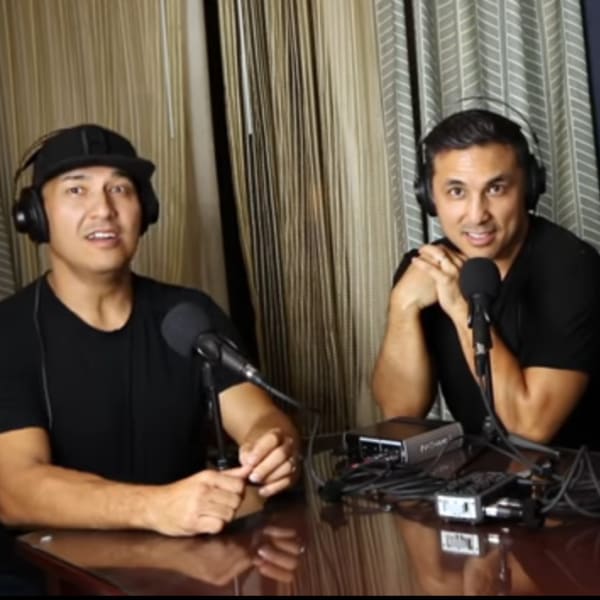
Young Nails' Greg, Habib, and Tracey discuss whether getting too close to clients can damage your business.