





The Beauty Pro Book Club: 4 Reads to Inspire Growth and Success
Four publications for beauty industry professionals to enhance their leadership skills, financial awareness, professional growth, and joy!
by Anne Moratto


 MENU
MENU SEARCH
Of the two main opportunities for a nail salon to generate revenue, the sale of retail products perhaps has the most potential for profit.
Of the two main opportunities for a nail salon to generate revenue, the sale of retail products perhaps has the most potential for profit. Services, while the chief moneymaker for most salons, are by necessity limited because of the time factor. Physically, one can only perform so many services within a given span of time.
On the other hand, the movement of retail items is much less limited by the same time constraints. A salon can move as many items in an hour as they can ring up on the register and thank shoppers. Obviously, a higher volume of dollars can be moved in the same time frame.
Just selling those items is not all it takes, however. To be profitable, many factors have to be taken into account before the retail side of the business can be fruitful.
MARKUP
Before all else, individual items must be priced to be profitable to the particular salon, and if not profitable in themselves, as, for instance, in loss-leaders, they must be priced to lead to the scale of other items in such quantities to make certain even the loss-leader pays for its space on the shelf.
From a sales point of view is important in assessing a price to a particular item is the perceived value; namely what the average customer perceives to be a fair price for the value charged. Many factors enter into how the market judges prices, not the least of which is the salon image (budget-minded, middle-of-the-road, or upscale). Keep in mind competitor’s prices. If the same brand of polish remover can be obtained elsewhere cheaper, it will be difficult to move in any quantity.
In most salons, the price charged for products is based on the manufacturer’s suggested retail price. This may or may not be profitable for the individual salon. In a start-up situation, the suggested retail may be the best price to use, at least until a sales history can be created.
As Jim O’Donnell, Backscratchers, Inc.’s creative director says, “Like most reputable manufacturers, we try to keep our suggested prices sharp for the salon. Remember we’re on the same page as the salon. If they don’t make money, we don’t.”
In most cases, selling at suggested retail prices will be profitable. However, this is not always the case. It is advisable to perform profitable studies periodically. (once a sales history has been accumulated) to determine if the prices charged are sufficient to render a reasonable profit.
There are three basic factors that influence the profitability of retail sales: gross volume sales, gross profit margins, and overhead expenses and gross profit margins – can be controlled.
Overhead expenses can put their broken down into expenses that are fixed or variable. Fixed expenses are those cost that go on whether the door opens that day or not, and include such items as rent, debt service, and insurance premiums, among others. Variable costs are those cost that are incurred in the act of selling, such as labor, supplies, and the majority of utilities. Gross volume sales are influenced by your marketing efforts. Planning, therefore, should be based chiefly on overhead and gross profit margins.
Knowing the difference between markup and profit is important, too. If you by an item for $1.00 and sell it for $1.43, you have a 43 percent markup, but your profit margin is only 30%, because although $.43 is 43% of $1.00, it is only 30% of $1.43.
Several formulas can be used in arriving at profitable retail prices. Here, we’ll use a bottle of nail strengthener as an example. Using it as a model, you can then extrapolate it to apply to all products.
BUILDING A COMPLETE LINE OVER TIME
Most successful retailers agree that the best way to build a line is to begin with the basics.
A good philosophy, according to O’Donnell, is to build a line by problem solving. For instance, if the chief problem clients experience is cracked nails, begin by stocking a product that alleviates that particular problem. “Reinvest the income from that item into another product that solves another common problem. You can build incrementally this way, choosing retail items either by universal popularity or by the prevalent problem seen in the individual salon. The key in this strategy is that a nail salon doesn’t have to buy the whole shooting match at once, but can build one or two items at a time – giving the advantage of having a retail item or items that the technician can sell to almost everyone.”
Matrix’s Stacie Halpern says pretty much the same thing. “Retailing works best in any salon when it is a logical extensions of the salon’s service business. In this way, the salon ‘services’ the client’s at-home beauty needs.”
To build a successful line, she adds, “The salon should begin with the basics: base coat, nail color, top coat, nail treatment cream, hand and body lotion. The items should offer a professional level of quantity that can’t be duplicated in retail outlets.
HOW TO DETERMINE YOUR PROFIT PER SQUARE FOOT ON RETAIL SALES
Merely selling products is not enough. It is important to know if a profit is being realized. It is a relatively simple procedure to determine the profit per square foot of retail, and from that to determine future strategy to boost profit margins.
Glen Allie, C.P.A. of the firm Del Principe & Allie, Certified Public Accountants in Rensselaer, Ind. gives the following formula: “First, determine income to be received from the square footage realized. This would include total sales minus sales tax, discounts, returns and allowances. Next, add the direct cost of products to the allocable overhead. The direct cost is the cost of the product itself (less any discounts) and any commissions paid. Allocable overhead is all of those costs incurred in maintaining the business space such as rents, insurance premiums and utilities, the net sales figure minus the direct and allocated overhead costs equals gross margin. Gross margin divided by the square footage of the retail area is the profit per square foot.”
This can be figured for any time period desired: monthly, quarterly, or annually. Below is an example of an annual determination of profit per square retail foot for a fictitious salon. XYZ Salon has 2,000 square feet (total), of which 200 square feet contributors for retail goods, and during the year the cost of discounts and commissions paid was $500 and $2,800 respectively. (XYZ sell at a 50% markup and pays 10% commission.) During the year, the salon realized $30,000 in net retail sales.
The value of knowing your profit per square foot is to see if you need to change your retail strategy. If you make less per square foot than you would by investing a similar amount of capital into a conservative investment instrument, then you need to rethink your strategy. In the beginning stages of retail, this is not as important as later on. To introduce retail items, train your staff, and get a retail program off the ground may initially involve a lesser return on investment. This can be viewed as an investment in the future, but after a year or two the return should begin to show a higher rate of profit than say putting the same amount of money in a Certificate of Deposit or other similar investment. If such is not the case, it is time to consult resources such as your accountant, retail sales experts, and the suppliers and manufacturers of the products you have chosen, for their input and advice as how to increase sales and profitability.
Four publications for beauty industry professionals to enhance their leadership skills, financial awareness, professional growth, and joy!
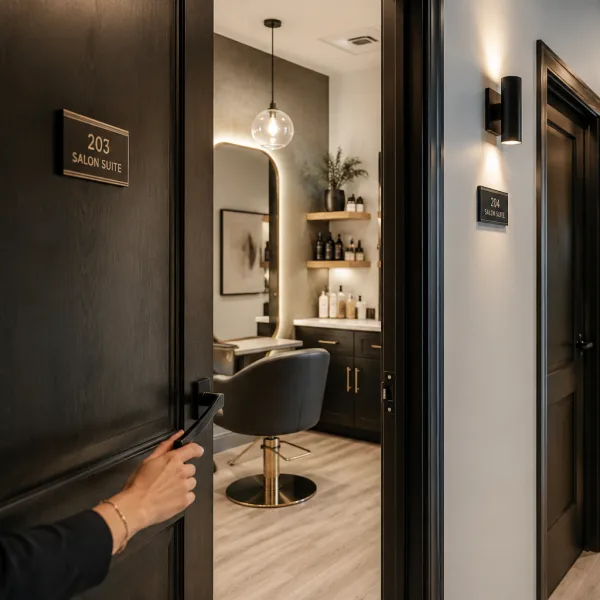
The most successful salon suites balance personality, function, and comfort. Megan Communale of My Salon Suite shares her best advice for designing a space that supports your business goals and leaves a lasting impression on every guest.

Square data shows that regular customers tip 11% higher and are shared across 32% of businesses in the same ZIP code, driving thousands of dollars in additional revenue per connection.

When Bowie Lau and Jeffrey Ching opened JBW Jeffrey Ching Salon in 2011, they weren’t just launching another luxury hair destination—they were building a business rooted in passion, artistry, and thoughtful growth.
Sponsored by Amex

Inside the Systems That Power an Elevated Salon Experience From seamless online booking to a team-first culture, J Gold Salon in Atlanta offers more than great hair—it delivers consistent, high-touch service with the help of partners like Boulevard and American Express.
Sponsored by Amex

Want to grow your career as a beauty professional? K18 Sales Manager Sabrina Sanborn shares advice on networking, mentorship, and self-advocacy—from attending hair shows to finding the right guidance to reach your goals.

A combination of clear policies, effective communication, and strong client relationships has helped me create a more reliable and efficient booking system.
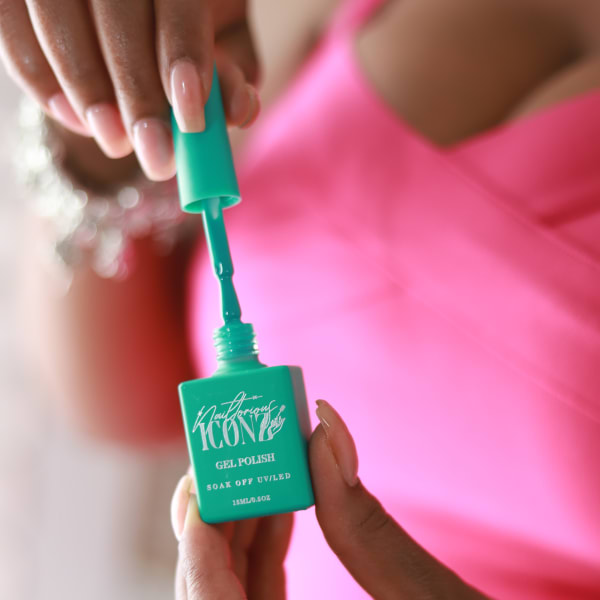
Founded by Cleveland serial entrepreneur Shaura Rodgers, Nailtorious has grown to include a nail supply megastore, training facilities, and retail line for nail techs.

This period after the holidays can bring on a huge lull for hairstylists. We asked Cosmo Prof's team of professionals to offer their best advice on how to deal with the January-February slow period.

Key highlights include a push toward inclusive spaces for all abilities, an emphasis on maximizing livable square footage, and a continued love for modern farmhouse exteriors.

The busy holiday season is here, and with it comes jam-packed days, last-minute client requests and booming retail sales. For many salon owners, the highlight of the season is Small Business Saturday® (SBS). This year on Saturday, November 30, consumers can take their shopping into the small businesses in their communities.
Sponsored by Amex

Want to become savvy about your personal finances, but don't quite know where to start? Anna Manukyan identifies six important concepts for building a strong financial foundation.
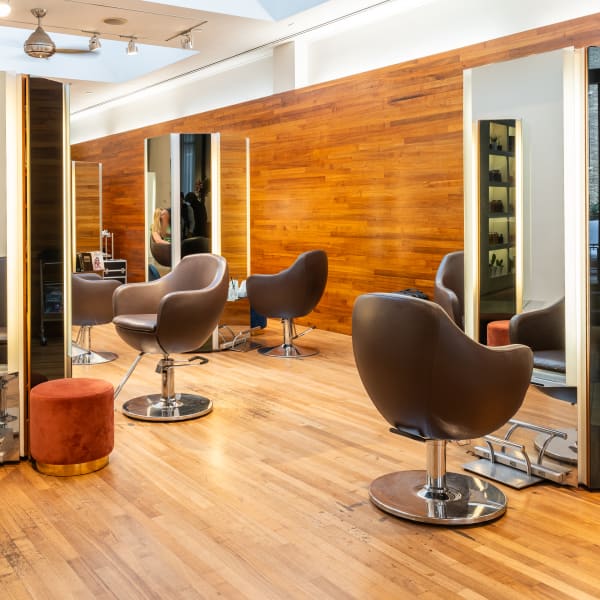
Salon owner Nuri Yurt had a dream of owning a salon on New York City’s Madison Avenue. "Through perseverance, hard work and stellar customer service, he and partner John Kaygisiz founded Toka Salon in 2007.
Sponsored by Amex

This guide is your one-stop shop for a plethora of technology tools, software and services created to keep your salon or spa thriving.

Anna Manukyan shares a breakdown of what different types of financial accounts should be used for.

Vagaro has consistently been at the forefront of salon software technology, helping businesses be more efficient, create more effective communication, and even improve company culture. Now, Connect by Vagaro, the platform’s two-way communication capability, and Vagaro’s new generative AI tools are giving owners new opportunities to grow and expand.
Sponsored by Vagaro

Young Nails' Greg, Habib, and Tracey discuss whether getting too close to clients can damage your business.