



The Beauty Pro Book Club: 4 Reads to Inspire Growth and Success
Four publications for beauty industry professionals to enhance their leadership skills, financial awareness, professional growth, and joy!
by Anne Moratto


 MENU
 SEARCH
The research on ambient scent in service businesses is real, but more modest than the people selling it tend to admit.

*This article was repurposed with permission from Aura House.
A client books you for a gel fill. She judges your salon on everything else.
By the time she has crossed the floor and set her bag down, she has already decided whether this is a place that has its act together. The light, the state of the front desk, whether anyone looked up, what the room smells like. It happens before she sits, and most of it runs below the level of anything she could name if you asked her.
Scent is the one piece of that first impression most salons leave to chance. Not because owners don't care, but because the honest version of this conversation is complicated, and the dishonest version has been sold to this industry hard, for years.
So let's do the honest version.
What scent can do, and what it can't
The research on ambient scent in service businesses is real, but more modest than the people selling it tend to admit. A pleasant, consistent scent shifts how people rate a space, and the effect is strongest where someone spends time rather than passes through. A salon, where a client sits at your station for an hour, is close to the best case there is.
What scent cannot do is fix air. If your salon has a fumes problem, the answer is engineering, and it is already spelled out. The model mechanical code most states build on requires source capture at every manicure and pedicure station, an exhaust inlet within about a foot of the work that pulls vapor away from the breathing zone before it spreads, plus enough makeup air that the exhaust has something to pull. Your state board publishes its guidance. That is where the money goes first, and no diffuser, mine included, belongs anywhere in that conversation. Anyone who puts one there is selling you something no fragrance can do.
Here is a two-minute test that costs nothing: open your Google reviews and search the word "smell." If what comes up is about product fumes, stop reading this and go price ventilation, because fragrance would only sit on top of the problem. If your reviews are quiet about smell, you are holding a blank page, and the blank page is the opportunity.
Four decisions that matter more than which scent you pick
Where it sits. At the front, between the door and the stations. The entry is where the impression forms, and it keeps fragrance out of the breathing zone at the table, where nobody should be layering anything on top of a client mid-service.
How strong. Lower than you think. You acclimate to your own salon within minutes of opening; your client walks in cold. The test is not what you can smell at the desk at 2 p.m., it is what someone notices from the doorway. Ask a friend who doesn't work there to tell you the truth.
When it runs. On a schedule: on before the first appointment, off after the last. A room that already smells considered when the first client walks in is the entire point, and nobody on staff should have to remember a switch. If a device can't be scheduled, you will end up running it all day or not at all, and both are worse.
One scent, held. Salons that rotate three scents a week smell like a candle aisle. Pick one, run it for a season, and let your regulars start to associate it with the place. If you change, change with the season, not with the shipment.
Choosing the scent itself
Match the register of your salon, not your personal favorite. Clean and bright reads as professional next to product smells: citrus first, something soft underneath, nothing gourmand. Sweet scents sit badly beside monomer and remover, and they turn cloying by mid-afternoon. If you have ever walked into a salon and felt the scent was trying too hard, it was almost always something sweet, set too high.
Our bestseller is Collins, lemon and orange over magnolia and rose, and it is the one we fit salons with first, because it reads the way a good hotel lobby does, which is the register most front rooms are actually after. Whatever you choose, from us or from anyone, buy depth in one scent rather than a little of several.
The practical questions owners actually ask
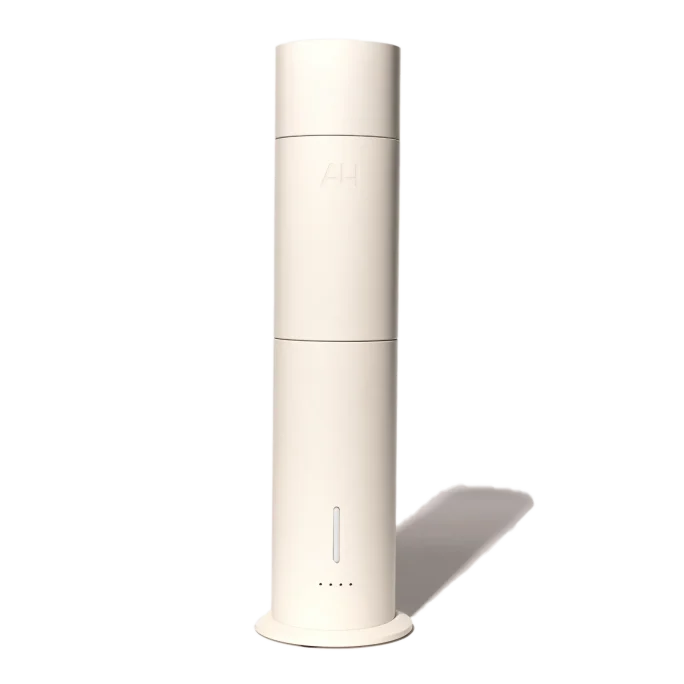
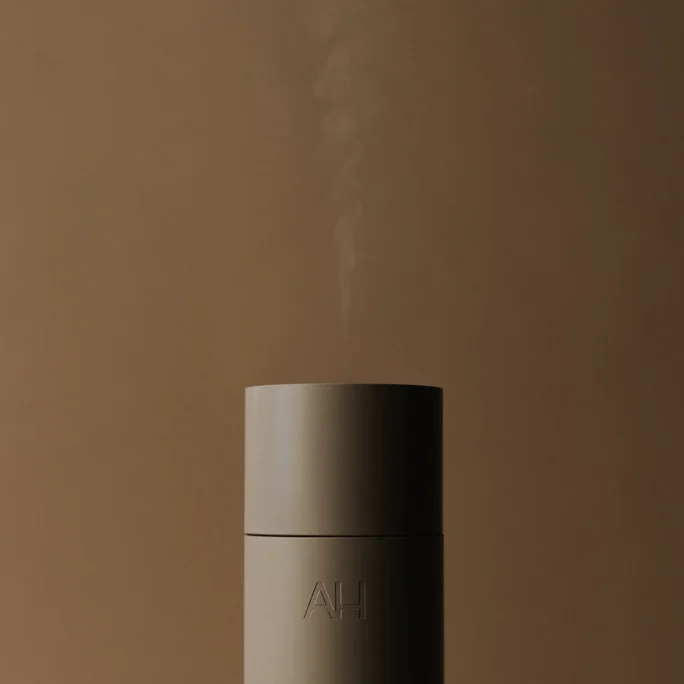
Heat and flame first, and the answer to both should be no. A candle is an open flame nobody can watch during a fill, and a plug-in warmer is a hot surface in a room full of solvents and towels, with a soot film on your ceiling either way. A waterless, cold-air diffuser atomizes the oil with no heat, flame or water, which also means no damp, no reservoir to scrub out weekly, and nothing for the front desk to babysit mid-service.
Coverage: about 650 square feet per unit is an honest figure for an open floor, which makes one unit at the entry enough for most single-room salons. A larger floor wants a second unit, not one turned up to compensate. And if you work out of a suite, you have the advantage here: one unit covers the whole room, and in a suite the room is the brand.
Running cost, straight: at about 40 percent intensity, scheduled across open hours, a 30 mL bottle lasts roughly a month. A home can stretch that same bottle two or three months; a working salon will not, and a brand that quotes you bottle life without naming the intensity and the hours is quoting you a living room. Budget it like backbar.
Start smaller than you think
One unit at the entry, on a schedule, for one month, at an intensity you had to be talked down to. Then listen at the desk. If clients start asking what the scent is, you have it right. Have your answer ready, because "it's called Collins, it runs on a schedule, I'll write it down for you" is the cheapest moment of brand your salon will get this year. If nobody mentions it, go up one step and wait a week. If anyone says it's strong, you were already too high.
It is a small thing. So is the state of your front desk, and you already fixed that.
Leif Frey is co-owner of Aura House, which makes waterless diffusers and fragrance oils blended in the USA.
Interested in an Aura House scent system? Visit aurahouse.com and choose a package, or use code NAILS20 for 20% off your one-time purchase.
Four publications for beauty industry professionals to enhance their leadership skills, financial awareness, professional growth, and joy!
The most successful salon suites balance personality, function, and comfort. Megan Communale of My Salon Suite shares her best advice for designing a space that supports your business goals and leaves a lasting impression on every guest.
Square data shows that regular customers tip 11% higher and are shared across 32% of businesses in the same ZIP code, driving thousands of dollars in additional revenue per connection.
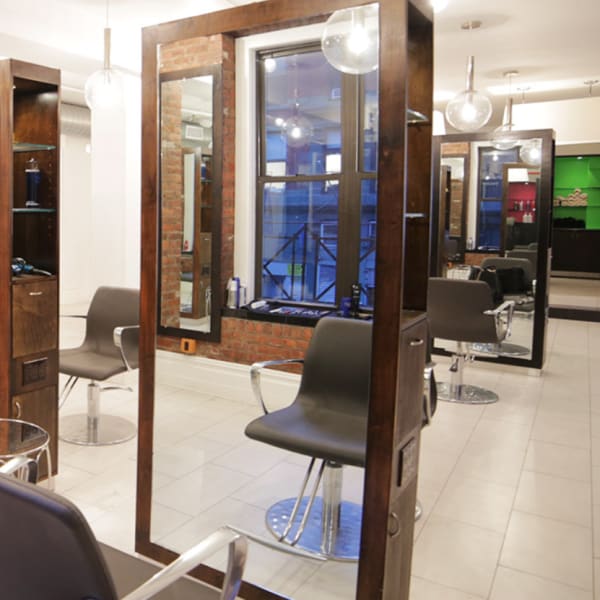
When Bowie Lau and Jeffrey Ching opened JBW Jeffrey Ching Salon in 2011, they weren’t just launching another luxury hair destination—they were building a business rooted in passion, artistry, and thoughtful growth.
Sponsored by Amex

Inside the Systems That Power an Elevated Salon Experience From seamless online booking to a team-first culture, J Gold Salon in Atlanta offers more than great hair—it delivers consistent, high-touch service with the help of partners like Boulevard and American Express.
Sponsored by Amex

Want to grow your career as a beauty professional? K18 Sales Manager Sabrina Sanborn shares advice on networking, mentorship, and self-advocacy—from attending hair shows to finding the right guidance to reach your goals.

A combination of clear policies, effective communication, and strong client relationships has helped me create a more reliable and efficient booking system.
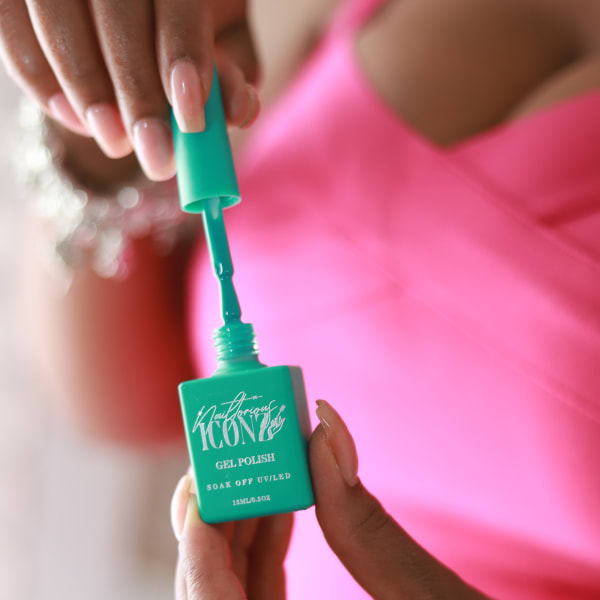
Founded by Cleveland serial entrepreneur Shaura Rodgers, Nailtorious has grown to include a nail supply megastore, training facilities, and retail line for nail techs.

This period after the holidays can bring on a huge lull for hairstylists. We asked Cosmo Prof's team of professionals to offer their best advice on how to deal with the January-February slow period.

Key highlights include a push toward inclusive spaces for all abilities, an emphasis on maximizing livable square footage, and a continued love for modern farmhouse exteriors.
The busy holiday season is here, and with it comes jam-packed days, last-minute client requests and booming retail sales. For many salon owners, the highlight of the season is Small Business Saturday® (SBS). This year on Saturday, November 30, consumers can take their shopping into the small businesses in their communities.
Sponsored by Amex

Want to become savvy about your personal finances, but don't quite know where to start? Anna Manukyan identifies six important concepts for building a strong financial foundation.
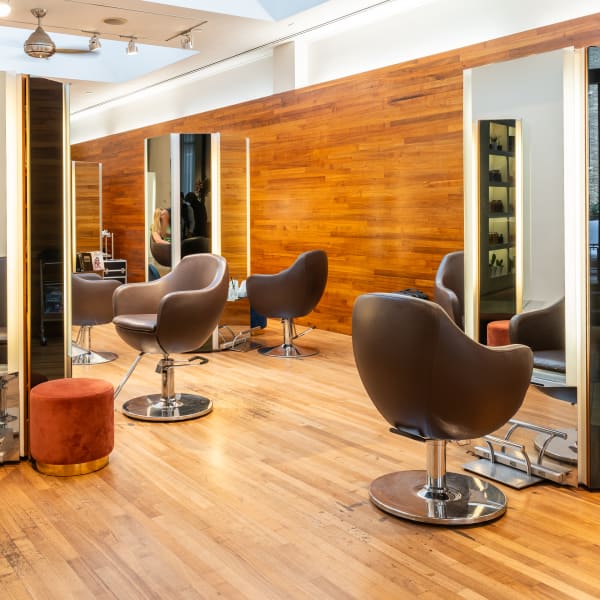
Salon owner Nuri Yurt had a dream of owning a salon on New York City’s Madison Avenue. "Through perseverance, hard work and stellar customer service, he and partner John Kaygisiz founded Toka Salon in 2007.
Sponsored by Amex

This guide is your one-stop shop for a plethora of technology tools, software and services created to keep your salon or spa thriving.

Anna Manukyan shares a breakdown of what different types of financial accounts should be used for.

Vagaro has consistently been at the forefront of salon software technology, helping businesses be more efficient, create more effective communication, and even improve company culture. Now, Connect by Vagaro, the platform’s two-way communication capability, and Vagaro’s new generative AI tools are giving owners new opportunities to grow and expand.
Sponsored by Vagaro

Young Nails' Greg, Habib, and Tracey discuss whether getting too close to clients can damage your business.