





The Beauty Pro Book Club: 4 Reads to Inspire Growth and Success
Four publications for beauty industry professionals to enhance their leadership skills, financial awareness, professional growth, and joy!
by Anne Moratto


 MENU
MENU SEARCH
The Stevensons of Hollywood Nail Care convinced their zoning board that nail technicians should be considered professionals.
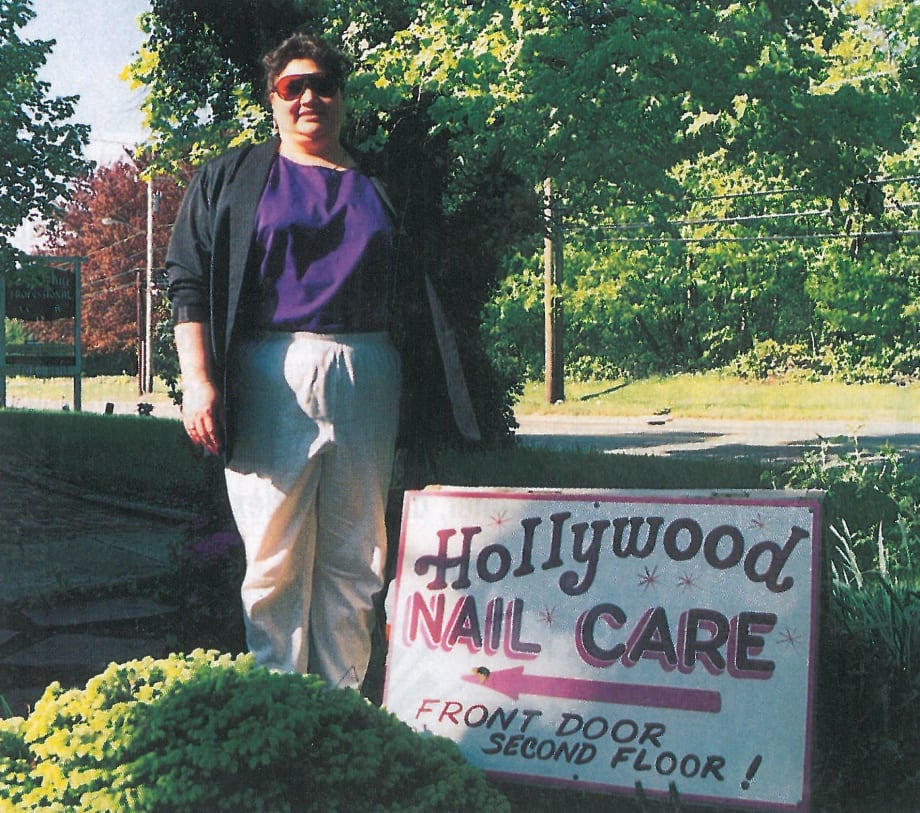
Cyndee Stevenson was a 37-year-old mother of six working as a waitress when she decided to go back to school two years ago to train as a nail professional. That income would help support the family-run Armed Forces Foundation, a non-profit organization concerned with veterans, military personnel, and their families.
The original plan was to have a salon in the Stevenson home. Cyndee and her husband Michael expected no hitches. In the Portsmouth area, many professionals had home offices---doctors, attorneys, real estate agents. However, zoning officials in two cities said that a nail salon didn’t qualify for a home office or a professional building.
Beyond zoning restrictions, explains Mike, few members of the general public understood what a nail technician does. “Among those who do, many envision a manicurist as a gum-chewing, mini-skirted Madge with a bottle of Palmolive liquid. We had professional people ask us what a manicurist was.”
The couple applied to the town of Tiverton, R.I., to open a salon in their home.
“We thought it was going to be easy. Cyndee had been trained, had worked as a professional, and knew w hat she was doing. We were wrong. They turned us down” he relates.
“If my wife was a doctor, a lawyer, a dentist, or a veterinarian, she could have an office in her home. But she is none of those. They didn’t consider her a professional. Manicurists weren’t even mentioned in the zoning code book, so the council decided to lump us with barbers and beauty salons.”
The Stevensons were discouraged, but they weren’t about to give up. “I tell people to do research. Read, search, ask questions. That’s how you get the information you need to go back to these people and win,” he says.
Meanwhile, the couple rented salon space in nearby Portsmouth in case they couldn’t win approval for a home-based salon. The salon was above a dentist’s office in an old home that had been converted into a professional building. Other tenants included an attorney and a real estate agent.
The Stevensons waited to receive their letter from the Portsmouth zoning board approving their business use of the building. The letter had to go first to the Division of Professional Regulation in Providence before a license would be issued.
The process seemed to be moving toward approval---until the building inspector noted that the zoning code book didn’t define what a manicurist was. And, the building had been rezoned residential. “We were back where we started in Tiverton. All of our capital was tied up in opening the shop, and they were telling us we couldn’t open,” Mike recalls.
The Stevensons determined that the only way they were going to get their license was to get the zoning board to see things their way. And so they set about educating the board about nail care professionals skills.
“Cyndee wore her lab coat to the meeting. She brought some of her instruments. We described her training, how she used the tools, what safety precautions she has to take,” says Mike. She even demonstrated the seriousness of the profession by showing that there were trade magazines written exclusively for nail technicians.
Perhaps what had the strongest impact on the board was a statement Mike had heard at a national nail care convention that he repeated. “Outside of the medical profession, a nail technician is the only person who is licensed to take a cutting instrument to your body. I noted that what my wife provided was not just a luxury service but a vital and valuable health service to the community,” he recalls.
The Stevensons won their license and the salon opened.
ROUND TWO: TIVERTON
The next challenge was to sway the council in Tiverton. The procedure there was much more formal. Mike had learned a great deal from his first experience and decided to do even deeper research. He searched out articles dealing with business practices and professionalism. He made copies of articles and advertisements from trade magazines, highlighting key sentences on every copy.
Armed with the articles, Mike described advances in nail technology over the past 20 years. He discussed the training a nail technician receives in chemistry. Each time he made a point, he handed out one of his articles, marking them like courtroom exhibits.
He concluded his presentation by displaying his wife’s nail instruments and stating, “There is not a person in this room who is licensed in this state to use these instruments except my wife.” The victory was sweet, Mike recalls. “They told me that we did not need a variance---that my wife is a professional and she qualified on those terms. Now, we can open a salon in our home when we are ready.”
NEVER TOO OLD TO START OVER
Cyndee’s interest in nails began, like many technicians, with her own. “I was having my nails done and I liked it. Every time I went in I asked so many questions that the woman who did my nails said I should go to school myself. That was the start of it.”
Cyndee was inspired to start a new career at age 37 by that same technician. Cyndee says, “She pointed to her license on the wall. It was just a year old and she was in her early forties. That decided it for me. I waited until my youngest son was old enough to go off to school by himself and then I went back to school.
“I was lucky to have Mike here. He was the one who kept telling me that if it was something I wanted to do, it would help us all. He took over the household duties. There aren’t many guys out there who can work , run a house, and take care of six kids. He did all that.”
Cyndee started “at the bottom” working at a salon while still in school. “Two weeks after I started school, I applied at a brand new salon, with a lot of encouragement from my teachers and my husband. I did manicures, cleaned up, and answered the telephone.” She gradually added sculptured nails and other services as she honed her skills.
“What was great for me was the encouragement and cooperation of the school. They took my working hours and credited them as school hours. I was able to work, bring a check home for the foundation and the family, and still be able to go to school and do something I really wanted to do for myself.”
After graduation, Cyndee worked at several nail and beauty salons before launching her master plan---opening her own nail salon.
“In Rhode Island, you have to have your license for a year before opening your own salon. That includes renting space in another salon.”
Hollywood Nail Care offers hot oil manicures, pedicures, tips, overlays, wraps, and sculptured nails. Cyndee is expanding her clientele to include more men. Says Cyndee, “Men, like so many women, may find that nail care can be asylum from the hectic pace of the ‘90s.”
One impetus for going out on her own, says Cyndee, was a desire to set her own work pace. “One thing that I kept hearing from salon clients was that they felt they were on a conveyor belt, that there was this constant pressure to work fast---get them in and get them out.
“You have to be proud of what you’re doing and what you’re sending out the door. What you have to do is be the best that you can be so that your clients are going to tell their friends about your work and where they had their nails done. It’s important because my name goes on their hands when they walk out the door,” she adds.
A PARLOR ATMOSPHERE
“I kept telling myself that there had to be a better way, that I could have a place where ladies could come, relax, and enjoy themselves. I pictured a salon where clients could come in, slow down, and key down from being out there in the world.
“I wanted something homey, comfortable, and relaxing. Many of my clients lead high-pressure lives. I wanted to offer them the opposite of high-tech.
“These were real estate agents, women who owned their own businesses, and mothers of six who were always rushing, always under pressure. I wanted a place where they could take a break.”
Step inside Hollywood Nail Care and you travel back in time to the late 1930s and 1940s.
Vintage movie posters decorate the walls. The furnishings, right down to the telephone, echo the period. Lighting is subdued. Colors are soft earthtones. Plants flourish. The salon is as welcoming as an old-fashioned parlor.
That’s the feeling Cyndee wanted to create when she opened her salon last January.
“We see Hollywood Nail Care as no ordinary salon but a unique nostalgic experience we want our clients to enjoy,” Cyndee says. “We’ve gone to great lengths to make this salon different and relaxing, to emulate a bygone era and the friendly warmth of that time.”
A one-woman show, the salon operates Wednesday through Saturday, often open late in the evening to accommodate professional women. What makes this salon so unusual is the family behind it---and the reason its success is so important to them.
The Hollywood reference is particularly apt. The Stevenson family story has all the elements of a movie-of-the-week script--- a large, loving family, a cause they all believe in, a willingness to work hard, make sacrifices, and to battle bureaucracy to achieve a dream.
Four publications for beauty industry professionals to enhance their leadership skills, financial awareness, professional growth, and joy!
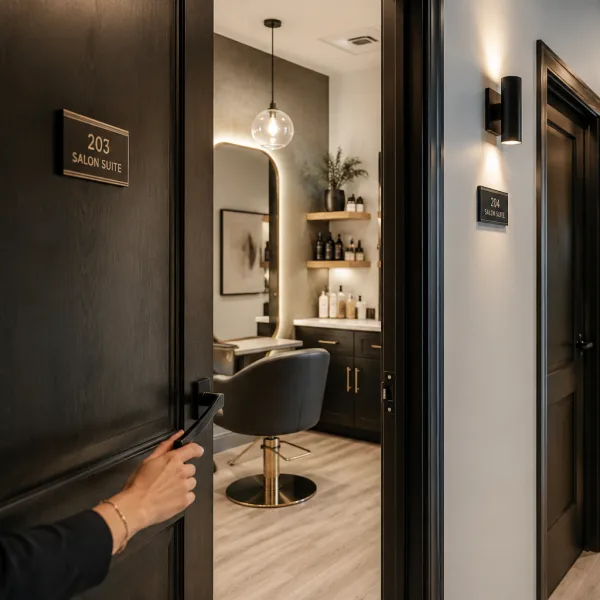
The most successful salon suites balance personality, function, and comfort. Megan Communale of My Salon Suite shares her best advice for designing a space that supports your business goals and leaves a lasting impression on every guest.

Square data shows that regular customers tip 11% higher and are shared across 32% of businesses in the same ZIP code, driving thousands of dollars in additional revenue per connection.
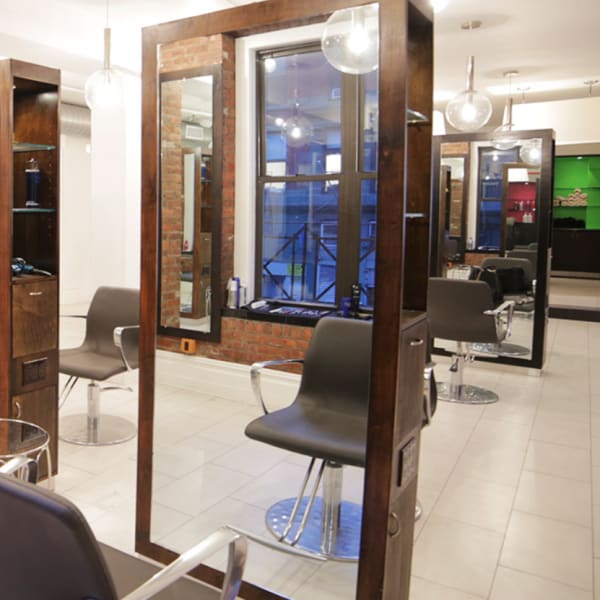
When Bowie Lau and Jeffrey Ching opened JBW Jeffrey Ching Salon in 2011, they weren’t just launching another luxury hair destination—they were building a business rooted in passion, artistry, and thoughtful growth.
Sponsored by Amex

Inside the Systems That Power an Elevated Salon Experience From seamless online booking to a team-first culture, J Gold Salon in Atlanta offers more than great hair—it delivers consistent, high-touch service with the help of partners like Boulevard and American Express.
Sponsored by Amex

Want to grow your career as a beauty professional? K18 Sales Manager Sabrina Sanborn shares advice on networking, mentorship, and self-advocacy—from attending hair shows to finding the right guidance to reach your goals.

A combination of clear policies, effective communication, and strong client relationships has helped me create a more reliable and efficient booking system.
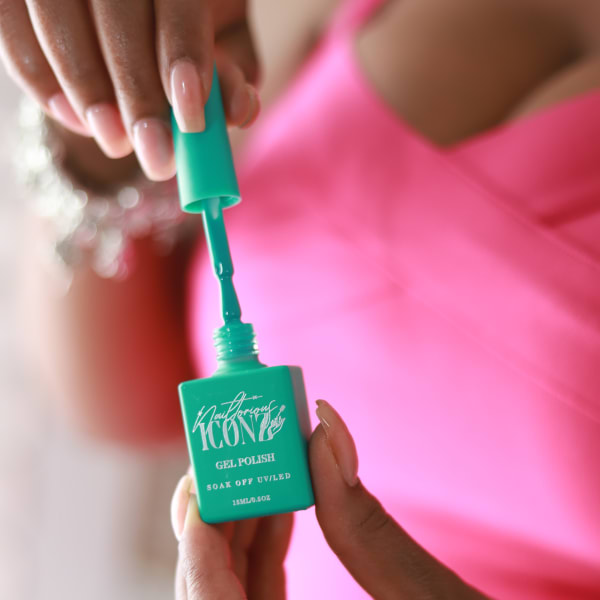
Founded by Cleveland serial entrepreneur Shaura Rodgers, Nailtorious has grown to include a nail supply megastore, training facilities, and retail line for nail techs.

This period after the holidays can bring on a huge lull for hairstylists. We asked Cosmo Prof's team of professionals to offer their best advice on how to deal with the January-February slow period.

Key highlights include a push toward inclusive spaces for all abilities, an emphasis on maximizing livable square footage, and a continued love for modern farmhouse exteriors.

The busy holiday season is here, and with it comes jam-packed days, last-minute client requests and booming retail sales. For many salon owners, the highlight of the season is Small Business Saturday® (SBS). This year on Saturday, November 30, consumers can take their shopping into the small businesses in their communities.
Sponsored by Amex

Want to become savvy about your personal finances, but don't quite know where to start? Anna Manukyan identifies six important concepts for building a strong financial foundation.
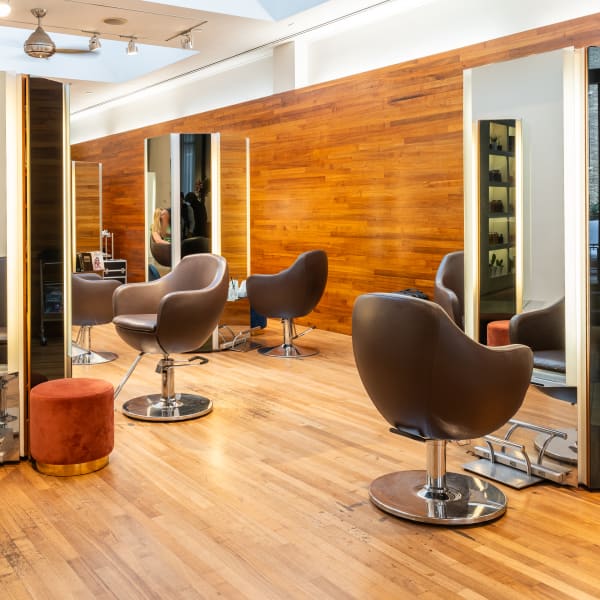
Salon owner Nuri Yurt had a dream of owning a salon on New York City’s Madison Avenue. "Through perseverance, hard work and stellar customer service, he and partner John Kaygisiz founded Toka Salon in 2007.
Sponsored by Amex

This guide is your one-stop shop for a plethora of technology tools, software and services created to keep your salon or spa thriving.

Anna Manukyan shares a breakdown of what different types of financial accounts should be used for.

Vagaro has consistently been at the forefront of salon software technology, helping businesses be more efficient, create more effective communication, and even improve company culture. Now, Connect by Vagaro, the platform’s two-way communication capability, and Vagaro’s new generative AI tools are giving owners new opportunities to grow and expand.
Sponsored by Vagaro

Young Nails' Greg, Habib, and Tracey discuss whether getting too close to clients can damage your business.