





The Beauty Pro Book Club: 4 Reads to Inspire Growth and Success
Four publications for beauty industry professionals to enhance their leadership skills, financial awareness, professional growth, and joy!
by Anne Moratto


 MENU
MENU SEARCH
Education is necessary for beauty professionals to maintain their cosmetology licenses, and paying for that education can be burdensome, but it doesn't have to be. Understand which education tax credits can help you offset those costs.

Co-author Eva Macris of Azarvand Tax Law describes the different education tax credits that can optimize your savings.
Eva Macris
Whether you are an employee or employer in the beauty industry, education is necessary to receive and maintain your license. There are various paths to complete the requisite training, all of which come at a cost. Paying for your education can be burdensome and sometimes overwhelming, but it doesn't have to be. For stylists, education tax credits can be a relatively simple and efficient way to alleviate the stressors of receiving necessary training while obtaining tax benefits to help offset educational expenses. As an employer, working with your employees to take advantage of education tax credits not only improves their expertise but also can enhance your business.
Choosing the educational tax benefits that are right for you ensures more money in your pocket. The following tax benefits can help both employees and employers accomplish that:
The Lifetime Learning Credit is a nonrefundable federal tax credit worth up to $2,000 that is available to taxpayers who pay qualified tuition and related expenses to attend an eligible educational institution. This credit is intended to help offset the costs of post-secondary education and specific continuing education courses. Hair stylists can utilize this credit to enroll in advanced courses involving hairstyling techniques, hair coloring, or business management at accredited vocational schools or colleges. The Lifetime Learning Credit enables hair stylists to invest in their continued education and career growth by reducing the financial burden.
The Lifetime Learning Credit is 20% of the first $10,000 in qualified education expenses, with a maximum credit of $2,000.
Highlights:
This credit can be claimed for any number of years.
The credit can include both tuition and fees.
The credit is usable for all students, including those taking courses to improve job skills.
There are no specific enrollment or criminal record restrictions; the credit may apply to any post-secondary educational institution, such as a college, university, or trade school, that qualifies to participate in a student aid program administered by the Department of Education.
Lowlights:
This credit does not cover course materials.
The credit is nonrefundable, meaning it will only reduce tax liability.
The credit phases out for higher-income individuals, with limits beginning at $80,000.
The credit is limited to one credit per tax return.
The American Opportunity Tax Credit is a refundable federal tax credit worth up to $2,500 for eligible students in their first four years of higher education to help cover qualified educational expenses. For hair stylists pursuing an undergraduate degree or other recognized credential in cosmetology at accredited institutions, this credit can be a stepping stone towards a brighter future. By covering tuition, fees, and required course materials, the American Opportunity Tax Credit helps alleviate the financial burden of education, allowing stylists to focus on acquiring the skills necessary for their profession. This credit supports the career advancement of hair stylists, contributing to their professional growth and success.
The American Opportunity Tax Credit is 100% of the first $2,000 in qualified education expenses and 25% of the next $2,000 of qualified education expenses paid, with a maximum credit of $2,500.
Highlights:
This credit provides up to $2,500 per student per year.
The credit can include tuition, fees, and course materials.
If the credit reduces your tax to zero, you can receive a refund of 40% of the remaining credit (up to $1,000).
Lowlights:
The credit is available for only two tax years (reduced from four years under the Tax Cuts and Jobs Act of 2017).
Students must be within the first four years of higher education to apply for this credit.
The credit phases out for higher-income individuals, with limits beginning at $80,000.
The credit requires at least half-time enrollment and no felony drug convictions.
Section 2206 of the CARES Act permits employers to contribute tax-free money annually to an employee's student loan repayments, up to $5,250 annually through 2025. These contributions are free from FICA tax and excluded from the employee's taxable income, resulting in a double tax benefit. Hair stylists employed by salons or other businesses can benefit from this provision if their employers choose to offer this assistance. By receiving tax-free contributions towards their student loan debt, stylists can reduce their financial burden and focus on advancing their careers without the stress of loan repayment.
Section 2206 was introduced in response to the COVID-19 Pandemic to amend the Internal Revenue Code Section 127 (IRC 127). Before the amendment, IRC 127 covered tuition, fees, books, supplies, and equipment for courses. Section 2206 of the CARES Act now permits employers to contribute up to $5,250 annually toward an employee's student loan debt. The contribution is excluded from the employee's income. Although introduced as a temporary measure applicable only to payments made in 2020, this provision was extended through 2025, meaning the benefit is only available for payments made in 2024 and 2025.
Highlights:
This section applies to tuition, fees, books, supplies, and student loan repayments.
Section 2206 reduces taxable income by excluding the amount from gross income.
There are no income limits for the employee to be eligible.
Employers can offer this to multiple employees.
This can be utilized with the American Opportunity Tax Credit or Lifetime learning Credit for different expenses.
Lowlights:
Any benefit received under this section is not refundable.
Use of Section 2206 of the CARES Act is under the employer's discretion.
Utilizing education tax credits can optimize your savings. As a stylist, strategically using the American Opportunity Tax Credit or Lifetime Learning Credit can offset education costs, allowing investment in advanced courses or certifications. If your salon offers student loan repayment assistance under Section 2206, utilize this benefit to reduce your debt.
Section 2206 benefits employers through FICA savings and improved employee retention. It also attracts talented stylists and fosters growth.
Smart tax planning maximizes financial benefits in the evolving salon industry. Don't leave money on the table by neglecting tax benefits like Section 2206. Regular tax planning, like hair maintenance, prevents costly corrections later. Consult a tax professional to ensure compliance and maximize benefits.
At Azarvand Tax Law, we are dedicated to providing comprehensive tax planning for businesses and individuals, helping you uncover hidden savings and implement education benefits that can give your business a competitive edge. Let us help you keep more of your hard-earned money where it belongs – in your business.
Email us at Info@AzarvandTaxLaw.com or book a free consultation online at AzarvandTaxLaw.com to discover how proactive tax planning can benefit your business today.
Originally posted on Salon Today
Four publications for beauty industry professionals to enhance their leadership skills, financial awareness, professional growth, and joy!
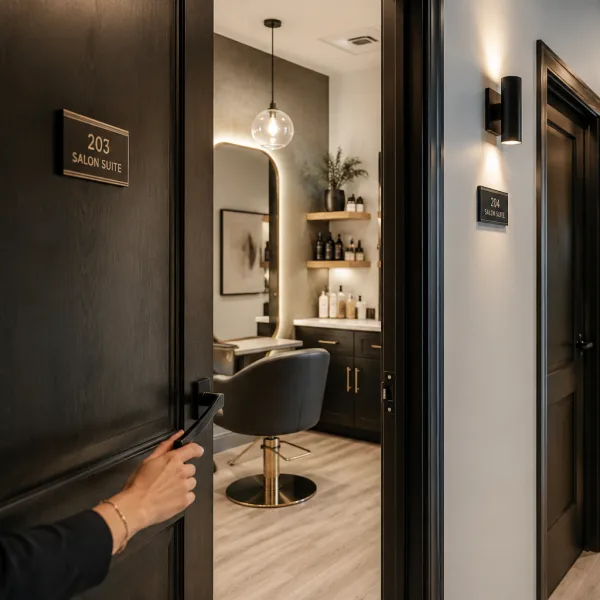
The most successful salon suites balance personality, function, and comfort. Megan Communale of My Salon Suite shares her best advice for designing a space that supports your business goals and leaves a lasting impression on every guest.

Square data shows that regular customers tip 11% higher and are shared across 32% of businesses in the same ZIP code, driving thousands of dollars in additional revenue per connection.

When Bowie Lau and Jeffrey Ching opened JBW Jeffrey Ching Salon in 2011, they weren’t just launching another luxury hair destination—they were building a business rooted in passion, artistry, and thoughtful growth.
Sponsored by Amex

Inside the Systems That Power an Elevated Salon Experience From seamless online booking to a team-first culture, J Gold Salon in Atlanta offers more than great hair—it delivers consistent, high-touch service with the help of partners like Boulevard and American Express.
Sponsored by Amex

Want to grow your career as a beauty professional? K18 Sales Manager Sabrina Sanborn shares advice on networking, mentorship, and self-advocacy—from attending hair shows to finding the right guidance to reach your goals.

A combination of clear policies, effective communication, and strong client relationships has helped me create a more reliable and efficient booking system.

Founded by Cleveland serial entrepreneur Shaura Rodgers, Nailtorious has grown to include a nail supply megastore, training facilities, and retail line for nail techs.

This period after the holidays can bring on a huge lull for hairstylists. We asked Cosmo Prof's team of professionals to offer their best advice on how to deal with the January-February slow period.

Key highlights include a push toward inclusive spaces for all abilities, an emphasis on maximizing livable square footage, and a continued love for modern farmhouse exteriors.

The busy holiday season is here, and with it comes jam-packed days, last-minute client requests and booming retail sales. For many salon owners, the highlight of the season is Small Business Saturday® (SBS). This year on Saturday, November 30, consumers can take their shopping into the small businesses in their communities.
Sponsored by Amex

Want to become savvy about your personal finances, but don't quite know where to start? Anna Manukyan identifies six important concepts for building a strong financial foundation.
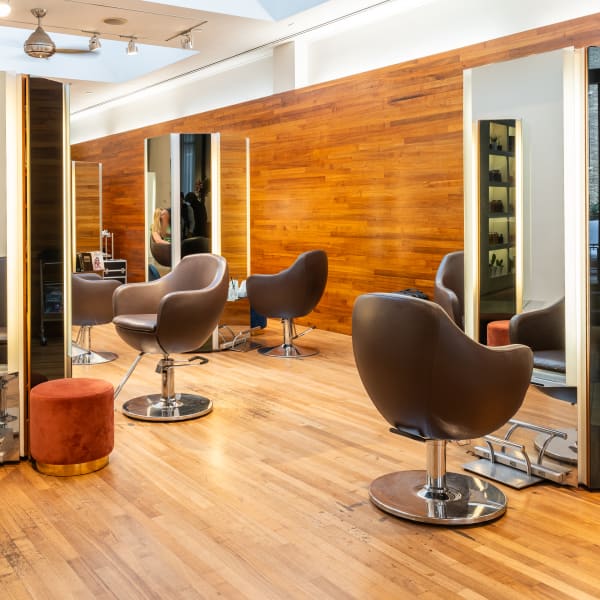
Salon owner Nuri Yurt had a dream of owning a salon on New York City’s Madison Avenue. "Through perseverance, hard work and stellar customer service, he and partner John Kaygisiz founded Toka Salon in 2007.
Sponsored by Amex

This guide is your one-stop shop for a plethora of technology tools, software and services created to keep your salon or spa thriving.

Anna Manukyan shares a breakdown of what different types of financial accounts should be used for.

Vagaro has consistently been at the forefront of salon software technology, helping businesses be more efficient, create more effective communication, and even improve company culture. Now, Connect by Vagaro, the platform’s two-way communication capability, and Vagaro’s new generative AI tools are giving owners new opportunities to grow and expand.
Sponsored by Vagaro

Young Nails' Greg, Habib, and Tracey discuss whether getting too close to clients can damage your business.