





The Beauty Pro Book Club: 4 Reads to Inspire Growth and Success
Four publications for beauty industry professionals to enhance their leadership skills, financial awareness, professional growth, and joy!
by Anne Moratto


 MENU
MENU SEARCH
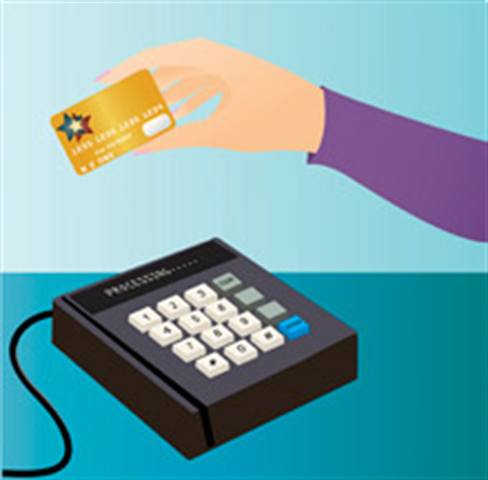
One way of enhancing your clients’ overall experience is to increase their convenience by offering alternate forms of payment. Here are some things you need to know if you accept credit cards.
CREDIT CARD PROCESSORS: THE BASICS
Credit cards are processed by one of two groups:
Member Banks issue accounts directly to merchants, usually in their local regions. It can add convenience for you to use your local bank as your credit card processor — and remove one additional party that needs to be involved in negotiating problems that can occur.
ISOs (Independent Selling Organizations) are companies that are in the business of packaging and selling merchant accounts and processing for the card issuers. These organizations can be national or even global and they can achieve volume efficiency, sometimes making them less expensive. You need to do your homework, however. There are countless examples of unscrupulous “card processors” out there. Start asking merchants in your area who they work with and if they’re happy. You’ll soon find a name that keeps popping up in your area.
PROCESSING METHODS
Terminals are small electronic devices with key pads that allow you to input various levels of information by keying in numbers and/or swiping magnetized credit cards through.
Voice authorization is achieved when you call a special number and read all the information to a customer service person and get authorization over the phone.
The fewer the number of steps and people involved, the cheaper the process. Fees for voice authorization are highest, then keying in the numbers (when the card is not present, for example) is next in line in terms of fees, and swiping the card is the least expensive.
Terminals are for sale or lease. You can buy them new or used. To determine which you need, as you are comparing the various processing organizations, ask them what equipment they provide, if any, and what equipment they support. Also ask about supplies like thermal paper or ink, if needed.
CREDIT CARD PROCESSING TIPS
> Talk to more than one processing company to compare services and fees.
> Ask lots of questions about the costs: Go over every possible fee, the equipment, etc.
> Be aware of the trade-off between higher fixed fees every month versus a higher discount rate. The more volume you have, the better flat fees will be for you.
> Ask about processing time. How long will they hold your money?
> Negotiate! Several large processing companies will waive annual fees or reduce discount rates just for the asking.
> If you already have a processor you’re working with, ask for a rate review — you may not be getting their best rates and they’ll negotiate to keep you.
GET SET UP FOR TIPPING
There are many models of credit card processing machines available. Be sure your model can be programmed with your business as a “tipped service” rather than as a “retail establishment” — even if you also sell retail. The difference is the print-out you present to the client will allow them to add a tip (or leave that blank if they prefer) when they sign the slip. This is a tactful way of saying “yes, we do accept tips” without soliciting them. There is no extra charge for this programming and the batch settlement statements at the end of the day will itemize tips separately from the gross receipts, giving the salon owner a way to double-check and pay out tips to the staff.
BE AWARE OF ALL THE COSTS
You can expect to pay a cost for every single service your credit card processor provides for you. The fees may be hidden or stated outright, but the old adage about free lunches is certainly true in this industry. Here are some cost-related terms you’ll encounter when comparing service providers:
Discount Rate is a term that means any of several fees that are deducted from the total dollars processed in a given term (usually, by the month). The discount rate can include processing fees, markups, member dues, and various other fees or dues. The biggest portion of the discount rate is the Interchange Fee.
Interchange Fee is the term that refers to the table of fees set by the credit card issuers that can be based on volume, industry, past history of the consumers of any given group, etc. All credit card processors base their fees somewhat on this schedule, with markups and additional services being priced separately.
The interchange fee schedule is most commonly based on a three-tier pricing schedule:
1. Qualified. Those transactions on cards that qualify for the lowest discount fee are swiped in on a standard terminal from a regular consumer credit card. This rate is the one that is usually quoted by the card processor, yet is not the actual rate for most credit card transactions, after all the surcharges are added.
2. Mid Qualified. For those transactions that are keyed in rather than swiped in from a regular consumer credit card or are on a “special” credit card that offers rewards or points or is a corporate card with special benefits to the card holder. This rate is higher than the qualified rate.
3. Non Qualified. These transactions are charged the highest rates and are made up of all transactions that don’t qualify for the lower rates. They’re phoned in or keyed in rather than swiped and perhaps address verification is not used, or the daily batch is not done in a timely fashion.
Some credit card processors take this a step further and debit cards are broken out into a further classification, making it a six-tier pricing schedule. In general, debit card transactions are priced at a lower discount rate due to past lawsuits, but usually the “per item” fee is higher, so that they come out about the same as credit cards overall.
Other fees that your provider may or may not itemize on your statement:
> Transaction fee or Per Item fee: For each transaction, credit or debit, charge or refund.
> Authorization fee: For each time you (or your terminal) checks to see that a given transaction is authorized and will likely clear.
> Statement fee: Some card issuers charge for providing monthly statements and card processors pass this along and mark it up and add their own profit to this service.
> Monthly minimum fee: This is charged if you fail to process some monthly minimum in credit card transactions. For example, if your contract calls for a monthly minimum of $25 and you only post $15, you will be charged an additional $10 to meet your monthly minimum requirement. It takes about $1,500 in sales to meet the $25 per month minimum.
> Batch fee: Charged every time you “batch” or process the transactions that have been accumulating all day as you work.
> Customer service fee or account maintenance fee: Charged every month, whether you require customer service or not. This may or may not include paper or other supplies.
> Annual fee or member dues: Sometimes charged to “join” the merchants group for your processing company. This can sometimes be waived if you ask.
> Security compliance fee: To recoup the costs of meeting required cardholder security by the card issuer.
> Early termination fee: Can be quite rigid if you fail to continue your contract term. Some even allow for an “assumed profit” that will be required at early termination.
> Chargeback fees: These occur when a charge is disputed by the cardholder. The most common reason is they simply can’t remember the transaction, but with more information most are usually cleared up. However, there may be a fee for processing the chargeback, a “retrieval fee” for getting additional information about the transaction to the cardholder, and if the dispute is in favor of the cardholder, the full amount of the charge will be recovered as well. Having too many charge backs can increase your discount rate as well as cause a loss of your merchant’s status.
All these fees are usually shown on your statements and do not include any equipment costs.
Four publications for beauty industry professionals to enhance their leadership skills, financial awareness, professional growth, and joy!

The most successful salon suites balance personality, function, and comfort. Megan Communale of My Salon Suite shares her best advice for designing a space that supports your business goals and leaves a lasting impression on every guest.

Square data shows that regular customers tip 11% higher and are shared across 32% of businesses in the same ZIP code, driving thousands of dollars in additional revenue per connection.

When Bowie Lau and Jeffrey Ching opened JBW Jeffrey Ching Salon in 2011, they weren’t just launching another luxury hair destination—they were building a business rooted in passion, artistry, and thoughtful growth.
Sponsored by Amex

Inside the Systems That Power an Elevated Salon Experience From seamless online booking to a team-first culture, J Gold Salon in Atlanta offers more than great hair—it delivers consistent, high-touch service with the help of partners like Boulevard and American Express.
Sponsored by Amex

Want to grow your career as a beauty professional? K18 Sales Manager Sabrina Sanborn shares advice on networking, mentorship, and self-advocacy—from attending hair shows to finding the right guidance to reach your goals.

A combination of clear policies, effective communication, and strong client relationships has helped me create a more reliable and efficient booking system.

Founded by Cleveland serial entrepreneur Shaura Rodgers, Nailtorious has grown to include a nail supply megastore, training facilities, and retail line for nail techs.

This period after the holidays can bring on a huge lull for hairstylists. We asked Cosmo Prof's team of professionals to offer their best advice on how to deal with the January-February slow period.

Key highlights include a push toward inclusive spaces for all abilities, an emphasis on maximizing livable square footage, and a continued love for modern farmhouse exteriors.

The busy holiday season is here, and with it comes jam-packed days, last-minute client requests and booming retail sales. For many salon owners, the highlight of the season is Small Business Saturday® (SBS). This year on Saturday, November 30, consumers can take their shopping into the small businesses in their communities.
Sponsored by Amex

Want to become savvy about your personal finances, but don't quite know where to start? Anna Manukyan identifies six important concepts for building a strong financial foundation.
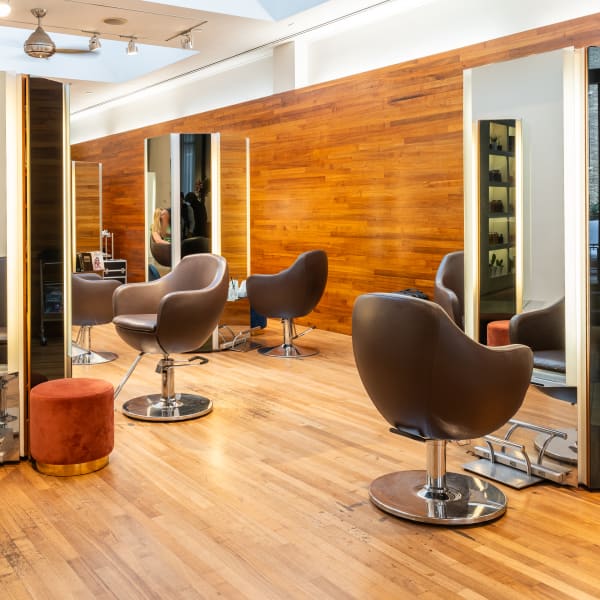
Salon owner Nuri Yurt had a dream of owning a salon on New York City’s Madison Avenue. "Through perseverance, hard work and stellar customer service, he and partner John Kaygisiz founded Toka Salon in 2007.
Sponsored by Amex

This guide is your one-stop shop for a plethora of technology tools, software and services created to keep your salon or spa thriving.

Anna Manukyan shares a breakdown of what different types of financial accounts should be used for.

Vagaro has consistently been at the forefront of salon software technology, helping businesses be more efficient, create more effective communication, and even improve company culture. Now, Connect by Vagaro, the platform’s two-way communication capability, and Vagaro’s new generative AI tools are giving owners new opportunities to grow and expand.
Sponsored by Vagaro

Young Nails' Greg, Habib, and Tracey discuss whether getting too close to clients can damage your business.