





The Beauty Pro Book Club: 4 Reads to Inspire Growth and Success
Four publications for beauty industry professionals to enhance their leadership skills, financial awareness, professional growth, and joy!
by Anne Moratto


 MENU
MENU SEARCH
According to the government, there is an oversupply of cosmetologists for available work. Salon professionals tell a different story. Is the industry over-crowded, or has the government come up with some faulty statistics?
The letter sent to the NAILS office reads: "Why don't you have a 'Want Ads' section? I'm a salon owner looking for a licensed nail technician in New York, and so far my search has been unsuccessful."
While salon owners continue their never-ending search for qualified nail technicians, some disturbing news came from the federal government last summer that seems to contradict their difficulties. A General Accounting Office (GAO) report entitled "Proprietary Schools: Millions Spent to Train Students for Oversupplied Occupations" stated that cosmetology was one in a group of 23 occupations that has too many workers for the number of jobs available. According to the report, cosmetology had a surplus labor supply in 10 of the 12 states studied, the highest of any category.
The beauty industry's reaction to the study turned from dismay to outrage. Malcolm Bonawits, president of Northeast Salons in Mt. Pocono, Pa., and Frank Schoeneman, president of Pence Beauty Salons in Pottsville, Pa., have taken the helm to question both the authors of the study and Congressman Christopher Shays (R-CT), chairman of the Subcommittee on Human Resources and the Committee on Government Reform and Oversight, who originally requested the study.
Playing the Numbers Game
Bonawits and Schoeneman say the numbers are misleading due to two significant reasons. The first one is the source the GAO used for its labor statistics. The GAO used state-level labor market data, which compares the number projected job openings in certain fields with the number of projected graduate who have studied that field. What is in dispute is where the labor market data comes from. "They used state job centers as a source," says Bonawits, "but traditionally, cosmetologists don't go to state agencies looking for work. Salon owners don't go there looking for employees either."
Gene Kuehneman, a senior economist with the GAO, denies that the office relied on this source for its data. "We did not go to state agencies," he explains. "In each state we talked to the labor department to get occupational projections for that state. Their data comes from a survey that is taken every three years, and the private sector is included in these surveys." Bonawits and Schoeneman feel that if researchers had come to working salons and spoke to salon owners, they would have had an entirely different — and much more accurate — picture. "In the International Chain Salon Association (ICSA) membership alone, there's a minimum need of about two or three cosmetologists in each salon," Schoeneman says.
The other reason for the disputed numbers is the nature of the way cosmetologists work. Many licensed cosmetologists and nail technicians work part-time; some don't work at all by choice (leave of absence, staying home with children, etc.), but "keep up" their license renewals. "If everyone who holds a license was a working member of the industry, we'd have an adequate supply of workers," says Kit McCormick, owner of Spa Salon Staffing Services, an employment service for the beauty industry based in Tempe, Ariz. In Arizona, McCormick estimates that out of the 36,000 cosmetology licenses, only about 16,000 are active. "We have 50 work orders from salons in Arizona that we need to fill," McCormick says. "There are so many jobs, it's unbelievable."
The GAO's main objective, says Kuehneman, was not to advocate cut ting off federal funding to schools. "It simply encourages students to get good information before they embark on schooling for their chosen career."
Money is a significant part of the controversy. Bonawits and Schoeneman state that about 80% of cosmetology students rely at least partially on Title IV funds (federally subsidized and unsubsidized loans for students attending higher education and vocational schools). If this funding is cut, they predict widespread damage to the industry, including slower salon growth, a decrease in product sales, and even salon closings.
Meanwhile, the Search Continues
Regardless of where or how the GAO got its numbers, the industry's need for qualified cosmetologists and nail technicians seems almost universal. At the JCPenney Corp. in Dallas, Cathy Heller, senior project manager for styling salons, is worried that a shrinking pool of 18- to 25-year-olds will further diminish the company's ability to find new stylists. "We're looking at things we can do internally to assist our local salon managers," Heller says. "We will try new methods of advertising to create awareness of our salons and to highlight our salary and benefits package."
Whether or not the government decides to modify its position on the overcrowded status of the cosmetology industry, the GAO report has at least served as a warning to the industry that without a reliable flow of motivated, trained workers, everyone will suffer the consequences. Associations such as the American citation of Cosmetology Schools (AACS) and the ICSA are challenging the government's position on the labor outlook schools and individuals need to show through letters citing placement rates and proof of employment, just how many opportunities there are in the beauty business. Write to Congressman Goodling, Chairman, Education and Workforce Committee, 2263 Rayburn House Office Bldg., Washington, D.C. 20515.
Four publications for beauty industry professionals to enhance their leadership skills, financial awareness, professional growth, and joy!

The most successful salon suites balance personality, function, and comfort. Megan Communale of My Salon Suite shares her best advice for designing a space that supports your business goals and leaves a lasting impression on every guest.

Square data shows that regular customers tip 11% higher and are shared across 32% of businesses in the same ZIP code, driving thousands of dollars in additional revenue per connection.

When Bowie Lau and Jeffrey Ching opened JBW Jeffrey Ching Salon in 2011, they weren’t just launching another luxury hair destination—they were building a business rooted in passion, artistry, and thoughtful growth.
Sponsored by Amex

Inside the Systems That Power an Elevated Salon Experience From seamless online booking to a team-first culture, J Gold Salon in Atlanta offers more than great hair—it delivers consistent, high-touch service with the help of partners like Boulevard and American Express.
Sponsored by Amex

Want to grow your career as a beauty professional? K18 Sales Manager Sabrina Sanborn shares advice on networking, mentorship, and self-advocacy—from attending hair shows to finding the right guidance to reach your goals.

A combination of clear policies, effective communication, and strong client relationships has helped me create a more reliable and efficient booking system.
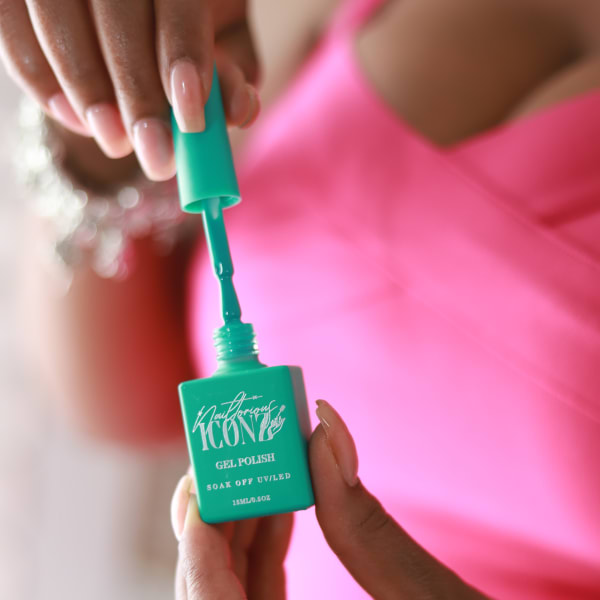
Founded by Cleveland serial entrepreneur Shaura Rodgers, Nailtorious has grown to include a nail supply megastore, training facilities, and retail line for nail techs.

This period after the holidays can bring on a huge lull for hairstylists. We asked Cosmo Prof's team of professionals to offer their best advice on how to deal with the January-February slow period.

Key highlights include a push toward inclusive spaces for all abilities, an emphasis on maximizing livable square footage, and a continued love for modern farmhouse exteriors.

The busy holiday season is here, and with it comes jam-packed days, last-minute client requests and booming retail sales. For many salon owners, the highlight of the season is Small Business Saturday® (SBS). This year on Saturday, November 30, consumers can take their shopping into the small businesses in their communities.
Sponsored by Amex

Want to become savvy about your personal finances, but don't quite know where to start? Anna Manukyan identifies six important concepts for building a strong financial foundation.

Salon owner Nuri Yurt had a dream of owning a salon on New York City’s Madison Avenue. "Through perseverance, hard work and stellar customer service, he and partner John Kaygisiz founded Toka Salon in 2007.
Sponsored by Amex

This guide is your one-stop shop for a plethora of technology tools, software and services created to keep your salon or spa thriving.

Anna Manukyan shares a breakdown of what different types of financial accounts should be used for.

Vagaro has consistently been at the forefront of salon software technology, helping businesses be more efficient, create more effective communication, and even improve company culture. Now, Connect by Vagaro, the platform’s two-way communication capability, and Vagaro’s new generative AI tools are giving owners new opportunities to grow and expand.
Sponsored by Vagaro

Young Nails' Greg, Habib, and Tracey discuss whether getting too close to clients can damage your business.