






The Beauty Pro Book Club: 4 Reads to Inspire Growth and Success
Four publications for beauty industry professionals to enhance their leadership skills, financial awareness, professional growth, and joy!
by Anne Moratto


 MENU
MENU SEARCH
For some nail techs, the dedication in their nail services is fueled by the dream of one day opening a salon of their own. But it can take more than just perseverance and savings to get started. Procuring financing in today’s economy can test the wits of even the most business- savvy techs.


The current recession lingering in hearts and minds was caused primarily by a breakdown in the banks’ assessment of risk and loans. A lot of money was given out on credit through business loans, home mortgages, and credit cards, without a proper accounting of how likely that money was going to be repaid. A lot then went on through the back-end of Wall Street financing that further weakened credit accountability. To put it shortly, way too much money was being distributed way too freely, and when it came time for all these loans to be paid, there simply wasn’t enough money coming in to cover them, and the banks were thus bailed out by the government.
As a consequence, banks have become exceedingly tight on giving out any new loans for prospective businesses, which includes many in our industry — the neighborhood startup salon.
Monte Zwang is the owner of Wellness Capital, a company that does financial consulting for the salon and spa industry. Zwang is also a licensed real estate agent in Washington state and has worked in beauty finance for more than 25 years. “The main thing you need now is great personal credit, which is at or above 700 on the FICO chart,” he says.
And after that, it’s working capital.
Larry Kopsa is a certified public accountant (CPA) with an expertise in the beauty industry. He defines working capital as, “the money required to survive the first six to 18 months of doing business.” And working capital can also be applied to the amount of money that banks may require as a good faith deposit. Banks are requiring a much higher percentage of money down on loans they’re giving out, increasing from about 5%-10% before the recession, to today’s average of 25%, says Zwang.
Well now that you’ve been warned, what lies ahead?
The Official Business Plan
A business plan is essentially a written description of what kind of salon you intend to run, how much you think it will cost, how you will market your salon, how much you think you will make, and then what kind of payments you will make to repay any money loaned to you.
This is the heart of American business. Business plans are drawn up for the largest multi-national trading company venture, down to the smallest business startups, but the principle of needing some money to begin a money-earning operation remains the same. This is why Wall Street is as powerful as it is.
So what are the guidelines for a sound salon business plan?
The first thing is to factor in startup costs, and typically the most expensive cost is the rental space. Be sure to search hard for the space you intend to rent, as that will be a monthly payment you need to make every month to literally keep your doors open.
Then you need to look at furnishing the salon, décor, paint, and any electrical or plumbing work that needs to be done. These all need to be scrutinized and whittled down to the best possible price for what you’re looking for long before you approach any potential investors.
After that, consider your product costs.
How much will it cost for every service on your salon menu? This will require some math because you will need to buy in bulk to keep the price down. So find out exactly how much your expense will be to provide the materials for the service before you factor in labor expense.
Larry Kopsa advises that owners be very selective when choosing a location, and keep in mind the community when deciding service pricing. “I call it business Darwinism,” says Kopsa. “Don’t go in with an ego, but with flexibility. Who are the guests going to be? What is the location like? You look for an opportunity where you can ‘just add water’ as they say, because then you don’t bury yourself with startup costs.”
The Small Business Administration has a wealth of information for budding entrepreneurs, and has a loan and finance department. The SBA website, www.sba.gov, has walkthroughs for preparing for loans, finding lending sources, and information about government grants you might be eligible for.

Nancy Donatone McCoy (above), owner of McCoy Nail Salon in Walnut, Miss., gives some advice on negotiating rent with landowners.
“Every renter/leaser should know that landlords want to rent you their space and most of them are willing to pay to replace flooring and paint because they want to make the renter comfortable and stay in the place long term. If a landlord is not willing to make simple changes, try to negotiate a lower rent or find another space.
I was able to negotiate with my first landlord to pay for the costs of updating the space to meet my state board salon regulations, if I would sign a six-month lease. I did sign because I knew I could cover the expense and my business would grow. On my second location, I was able to get a cheaper rent without even a security deposit if I updated the space, which I chose to do by putting new paint on the walls.”
Business Sense
The goal of the business plan is to lay out clearly how this business will turn a profit, so any marketing information or local consumer research will help as well. Also include your personal finance statements, to show you are currently earning, as well as tax returns to show you are responsible.
Bankers want to deal with people who are business people. Bookstores are great resources and will have a business section with helpful literature for fledgling businesses.
Being prepared and knowledgeable shows the banks that you are serious and that you know your stuff. Have your numbers and be able to support how you arrived at those numbers.
Clearly identify your marketing plan, and be specific with details. How are you going to let customers know of your services and location?
The better you can support your claims, the better you will fare in the eyes of the bank clerk. Remember the clerk’s main concern is feasibility, so keep your expectations realistic to what you can do with your own efforts and leave out any assumptions of chance.
A powerful number to have is your “break even” number, which is how many dollars in sales you need to keep the doors open. You can divide this by your anticipated average service payment to determine how many customers you will need to keep the doors open.
Kopsa recalls a time when he was reviewing the numbers for a prospect and when he did this calculation, it figured that the salon would need to see every man, woman, and child in the entire county one time over a one month period just to break even. Needless to say they went back to the drawing board and slashed expenses.

The 401K Way: Melodie Little-Hand (above) of Tickled Pink salon in Clayton, N.C., withdrew money from her 401K to finance her startup costs. “We just withdrew it rather than take a loan,” she says. “I will begin repaying it by putting $150 a month into a savings account that we will then be able to have set aside as an emergency fund.”
The Contingency Well and Family
One of the things that is important to do with a startup budget is build in an amount for any little thing that might come up unexpectedly. This can be anything from a plumbing problem to a broken piece of equipment, but it’s good to have about 5% of the fixed expenses allocated toward unforeseen contingency issues. If it isn’t used, just think of it as more profit.
A lot of startups will also turn to family for help on initial investments. This should be done with caution, as mixing business and family can often damage relationships. Monte Zwang advises that if a salon owner does so, they should treat the family investor just as a bank or any other business partner, and produce a proper business plan with agreed upon details for repayment.
Think about other associations and organizations you might benefit from. There are a great deal of women business owners in the beauty industry, and there are organizations like the American Business Women’s Association (ABWA) (www.abwa.org), and the National Association of Women Business Owners (NAWBO) (www.nawbo.org), that have lots of resources available. There also may be some cultural associations out there that can help and are only a Google search away.
Cutting the Ribbon
Although venturing into your own business can be stressful and at times scary, it’s important to remember that every venture capitalist has had to take a risk at some point. The trick is to educate yourself as much as possible so you can take the most informed and thought-out risk you can, and have the conviction to carry it through. As Kopsa says, ownership is hard work.
“I always ask people who are planning to open a new business why they want to be an owner, and often I hear back, ‘Because we want to work less and make more money,’” he says. “Actually the opposite is true, especially in the early yars. You work harder and make less money. You become accountable for so much more than just your professional skill of doing nails. But on the other hand, it can be very rewarding.”
When you venture into salon ownership, you are essentially buying a job, as they say. But a vision and a strong desire to bring to it reality just may be compelling enough for the next startup to get going.
Four publications for beauty industry professionals to enhance their leadership skills, financial awareness, professional growth, and joy!
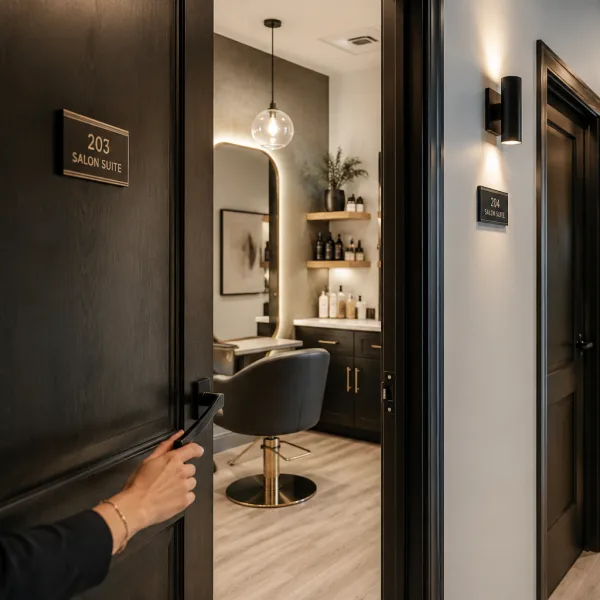
The most successful salon suites balance personality, function, and comfort. Megan Communale of My Salon Suite shares her best advice for designing a space that supports your business goals and leaves a lasting impression on every guest.

Square data shows that regular customers tip 11% higher and are shared across 32% of businesses in the same ZIP code, driving thousands of dollars in additional revenue per connection.

When Bowie Lau and Jeffrey Ching opened JBW Jeffrey Ching Salon in 2011, they weren’t just launching another luxury hair destination—they were building a business rooted in passion, artistry, and thoughtful growth.
Sponsored by Amex

Inside the Systems That Power an Elevated Salon Experience From seamless online booking to a team-first culture, J Gold Salon in Atlanta offers more than great hair—it delivers consistent, high-touch service with the help of partners like Boulevard and American Express.
Sponsored by Amex

Want to grow your career as a beauty professional? K18 Sales Manager Sabrina Sanborn shares advice on networking, mentorship, and self-advocacy—from attending hair shows to finding the right guidance to reach your goals.

A combination of clear policies, effective communication, and strong client relationships has helped me create a more reliable and efficient booking system.
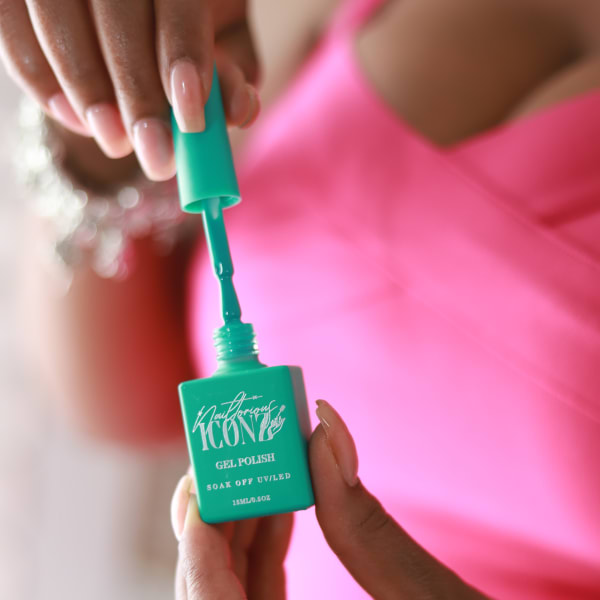
Founded by Cleveland serial entrepreneur Shaura Rodgers, Nailtorious has grown to include a nail supply megastore, training facilities, and retail line for nail techs.

This period after the holidays can bring on a huge lull for hairstylists. We asked Cosmo Prof's team of professionals to offer their best advice on how to deal with the January-February slow period.

Key highlights include a push toward inclusive spaces for all abilities, an emphasis on maximizing livable square footage, and a continued love for modern farmhouse exteriors.

The busy holiday season is here, and with it comes jam-packed days, last-minute client requests and booming retail sales. For many salon owners, the highlight of the season is Small Business Saturday® (SBS). This year on Saturday, November 30, consumers can take their shopping into the small businesses in their communities.
Sponsored by Amex

Want to become savvy about your personal finances, but don't quite know where to start? Anna Manukyan identifies six important concepts for building a strong financial foundation.

Salon owner Nuri Yurt had a dream of owning a salon on New York City’s Madison Avenue. "Through perseverance, hard work and stellar customer service, he and partner John Kaygisiz founded Toka Salon in 2007.
Sponsored by Amex

This guide is your one-stop shop for a plethora of technology tools, software and services created to keep your salon or spa thriving.

Anna Manukyan shares a breakdown of what different types of financial accounts should be used for.

Vagaro has consistently been at the forefront of salon software technology, helping businesses be more efficient, create more effective communication, and even improve company culture. Now, Connect by Vagaro, the platform’s two-way communication capability, and Vagaro’s new generative AI tools are giving owners new opportunities to grow and expand.
Sponsored by Vagaro

Young Nails' Greg, Habib, and Tracey discuss whether getting too close to clients can damage your business.