





The Beauty Pro Book Club: 4 Reads to Inspire Growth and Success
Four publications for beauty industry professionals to enhance their leadership skills, financial awareness, professional growth, and joy!
by Anne Moratto


 MENU
MENU SEARCH
Les Edgerton is a salon owner and author for the beauty industry. His salon is Bold Strokes Hair Designers, Inc., and his writing specifically addresses salon finance and management issues. Edgerton received his bachelor of arts with honors from Indiana University. Previously Edgerton has written for both consumer and trade publications, published two books through Milady Publishing, was a platform artist for Clairol, and has won numerous awards, both for half-styling and writing.
How do you begin to decide what retail line or products within a particular line you should carry for sale to clientele? For that matter, how do you decide whether to stick to just one line. Or carry other multiple lines or products? With the dozens and dozens of lines and hundreds of available products, such decisions can seem a bit overwhelming and bewildering.
A good way to arrive at a sound decision is to sit down and make up three separate lists of potential retail products. The first list will contain those products your particular clientele require to maintain their nails in optimum condition – those products that promote healthy nails and maximize the longevity and beauty of the services your provide. This list will be the backbone of your product line, and the most attention should be paid to it. There should be 6-12 kinds of products on this list, such as polishes and polish removers, conditioners, and hand lotions.
The second list should contain those items that, although not absolutely essential to the client, are nevertheless fairly important. This might include products like nail hardeners.
The third and final list should contain specialty items that may work as impulse sale items. Depending on its specialty and focus, each salon will have different items on each of these lists. Once you have determined you product lists, decide which companies will provide the best price, service, and value for your salon.
Of course, overall product quality is important – perhaps the most important factor. Customer service from the distributor or manufacturer is sometimes just as important. It doesn’t do much good to carry the very best products if you can’t get them in a timely fashion, o if the company doesn’t have a reasonable return policy and you get stuck with a product that won’t move. Most distributors are willing to work with you in determining a company that is a good fit for your salon. Still, it is wise to clarify these sorts of issues up front to avoid future unpleasantness or even financial loss.
In many cases, brand-name identification is an important factor in determining which line to carry. For instance, in a salon that services a great deal of transient clientele form a wide geographical area, it would probably pay to stock nationally recognized brands. In another setting, this might not be as important a consideration. Chances are that you will end up with at least two or three liens, maybe more, especially when you get to the second and third of your lists.
HOW MANY LINES SHOULD YOU CARRY?
Is it advisable to carry just one retail line or should you stock several? While there are good arguments for remaining loyal to one line – enjoy the company’s full attention, all of your technicians receive the same product education, your retail area exhibits a unified look – my own belief, based on years of experience, is that offering multiple lines is the best way to meet both our needs and the client’s needs. Despite what the manufacturers would like you to believe, no one line is undisputed leader in everything it manufactures.
I have often heard salon owners who have been selling one line for a long time say they can’t bring in another line or product to sell because, “I’ve already sold my clients on Brand X. How can I get them to change without harming my integrity with them?” The answer is simple. At our salon, we instruct anyone who is recommending a retail item to offer the following qualifier: “I recommend this product now because I am convinced it is the best possible product of its kind at the present time. However, my loyalty to it lasts only so long as it remains the best product. We are continually testing new products, and when we find something that is better, we will no longer recommend that product but the one we feel is best.”
Such a disclaimer, stated at the time of the sale, reinforces to the customer that you are on the cutting edge and will always provide the very best products for her. You will be conditioning clients to expect that there will come a time when you might recommend something new. You have overcome a primary sales objection before it can be posed. Your client will have an image of your salon that it is innovative and up-to-date on new products and technology.
By carrying products from different lines, you obtain many benefits. Not only can you get the best individual products for your needs, you earn more customers who want variety. Take a hint from the way department stores operate. Department stores carry many different lines – products and brands that are carefully chosen to fit their image. For example, a fine department store, even though they carry many lines, carries only the top-rated (and most expensive) ones. For your salon, select lines that correspond to the image and market you are striving for, whether it’s expensive, moderate, or budget.
SAME PRODUCT, DIFFERENT BRANDS?
Should you carry different brands of the same type of products? The same logic used to determine whether to carry multiple lines applies here. For instance, if you have tried three brands of nail polish and find that they all sell well to their particular market, it makes sense to carry three lines. You will probably discover one of the lines outsells the other two, but is one of the other lines has colors not available in the primary line, you may wish to offer only those colors that are different, but only if they move off the shelves.
How many price points should you carry? The rule of thumb is that you should have two to three price points for the majority of your products. Some items, however, can be high-end only (for example, you may elect to carry three price points of polish but only high-end boutique items). Too many different price points can confuse shoppers and cost the salon sales. I think three price points, in general, is optimum.
You might want to carry two or three primary lines for basic items, each distinctly priced and each attractive to a different segment of your buying audience. This pricing strategy allows you to utilize the technique of “selling up.” A client who needs, say, a moisturizer, but is reluctant because of the product’s price, may purchase a lower-priced product. Once she has seen the benefit of following your advice, she will be more willing to try the higher priced item later because you have earned her trust, and she has seen improvement in whatever condition she had in the first place.
In general, evaluate a company by the quality of the products, its reputation in the industry, and by the level of service the company offers (which should include the amount and quality of education offered).
If the line of products you’re considering is from a new company, test a few products before plunging into a major purchase. This will give you a chance to judge the company and see if they look like they’re going to be in it for the long haul. Purchasing a few test items gives you the chance to see not only how the products perform, but also enables you to gauge the service and reliability of the manufacturer.
Keep track of how each product is doing. Products that don’t move are costing you money and should be re-evaluated. Perhaps it isn’t the product that is at fault but other factors, such as placement on the shelf, the educational level of the nail technician for that item, or a host of other reasons. When you have determined that the chief reason is that there is no market for the product, it is time to eliminate it and replace it with something that sells.
Happy selling.
Four publications for beauty industry professionals to enhance their leadership skills, financial awareness, professional growth, and joy!

The most successful salon suites balance personality, function, and comfort. Megan Communale of My Salon Suite shares her best advice for designing a space that supports your business goals and leaves a lasting impression on every guest.
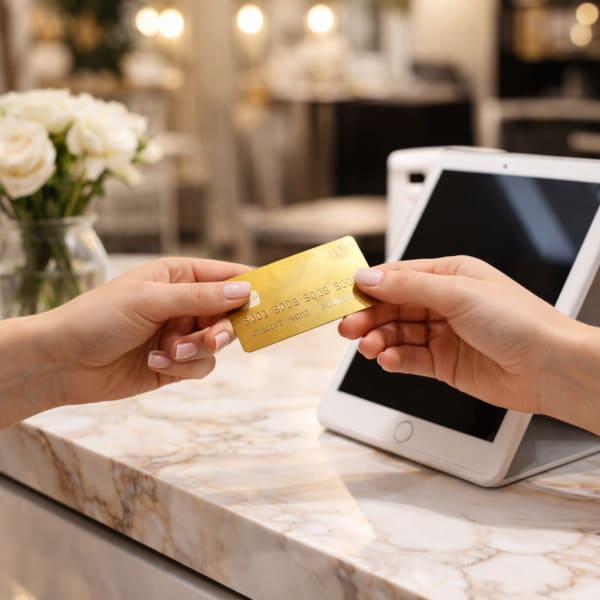
Square data shows that regular customers tip 11% higher and are shared across 32% of businesses in the same ZIP code, driving thousands of dollars in additional revenue per connection.

When Bowie Lau and Jeffrey Ching opened JBW Jeffrey Ching Salon in 2011, they weren’t just launching another luxury hair destination—they were building a business rooted in passion, artistry, and thoughtful growth.
Sponsored by Amex

Inside the Systems That Power an Elevated Salon Experience From seamless online booking to a team-first culture, J Gold Salon in Atlanta offers more than great hair—it delivers consistent, high-touch service with the help of partners like Boulevard and American Express.
Sponsored by Amex

Want to grow your career as a beauty professional? K18 Sales Manager Sabrina Sanborn shares advice on networking, mentorship, and self-advocacy—from attending hair shows to finding the right guidance to reach your goals.

A combination of clear policies, effective communication, and strong client relationships has helped me create a more reliable and efficient booking system.
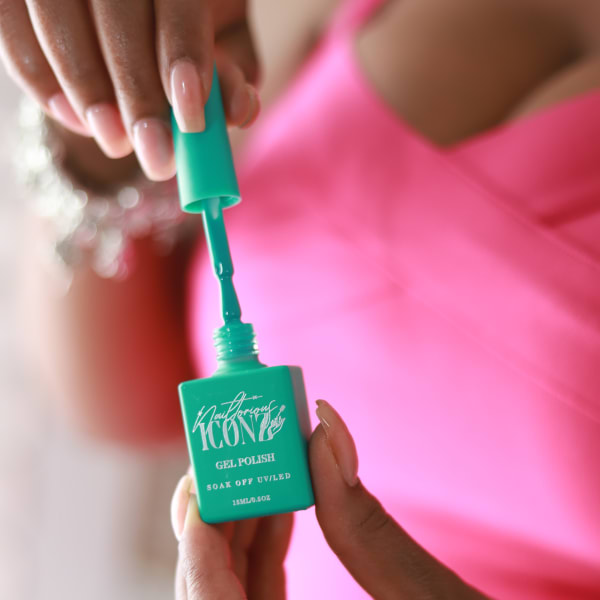
Founded by Cleveland serial entrepreneur Shaura Rodgers, Nailtorious has grown to include a nail supply megastore, training facilities, and retail line for nail techs.

This period after the holidays can bring on a huge lull for hairstylists. We asked Cosmo Prof's team of professionals to offer their best advice on how to deal with the January-February slow period.

Key highlights include a push toward inclusive spaces for all abilities, an emphasis on maximizing livable square footage, and a continued love for modern farmhouse exteriors.

The busy holiday season is here, and with it comes jam-packed days, last-minute client requests and booming retail sales. For many salon owners, the highlight of the season is Small Business Saturday® (SBS). This year on Saturday, November 30, consumers can take their shopping into the small businesses in their communities.
Sponsored by Amex

Want to become savvy about your personal finances, but don't quite know where to start? Anna Manukyan identifies six important concepts for building a strong financial foundation.
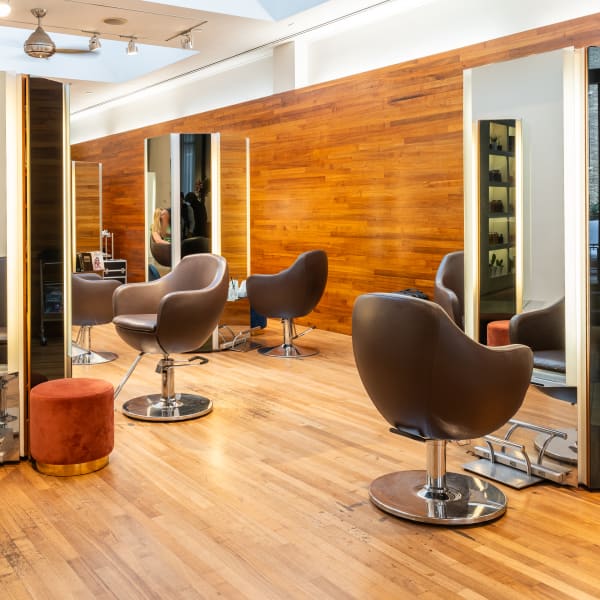
Salon owner Nuri Yurt had a dream of owning a salon on New York City’s Madison Avenue. "Through perseverance, hard work and stellar customer service, he and partner John Kaygisiz founded Toka Salon in 2007.
Sponsored by Amex

This guide is your one-stop shop for a plethora of technology tools, software and services created to keep your salon or spa thriving.

Anna Manukyan shares a breakdown of what different types of financial accounts should be used for.

Vagaro has consistently been at the forefront of salon software technology, helping businesses be more efficient, create more effective communication, and even improve company culture. Now, Connect by Vagaro, the platform’s two-way communication capability, and Vagaro’s new generative AI tools are giving owners new opportunities to grow and expand.
Sponsored by Vagaro

Young Nails' Greg, Habib, and Tracey discuss whether getting too close to clients can damage your business.