





The Beauty Pro Book Club: 4 Reads to Inspire Growth and Success
Four publications for beauty industry professionals to enhance their leadership skills, financial awareness, professional growth, and joy!
by Anne Moratto


 MENU
MENU SEARCH
Sitting in the crowd, listening as nailists explained new techniques or styles in Japanese, I found I wasn’t completely in the dark. Why not? Because I found out that what I had in common with everyone here was we all spoke a universal language — of nails.

Yumi Yokoyama (left) was awarded Professional Grand Master for 2003. Kaori Seki (middle) was first runner-up and Ryoko Wada (right) was second runner-up.
Like a group of rock stars, they paraded through the front entrance, past the long line of waiting people, ushered quickly into a back room. Dressed in the latest designer threads and mostly in black, this pack of seven waited patiently in the staging area for the show to begin.

Yumi Yokoyama (left) was awarded Professional Grand Master for 2003. Kaori Seki (middle) was first runner-up and Ryoko Wada (right) was second runner-up.
But these were not rock stars. They were stars of another variety — a variety you and I probably feel a lot closer to: nail techs. The international crew of top competitors included Russia’s Elena Maltseva, The Netherlands’Anneke van der Sar, and the United States’ Lorena Marquez, Tom Holcomb, Tom Bachik, Danny Haile, and Alisha Rimando. They were there, like myself, as guests of the Japan Nailist Association (JNA). They were there to compete against Japan’s cream of the crop in the first-annual Nail Olympics Japan. I was there to observe the competition, visit some schools and salons, and generally immerse myself in the world of nails, Japanese style. And what a world it is.Nailists, as they are called in Japan, showed up in droves to compete in this extremely well-run competition. There were more than 300 professional competitors and more than 250 student competitors on hand for the two-day competition held at The Garden Hall & Garden Room in Tokyo’s tony suburb of Ebisu. In conjunction with the competitions, booths were also set up around the conference hall with products and demonstrations galore. Japanese nailists (as well as their international counterparts) took the stage to do product and technical demos while being interviewed by the show’s hosts Yoshio Mizuno, executive director of the JNA, and Sachiko Nakasone, chief executive member of the JNA.
“The nail industry in Japan has continually grown over the last five years. Nailists’ skill levels are higher and the market is much more stable. JNA members number over 15,000 now,” says Mizuno. The show ran like a well-oiled machine. The competitions were on schedule, the stage demos were hosted and broadcast over large screens so even people in the back could see the nails, and the entire staff (complete with headsets) kept everything moving right on schedule.
“The Nail Olympics Japan was such an excellent competition,” says van der Sar, who was on her first trip to Japan.“It was really even more than I expected. Even the students’ work was incredible. I wish the experienced nail techs in Europe would even have 10% of the drive and skills of the Japanese nailists.”

Tom Holcomb and his two best girls Alisha Rimando and Eriko Kurosaki celebrate at the after party. Eriko was a judge for several of the categories and Alisha placed sixth in the division A French sculpt category.
A little different from the U.S. version of the Nail Olympics, Japan’s categories included design sculpt, art gel, flat art, sculpted French, and nail care. There was a student division, a junior division, and a professional division. (The professional division was broken down even further into Division A and Division B just for the French sculptured category, with Division A competitors being anyone who had placed before.)
People in Japan love all things American and European. Walk through the bustling shopping districts of Ginza and Shinjuku and you’re bombarded with Japanese ladies with shopping bags from Prada, Versace, the Gap, and Nike.
Trendy young men can be found wearing shirts that say the most random phrases — as long as they are written in English. And in the nail world, Japanese nailists want to use American products and learn the techniques of American nail superstars.
Tom Holcomb is one of the biggest superstars in Japan. Everyone knows him, recognizes him, and wants to learn his technique. And the crazy part is when you see these young Japanese girls doing nails, they are all doing them just like Holcomb. Some people even refer to them as “Tom’s Children” because he trained them (or he trained their teachers, who passed along his style) and now they all consistently turn out Tom Holcomb-style and -quality nails. Eriko Kurosaki is probably his best-known “student” and she has now moved on to own her own schools, salons, and product line.
“Tom Holcomb dedicated so much of his time and effort to really teach our nailists how to do his precise French sculptured nails,” says Mizuno, who attributes the large numbers of competitors in Japan to the fact that nailists are highly motivated by the honor of competing and winning.
“Competing seems to be such a big part of the Japanese culture,” adds van der Sar. “Competing helps to improve your skills. But I think the Japanese nailists also compete for honor — the honor of the people they work for and for the people who trained them. That seems like one of the biggest differences in Europe and the United States.”
Even with the high level of competition in Japan, it was extremely apparent that these competitors were excited to be competing against the international guests.
“The Japanese perceive everything that comes out of the U.S. as great,” says Rimando, who now educates entirely in Japan and had been there for a week prior to the Nail Olympics Japan doing demos at schools and teaching classes. “We’ve taught them everything we know and now they are starting to surpass us. “One of the main differences that I see between the nail industry in the United States and Japan is that in Japan, these nailists really want to keep learning and keep getting better. They take such pride in what they do. In Japan, everyone competes. In the U.S., there’s only an upper echelon of techs who compete and strive to continually improve. But a lot of that may have something to do with the prestige level.”

Our group celebrates over a traditional Japanese dinner after the show with Mr. Mizuno (far left) and Mrs. Nakasone (third from left).
And what she means by that is competing — and winning — boosts techs to an entirely new level in Japan. Like Kurosaki, who reached the number-one spot on NAILS’ Top 25 Competitors list in 2000, many top nailists go on to run their own schools or salons, and see their work featured not only in nail-focused magazines, but consumer beauty and fashion magazines as well. They become celebrities in their own right.
“The nails are at a much higher level here (in Japan),” notes Marquez, who is currently sitting at the number- one position on NAILS’ Top 25 Competitors list for 2003. “The skill level is way better than I expected.” Marquez, who usually places in competitions in the United States and Canada, wasn’t alone in not placing at the Nail Olympics Japan. Only Holcomb and Rimando placed (first and seventh respectively in the French sculptured professional division A). “All of our international guests demonstrated great skill during the competition,” says Mizuno. “I think the importance of international competitions is to help improve the communication between all of us.”
JAPAN: STATISTICS AT A GLANCE*
Is licensing required? No
Number of salons: 3,000-5,000
Number of nailists: 10,000-15,000
Average price of a manicure: $30-$50 (U.S.)
Average price of a full set: $100-$150 (U.S.)
*Estimates based on surveys of distributors and associations in Japan.
Four publications for beauty industry professionals to enhance their leadership skills, financial awareness, professional growth, and joy!
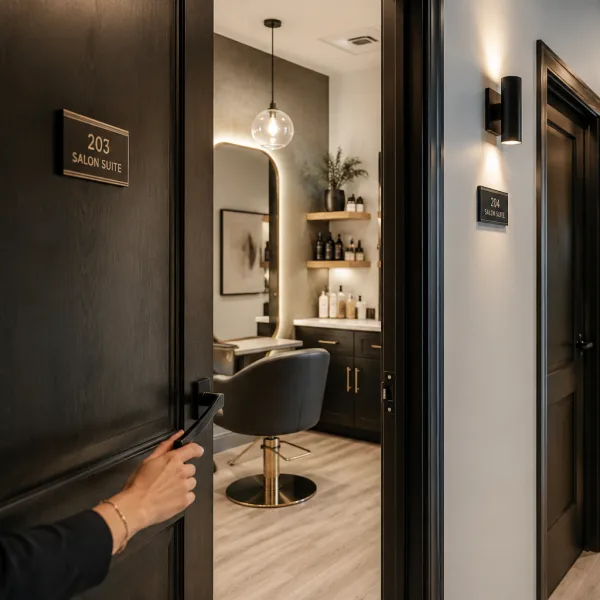
The most successful salon suites balance personality, function, and comfort. Megan Communale of My Salon Suite shares her best advice for designing a space that supports your business goals and leaves a lasting impression on every guest.
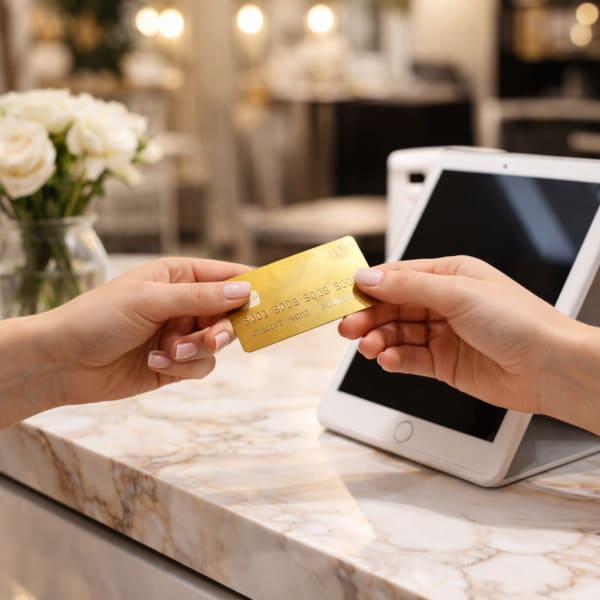
Square data shows that regular customers tip 11% higher and are shared across 32% of businesses in the same ZIP code, driving thousands of dollars in additional revenue per connection.
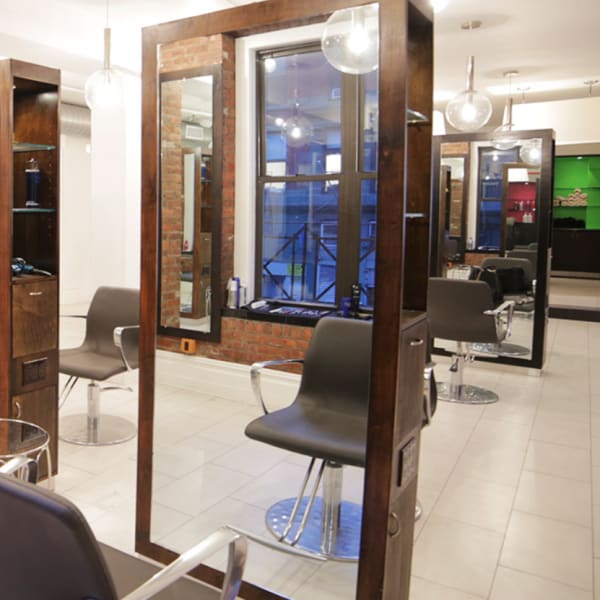
When Bowie Lau and Jeffrey Ching opened JBW Jeffrey Ching Salon in 2011, they weren’t just launching another luxury hair destination—they were building a business rooted in passion, artistry, and thoughtful growth.
Sponsored by Amex

Inside the Systems That Power an Elevated Salon Experience From seamless online booking to a team-first culture, J Gold Salon in Atlanta offers more than great hair—it delivers consistent, high-touch service with the help of partners like Boulevard and American Express.
Sponsored by Amex

Want to grow your career as a beauty professional? K18 Sales Manager Sabrina Sanborn shares advice on networking, mentorship, and self-advocacy—from attending hair shows to finding the right guidance to reach your goals.
A combination of clear policies, effective communication, and strong client relationships has helped me create a more reliable and efficient booking system.
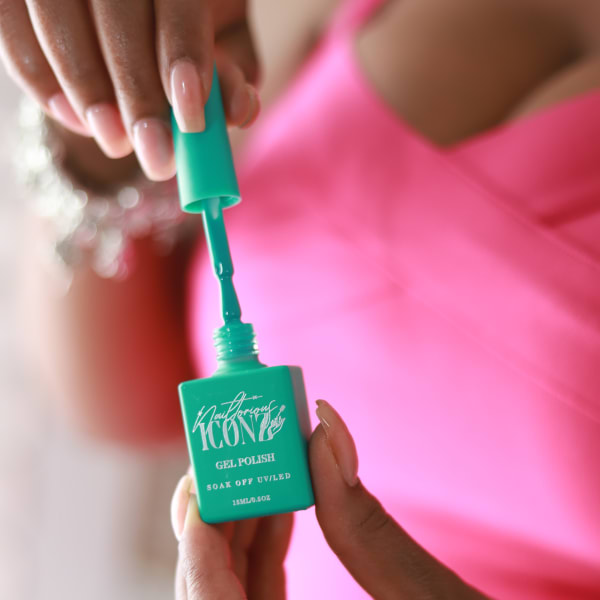
Founded by Cleveland serial entrepreneur Shaura Rodgers, Nailtorious has grown to include a nail supply megastore, training facilities, and retail line for nail techs.

This period after the holidays can bring on a huge lull for hairstylists. We asked Cosmo Prof's team of professionals to offer their best advice on how to deal with the January-February slow period.

Key highlights include a push toward inclusive spaces for all abilities, an emphasis on maximizing livable square footage, and a continued love for modern farmhouse exteriors.
The busy holiday season is here, and with it comes jam-packed days, last-minute client requests and booming retail sales. For many salon owners, the highlight of the season is Small Business Saturday® (SBS). This year on Saturday, November 30, consumers can take their shopping into the small businesses in their communities.
Sponsored by Amex

Want to become savvy about your personal finances, but don't quite know where to start? Anna Manukyan identifies six important concepts for building a strong financial foundation.
Salon owner Nuri Yurt had a dream of owning a salon on New York City’s Madison Avenue. "Through perseverance, hard work and stellar customer service, he and partner John Kaygisiz founded Toka Salon in 2007.
Sponsored by Amex

This guide is your one-stop shop for a plethora of technology tools, software and services created to keep your salon or spa thriving.
Anna Manukyan shares a breakdown of what different types of financial accounts should be used for.

Vagaro has consistently been at the forefront of salon software technology, helping businesses be more efficient, create more effective communication, and even improve company culture. Now, Connect by Vagaro, the platform’s two-way communication capability, and Vagaro’s new generative AI tools are giving owners new opportunities to grow and expand.
Sponsored by Vagaro

Young Nails' Greg, Habib, and Tracey discuss whether getting too close to clients can damage your business.