






The Beauty Pro Book Club: 4 Reads to Inspire Growth and Success
Four publications for beauty industry professionals to enhance their leadership skills, financial awareness, professional growth, and joy!
by Anne Moratto


 MENU
MENU SEARCH
Everyone appreciates a well-organized space, but not everyone has the ability to maintain one. We asked an organizing guru to let us in on some of her trade secrets.

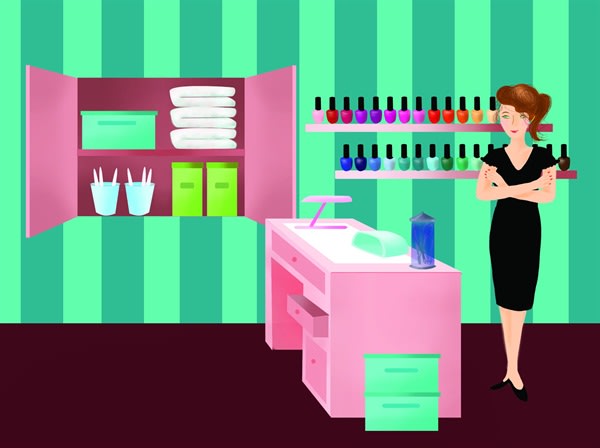
“There’s no magic pill to get organized; you just have to do the work,” says Sara Barba, founder of XOXOrganizing, based in Orange County, Calif. “It’s basically choosing to make a decision now instead of later.” Barba says we’re always buying new things. If we don’t have the space available, we place it anywhere we can find and tell ourselves we’ll get to it when we have time. But the truth is, we don’t really have room for it — because we don’t ever thin out the stuff we already own. Before long, our spaces are packed and cluttered.
As a professional organizer, Barba is hired to relieve the anxiety of those overwhelmed by the clutter in their cabinets and drawers. “I think about this all day long,” says Barba. “I’m a nerd about organizing, and I know many people simply don’t think the way I do.” She says she doesn’t judge anyone because she knows the real problem isn’t confusion or lack of ability — it’s an issue of competing priorities. “It’s how I feel about working out. I know I should do it; I know I’d feel better if I did it; but if I have an extra half-hour, would I opt to work out? No. I’d find something fun to do,” she laughs. “It’s the same way for creative people. They could keep their spaces organized, but with so many other demands on their time, they push it aside and tell themselves they’ll do it later. Only, later is never right now, so it doesn’t get done. Then things pile and before you know it, it seems overwhelming. That’s where I come in.”
Barba meets with clients one-on-one to go over a game plan, then suggests these three actions to get organized:
1. Take inventory.
When organizing doesn’t come naturally to someone, stuff is stored in any available space. This system leads to purchasing and stuffing ... and then forgetting what you bought or where you put it. So, you purchase again, thinking you’ve used the last of something.
Barba tells her clients to go through their spaces every six months. Choose one drawer or cabinet at a time and selectively go through to see what’s there. You’ll likely have more supplies than you realized, often scattered around in different places. This exercise could save you money, because people often find they have doubles and triples of the same item. You’ll also find junk: things are unusable, outdated, dried up, or just plain ugly. Purge them. It’s time to admit you’re not ever going to use them.
Once all your “stuff” is out in the open, and you’ve purged the unusable supplies, it’s time to organize “like with like.”
2. Put “like with like.”
You keep nail files in your drawer, buffers in a cabinet by the pedi chairs and in one of the salon’s supply closets; paper towels are under the sink unless they haven’t been opened yet. Those extra ones you keep in a cabinet in the reception area. Oh — and at your house in that spare room. Come to think of it, you have some files in a drawer at home, too, and maybe a few bottles of polish still in the bag by the front door. Sound familiar? We get it. You’ve got stuff everywhere. Grab all your stuff from the four corners of your world and organize not only by item (files with files, buffers with buffers), but by function — products you use to prep and finish the nail, items you use to apply enhancements, natural nail specialty items, nail art products, paper supplies, etc. Determine if you need to contain smaller items, and if you do, what size container you need to store them all together in an organized way.
How you organize them is a matter of preference. Some people prefer baskets, some like lids and covers. One likes labels on the outside, another wants to see the product and opts for clear containers. “That’s not what’s important,” says Barba. “The important thing is to find a container that is the correct size so that all of the similar items can be stored in one location. We run into trouble when the container is too small, which requires the extra to be stored in a second location.”
Once you’ve put your products in containers, you’re ready to put all your supplies back in an organized way. And here, says Barba, is where most people balk. They often still have too much stuff to put back because they don’t view space as a commodity.
3. Realize space is a commodity.
“The price of anything is the amount of space you exchange for it,” Barba tells her clients. She often hears clients say they think it’s a waste of money to purge. “Either they paid a lot for it, and they haven’t used it enough to justify getting rid of it, or they imagine there will be a time when they need it in the future,” she says. Barba tries to help her clients realize the money has already been spent; they aren’t going to get the money back by holding on to the item. She explains that it’s still costing them — in space.
The need to hold on to something with perceived value is the number-one clutter culprit. “I try to get people to recognize they must open up space to relieve clutter. We don’t remove clutter simply by making all our stuff look pretty. We do it by purging old and unused things so the new stuff — the stuff we really want and use — has a place to live,” she explains.
Barba says this is one of the advantages of taking inventory every six months. “Over time, things lose their luster,” she says. “After looking at the same thing three times, knowing it’s been unused for over a year-and-a-half, it becomes easier to admit you’re probably not going to need it.” As people part with things during their sixth-month inventory, it becomes easier for them to make everyday decisions of what stays and what goes. Eventually, there’s a shift in thinking as they realize space is a commodity and they begin to reserve it for things that are important and useful.
Barba recognizes that most people will make small changes and some progress, but will naturally slip back into the same routine over time. If you find yourself slipping back into clutter chaos, don’t be too hard on yourself. Instead, spend your time doing what you do well and hire someone to help you with the other stuff: “If you’re not wired for it, hire for it.”

Sara Barba says failing to organize is really an issue of competing priorities.
Beware of the Bulk Bargain
“I’m not a huge fan of buying bulk,” says Barba. “It may work for salon owners who supply multiple techs, but for a single owner/operator, the amount of space the huge containers take isn’t worth the $3 in savings.” Barba recommends labeling every bulk item to see how long it takes to finish it. “I do this myself,” she says. “I bought a package of bulk refill containers of Soft Soap because I thought we were a soapy family. Three years later, two of the containers are still unopened and I realized we aren’t as soapy as I thought. Those big containers have been taking up space in my cupboard all this time. I won’t ever do that again!”
If you find the bulk item is used fast enough, then go for it — but don’t hoard. Even if you find a screaming deal, still purchase only what you will use within six months. Then, purchase a smaller container to use at your desk. Place the larger one out of the way in a storage closet so that the desk area remains neat and more space can be given to items you’ll use every day.
Read “Steal These Storage Solutions” at www.nailsmag.com/storagesolutions.
Four publications for beauty industry professionals to enhance their leadership skills, financial awareness, professional growth, and joy!

The most successful salon suites balance personality, function, and comfort. Megan Communale of My Salon Suite shares her best advice for designing a space that supports your business goals and leaves a lasting impression on every guest.
Square data shows that regular customers tip 11% higher and are shared across 32% of businesses in the same ZIP code, driving thousands of dollars in additional revenue per connection.

When Bowie Lau and Jeffrey Ching opened JBW Jeffrey Ching Salon in 2011, they weren’t just launching another luxury hair destination—they were building a business rooted in passion, artistry, and thoughtful growth.
Sponsored by Amex

Inside the Systems That Power an Elevated Salon Experience From seamless online booking to a team-first culture, J Gold Salon in Atlanta offers more than great hair—it delivers consistent, high-touch service with the help of partners like Boulevard and American Express.
Sponsored by Amex

Want to grow your career as a beauty professional? K18 Sales Manager Sabrina Sanborn shares advice on networking, mentorship, and self-advocacy—from attending hair shows to finding the right guidance to reach your goals.

A combination of clear policies, effective communication, and strong client relationships has helped me create a more reliable and efficient booking system.
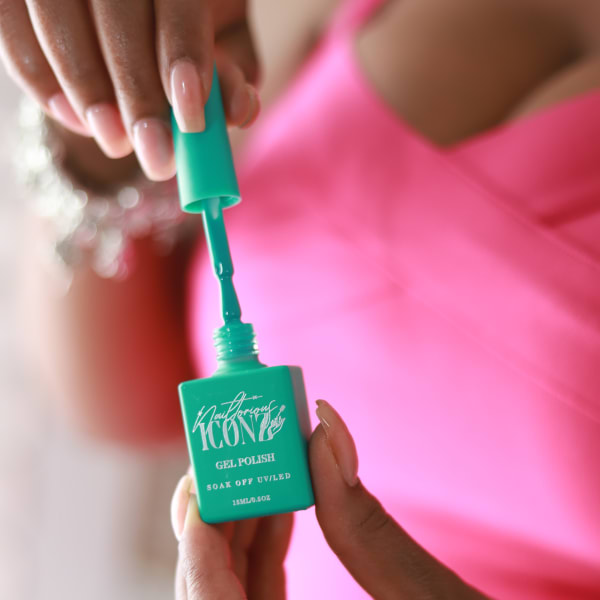
Founded by Cleveland serial entrepreneur Shaura Rodgers, Nailtorious has grown to include a nail supply megastore, training facilities, and retail line for nail techs.

This period after the holidays can bring on a huge lull for hairstylists. We asked Cosmo Prof's team of professionals to offer their best advice on how to deal with the January-February slow period.

Key highlights include a push toward inclusive spaces for all abilities, an emphasis on maximizing livable square footage, and a continued love for modern farmhouse exteriors.

The busy holiday season is here, and with it comes jam-packed days, last-minute client requests and booming retail sales. For many salon owners, the highlight of the season is Small Business Saturday® (SBS). This year on Saturday, November 30, consumers can take their shopping into the small businesses in their communities.
Sponsored by Amex

Want to become savvy about your personal finances, but don't quite know where to start? Anna Manukyan identifies six important concepts for building a strong financial foundation.

Salon owner Nuri Yurt had a dream of owning a salon on New York City’s Madison Avenue. "Through perseverance, hard work and stellar customer service, he and partner John Kaygisiz founded Toka Salon in 2007.
Sponsored by Amex

This guide is your one-stop shop for a plethora of technology tools, software and services created to keep your salon or spa thriving.

Anna Manukyan shares a breakdown of what different types of financial accounts should be used for.

Vagaro has consistently been at the forefront of salon software technology, helping businesses be more efficient, create more effective communication, and even improve company culture. Now, Connect by Vagaro, the platform’s two-way communication capability, and Vagaro’s new generative AI tools are giving owners new opportunities to grow and expand.
Sponsored by Vagaro

Young Nails' Greg, Habib, and Tracey discuss whether getting too close to clients can damage your business.