






The Beauty Pro Book Club: 4 Reads to Inspire Growth and Success
Four publications for beauty industry professionals to enhance their leadership skills, financial awareness, professional growth, and joy!
by Anne Moratto


 MENU
MENU SEARCH
Conservative wisdom reminds us to hope for the best but prepare for the worst. Create a plan now that prepares you and your staff for the day when a minor disaster strikes.


When a car accident caused power lines to fall, Rhonda Kibuk, the owner of The Purple Pinkie in Ford City, Pa., found herself working in a salon with no power. No power means no lights and no electric files. For the less ingenious, business would have come to a grinding halt. But Kibuk kept her doors open, finding creative solutions to the sudden change. “I finished the pedicure with a flashlight in my mouth,” says Kibuk. “Drool was running down the flashlight, but I was able to finish,” she laughs.
Because it was summer, techs were able to complete the last three hours of services hand-filing by natural light coming through the large front window. Immediately after Kibuk’s first pedicure, she was able to run to a department store and purchase headlamps for herself and each of her techs. If the lights go out again, they are prepared. Kubik and her staff can strap on headlamps like miners and finish the job.
In addition to her electricity disruption, Kibuk says she has experienced issues with the supply of water. “It’s not uncommon for us to lose water because the city is working on the pipes,” she says. “We’ve had to develop a back-up plan so we always have clean water.”
After dealing with these disasters, Kibuk decided she needed a Disaster Recovery Plan so she and her staff would be prepared for the next accident that threatened to send the salon into mayhem. The plan provides a workable back-up solution for staff to follow in case of a sudden interruption in the essentials of doing business: power, water, heat, etc. Your Disaster Recovery Plan may not include the same solutions as Kibuk’s, but it should instruct staff on immediate “next steps” to take when the same types of problems occur.
To create a Disaster Recovery Plan, begin by listing all staff names and contact numbers. Next, list emergency contact numbers for the police, fire department, electric company, public works (water department), landlord, insurance company, etc. Part of the plan is to have a process for calling clients to alert them of any changes to their appointment times or locations. Be sure to keep updated records of clients’ cell phone numbers in your client files. Using a different tab for each possible problem, create different sections to your plan that give staff members an easy-to-use resource for dealing with disaster.
Electricity
Electricity is a good place to start, because the loss of electricity can knock out other essentials, such as hot water and heat. Determine the best steps to take if your electricity suddenly goes out. Kibuk was able to use headlamps as her solution, because she depends on electricity for only lighting and the electric files. However, this solution may not work for you if you need to use UV lights to cure product, or if you depend heavily on electricity to accept payment or to book appointments. In this case, you may need to consider investing in a generator to ensure you always have a back-up power source.
Water
Water is another requirement for conducting business. Kibuk says she purchased large water containers and an electric tea pot. On days when the water is shut off, she takes the stored water, and, between large coffee carafes and the electric tea pot, she can supply her salon with a sufficient amount of warm water. It’s a temporary solution that reduces a catastrophe to an inconvenience, and it allows her to keep her doors open during the two or three days each year that the city works on the pipes.
Water loss can occur not only from a problem in the pipes, but also from a loss of electricity. In some cases, a loss in electricity won’t stop the supply of water, but it will shut down the hot water tank. Know how water is supplied to the salon in order to create an efficient alternative for water.
If you have a nails-only salon, a back-up supply of water, such as the one Kibuk uses, may work fine for you. However, if your salon also offers hair services, you may need a different option. Along with a back-up water supply, you may want to purchase a couple of portable showers that can be filled and used to wash clients’ hair. Another option to consider is a professional goodwill relationship with another salon in town. This means that if a calamity threatens to shut down business, you have a back-up location where you could direct clients. This is a viable option for salon owners who are friendly with staff from other salons in town. The drawback, of course, is that you never know which day the calamity will hit. If it’s the week before Christmas, it’s unlikely the “back-up” salon will have an open nail desk or stylist chair that you can use.
Computers
What if you come to work, turn on your computer, and realize that instead of booting up, the computer mocks you with the blue screen of death. Your hard drive is fried and you can’t access any client files, financial data, or appointment schedules. With no way to know what is scheduled for the day, no way to accept payment, and no way to reschedule, you’re looking at a calamity that could affect you for weeks. Be sure your Disaster Recovery Plan includes a process for dealing with a computer malfunction.
If your salon is technology dependent, you should conduct nightly back-ups of all your important data, either online or onto an external hard drive. This way, when your computer does crash, it’s a temporary setback, not a show stopper. If you come to work and your main computer gives you problems, you can use a laptop to access the information online or through the external drive, and your business keeps running. Be sure to add “how-to” instructions and codes in your written plan so even if you aren’t in the salon (or in town), someone on your staff will be able to handle the computer problems. Include the name and contact number for the computer guru if you hired someone to set up your back-up system.
Heat
Let’s say you don’t lose electricity, but your furnace breaks. Would you have to close the doors, or do you have an alternative heat source? Your Disaster Recovery Plan should include the name and number of the company that can repair the furnace along with the location of where you have stored small space heaters that would allow you to make it through the day until the furnace can be repaired or replaced.
Odors
Loss of water and electricity are the most obvious problems that would close business for the day, but other problems could cramp your mojo too. Take odors. What does your Disaster Recovery Plan say to do if you smell gas in the salon? Sometimes gas leaks emit a subtle, sweet smell that you might be tempted to “deal with” so you could keep working. Don’t give in to the temptation. In the Disaster Recovery Plan, on the “odor” page, include the number of the gas company and list the first course of action as: “Call the gas company and get them over to the salon immediately.”
If the odor is something external, such as a skunk, food from the garbage, or some other strange odor emitting from the vents or surrounding areas, you’ll want to find the source of the problem and alert the landlord. Your plan should include not only a contact number, but also where air purifiers are located, along with advice on how close to place them to the source of the odor.
Staff Training
Include in your Disaster Recovery Plan an order of who to contact. If you’re the owner or manager, the first call will naturally be to you, but the calls shouldn’t stop there. Set up a chain of command, so that if you are out of town, everyone on staff is aware of who to contact in case of an emergency. Show staff where everything is located, including the furnace, the hot water tank, and the circuit breakers.
Take time during a staff meeting to discuss where you keep the Disaster Recovery Plan folder, what situations are covered in the folder, who to call, and when. Each page should list a situation and the exact steps to take to address a problem. List where all essentials (such as extra water, lamps, generator, heaters) are located. List where keys are located if the items are in a locked room. Write down any codes or access numbers. For example, on the electricity page, include the customer number of your salon in case there are two or more accounts at your location.
Not every salon will respond to potential disaster in the same way. But as the owner, your ability to devise a Disaster Recovery Plan gives your staff the resources they need to be prepared for the worst.
KEYWORDS: BUSINESS
Four publications for beauty industry professionals to enhance their leadership skills, financial awareness, professional growth, and joy!
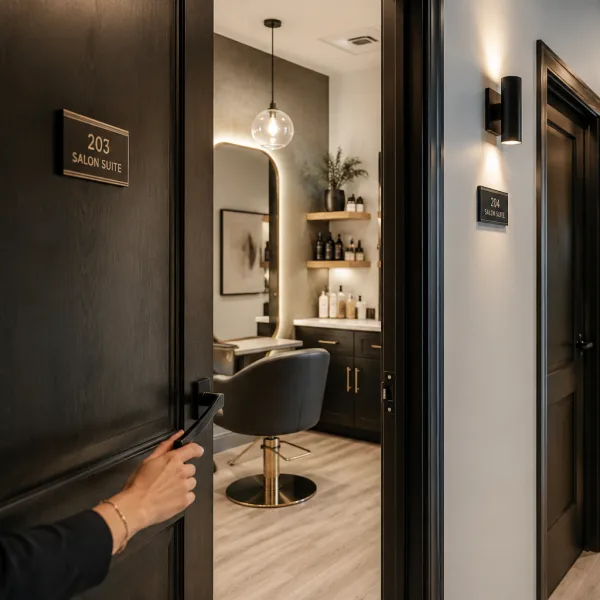
The most successful salon suites balance personality, function, and comfort. Megan Communale of My Salon Suite shares her best advice for designing a space that supports your business goals and leaves a lasting impression on every guest.

Square data shows that regular customers tip 11% higher and are shared across 32% of businesses in the same ZIP code, driving thousands of dollars in additional revenue per connection.

When Bowie Lau and Jeffrey Ching opened JBW Jeffrey Ching Salon in 2011, they weren’t just launching another luxury hair destination—they were building a business rooted in passion, artistry, and thoughtful growth.
Sponsored by Amex

Inside the Systems That Power an Elevated Salon Experience From seamless online booking to a team-first culture, J Gold Salon in Atlanta offers more than great hair—it delivers consistent, high-touch service with the help of partners like Boulevard and American Express.
Sponsored by Amex

Want to grow your career as a beauty professional? K18 Sales Manager Sabrina Sanborn shares advice on networking, mentorship, and self-advocacy—from attending hair shows to finding the right guidance to reach your goals.

A combination of clear policies, effective communication, and strong client relationships has helped me create a more reliable and efficient booking system.

Founded by Cleveland serial entrepreneur Shaura Rodgers, Nailtorious has grown to include a nail supply megastore, training facilities, and retail line for nail techs.

This period after the holidays can bring on a huge lull for hairstylists. We asked Cosmo Prof's team of professionals to offer their best advice on how to deal with the January-February slow period.

Key highlights include a push toward inclusive spaces for all abilities, an emphasis on maximizing livable square footage, and a continued love for modern farmhouse exteriors.
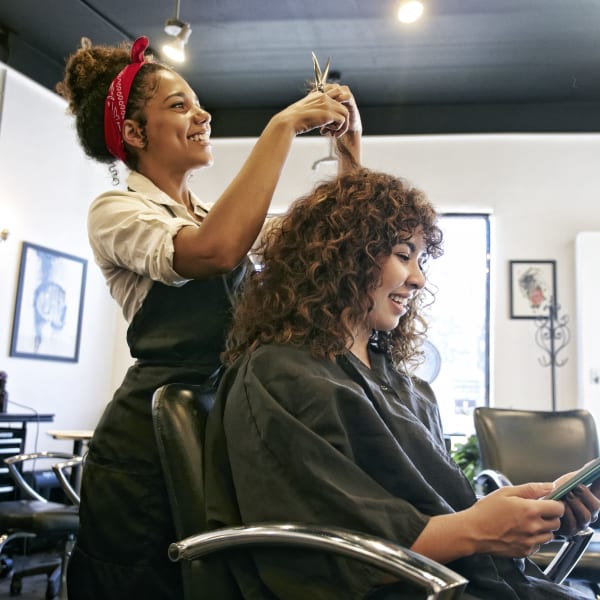
The busy holiday season is here, and with it comes jam-packed days, last-minute client requests and booming retail sales. For many salon owners, the highlight of the season is Small Business Saturday® (SBS). This year on Saturday, November 30, consumers can take their shopping into the small businesses in their communities.
Sponsored by Amex

Want to become savvy about your personal finances, but don't quite know where to start? Anna Manukyan identifies six important concepts for building a strong financial foundation.
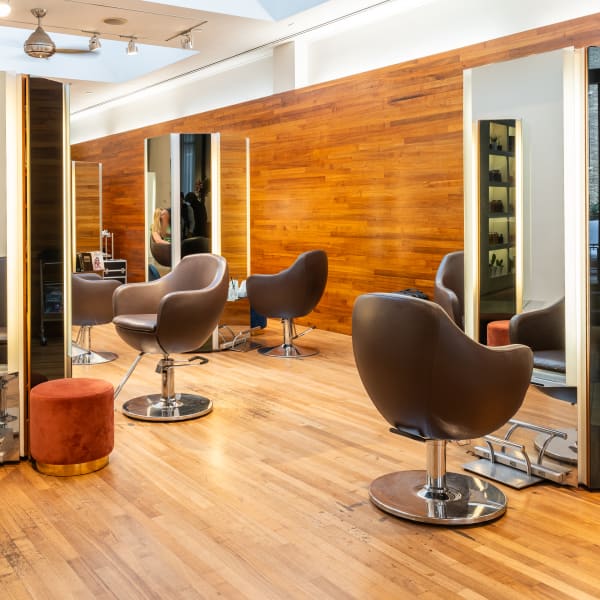
Salon owner Nuri Yurt had a dream of owning a salon on New York City’s Madison Avenue. "Through perseverance, hard work and stellar customer service, he and partner John Kaygisiz founded Toka Salon in 2007.
Sponsored by Amex

This guide is your one-stop shop for a plethora of technology tools, software and services created to keep your salon or spa thriving.

Anna Manukyan shares a breakdown of what different types of financial accounts should be used for.

Vagaro has consistently been at the forefront of salon software technology, helping businesses be more efficient, create more effective communication, and even improve company culture. Now, Connect by Vagaro, the platform’s two-way communication capability, and Vagaro’s new generative AI tools are giving owners new opportunities to grow and expand.
Sponsored by Vagaro

Young Nails' Greg, Habib, and Tracey discuss whether getting too close to clients can damage your business.