






The Beauty Pro Book Club: 4 Reads to Inspire Growth and Success
Four publications for beauty industry professionals to enhance their leadership skills, financial awareness, professional growth, and joy!
by Anne Moratto


 MENU
MENU SEARCH
Minerva's Jeff Grissler offers some solid advice about restructuring your commerical lease during the COVID-19 crisis, then visit our resource center to download his template to get you started.


Visit SALON TODAY's SalonShare Resource Center and download Jeff Grissler's templated letter to communicate to your landlord when you can't pay your rent during the COVID-19 crisis.
Safe to say, the world as it is today is a vastly different place than it was when you first signed your commercial lease for your salon or spa business. Unforeseeable circumstances— sometimes referred to as ‘Force Majeure’ or ‘Acts of God’— have a way of complicating business. In this case COVID-19 has changed the entire world of business in less than 90 days. With the recent social distancing rules and subsequent economic slowdown caused by the COVID-19 outbreak, many salon and spa find themselves wondering how they will stay afloat, reopen and get back to business as usual. The actual shutting down of their business is something that no owner could have ever thought possible when opening the doors.
One of the most crucial issues to deal with is how to make contractual payments, such as your lease, when the company is bringing in little or no revenue. Few businesses have the savings or cash on hand that would enable them to maintain an on-time payment schedule during times of extreme economic distress, and most of us are not among those fortunate few. Without money coming in the door, how can we pay our rent? This is a frightening question and one that’s not going away. In fact, the longer the economic downturn lasts, many of us will fall further behind. This can have far-reaching impacts, from draining the savings, cash on hand, and equity we’ve built into our businesses to costing some of us our life’s savings, and in only a few months we can find ourselves in a horrible financial position.
Unless we make bold, cost-effective moves.
Fortunately, you can make a bold move that could save you thousands of dollars each month, enabling you to keep your business in good financial health and put you in a position to thrive once we’re past the COVID-19 pandemic and the economic troubles it’s brought to town.
So, what is this move? What can we do?
Ask your landlord for some concessions on your lease.
It sounds like a big move, and it is, but it’s one each of us should consider.
While it may seem harsh for your landlord to continue to demand payments in such a rocky economy, remember that they’re in a similar situation. Your landlord has large expenses – mortgages, building loans, construction expenses, property insurance, and more – and they’re running a business too, but that works to your advantage. How? Because landlords are thinking like we are as salon and spa owners. They’re in survival mode, worried for their finances and the future of their business, awake at night trying to figure out a solution.
Since landlords are thinking like we are, and since landlords are running a business (just like we are), this works to your advantage. Strip malls aren’t as full as they once were, the economy is moving in the wrong direction, and that means your landlord is desperate to keep you and your business in place and doing well. Helping tenants like you survive is in their best interests in the short and long term.
Let’s look at how a rent abatement or adjustment would work.
Typically, when a tenant stops paying rent, landlords either evict the tenant or sue them for the money owed as outlined in the contract (that’s the lease agreement) signed by both parties. Under the circumstances we find ourselves now, options like eviction or a lawsuit may not work, instead, landlords and tenants are forced to find a mutually beneficial arrangement and make it work.
That’s why negotiating a temporary rent abatement is a good idea. Now, it’s unlikely your landlord would just waive your rent for the next quarter without asking for anything in return, so what would a fair rent abatement strategy look like? At its simplest, it looks like this: the landlord waives or reduces rent for X months and the lease is extended by X months or the rent, once things are normal, increases by $X per month, making up the difference. A fair agreement would find the middle ground between both parties and work to keep you and your landlord in business.
But what is a rent abatement? Rent abatements are agreements that allow tenants to temporary suspend lease payments or reduce their monthly payment. This can keep you from declaring bankruptcy and will give your landlord some form of payment. It also has the potential to keep your life’s savings from evaporating so you can make your rent payment.
If you think a rental reduction or deferral is right, tell your landlord. Be honest with them and be frank. Tell them now while they’re feeling the impact of businesses closing down and while the threat of a total lockdown is still present. But come to them with a plan that will benefit both of you.
First, gather your financials so you can prove you’re in for a tough quarter or more. Think about what would work for your rent situation and how you can provide some form of payment to your landlord. Formulate a comprehensive plan for turning things around in your business once we’re back to normal.
Now, go to your landlord. Tell them how a rent reduction would help keep your business afloat and emphasize how your business is a valuable addition to their shopping center or rental portfolio. If you’ve always been on time with your rent and have always been a good tenant, now’s the time to hammer that home. A solid plan for repayment and those necessary business changes will go a long way toward making your argument convincing. Meeting with your landlord without a viable plan is a mistake.
If your business is doing well and the future was looking bright, consider asking your landlord for a forbearance (that means a pass on your rent for a specific length of time) or a rent reduction as part of a longer lease renegotiation. Commercial spaces bring in zero dollars if they’re empty, and finding new tenants costs time and money, so you have several things working for you here.
With typical commercial leases being a 3- 5-year commitment, you can use the lease length as leverage in your negotiation. The longer you’re willing to extend, the lower your landlord may be willing to go.
If you’re just starting out or have been in the space for a long time, extending your lease by too much time can hurt you in the end, so study the situation and make a decision that’s right for you, your future and your present circumstances.
It may seem like a big ask to request your landlord give you a break on your lease whether you’re looking for a reduction in rent or you want to go into forbearance for a short while, and you’re not wrong. But it’s a move that could save you thousands of dollars and, frankly, save your business, setting you up to thrive another day.
This Covid-19 virus has put all of us in a place we have never been before, it planted us in another world, a scene from a horrible movie. We as business owners are forced to make quick decisions. Many of us are not sure what the next move should be. If anything, your rent is one of your biggest fixed expenses. This should be your first move in navigating through this unforeseen calamity. Follow these steps and it could save your business. One thing that is extremely important. Time is of the essence. The action you take with the landlord should happen sooner than later. My suggestion is NOW. This is serious business and cannot be executed through texting a quick message. Start with a phone call and go from there. Everything else you negotiate should be put in writing and sent in a formal letter via certified mail. Not only does this show you are serious, but your landlord has to sign to except the mail. No finger pointing saying that they never received it or that a rent reduction was never discussed. This is important if you should ever end up in court. Your documentation will help you, this paperwork shows you had full intentions to come to some type of rent compromise. Let’s hope this doesn’t happen and things work out for both of you. Good luck!
Visit SALON TODAY's SalonShare Resource Center and download Jeff's templated letter to help you ask your landlord for rent abatement.
Originally posted on Salon Today
Four publications for beauty industry professionals to enhance their leadership skills, financial awareness, professional growth, and joy!
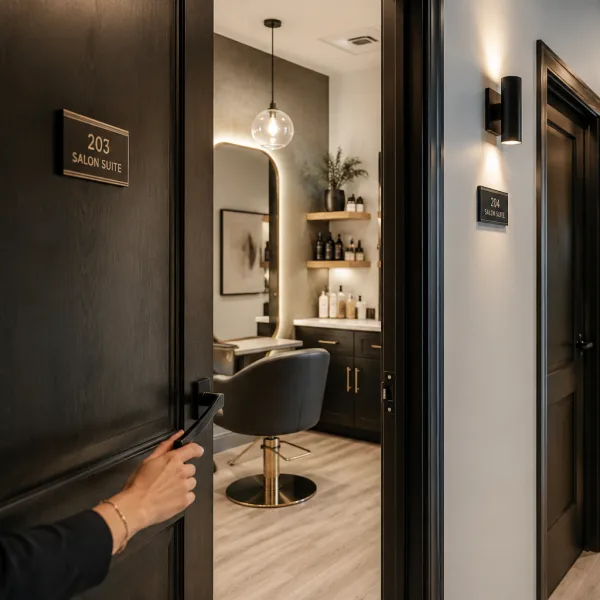
The most successful salon suites balance personality, function, and comfort. Megan Communale of My Salon Suite shares her best advice for designing a space that supports your business goals and leaves a lasting impression on every guest.

Square data shows that regular customers tip 11% higher and are shared across 32% of businesses in the same ZIP code, driving thousands of dollars in additional revenue per connection.

When Bowie Lau and Jeffrey Ching opened JBW Jeffrey Ching Salon in 2011, they weren’t just launching another luxury hair destination—they were building a business rooted in passion, artistry, and thoughtful growth.
Sponsored by Amex

Inside the Systems That Power an Elevated Salon Experience From seamless online booking to a team-first culture, J Gold Salon in Atlanta offers more than great hair—it delivers consistent, high-touch service with the help of partners like Boulevard and American Express.
Sponsored by Amex

Want to grow your career as a beauty professional? K18 Sales Manager Sabrina Sanborn shares advice on networking, mentorship, and self-advocacy—from attending hair shows to finding the right guidance to reach your goals.

A combination of clear policies, effective communication, and strong client relationships has helped me create a more reliable and efficient booking system.

Founded by Cleveland serial entrepreneur Shaura Rodgers, Nailtorious has grown to include a nail supply megastore, training facilities, and retail line for nail techs.

This period after the holidays can bring on a huge lull for hairstylists. We asked Cosmo Prof's team of professionals to offer their best advice on how to deal with the January-February slow period.

Key highlights include a push toward inclusive spaces for all abilities, an emphasis on maximizing livable square footage, and a continued love for modern farmhouse exteriors.

The busy holiday season is here, and with it comes jam-packed days, last-minute client requests and booming retail sales. For many salon owners, the highlight of the season is Small Business Saturday® (SBS). This year on Saturday, November 30, consumers can take their shopping into the small businesses in their communities.
Sponsored by Amex

Want to become savvy about your personal finances, but don't quite know where to start? Anna Manukyan identifies six important concepts for building a strong financial foundation.

Salon owner Nuri Yurt had a dream of owning a salon on New York City’s Madison Avenue. "Through perseverance, hard work and stellar customer service, he and partner John Kaygisiz founded Toka Salon in 2007.
Sponsored by Amex

This guide is your one-stop shop for a plethora of technology tools, software and services created to keep your salon or spa thriving.

Anna Manukyan shares a breakdown of what different types of financial accounts should be used for.

Vagaro has consistently been at the forefront of salon software technology, helping businesses be more efficient, create more effective communication, and even improve company culture. Now, Connect by Vagaro, the platform’s two-way communication capability, and Vagaro’s new generative AI tools are giving owners new opportunities to grow and expand.
Sponsored by Vagaro

Young Nails' Greg, Habib, and Tracey discuss whether getting too close to clients can damage your business.