





The Beauty Pro Book Club: 4 Reads to Inspire Growth and Success
Four publications for beauty industry professionals to enhance their leadership skills, financial awareness, professional growth, and joy!
by Anne Moratto


 MENU
MENU SEARCH
Make room in your schedule for new clients, and you'll soon need to make room in your wallet for more money.
Most technicians try to service fill clients once every two weeks. While this schedule works well for many clients, having a more flexible schedule may actually help you provide better service for your customers and make more money for yourself. Every appointment slot taken up by a fill client eliminates a place to put a new client. Since not every client needs a salon visit every two weeks, it may be a good time to rethink your scheduling system. Its a win/win situation: Your client saves the cost of a fill (she’ll need nine fewer fills over the course of a year) and you open up room to see a new client (at least 17 new-client appointments over the course of the year).
MEETING CLIENTS’ NEEDS
For many clients, the two-week rule is arbitrary. “I don’t know who invented this two week stuff, but not everybody’s nails grow at the same rate,” says Annessa Blair, a nail technician at Atkinson’s (St. Petersburg, Fla.). “Some of my clients do need to come in every two weeks, some every four weeks, and I have one who comes in every two months.”
Other clients want their nails to look good all the time. “I have clients who have jobs where the/re showing demos or working in an office,” says Lorion Brewer, a nail technician at Nail’s By Lorion (Torrance, Calif.). “They have to come in every two weeks so their hands and cuticles are always looking their best.”
The client should have a say in how often she wishes to return for appointments. It’s up to the client and technician together to decide the best schedule for the client. “A consultation is mandatory with a new client,” says Jo Livingston, owner of Nails Chicago in Chicago. “You need to find out whether she’s used to regularly scheduled manicures. You have to be stricter about keeping appointments with the one who’s never had artificial nails and wants to start, because she’s not used to a schedule.”
To start a program with a new client, schedule an appointment for the clients first fill two weeks after you apply the full set. If the nails show little growth and no damage, you can try letting the client go another week between fills.
Don’t forget that a client’s at-home maintenance program plays an important role in the length of time her nails last. Before Livingston will let her clients go three weeks between fills, for example, she needs to be sure they’re applying a top coat every other day.
THREE-WEEK TECHNIQUES
To make sets last three weeks, you have to give the client a manicure that resists lifting and breaking. Blair advises technicians not to nip acrylic. “I find nipping encourages more lifting because, no matter how careful you are, nipping causes a little more of the acrylic to lift,” she says. To reduce the oils around the cuticle that can get under the acrylic and cause lifting, Blair has some of her clients apply alcohol or astringent to the cuticle each day.
It’s important to stress to the client that the three-week appointment can’t be missed. Otherwise, the chances of cracking and breaking are greater. As an incentive to keep clients coming regularly, Blair doesn’t charge for repairs during a client’s regularly scheduled appointment. However, if a client has to cancel a regular appointment and shows up for the new appointment with broken nails, there is a charge for repairs.
Generally, technicians charge one price for fills, regardless of the time lapse between them. “I don’t charge any more for people who come in every three weeks,” says Brewer. “I keep everyone to their own workable length, so I don’t have nails that break a lot.”
You may choose to implement a “no charge for repairs” incentive similar to Blair’s to encourage clients to keep appointments, or you may wish to add on services that increase the price, like Livingston does. But when scheduling clients every three weeks, don’t overlook the biggest benefit of all — more time for new appointments. Instead of servicing 80 clients that you see once every two weeks, you can now service as many as 120 clients that you’ll see once every three weeks. With a larger client base, you won’t have trouble keeping your appointment book full.
Four publications for beauty industry professionals to enhance their leadership skills, financial awareness, professional growth, and joy!
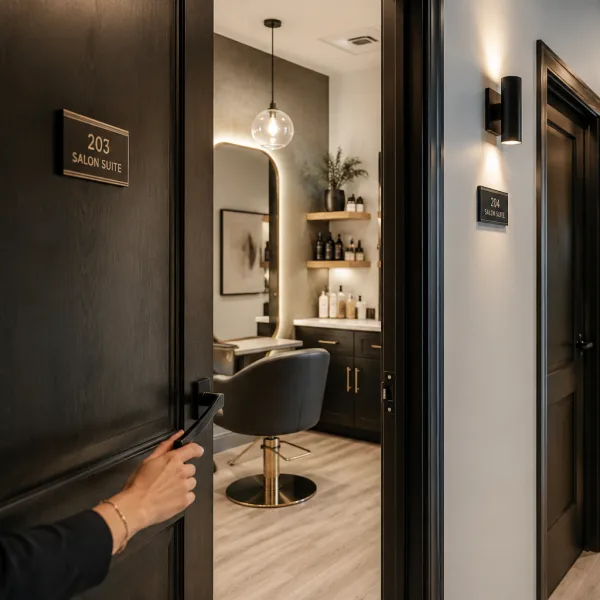
The most successful salon suites balance personality, function, and comfort. Megan Communale of My Salon Suite shares her best advice for designing a space that supports your business goals and leaves a lasting impression on every guest.

Square data shows that regular customers tip 11% higher and are shared across 32% of businesses in the same ZIP code, driving thousands of dollars in additional revenue per connection.

When Bowie Lau and Jeffrey Ching opened JBW Jeffrey Ching Salon in 2011, they weren’t just launching another luxury hair destination—they were building a business rooted in passion, artistry, and thoughtful growth.
Sponsored by Amex

Inside the Systems That Power an Elevated Salon Experience From seamless online booking to a team-first culture, J Gold Salon in Atlanta offers more than great hair—it delivers consistent, high-touch service with the help of partners like Boulevard and American Express.
Sponsored by Amex

Want to grow your career as a beauty professional? K18 Sales Manager Sabrina Sanborn shares advice on networking, mentorship, and self-advocacy—from attending hair shows to finding the right guidance to reach your goals.

A combination of clear policies, effective communication, and strong client relationships has helped me create a more reliable and efficient booking system.
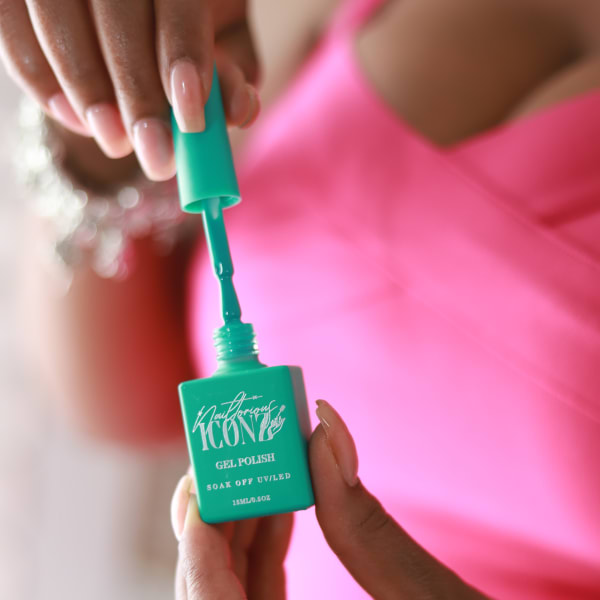
Founded by Cleveland serial entrepreneur Shaura Rodgers, Nailtorious has grown to include a nail supply megastore, training facilities, and retail line for nail techs.

This period after the holidays can bring on a huge lull for hairstylists. We asked Cosmo Prof's team of professionals to offer their best advice on how to deal with the January-February slow period.

Key highlights include a push toward inclusive spaces for all abilities, an emphasis on maximizing livable square footage, and a continued love for modern farmhouse exteriors.

The busy holiday season is here, and with it comes jam-packed days, last-minute client requests and booming retail sales. For many salon owners, the highlight of the season is Small Business Saturday® (SBS). This year on Saturday, November 30, consumers can take their shopping into the small businesses in their communities.
Sponsored by Amex

Want to become savvy about your personal finances, but don't quite know where to start? Anna Manukyan identifies six important concepts for building a strong financial foundation.
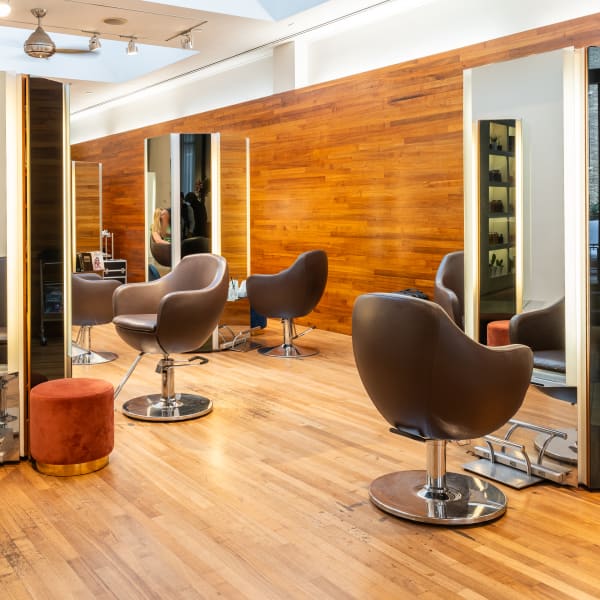
Salon owner Nuri Yurt had a dream of owning a salon on New York City’s Madison Avenue. "Through perseverance, hard work and stellar customer service, he and partner John Kaygisiz founded Toka Salon in 2007.
Sponsored by Amex

This guide is your one-stop shop for a plethora of technology tools, software and services created to keep your salon or spa thriving.

Anna Manukyan shares a breakdown of what different types of financial accounts should be used for.

Vagaro has consistently been at the forefront of salon software technology, helping businesses be more efficient, create more effective communication, and even improve company culture. Now, Connect by Vagaro, the platform’s two-way communication capability, and Vagaro’s new generative AI tools are giving owners new opportunities to grow and expand.
Sponsored by Vagaro

Young Nails' Greg, Habib, and Tracey discuss whether getting too close to clients can damage your business.