Is Your Salon One Inspection Away from a Shutdown?
Ad Loading...
A local building inspector walks into a busy nail salon during a Saturday rush. He's not there for the polish colors. He's there to check airflow. Within a few minutes, he's identified a violation: no dedicated source capture at each manicure & pedicure station. The salon has 30 days to fix it or risk closure.
This scenario plays out more often than most salon owners realize, and it usually catches them off guard. Not because they were cutting corners, but because they genuinely didn't know the requirement existed, or assumed their HVAC system already covered it. It doesn't.
The Code Most Salon Owners Have Never Heard Of
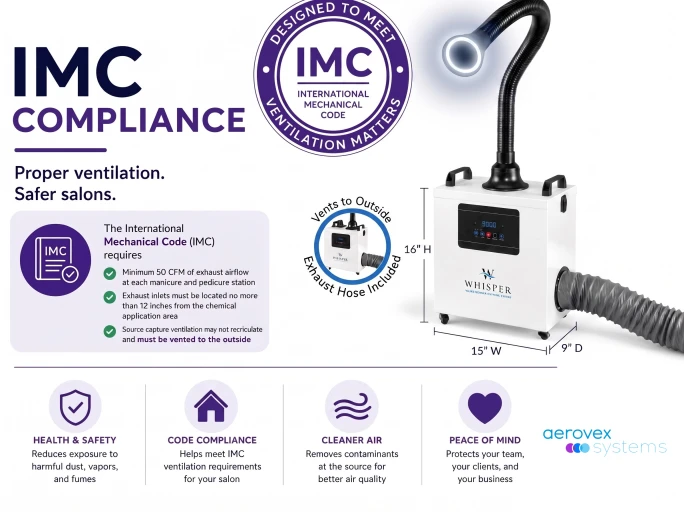
Most U.S. states have adopted the International Mechanical Code, and Section 502.20 is the part that applies directly to all salons performing nail services, regardless of the type of nail chemical service being provided. In plain terms, it requires:
Source capture at each workstation – not general room ventilation
A minimum of 50 CFM at every manicure and pedicure station
Capture within 12 inches of where product is being applied
Venting to the building exterior, which is the default requirement most salons need to plan around
That last point is the one that trips people up most. A ceiling fan, an open window, or a standard HVAC system moves air around the room. None of them capture dust and vapor at the point where it's actually generated, which is what the code requires.
Ad Loading...
Why "We Have Good Airflow" Doesn't Hold Up
Inspectors aren't evaluating whether a salon smells clean or feels comfortable. They're checking for a specific, measurable setup: a dedicated source capture system positioned at each manicure & pedicure station, moving a minimum volume of air, with a compliant path to the outside (or an approved recirculating alternative).
A few things that will not satisfy an inspector, even though salon owners often assume they will:
General HVAC or central air. It conditions the room. It doesn't capture contaminants at the source.
A room air purifier. It filters ambient air after dust and vapor have already dispersed and settled, which is after the exposure has already happened.
A desk fan or open window. This redistributes airborne particles rather than removing them and can actually spread exposure across the room.
A capture hood mounted too far from the station. Anything beyond 12 inches sees a sharp drop in effective capture, even if the unit itself is rated well above the CFM minimum.
What Being Prepared Actually Looks Like
Ad Loading...
The salons that sail through inspections tend to have three things in place before the inspector ever walks in:
A dedicated source capture system at every manicure & pedicure station, positioned within the required distance and rated well above the 50 CFM minimum.
A documented compliance path, meaning the owner (or manager) can explain, in plain language, how their setup meets each part of 502.20, without having to look it up on the spot.
A maintenance routine, since a saturated filter quietly reduces airflow over time and can take a compliant station below the legal threshold without anyone noticing until it's tested.
That third point catches even well-intentioned owners. A unit that was fully compliant on install day can fall out of compliance six months later simply because the filter wasn't replaced on schedule.
A Free Resource to Walk You Through It
Because this is one of the most common (and most avoidable) compliance gaps in the industry, Aerovex put together a complete, no-jargon buyer's guide that walks salon owners through exactly what IMC 502.20 requires and how to get compliant, station by station.
Ad Loading...
It covers:
How to determine your nail salon type and hazard level
Counting your stations and sizing your equipment correctly
Assessing your space for exterior venting options
A side-by-side breakdown of what the code requires versus what actually satisfies it
A ready-to-use spec sheet to finalize your setup before you buy
Whether you're opening a new location, adding stations, or simply want to know your current setup will hold up under inspection, the guide is built to get you from "not sure where to start" to a clear, compliant plan in eight straightforward steps.
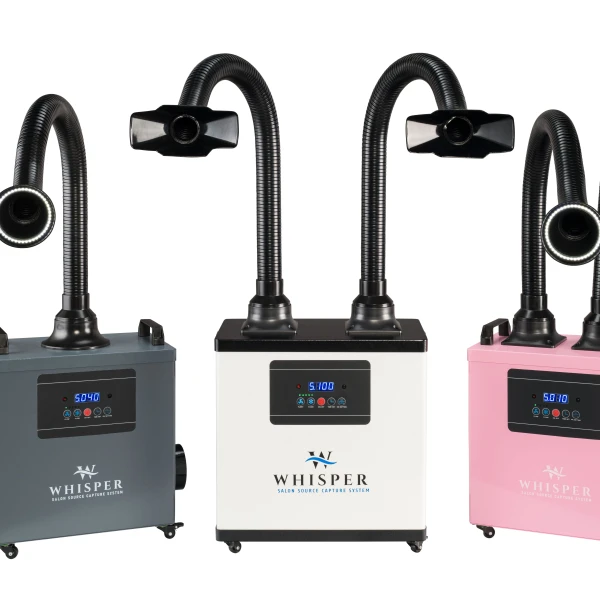
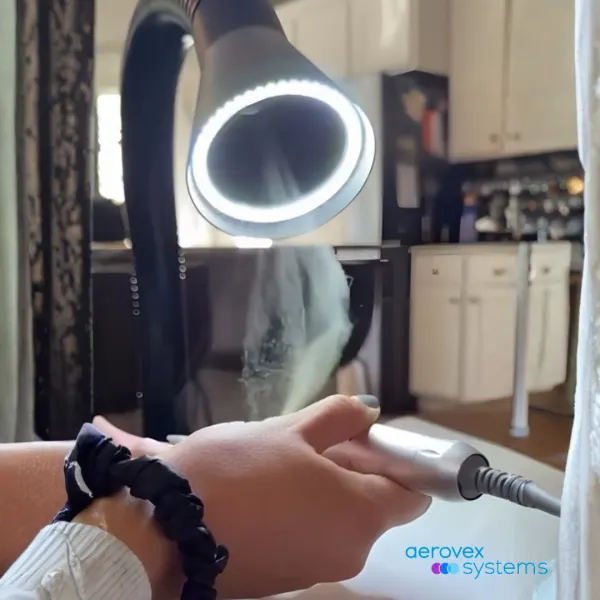
Most general-purpose air purifiers and DIY setups aren't built to satisfy the code's source capture requirement. The Whisper MiniVent is engineered specifically to.
If your situation is more complicated (an unusual building layout, a shared suite, multiple service types, or a state requirement you're not sure about), Aerovex also offers free one-on-one salon ventilation consultations. You can book a call with one of their clean air experts to walk through your specific setup before you buy anything.
Ad Loading...
Aerovex Systems provides source capture ventilation systems, including the Whisper MiniVent, built specifically to meet IMC 502.20 requirements for nail salons. Learn more at aerovexsystems.com or call 1-800-288-2023.
Both systems capture vapors and dust right at the nail table. The difference is where that air goes next, and that one detail can decide whether your salon passes inspection.
Uncured gel polish and microscopic e-file dust contain active acrylates that penetrate the skin, triggering permanent contact dermatitis. Learn the chemistry behind these irritants and how to protect your clients and yourself.
The Good Patch is a leading wearable wellness patch brand, offering wellness and skincare patches that support everyday needs including energy, sleep, relaxation and more.
Orthopedic PT reveals three daily exercises plus ergonomic advice that can help salon professionals avoid the aches and injuries caused by standing, bending and repetitive overhead work.
From acrylic monomers to airborne bio-dust, the air inside a nail salon carries risks most professionals never see coming. Aerovex Systems reveals the source-capture and room-purification strategies that are setting a new standard for salon safety.
Working in beauty doesn’t have to hurt. Learn how Somatic Movement helps hairstylists, lash artists, and other beauty pros release tension, improve posture, and extend their careers.
As a spa or salon professional, your clients expect more than just beauty—they expect safety, hygiene, and peace of mind. Fungal infections like Athlete’s Foot and Nail Fungus are more common than you think, especially in environments where tools and footbaths are reused without proper sanitation. This blog covers how to stop these issues before they start, using proven infection prevention strategies for salons and spas.
A federal initiative aimed at studying chemical exposure in nail salons has ended due to staffing and budget changes. Here’s what the project set out to do—and what its conclusion means for salon professionals.
For many people, a pedicure is a relaxing beauty ritual. But what most don’t realize is that this simple service, if done without proper hygiene and sanitation, can cause serious infections and long-term health issues.
Onycholysis is the separation of the nail plate from the nail bed. While it may look painful, it typically isn’t—at least not at first. But without proper care, this common nail disorder can lead to infections, deformities, and long-term damage.
Mckenzie Kool, Psychologist, MC, RPsych provides us with guidance on what may or not be helpful in speaking with someone who has suffered a significant loss.
Clients come to you to feel their best—not leave with a viral souvenir. Warts and cold sores can spread fast in busy salons, but a few smart habits make all the difference. Let’s talk about what’s really lurking in your salon (and how to kick it to the curb).
As Earth Day approaches, The Green Beauty Community Foundation and the Green Spa Network invite beauty pros to step forward and embrace sustainability through the Green Pledge--a powerful initiative designed by and for beauty industry leaders.
Don’t cancel Valentine’s Day altogether, urges Jill Palmquist. Instead, think of it as a (frilly, flowery, Champagne-bubbly) wake-up call to fall deeply in love with your own life.