





The Beauty Pro Book Club: 4 Reads to Inspire Growth and Success
Four publications for beauty industry professionals to enhance their leadership skills, financial awareness, professional growth, and joy!
by Anne Moratto


 MENU
MENU SEARCH
Expert advice from Boulevard's director of education on the question of whether or not to switch to an hourly rate structure.

Shanalie Wijesinghe, director of education at Boulevard.
It’s a question with which the salon industry has long grappled: should we switch to an hourly rate structure rather than charge set fees for specific services? Though just about every salon owner and professional has at one point or another pondered the merits of hourly pricing, most have resisted making the switch, largely because the benefits never quite seem worth the disruption.
As may have noticed, however, the pandemic has changed virtually everything about consumer behavior and the importance of self-care and wellness. Self-care is no longer a nice-to-have, but rather an essential, non-negotiable part of our daily lives. This sea change in the way consumers prioritize self-care – and just as importantly, what they want out of self-care services – has created many trickle-down effects, one of which is that the case for switching to an hourly pricing model is stronger than ever.
Before we outline some of the many ways you (and your clients!) can potentially benefit from an hourly pricing structure, let’s make one thing clear: stylists are experts in helping people look and feel their best. You are an expert. Period.
And in just about every other industry, experts charge by the hour. Cost is determined not by the service itself but by how long it takes to provide it. Your lawyer bills you for the number of hours they spend working on your case. Your accountant charges you for the number of hours they spend filing your taxes. If someone else’s legal case or tax return is less complex and takes less time than yours, they pay less. Simple as that.
If those comparables are a little far from home, consider the example of a masseuse. If you get a 90-minute massage and your friend gets a 30-minute massage, you’re going to pay more even though you’re both technically getting the same service. Your time is valuable and it’s ok to charge accordingly.
With that established, let’s examine four tangible benefits that come with an hourly pricing model.
Hourly pricing enables you to focus on styles over services. Our job isn’t to provide haircuts or color treatments – it’s to help people look and feel their best. Anything that restricts our ability to send our clients away looking and feeling their best is ultimately a net negative for both us and them. Hourly pricing allows us to do whatever it takes to create the style our clients want regardless of how many techniques or services are needed to achieve it. Most importantly, it gives us the best chance of sending them home happy and ensuring they come back.
In the post-pandemic world, our success or failure as professionals is not defined by our ability to execute a given service but by our ability to build lasting, meaningful clients relationships. We need to be less transactional and more experiential in how we engage with clients. Selling services is transactional. The sooner you can get out of that mode, the better for everyone involved. Hourly pricing, on the other hand, gives you the freedom to make suggestions, experiment in real-time, and partner with your client to achieve their desired look. In our business, that’s how relationships are built.
Between inflation, global unrest, and rising interest rates, these are uncertain times for businesses. Now more than ever, we need a modicum of financial certainty as we plan and prepare for the months ahead. Hourly pricing gives that to you. It makes it easier to project future earnings, offset the rising cost of goods and products through incremental price increases, and ensure your margins are where they need to be. It also accounts for and protects you from variance. For example, a partial highlight might take twice as long for one client as it does for another. Or it might take twice as long as you were expecting it to take based on the specific needs of a particular client. If you’re charging a set fee, you’re not making any extra money for all that extra time, while potentially burning out your staff in the process (more on this later).
But perhaps more importantly, the certainty that comes with hourly pricing dramatically reduces the pressure to get clients in and out the door. That, in turn, frees stylists to devote more of their time and mental energy to building relationships and creating enjoyable experiences. Over time, that’ll do far more for your bottom line than squeezing in a few extra appointments each week will ever do.
Reducing the need to double book our calendars and cycle through as many clients as possible in as short a window as possible comes with another enormous benefit for salons: a happier, healthier work environment for stylists. Many salons owners are wondering aloud what they can do to reduce staff churn. Well, here’s a great place to start. Working under constant pressure to get one client out and the next one in is exhausting. And demoralizing. And ultimately, unsustainable. Hourly pricing turns the pressure dial down significantly.
The deeper you dig, the more clear the case for hourly pricing becomes. Maybe you’re convinced but aren’t sure how or where to begin. As always, start with clear, proactive communication, with both your staff and your clients. Explain to your staff how it will create a healthier workplace for them and enable them to build better relationships. Explain to your clients how they’ll benefit from a better, more enjoyable experience, one focused exclusively on achieving the look and feel they desire. And give everyone time to absorb the changes before actually implementing them. The wait will almost certainly be worth it.
Originally posted on Modern Salon
Four publications for beauty industry professionals to enhance their leadership skills, financial awareness, professional growth, and joy!
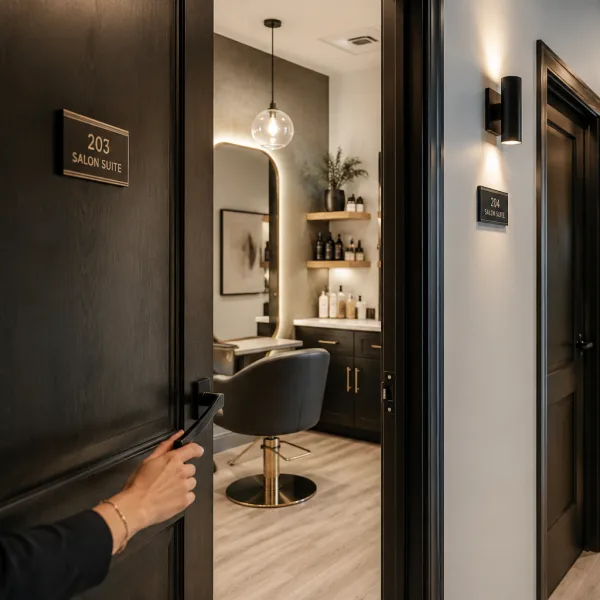
The most successful salon suites balance personality, function, and comfort. Megan Communale of My Salon Suite shares her best advice for designing a space that supports your business goals and leaves a lasting impression on every guest.

Square data shows that regular customers tip 11% higher and are shared across 32% of businesses in the same ZIP code, driving thousands of dollars in additional revenue per connection.
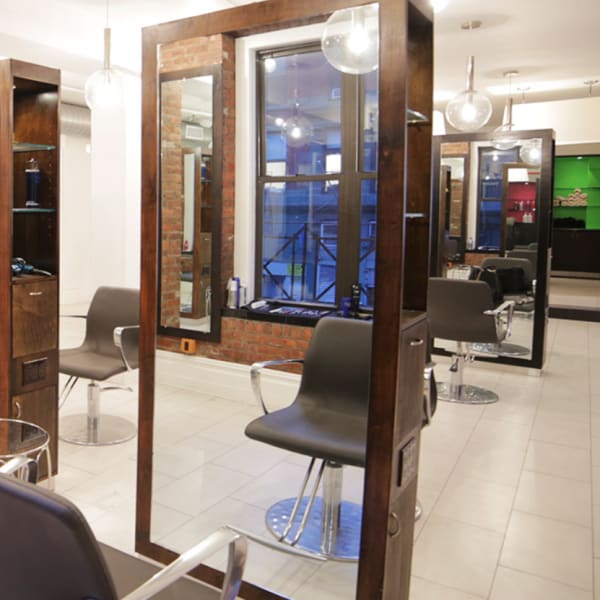
When Bowie Lau and Jeffrey Ching opened JBW Jeffrey Ching Salon in 2011, they weren’t just launching another luxury hair destination—they were building a business rooted in passion, artistry, and thoughtful growth.
Sponsored by Amex

Inside the Systems That Power an Elevated Salon Experience From seamless online booking to a team-first culture, J Gold Salon in Atlanta offers more than great hair—it delivers consistent, high-touch service with the help of partners like Boulevard and American Express.
Sponsored by Amex

Want to grow your career as a beauty professional? K18 Sales Manager Sabrina Sanborn shares advice on networking, mentorship, and self-advocacy—from attending hair shows to finding the right guidance to reach your goals.

A combination of clear policies, effective communication, and strong client relationships has helped me create a more reliable and efficient booking system.
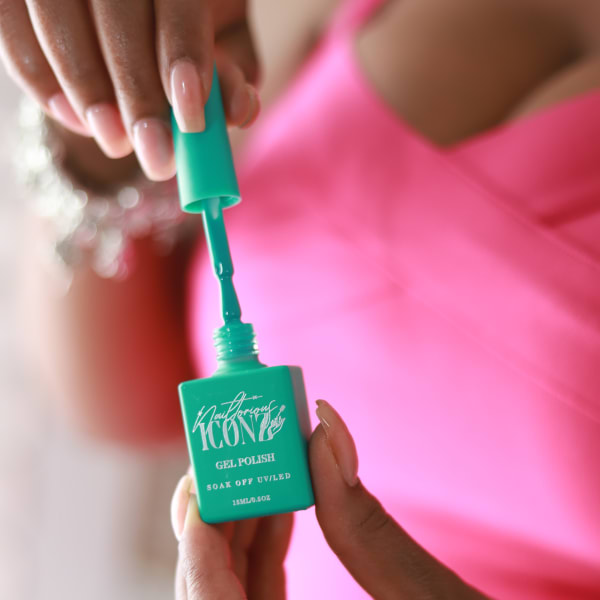
Founded by Cleveland serial entrepreneur Shaura Rodgers, Nailtorious has grown to include a nail supply megastore, training facilities, and retail line for nail techs.

This period after the holidays can bring on a huge lull for hairstylists. We asked Cosmo Prof's team of professionals to offer their best advice on how to deal with the January-February slow period.

Key highlights include a push toward inclusive spaces for all abilities, an emphasis on maximizing livable square footage, and a continued love for modern farmhouse exteriors.

The busy holiday season is here, and with it comes jam-packed days, last-minute client requests and booming retail sales. For many salon owners, the highlight of the season is Small Business Saturday® (SBS). This year on Saturday, November 30, consumers can take their shopping into the small businesses in their communities.
Sponsored by Amex

Want to become savvy about your personal finances, but don't quite know where to start? Anna Manukyan identifies six important concepts for building a strong financial foundation.
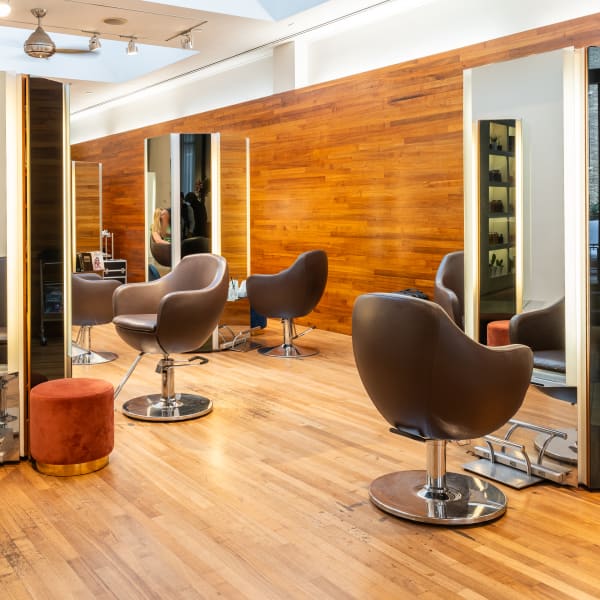
Salon owner Nuri Yurt had a dream of owning a salon on New York City’s Madison Avenue. "Through perseverance, hard work and stellar customer service, he and partner John Kaygisiz founded Toka Salon in 2007.
Sponsored by Amex

This guide is your one-stop shop for a plethora of technology tools, software and services created to keep your salon or spa thriving.

Anna Manukyan shares a breakdown of what different types of financial accounts should be used for.

Vagaro has consistently been at the forefront of salon software technology, helping businesses be more efficient, create more effective communication, and even improve company culture. Now, Connect by Vagaro, the platform’s two-way communication capability, and Vagaro’s new generative AI tools are giving owners new opportunities to grow and expand.
Sponsored by Vagaro

Young Nails' Greg, Habib, and Tracey discuss whether getting too close to clients can damage your business.