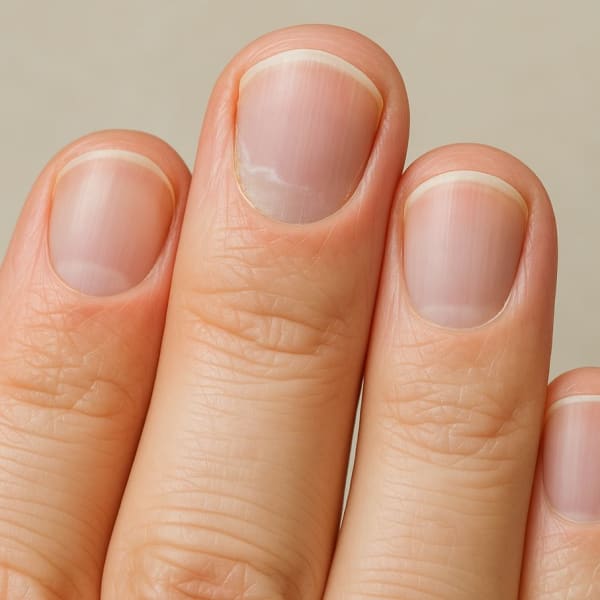
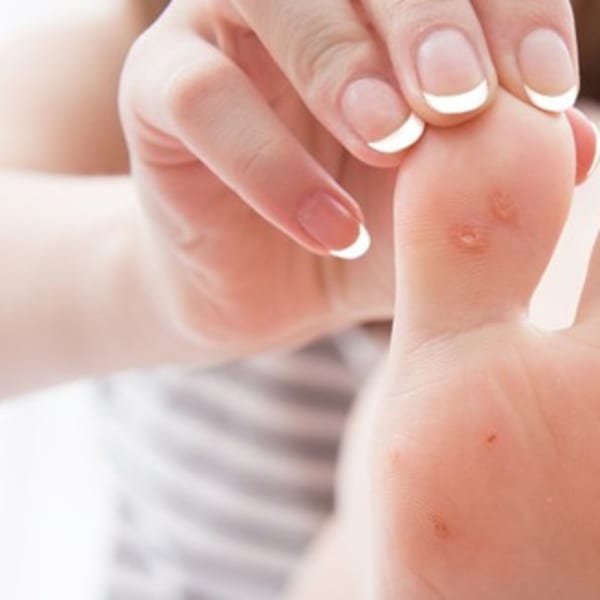
Richard K. Scher, M.D., is known around the world for his research on nail disorders. A peek into Dr. Scher’s research facility shows how he has brought nails to the forefront in the field of dermatology.
by Erika Kotite, NAILS editor
July 1, 1996
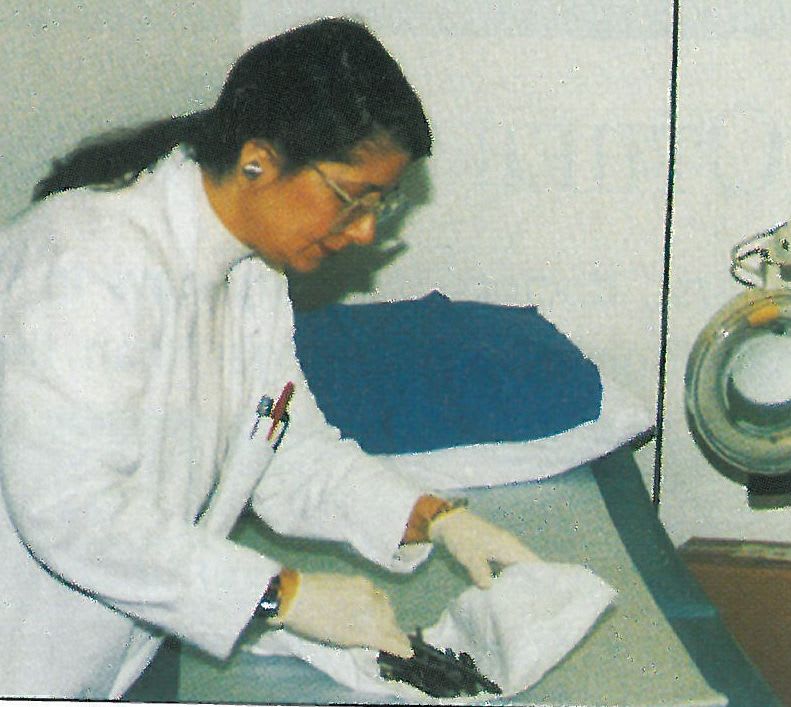
The examination room, where clinical research coordinator Janet Holwell puts away some testing equipemnt, is where Dr. Scher examines people interested in participating in his studies. Many of the candidates hear about the studies through Dr. Scher himself, as he has appeared in numerous television and print media, including a recent series on brittle nails that was broadcast on ABC.
6 min to read
Dr. Scher is a busy man. Between time spent at his research facility at Columbia-Presbyterian Medical Center and appointments with his patients in private practice, the doctor’s week is filled. Not to mention frequent trips all over the world to lecture on nail disorders and new treatments. Somehow he also finds the time to write columns for NAILS and articles for medical journals, and to establish the Council on Nail Disorders, an organization of medical professionals, of which he is co-president. He is also the co-author of Nails-Therapy, Diagnosis, Surgery, one of the most widely read medical books on the nail. No surprise, then, that a last-minute call to be present at a Food and Drug Administration (FDA) hearing for a new nail treatment pulled Dr. Scher out of New York on the day NAILS came to call. Janet Ellen Holwell, Dr. Scher’s clinical research coordinator, graciously stepped in to talk about the facility and the work that goes on there.
WHERE IT ALL HAPPENS
Ad Loading...
The Clinical Pharmacology Unit at Columbia University is tucked away on the seventh floor of an imposing building high on the west side of New York City. This is where Dr. Scher and his staff of eight researchers conduct nails to test promising new treatments for nail disorders. As Holwell cleared away manila folders and straightened books, she explained that quarters for Dr. Scher’s clinical studies are very tight. “We have limited examination space, but we can utilize other facilities in the private clinical research section if necessary,” she says. Dr. Scher also has an academic room in a building across the street.
The examination room, where clinical research coordinator Janet Holwell puts away some testing equipemnt, is where Dr. Scher examines people interested in participating in his studies. Many of the candidates hear about the studies through Dr. Scher himself, as he has appeared in numerous television and print media, including a recent series on brittle nails that was broadcast on ABC.
Next to the examination room, assistant clinical research coordinator Molly Ramkumar is busy making calls to study participants. It’s hard to believe that all of Dr. Scher’s studies on nail treatments take place in this small facility. In spite of its size, however, significant strides in nail medication development have taken place here. In 1991, for example, Dr. Scher took part in a multi-center trial to study an ointment treatment for psoriasis. A few years after the studies were completed, the ointment, called Dovonex, was approved by the FDA. Dr. Scher and his staff have also done extensive studies on oral antifungal medications. Last year, itraconazole (brand name Sporonox) became FDA-approved; it is also a medication that was tested by Dr. Scher and his staff. Two other antifungals, fluconazole and terbinafine, are also being evaluated. Currently; a study on brittle nails is underway, with a cosmetic preparation tested as a possible treatment. It’s a slightly different focus for Dr. Scher, who normally studies medical drugs. The testing, no matter what the type of treatment, requires four phases as outlined by the FDA before that agency will consider the test results. No matter who is underwriting each study, Dr. Scher is undeterred in his objectivity. He presents both positive and negative results with equal conviction, and he will not accept a study unless he has complete freedom and autonomy. This policy has enabled Dr. Scher to give professional opinions that are irreproachable in the medical community.
Studies take a long time to complete, says Holwell, both because of stringent government requirements and because ... well, nails grow slowly. “If you are testing a toenail treatment,” she explains, “you must wait one to one and a half years for the nail to grow out to determine the results. Then, you usually do another wave of testing. Total time is usually two to three years.” Not to mention the time it takes to recruit and screen potential participants. Each candidate goes through extensive interviews, during which time a complete medical history is taken and a physical examination is administered. Photos of the candidate’s particular nail disorder are taken and filed, to be used for comparison as the study progresses. Usually there isn’t a problem finding willing subjects; Holwell says the office advertises its studies with posters, newspaper advertisements, and public service announcements on the radio. Many times, candidates have to be turned away. It seems there are a lot of people with nail disorders who wish to get effective treatment. “Nail disorders are more than cosmetic,” Holwell says. “They can be painful or affect the way you walk or use your hands. Bacterial infection is also more of a possibility when the nails are not healthy.”
With many promising new treatments on the horizon, Dr. Scher and his team of researchers continue to look for new ways to combat nail diseases at his modest, but expanding center on Fort Washington Avenue.
Why Nails? And Other Questions for Dr. Scher
Ad Loading...
After the visit to Dr. Scher’s office, NAILS interviewed him on the phone.
NAILS: How did you decide to specialize in nails?
SCHER: Somewhat by accident. In the late ’70s, the department head of the dermatology unit in New York University asked if I would start a clinic devoted to the study of nails. I said, “How can I start a nail clinic when I know nothing about nails?” The department head responded, “No one else does either. The more you do, the more you’ll know.” At the time very little was written on the subject, and few doctors had any interest in the field. Patients did, though; when I opened the clinic, I was loaded with patients in a very short period of time.
NAILS: Why were nails given so little attention?
SCHER: At first doctors considered nail disorders as mostly cosmetic inconveniences. However, the more I found out, the more I was asked to give lectures. Soon, many doctors were listening to what I had to say, and they became hungry for the extra knowledge.
Ad Loading...
NAILS: What are the new oral antifungal treatments, and why are they revolutionary?
SCHER: One new treatment, called itraconazole, has been FDA-approved. Two others, fluconazole and terbinafine are being considered for approval. This treatment (which requires a doctor’s prescription) gets into the nail very fast, often as quickly as one to three weeks. The old products took four to six months, and as much as one year, to reach the nail. Also, the new treatment stays in the nail for longer than the old ones, meaning that patients can stop taking the drug and it will continue to work in the nail safely. The safety factor has increased tremendously. Success rate varies according to the patient, the type of fungus, the severity of the fungus, and the patient’s age. But the majority of patients who try this treatment do see positive results.
NAILS: What is your position on the professional nail care industry?
SCHER: Two years ago, I was interviewed by a consumer advocate who, after several questions about sculptured nails and salons, asked me what I really thought of the industry. I replied that I didn’t see any problem with salons or salon products as long as good sanitation rules are followed.
NAILS: Tell us more about the nail council you founded.
Ad Loading...
SCHER: A group of us founded the Council of Nail Disorders due to the increasing interest in the study of nails. It has an educational function and is run by a board of directors. It’s open to dermatologists and other health care people. We also welcome nail technicians and estheticians – this is not limited to just doctors. We sent out a mailing, hoping to get a handful of interested people to join, and received 2,000 back. We were absolutely flabbergasted at the high response. So far we’ve had one exhibit at the American Academy of Dermatologists’ Convention, and we are not seeking grants from pharmaceutical companies to conduct more research on nail disorders and treatme
Uncured gel polish and microscopic e-file dust contain active acrylates that penetrate the skin, triggering permanent contact dermatitis. Learn the chemistry behind these irritants and how to protect your clients and yourself.
The Good Patch is a leading wearable wellness patch brand, offering wellness and skincare patches that support everyday needs including energy, sleep, relaxation and more.
Orthopedic PT reveals three daily exercises plus ergonomic advice that can help salon professionals avoid the aches and injuries caused by standing, bending and repetitive overhead work.
From acrylic monomers to airborne bio-dust, the air inside a nail salon carries risks most professionals never see coming. Aerovex Systems reveals the source-capture and room-purification strategies that are setting a new standard for salon safety.
Working in beauty doesn’t have to hurt. Learn how Somatic Movement helps hairstylists, lash artists, and other beauty pros release tension, improve posture, and extend their careers.
As a spa or salon professional, your clients expect more than just beauty—they expect safety, hygiene, and peace of mind. Fungal infections like Athlete’s Foot and Nail Fungus are more common than you think, especially in environments where tools and footbaths are reused without proper sanitation. This blog covers how to stop these issues before they start, using proven infection prevention strategies for salons and spas.
A federal initiative aimed at studying chemical exposure in nail salons has ended due to staffing and budget changes. Here’s what the project set out to do—and what its conclusion means for salon professionals.
For many people, a pedicure is a relaxing beauty ritual. But what most don’t realize is that this simple service, if done without proper hygiene and sanitation, can cause serious infections and long-term health issues.
Onycholysis is the separation of the nail plate from the nail bed. While it may look painful, it typically isn’t—at least not at first. But without proper care, this common nail disorder can lead to infections, deformities, and long-term damage.
Mckenzie Kool, Psychologist, MC, RPsych provides us with guidance on what may or not be helpful in speaking with someone who has suffered a significant loss.
Clients come to you to feel their best—not leave with a viral souvenir. Warts and cold sores can spread fast in busy salons, but a few smart habits make all the difference. Let’s talk about what’s really lurking in your salon (and how to kick it to the curb).
As Earth Day approaches, The Green Beauty Community Foundation and the Green Spa Network invite beauty pros to step forward and embrace sustainability through the Green Pledge--a powerful initiative designed by and for beauty industry leaders.
Don’t cancel Valentine’s Day altogether, urges Jill Palmquist. Instead, think of it as a (frilly, flowery, Champagne-bubbly) wake-up call to fall deeply in love with your own life.
Life coach and Culture Ambassador of Sam Villa, Andrew Carruthers, outlines how to tell if your burnout is temporary - or if it's time to make a bigger career change.