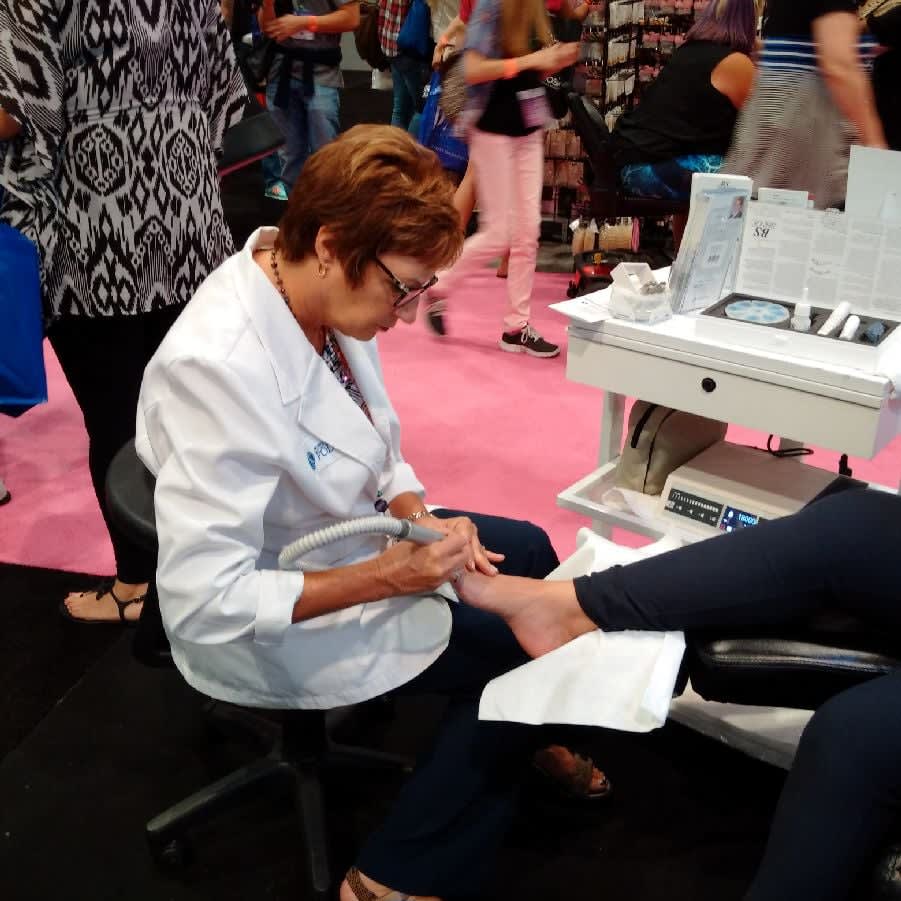
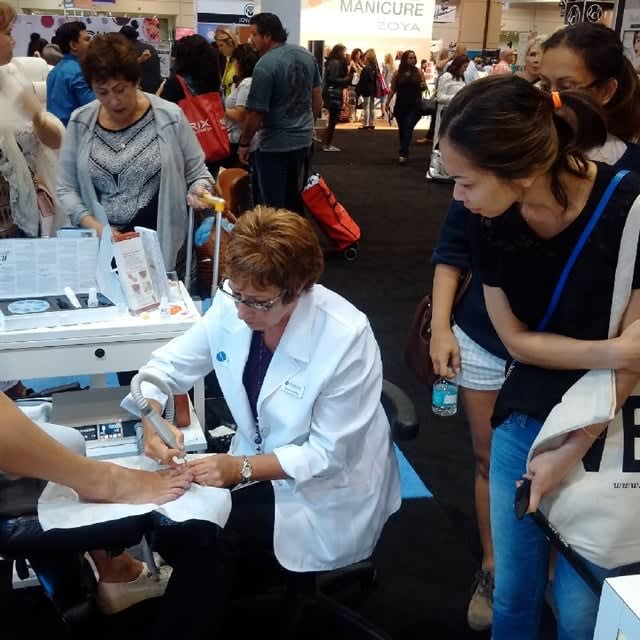
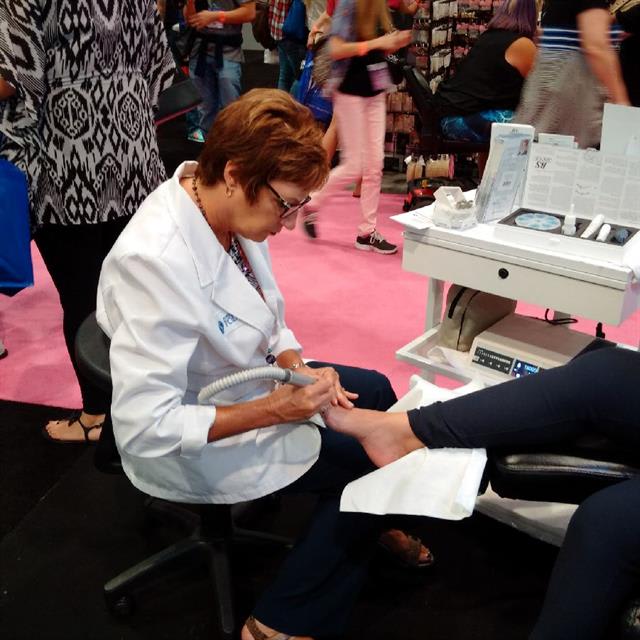
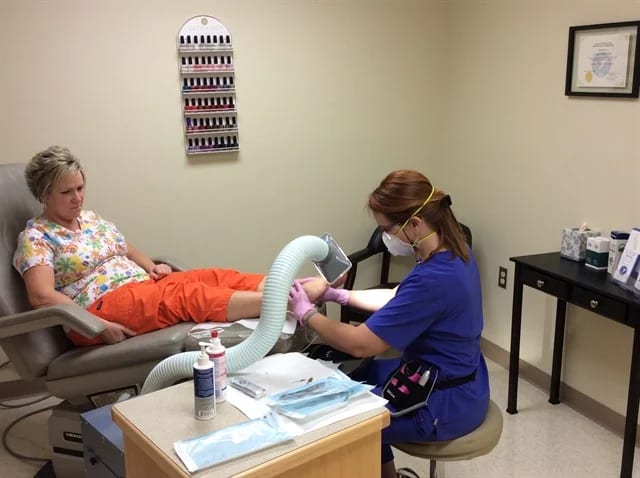
One of the greatest things about the nail industry is that there are so many options when it comes to building the kind of career you want. Some techs thrive on the excitement and glamour of creating dazzling nail art, while others are fulfilled by working in a medical setting and helping others. NAILS spoke to two techs about their decision to become medical pedicurists, what a typical day is like for them, and how interested nail techs can steer their careers in the same direction.
A retired nurse, Brenda Ribble has more than 30 years experience in the medical field. She chose to become a nail tech as her second career, but after nail school, she was left with unanswered questions and felt that clients had many foot-related issues no one seemed to be addressing. To resolve these concerns, she sought advanced training at the North American School of Podology (NASP), earning Certified Master Pedicurist (CMP), and Certified Podologist (C Pod) credentials. She now educates for NASP in Fort Myers, Fla., and works as a medical pedicurist for select clients by physician referral.
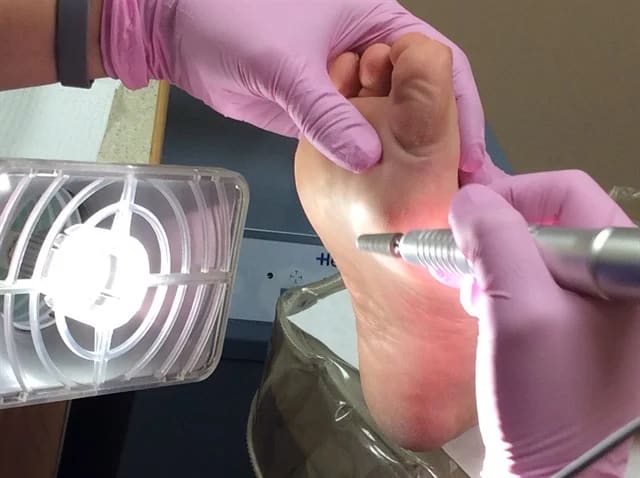
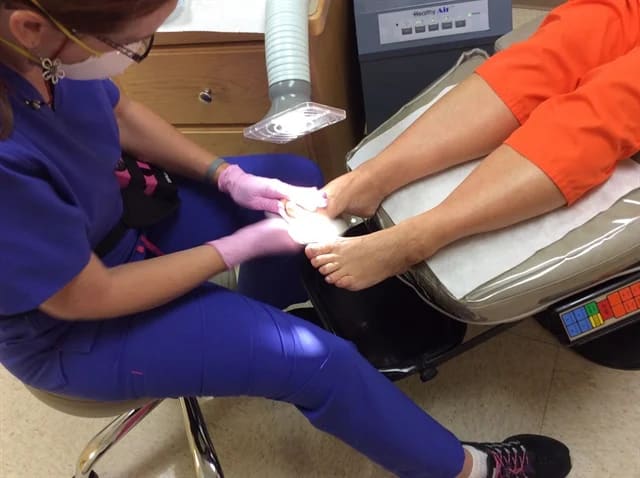
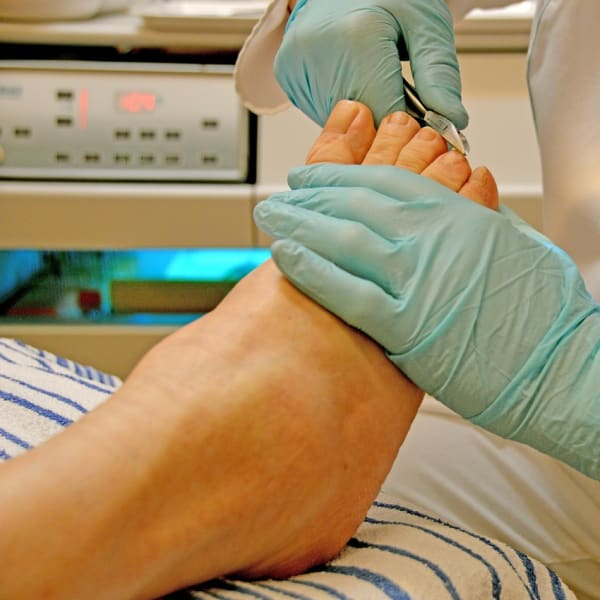
Q: What is a typical day like working in a medical facility? A: On any given day I can be educating on the importance of daily foot care checks for a diabetic or neuropathy clients, consulting about proper footwear, recommending skin care products to improve skin appearance, applying prosthetic nails for short-term use, evaluating the biomechanics of clients’ feet and making recommendations for arch supports, applying temporary braces to help correct an excessively curved nail, measuring feet for bunion aligners, as well as giving wellness pedicures and referrals to appropriate medical practitioners. All of the services I do are cosmetic changes and are within my scope of practice as a licensed nail technician.
Ad Loading...
Q: What is the most fulfilling part of your job? What is the most challenging? A: Every service begins with a consultation and clients are asked what they would like to accomplish with their foot-care service, but it’s frustrating when they don’t make changes or are inconsistent with the recommendations that are needed to improve their foot issues.
Q: What special education/credentials beyond a basic nail tech license does one need in order to work in a medical facility or convalescent home? Where are some good places to look for this education? A: The scope of practice for any licensed nail technician is limited to cosmetic changes; however, a salon professional needs to be able to recognize medical conditions, disorders, and deformities of the feet and hands so she can make educated recommendations and referrals. The North American School of Podology educates nail technicians with hands-on training to complete these elevated services with their advanced foot-care classes. Emphasis is placed on promoting best practices and standards.
Q: How would a nail tech interested in this type of work go about finding a job? A: Podiatry offices, ankle and foot surgeons, medical wellness spas, and many salons are now looking at wellness-focused services to attract clients, so those are great places to inquire. The North American School of Podology website has a job opportunity listing as well as a CMP locator to help clients find you.
Q: Is medical pedicuring lucrative? A: My basic service starts at $65 for an hour but can go up to $120 for a complete Master Pedicure, depending on the needs of client’s feet. Clients are also booked every five weeks so I can continually manage foot issues.
CRYSTAL PIKE
Crystal Pike
Crystal Pike says that becoming a medical nail technician has taken her career to places she never dreamed of going. After completing the Medinail Learning Center’s Advanced and Medical Nail Technician courses, as well as the Certified Clinical Podiatric Medical Assistant (CCPMA) bridge exam through the American College of Foot and Ankle Orthopedics and Medicine (ACFAOM), Pike began working at Mountain Podiatry in Hendersonville, N.C. She also started Safe Salon Supply, LLC, a business that helps nail professionals obtain better sanitation and safety supplies and equipment for their salons.
Q: Why did you decide to work in a medical setting as opposed to a traditional nail salon? A: My decision to work in a medical office instead of the traditional salon setting was based on numbers. For the amount of time I was putting in at the salon versus the podiatry office, it was more profitable at the podiatry office. As a booth renter at the salon, I was responsible for rent, all my products, taxes, scheduling, confirmations, taking payments, etc. At the podiatry office, they supply all of the office equipment, including an auto-clave, many products, and staffing. They also take payments, make my schedule, and confirm my appointments. There are no nights, no weekends, no emergency texts at 10 p.m. asking me to come in on my day off to fix a client’s broken nail.
Q: What is a typical day like working in a medical facility? A: My typical client is one who has issues because of age or disability that prevent her from taking care of her feet (or hands). I have one gentleman in his 90s who is legally blind. I have another client who has had both hips replaced and cannot bend to reach his toes. My clients are healthy enough to receive my services. The doctors clear their patients of any health issues that would prevent them from receiving cosmetic services. I stay within the guidelines set forth by the North Carolina State Board of Cosmetic Arts. As such, I have a dedicated space — exam room-turned-licensed salon — for my services. It’s the only nail spa within a podiatry office in the area.
Q: What is the most fulfilling part of your job? What is the most challenging? A: Working in a medical setting offers nail technicians a unique opportunity to assist clients who are underserved and to demonstrate to podiatrists that there are safe, qualified, and knowledgeable nail technicians who care and do things correctly. It provides an opening between the nail industry and the medical field to dispel some long-held misinformation about our beloved chosen careers. The most challenging part is working on such a tight time frame. As with most doctors’ offices, we have quick turnover for the patients.
Q: How would a nail tech interested in this type of work go about finding a job? A: Medinail Learning Center’s Medical Nail Technician program has a module dedicated to marketing yourself to podiatrists in your area to seek employment or develop a referral relationship. I was fortunate that the first podiatry office I visited was already familiar with the MNT Program and had been considering a search for an MNT to join its staff. Unfortunately, this is not usually the case. An MNT graduate must be prepared to educate podiatrists on the benefits of adding an MNT to their staff. Be sure to have an excellent portfolio prepared to leave with any office. Follow up with them after leaving your information. Do try to put it directly in the hands of the office manager if at all possible. Within your portfolio, speak to the benefits the office will gain, such as a new market for revenue with underserved clients, and opening up their schedules by passing on their healthier clients to you so they can concentrate more on those that need them most. Emphasize also the benefits for clients; they can receive similar services (nail trimmings) from an MNT at a reduced, out-of-pocket expense that is less than what the podiatrist charges.
Ad Loading...
Q: Is medical pedicuring lucrative? A: I work on a commission-based salary for services and an hourly rate for the times I assist the office. My service prices are about 30% higher than they were when I worked at a salon, but they are less than the same service the podiatrists offer. For example, for a simple toenail trim, the salon price would be about $25. When the podiatrists provide this service, it’s about $65. I fall in between at $45. It’s an out-of-pocket expense, so the client is getting a discount. These clients would not visit a salon for the reasons stated previously. I am compensated as a W2 employee, so they take care of the taxes as well.
Medi Pedi 3 Ways: 1. Set up a full-time space in a podiatrist office or nursing facility. 2. Set up a referral network with local podiatrists to send patients to your existing salon. 3. Mobile Medi-Pedis: Visit podiatrist offices, nursing facilities and other on-site locations.
Uncured gel polish and microscopic e-file dust contain active acrylates that penetrate the skin, triggering permanent contact dermatitis. Learn the chemistry behind these irritants and how to protect your clients and yourself.
The Good Patch is a leading wearable wellness patch brand, offering wellness and skincare patches that support everyday needs including energy, sleep, relaxation and more.
Orthopedic PT reveals three daily exercises plus ergonomic advice that can help salon professionals avoid the aches and injuries caused by standing, bending and repetitive overhead work.
From acrylic monomers to airborne bio-dust, the air inside a nail salon carries risks most professionals never see coming. Aerovex Systems reveals the source-capture and room-purification strategies that are setting a new standard for salon safety.
Working in beauty doesn’t have to hurt. Learn how Somatic Movement helps hairstylists, lash artists, and other beauty pros release tension, improve posture, and extend their careers.
As a spa or salon professional, your clients expect more than just beauty—they expect safety, hygiene, and peace of mind. Fungal infections like Athlete’s Foot and Nail Fungus are more common than you think, especially in environments where tools and footbaths are reused without proper sanitation. This blog covers how to stop these issues before they start, using proven infection prevention strategies for salons and spas.
A federal initiative aimed at studying chemical exposure in nail salons has ended due to staffing and budget changes. Here’s what the project set out to do—and what its conclusion means for salon professionals.
For many people, a pedicure is a relaxing beauty ritual. But what most don’t realize is that this simple service, if done without proper hygiene and sanitation, can cause serious infections and long-term health issues.
Onycholysis is the separation of the nail plate from the nail bed. While it may look painful, it typically isn’t—at least not at first. But without proper care, this common nail disorder can lead to infections, deformities, and long-term damage.
Mckenzie Kool, Psychologist, MC, RPsych provides us with guidance on what may or not be helpful in speaking with someone who has suffered a significant loss.
Clients come to you to feel their best—not leave with a viral souvenir. Warts and cold sores can spread fast in busy salons, but a few smart habits make all the difference. Let’s talk about what’s really lurking in your salon (and how to kick it to the curb).
As Earth Day approaches, The Green Beauty Community Foundation and the Green Spa Network invite beauty pros to step forward and embrace sustainability through the Green Pledge--a powerful initiative designed by and for beauty industry leaders.
Don’t cancel Valentine’s Day altogether, urges Jill Palmquist. Instead, think of it as a (frilly, flowery, Champagne-bubbly) wake-up call to fall deeply in love with your own life.
Life coach and Culture Ambassador of Sam Villa, Andrew Carruthers, outlines how to tell if your burnout is temporary - or if it's time to make a bigger career change.