As a nail tech, you probably see pedicure clients with nail issues and foot problems all the time. One of the most common problems is ingrown nails, characterized by the corner or edge of a nail being embedded in the surrounding skin. Many times, ingrown nails don’t pose a serious problem, and you have probably fixed quite a few before they became a larger issue for your client. Sometimes, though, ingrown nails can progress to the point that they cause pain and even infections.
To get more information on this common nail issue, we spoke to Dr. Dana Stern, Assistant Clinical Professor of Dermatology at The Mount Sinai School of Medicine. Dr. Stern specializes in nail health and is our go-to source on all things having to do with nail disorders. She has helped us construct this comprehensive guide so that you can help your clients with the prevention and care of ingrown nails, as well as advise them on what to do if the problem is out of your hands.
“An ingrown toenail, referred to as onychocryptosis, is when the corner or edge of the nail embeds in the surrounding skin,” Dr. Stern says. “It most commonly affects the big toenail. The nail has sharp edges and when the nail pierces the surrounding nail fold tissue it can begin to grow into the skin.”
Ingrown nails are much more common on the feet, but it’s possible for them happen with fingernails on certain people. “On fingernails the issue usually develops in people who have a nail dystrophy called a pincer nail, where the fingernail has a very exaggerated over-curvature.” This disorder can also happen on the toenails.
What are the common causes of ingrown nails?
In many cases, ingrown toenails are preventable. However, some people are predisposed to developing them, such as runners and other athletes. Causes include:
Cutting the nail too short, which makes the nail more prone to embedding
Cutting the nail on a curve
Having nails that are just more prone to embedding due to exaggerated over-curvature (pincer nails)
Improperly fitting shoes
Repetitive toe trauma (common in athletes)
To prevent the occurrence of ingrown toenails, Dr. Stern recommends cutting the nail straight across (square shape) instead of on a curve, and not too short. Advise clients to wear shoes that fit them properly, leaving enough room for all the toes to be comfortable.
Ad Loading...
How do you identify an ingrown nail?
Your client’s first sign that something is wrong may be feeling pain at the site, which they may communicate to you. “The nail plate has sharp edges,” Dr. Stern says, “so when it embeds, it can result in significant pain, redness at the surrounding skin, inflammation, and swelling.” Leaving the embedded nail to persist can result in a granuloma, a heap of vascular tissue that occurs in response to trauma. It’s how the body attempts to stop the sharp object from piercing the skin. The granuloma might look like a growth overlying the area where the nail is embedded.
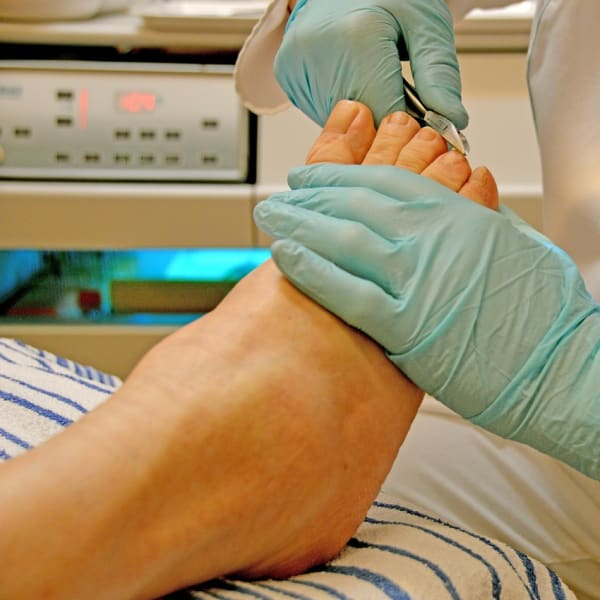
The most important thing that you can do as a nail tech is to clip the nails in a way that relieves or prevents ingrown nails.
“Shape-wise, square would be preferred to round,” Dr. Dana advises, “although squoval (square with a bit of filing on the edge) would be ok too. Also, it is important to not cut the nail too short as that will also make it more prone to embedding. Those who suffer from ingrowns should allow their toenails to be a bit longer than is typical...Sometimes a simple clipping of the embedded section will create immediate relief.”
What can your client do at home?
If your client is suffering from an ingrown nail, give them some options on further care that they can do at home. Dr. Stern recommends these home treatment methods:
Epsom salt soaks in cool water will help alleviate inflammation.
Wear shoes where the nail doesn’t make contact with the shoe. Open toed, well-fitting sandals are ideal in summer.
Over the counter anti-inflammatory medication such as Ibuprofen can help.
Keep the area clean and dry.
Do not try to dig into the nail fold with tools or to perform a home surgery.
Ad Loading...
How can you tell if an ingrown nail has caused infection?
“When infected there will be purulent drainage (pus) and there can be significant swelling, warmth, and extreme tenderness,” Dr. Stern says. At this point, or whenever the ingrown nail impacts your ability to walk or participate in activities, it is necessary to seek medical help.
You should also see a doctor as soon as possible for any ingrown nail if you also have any of these conditions:
Diabetes
Severe nerve damage
Poor blood circulation
These conditions can further complicate issues with the extremities that may normally not be as big of a problem for others. For instance, with a condition that damages the nerves in your feet, you may not feel or notice when an ingrown toenail has become infected. The risk of this resulting in severe complications is high, so advise your client to see their healthcare provider as soon as they can.
A doctor can prevent ingrown toenails from reoccurring.
How does a doctor treat ingrown nails?
“Most of the time, ingrown toenails heal without surgery,” Dr. Stern says. “In severe cases, your healthcare provider may need to remove part of the nail with a procedure called a nail avulsion. Surgery keeps the edge of the nail from growing inward and cutting into the skin. During a partial nail avulsion, your provider injects an anesthetic (numbing medicine) in your toe and then a portion of the embedded toenail is cut away.”
Ad Loading...
Depending on how often your client gets ingrown toenails, their doctor may take steps to further prevent them from coming back. “For recurrent ingrown nails, these avulsion procedures can be done permanently with the assistance of a chemical to kill the nail root. This procedure, called a matricectomy, will enable the nail to subsequently grow in more narrowly and, therefore, eliminates the risk of chronic embedding. When infection is present, it will be important for your doctor to drain and culture the infection and treatment may include an oral antibiotic.”
Even if you see ingrown nails all the time, hopefully we’ve helped you gain a more complete understanding of what to look for, how to help your client, and when to go hands-off and advise them to see a healthcare provider. Educating your client on how to take care of their feet at home will also help with ingrown nail prevention.
Dr. Dana Stern
Dr. Dana Stern is an Assistant Clinical Professor of Dermatology at The Mount Sinai School of Medicine, and a board-certified dermatologist who specializes in the treatment of nail disorders, including nail infections, inflammatory diseases of the nail, cosmetic issues related to the nail, cancers of the nail, and sports-related nail injuries.
Uncured gel polish and microscopic e-file dust contain active acrylates that penetrate the skin, triggering permanent contact dermatitis. Learn the chemistry behind these irritants and how to protect your clients and yourself.
The Good Patch is a leading wearable wellness patch brand, offering wellness and skincare patches that support everyday needs including energy, sleep, relaxation and more.
Orthopedic PT reveals three daily exercises plus ergonomic advice that can help salon professionals avoid the aches and injuries caused by standing, bending and repetitive overhead work.
From acrylic monomers to airborne bio-dust, the air inside a nail salon carries risks most professionals never see coming. Aerovex Systems reveals the source-capture and room-purification strategies that are setting a new standard for salon safety.
Working in beauty doesn’t have to hurt. Learn how Somatic Movement helps hairstylists, lash artists, and other beauty pros release tension, improve posture, and extend their careers.
As a spa or salon professional, your clients expect more than just beauty—they expect safety, hygiene, and peace of mind. Fungal infections like Athlete’s Foot and Nail Fungus are more common than you think, especially in environments where tools and footbaths are reused without proper sanitation. This blog covers how to stop these issues before they start, using proven infection prevention strategies for salons and spas.
A federal initiative aimed at studying chemical exposure in nail salons has ended due to staffing and budget changes. Here’s what the project set out to do—and what its conclusion means for salon professionals.
For many people, a pedicure is a relaxing beauty ritual. But what most don’t realize is that this simple service, if done without proper hygiene and sanitation, can cause serious infections and long-term health issues.
Onycholysis is the separation of the nail plate from the nail bed. While it may look painful, it typically isn’t—at least not at first. But without proper care, this common nail disorder can lead to infections, deformities, and long-term damage.
Mckenzie Kool, Psychologist, MC, RPsych provides us with guidance on what may or not be helpful in speaking with someone who has suffered a significant loss.
Clients come to you to feel their best—not leave with a viral souvenir. Warts and cold sores can spread fast in busy salons, but a few smart habits make all the difference. Let’s talk about what’s really lurking in your salon (and how to kick it to the curb).
As Earth Day approaches, The Green Beauty Community Foundation and the Green Spa Network invite beauty pros to step forward and embrace sustainability through the Green Pledge--a powerful initiative designed by and for beauty industry leaders.
Don’t cancel Valentine’s Day altogether, urges Jill Palmquist. Instead, think of it as a (frilly, flowery, Champagne-bubbly) wake-up call to fall deeply in love with your own life.
Life coach and Culture Ambassador of Sam Villa, Andrew Carruthers, outlines how to tell if your burnout is temporary - or if it's time to make a bigger career change.