Has your inner nail geek ever caused you to wonder what makes the products we apply to the nail plate stay there? The first rule of great adhesion is proper nail preparation. “Most manufacturers have great systems, but when users fail to follow their recommendations and the fingernail isn’t prepared correctly, you won’t see adhesion,” says Jim McConnell, president of Light Elegance (www.lightelegance.com). Adhesion problems can show up in different ways depending on the product and system you are using.
“The keratin of the fingernail needs to be prepared properly to allow the enhancement resin system to bond correctly,” McConnell explains. “Some manufacturers use pH balancers, cleansers, surface treatments, and other potential options. These surface treatments will chemically alter the fingernail to allow better adhesion.”
Ad Loading...
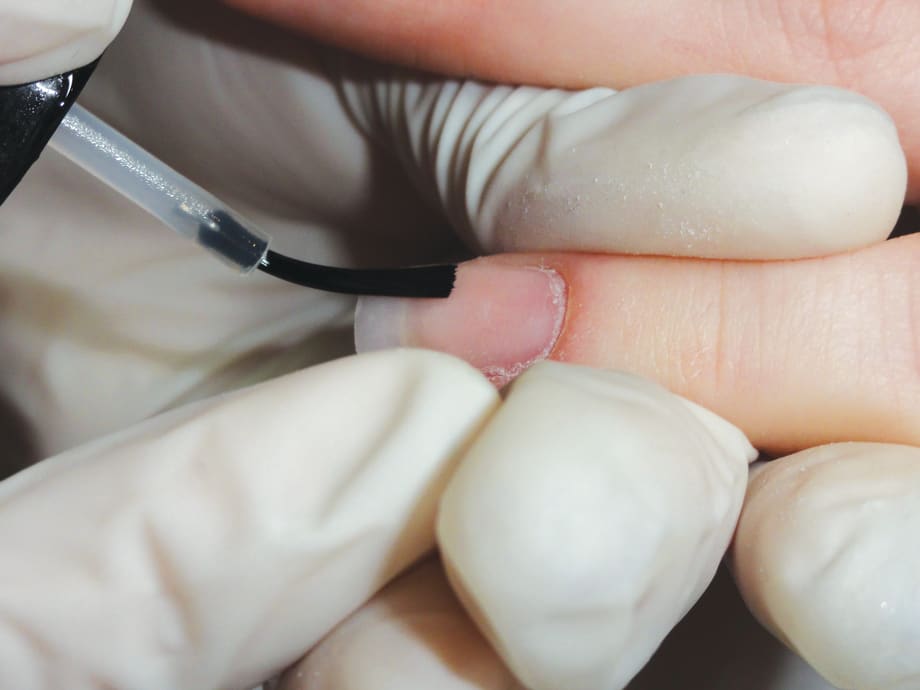
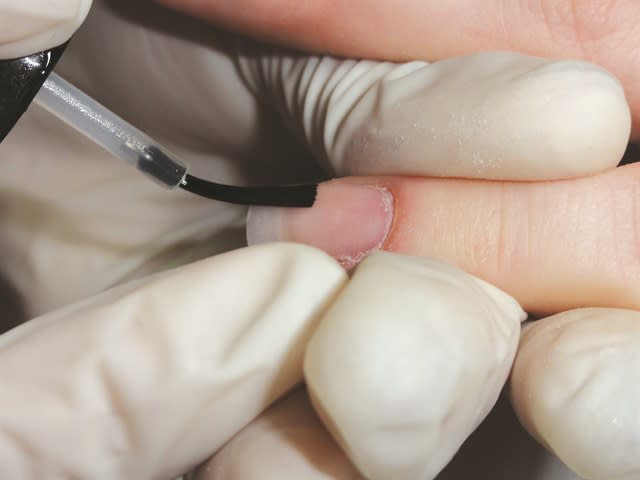
All nail coatings require the nail to be free of cuticle, that transparent tissue arising from the proximal nail fold. Any remaining cuticle will act like wax paper on a cookie sheet, preventing things from sticking and allowing them to slide or peel off.
Make sure you know how to use your cuticle product. Does it need to be removed with plain water or soapy water? Are you using a cuticle remover meant for manicures or home care that adds oils to the nail, which can become adhesion blockers? Knowing what cuticle product works for you and how to use it will give you a definite adhesion advantage.
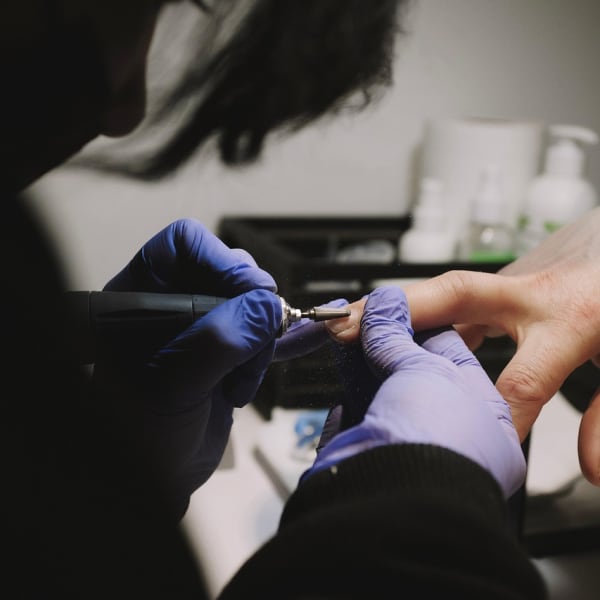
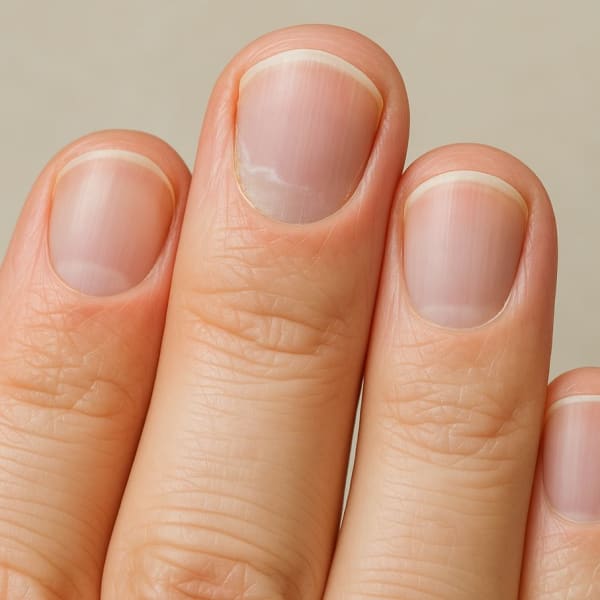
Next is the question of whether to buff the nail. This is something you should know from your product instructions. Some products are designed to be applied to a nail that has not been buffed, and buffing in this instance can lead to nail damage, most notably in the formation of white spots. Other products require a light buffing or removal of shine in order for the product to stick to the nail properly.
Finally, the nail is prepped with a cleanser and a dehydrator. Some cleansers may combine the two functions, while other systems will have separate products for cleansing and dehydrating. The end result is a clean, naked nail that is the ideal foundation for successful product application and wear.
By using the specific bonding product a manufacturer recommends for use with its other products, you’re more likely to achieve the results promised by the manufacturer. In other words, if you use Cleanser A because it smells pretty, Bonder B because of the lovely packaging, and Surface Treatment C because it was on sale, you may not get the results you expect. The other part of the equation is using each product according to its directions and in the order set forth by the manufacturer. While it’s fun to bend (or even break) the rules of nail design, your foundational structure needs to follow the rules precisely, so your creation doesn’t “just fall off” and wind up lying in bed next to your client.
Ad Loading...
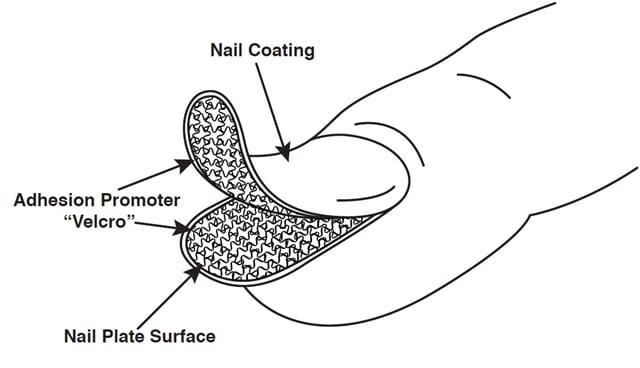
Some adhesion promoters work a little like Velcro — with one side sticking to the nail coating and the other side sticking to the nail plate.
The Stick Factor
Putting aside questions of technique for a moment, what creates the bond between the nail and the product applied to it? “The key to adhesion is compatibility between the resin system [your product] and the substrate [the surface of the nail],” McConnell explains. “Adhesion promoters — anything from a base coat in a polish system to a primer in an enhancement system — will give increased compatibility with the fingernail. This means that the adhesion promoter will lay down on the fingernail smoothly to allow the best adhesion to the fingernail’s keratin surface.” McConnell recommends using adhesion promoters that are standalone products, rather than combined with another product.
One way to visualize this would be to imagine Velcro [see illustration]. Pretend that your adhesive resin is the Velcro and that one side sticks to the nail coating, while the other side sticks to the nail plate. While not all products use that style of adhesion, you can get an idea of the role adhesion promoters play. If dirt, oil, or cuticle remains on the nail plate, it could prevent the “Velcro” from sticking altogether, or allow the coating to peel off after the client leaves the salon. And as we all know, it’s much easier to pick at product that has started lifting on its own!
How Molecules Attract
In this excerpt from Nail Structure and Product Chemistry, industry scientist Doug Schoon explores the principles behind product adhesion. Learn more at www.dougschoon.com or www.facebook.com/dougschoonsbrain.
To understand why things stick, we must know something about surfaces. The first thing to know is that a surface can be solid or liquid. ... Molecules can be found at the surface of both liquids and solids. When two surfaces stick together, it is the surface molecules that interact with each other and cause adhesion. In other words, adhesion is caused when the molecules on one surface are attracted to the molecules on another surface. The forces that draw and hold them together can be either physical or chemical. There are three types of interactions between the surface molecules:
1. Entanglement — the molecules become tangled together and can’t separate very easily. Entanglement is how Velcro works. But in the case of nail products, the tangled molecules are invisible and many thousands of times smaller. Entanglement is a physical force that creates adhesion.
2. Attraction — the molecules are pulled toward each other but never permanently link together. Socks held together by static cling is an example of an attraction. Static does not hold products to the natural nail; with nail products, the adhesion is created by chemical forces of attraction and entanglement.
3. Reaction — the molecules are drawn toward each other and link together with strong chemical bonds that are difficult to break. This reaction is a chemical force.
In each case, the interactions will not occur unless the surfaces are compatible.
Holly Schippers
Holly Schippers is a contributing editor to NAILS and a member of Team CND. Follow her FingerNailFixer blog at www.nailsmag.com/fingernailfixer.
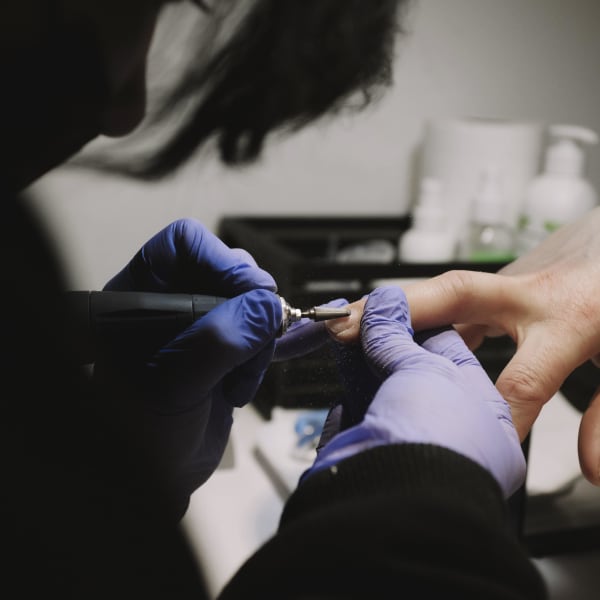
Uncured gel polish and microscopic e-file dust contain active acrylates that penetrate the skin, triggering permanent contact dermatitis. Learn the chemistry behind these irritants and how to protect your clients and yourself.
The Good Patch is a leading wearable wellness patch brand, offering wellness and skincare patches that support everyday needs including energy, sleep, relaxation and more.
Orthopedic PT reveals three daily exercises plus ergonomic advice that can help salon professionals avoid the aches and injuries caused by standing, bending and repetitive overhead work.
From acrylic monomers to airborne bio-dust, the air inside a nail salon carries risks most professionals never see coming. Aerovex Systems reveals the source-capture and room-purification strategies that are setting a new standard for salon safety.
Working in beauty doesn’t have to hurt. Learn how Somatic Movement helps hairstylists, lash artists, and other beauty pros release tension, improve posture, and extend their careers.
As a spa or salon professional, your clients expect more than just beauty—they expect safety, hygiene, and peace of mind. Fungal infections like Athlete’s Foot and Nail Fungus are more common than you think, especially in environments where tools and footbaths are reused without proper sanitation. This blog covers how to stop these issues before they start, using proven infection prevention strategies for salons and spas.
A federal initiative aimed at studying chemical exposure in nail salons has ended due to staffing and budget changes. Here’s what the project set out to do—and what its conclusion means for salon professionals.
For many people, a pedicure is a relaxing beauty ritual. But what most don’t realize is that this simple service, if done without proper hygiene and sanitation, can cause serious infections and long-term health issues.
Onycholysis is the separation of the nail plate from the nail bed. While it may look painful, it typically isn’t—at least not at first. But without proper care, this common nail disorder can lead to infections, deformities, and long-term damage.
Mckenzie Kool, Psychologist, MC, RPsych provides us with guidance on what may or not be helpful in speaking with someone who has suffered a significant loss.
Clients come to you to feel their best—not leave with a viral souvenir. Warts and cold sores can spread fast in busy salons, but a few smart habits make all the difference. Let’s talk about what’s really lurking in your salon (and how to kick it to the curb).
As Earth Day approaches, The Green Beauty Community Foundation and the Green Spa Network invite beauty pros to step forward and embrace sustainability through the Green Pledge--a powerful initiative designed by and for beauty industry leaders.
Don’t cancel Valentine’s Day altogether, urges Jill Palmquist. Instead, think of it as a (frilly, flowery, Champagne-bubbly) wake-up call to fall deeply in love with your own life.
Life coach and Culture Ambassador of Sam Villa, Andrew Carruthers, outlines how to tell if your burnout is temporary - or if it's time to make a bigger career change.