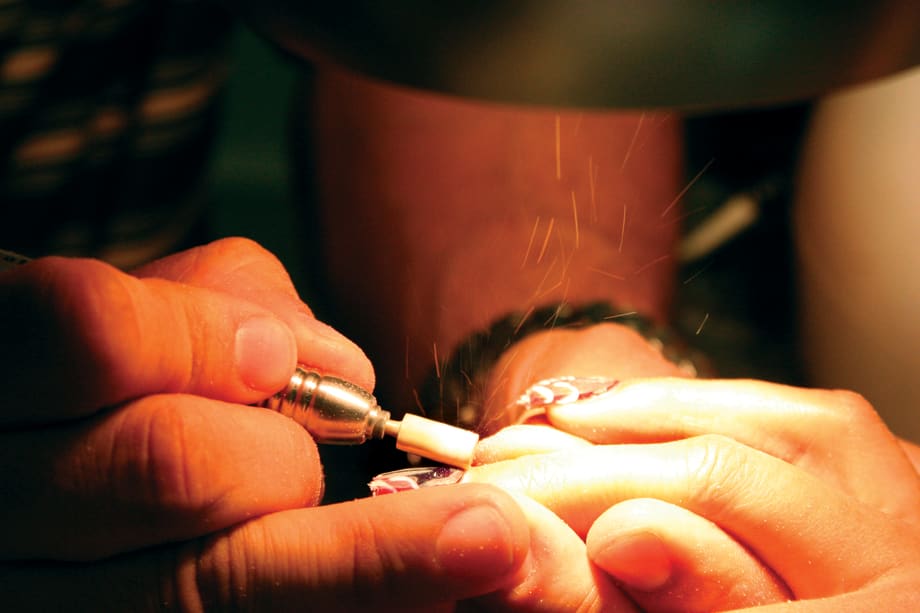
Sometimes it can be hard to separate fact from fiction when it comes to potential hazards associated with work in the nail industry. With persuasive voices on both sides of the issue, we wondered how many of you feel you are jeopardizing your health by working in the salon.
by Staff
May 19, 2011
5 min to read
We asked techs: On a scale of one to 10, how concerned are you about any potential negative health effects from the nail chemicals you use every day?
Ten. Chemicals are just that. It doesn’t take a rocket scientist to tell anyone that over time, if proper handling isn’t followed, damage can and will occur. Too much of anything can kill you. Amber Burnett, Hendersonville, N.C.
Ad Loading...
My worries are a one, simply because I know about and understand the chemicals we use. This is mainly due to [industry chemist] Doug Schoon. (I recommend his book Nail Structure and Product Chemistry.) It’s not easy understanding it all, but once you do the benefit to you and your clients is amazing. You have to understand how and why these chemicals work. Once you do that and know exactly what these chemicals are doing, your job is safe and you can sleep well at night. As long as you follow the correct procedures, then everything should be fine. Judy Archibald, Manchester, England
Nine. Iam concerned about the negative health effects of nail dust and the chemicals in it. For 15 years I never used a fan, mask, or vacuum and developed polyps in my nasal cavity, which I’ve had two surgeries to remove. The doctors said there may be a connection — and I strongly believe there is — so I now take precautions by using a dust vacuum, fan, and protective eyewear. Lynette Guzman, Nail Creations by Lynette, Huron Township, Mich.
Three. Manufacturers have made the chemicals for acrylic much less offensive than in the past, so the smells or the vapors traveling throughout the salon don’t seem to be as bad. I do worry about all the dust, but I have a vented table that keeps dust and debris to a minimum. I am looking for an extraction unit for help with the finer dust that gels create. After 22 years, I have never really had a problem with either and have always tried to use proper ventilation. Marc Foley, Greatful Nails Wausau, Wis.
I’d rate my concern as a two overall, a four on dust. The two things that concern me over time are the dust and the repetitive motion. While I do everything I can to minimize both and have done research on ergonomics, the cumulative effect over time is a concern. Claudia Iacovetto, C-C My Nails, Newcastle, Wyo.
I’ll rate it a two. I fully know how to use my product in a safe manner where even with prolonged contact I feel confident I will not acquire negative health problems. Classic Fournier-Mully, Personalities Salon, Queen Creek, Ariz.
Ad Loading...
While I agree that proper handling and precautions certainly need to be observed, I rate this a 10. As a natural nail tech, I believe minimizing exposure to clients and techs is very important. A growing number of companies are offering “greener” alternatives that techs can offer clients in combination with nail health education. Yna Johnson, Premier Salon, Franklin, Tenn.
I rank my concern about the products I use at a three. I’m kind of concerned, but not enough to worry about it constantly. I don’t think it’s good to be inhaling any kind of dust, let alone dust that comes off of an enhancement (not just because of the chemicals in the enhancement material, but because of the various household chemicals used by the clients in between fills that the acrylic may have absorbed). However, we’re exposed to so many chemicals and environmental pollutants on a daily basis — from our hair care products to the air we breathe. My natural nail clients tell me, “You can’t be too careful.” I say, “Sometimes, you can.” Tina Alberino, Attitudes Total Body Image, Wesley Chapel, Fla.
Six. I used to get headaches and then figured out I was too close to the nails and the brushes. Once I sat up taller I did much better. I have been doing nails for 25 years. I have some lung problems and I think they are from the dust. About five years ago I started wearing a mask and I sure hope that has made a difference. I know I get a fuzzy, dusty feeling in my eyes by the end of the day. Brenda Gibson, Brenda Gibson Center for Nails, Perrysburg, Ohio.
Eight. I am always careful with products and smell, and do not offer acrylics anymore due to the smell. I was getting headaches after doing a set of nails, so now I strictly use gel. My clients are happy with a product that is reliable, and my coworkers and other clients in the salon are much happier with the odorless product. Robyn Schwartz, Polished & Pampered Hair and Esthetics, Grand Forks, British Columbia, Canada
I rate it a five — smack dab in the middle. While all techs are taught how to properly use and protect against the products we use on a daily basis, not everyone follows the rules. With any chemical you always have to worry about allergic reactions, contact dermatitis, white lung from dust inhalation over the course of so many years when using improper ventilation, and so on. In all reality, no matter how much care you take to ensure safety, there is always something that could go wrong. Becky Liles, Seaport Salon & Day Spa an Aveda, Concept Salon, Silverdale, Wash.
Ad Loading...
I would say a 10. I’ve been doing nails for over 20 years. I started wearing a mask when filing about two years ago. I’ve developed asthma-type symptoms, and they’re not fun. I highly recommend that every nail tech who does artificial enhancements wear a mask when filing. Joanne Hurtubise Boice, Haute Pink Studio, Santee, Calif.
One. I use a product that has no odors and requires very limited hand-buffing. I think that in the 21st century if a salon has not yet looked for a healthier alternative, it’s not even worth going there. There are several products out there that have no odors and I found one that is an all-in-one system (Bio Sculpture Gel) that allows me to do every nail service — enhancements, no-chip manicures, silk tips (no glue on natural nails), and even 3-D art without acrylic. Christian “Chris” Mans, Jeweled Nails, Irvine, Calif.
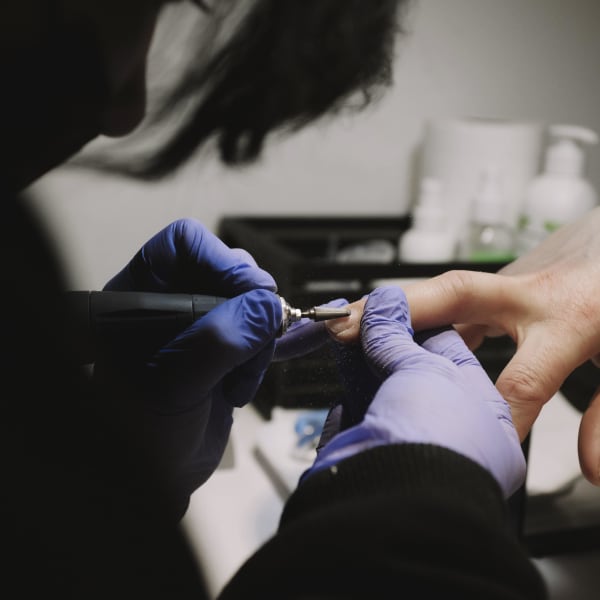
Uncured gel polish and microscopic e-file dust contain active acrylates that penetrate the skin, triggering permanent contact dermatitis. Learn the chemistry behind these irritants and how to protect your clients and yourself.
The Good Patch is a leading wearable wellness patch brand, offering wellness and skincare patches that support everyday needs including energy, sleep, relaxation and more.
Orthopedic PT reveals three daily exercises plus ergonomic advice that can help salon professionals avoid the aches and injuries caused by standing, bending and repetitive overhead work.
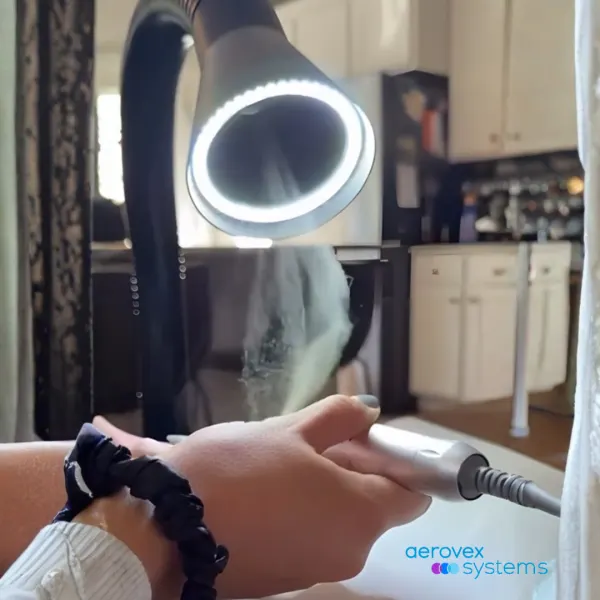
From acrylic monomers to airborne bio-dust, the air inside a nail salon carries risks most professionals never see coming. Aerovex Systems reveals the source-capture and room-purification strategies that are setting a new standard for salon safety.
Working in beauty doesn’t have to hurt. Learn how Somatic Movement helps hairstylists, lash artists, and other beauty pros release tension, improve posture, and extend their careers.
As a spa or salon professional, your clients expect more than just beauty—they expect safety, hygiene, and peace of mind. Fungal infections like Athlete’s Foot and Nail Fungus are more common than you think, especially in environments where tools and footbaths are reused without proper sanitation. This blog covers how to stop these issues before they start, using proven infection prevention strategies for salons and spas.
A federal initiative aimed at studying chemical exposure in nail salons has ended due to staffing and budget changes. Here’s what the project set out to do—and what its conclusion means for salon professionals.
For many people, a pedicure is a relaxing beauty ritual. But what most don’t realize is that this simple service, if done without proper hygiene and sanitation, can cause serious infections and long-term health issues.
Onycholysis is the separation of the nail plate from the nail bed. While it may look painful, it typically isn’t—at least not at first. But without proper care, this common nail disorder can lead to infections, deformities, and long-term damage.
Mckenzie Kool, Psychologist, MC, RPsych provides us with guidance on what may or not be helpful in speaking with someone who has suffered a significant loss.
Clients come to you to feel their best—not leave with a viral souvenir. Warts and cold sores can spread fast in busy salons, but a few smart habits make all the difference. Let’s talk about what’s really lurking in your salon (and how to kick it to the curb).
As Earth Day approaches, The Green Beauty Community Foundation and the Green Spa Network invite beauty pros to step forward and embrace sustainability through the Green Pledge--a powerful initiative designed by and for beauty industry leaders.
Don’t cancel Valentine’s Day altogether, urges Jill Palmquist. Instead, think of it as a (frilly, flowery, Champagne-bubbly) wake-up call to fall deeply in love with your own life.
Life coach and Culture Ambassador of Sam Villa, Andrew Carruthers, outlines how to tell if your burnout is temporary - or if it's time to make a bigger career change.