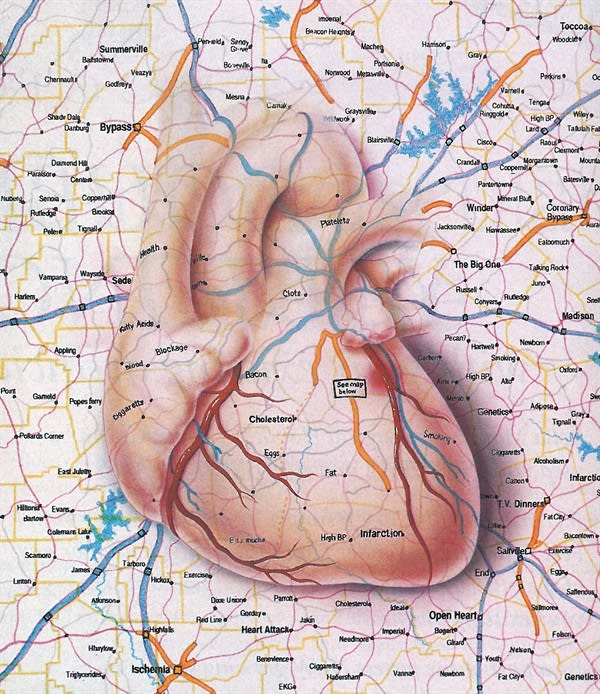
Overweight? Get too little exercise? Eat more fatty foods than you know you should? Smoke? Cholesterol a little (or a lot) high?
by Suzette Hill
July 1, 2000
8 min to read
Editor’s note: The line between our personal and professional lives can be a fine one. Hence this second installment in our occasional series on women’s health issues (part one, on breast cancer, appeared in the May 2000 issue). In this series, we’ll tell you about the most common medical conditions for women and what can be done to prevent, detect, and treat them. In the coming months the series will include articles on osteoporosis, depression, and diabetes. After you read each piece, we encourage you to share them with your coworkers, your clients, and your friends. Because the way we see it, your health is your most precious resource— both on and off the job.
I would wager a bet that at some point in her life every woman thinks she’ll just die of a broken heart. What’s sad is that more than one in three are right. Fact is, cardiovascular diseases (CVD) — including heart disease, stroke, and high blood pressure — are the #1 killers of men and women. According to the American Heart Association (AHA), CVD claims the lives of more than a half- million women every year.
Ad Loading...
“There is a misperception that cardiovascular disease is a disease of men,” emphasizes Patrice Desvigne-Nickens, M.D., the leader of cardiovascular medicine at the National Heart, Lung, and Blood Institute (NHLBI) in Maryland. “It affects women as much as, and perhaps worse, than men. Women who have [heart] disease don’t fare as well as men. Women who have a heart attack have a higher mortality rate in the hospital and over the ensuing years.”
While a recent study by the AHA demonstrated that women fear breast cancer more than any other disease, heart disease alone is the #1 cause of death and disability to women, says Richard Stein, M.D., an AHA spokesperson. Stroke is the third leading cause of death, and heart disease, stroke, and high blood pressure combined play a role in 41% of deaths (both men and women) in the United States each year.
Dr. Stein, a professor of medicine at New York State Health Science Center and chief of cardiology at Brooklyn Hospital Center, attributes women’s greater fear of breast cancer to the fact that younger women know more people with it than any other disease. CVD, on the other hand, tends to strike older, post-menopausal women, which scientists speculate is due to some protective aspect of estrogen levels. Because it affects women at a later age, CVD is perceived as a more natural disease process related to aging, as opposed to cancer, which strikes randomly and often younger women.
However, heart disease is by no means an “old person’s disease.” Dr. Desvigne-Nickens says she’s seen 30- year-old heart attack victims and stroke sufferers. While these women are certainly the exception rather than the rule, her larger point is that whether we develop heart disease later in life depends in large part on our youthful behavior.
You can greatly reduce your risks for developing cardiovascular disease by increasing your awareness of the individual diseases and their symptoms, minimizing your personal risk factors, and having an annual physical. Because, as she points out, the time to worry about heart disease is before you develop it.
Ad Loading...
“Particularly for healthy women in their 30s, it’s important to increase your awareness and start doing the right things,” Dr. Desvigne-Nickens asserts. “If you change your habits now, you can prevent — rather than seek treatment for — these diseases.” And both she and Dr. Stein note that it’s almost never too late to start lowering your odds of developing cardiovascular disease.
What Are These Diseases?
Cardiovascular disease is a generic term that encompasses a number of diseases of the heart (cardio) and blood vessel (vascular) systems. Ac- Cording to the AHA, approximately 50 million Americans have high blood pressure, more than 12 million have coronary heart disease, and almost 4.5 million have had a stroke. Obviously, not everyone dies from these diseases, but as Dr. Desvigne-Nickens observes, it’s equally a quality of life issue. “Women don’t die,” she says, “they all.”
While a common body system and risk factors link CVDs, each has its own unique disease process and treatment.
High blood pressure is by far the most common CVD, and for the most part its cause is unknown, although doctors know diet and exercise habits play a role in keeping it low. Blood pressure is the measure of the force of blood pushing against the walls of the coronary arteries as the heart pumps freshly oxygenated blood back out through the arteries to the organs and tissues. The pressure is greatest when the heart contracts and pumps blood; this is called systolic pressure. When the heart is at rest between beats (or “pumps”), the blood pressure falls, which is measured as diastolic pressure. Normal blood pressure is around 120/80 (the first, or top, number is systolic pressure; the second, or bottom, number is diastolic). Blood pressure above 140/90 is considered high. With high blood pressure, the heart has to work harder and you are at an increased risk of a stroke, heart attack, or kidney problems. Sometimes called “the silent killer” because high blood pressure is virtually symptomless, it’s estimated that more than 30% of people with high blood pressure are not being treated. A disease within its own right, high blood pressure is also a significant risk factor for heart disease and stroke.
Ad Loading...
Heart disease, on the other hand, is a disease of the coronary arteries (again, the blood vessels of the heart). According to the NHLBI, blood flows through the coronary arteries to deliver oxygen and nutrients to the heart. Clogging of the arteries (also known as arteriosclerosis) by a build-up of fatty plaque reduces the flow of blood — not unlike how grease clogs a kitchen drain. This restricts the amount of nourishment the heart gets and can lead to chest pain, also called angina. When the blood flow is severely restricted, a heart attack can occur (when nourishment is so restricted that the heart muscle is injured and damaged).
Stroke is a disruption of the blood supply to, or within, the brain. It is t similar to a heart attack in that when the blood supply is cut off, the brain 1 doesn’t receive the oxygen and nutrients it needs and brain cells are injured. Because the brain is the nerve center of the body, the body functions controlled by the injured or dead cells are affected. For example, people who have a stroke may have problems walking, talking, writing, and performing other tasks that they used to do without even thinking about them.
Don’t Be a Statistic
The good news about cardiovascular disease is that, unlike other diseases such as cancer or diabetes, there are many things you can do to greatly reduce your odds of developing it. “What is really exciting, and what makes it a travesty that cardiovascular disease is so underappreciated by people, is that healthy behavior really makes a difference,” says Dr. Desvigne-Nickens.
While factors such as heredity and other diseases such as high blood pressure, diabetes, and kidney disease put you at greater risk for developing cardiovascular disease, most of the risk factors are lifestyle-related — smoking, high cholesterol, poor diet, physical inactivity, obesity, overweight, and high stress levels. For those who have more than one of these risk factors, the odds don’t just add up, they multiply.
Ad Loading...
“A very important issue underappreciated by women is exercise,” says Dr. Desvigne-Nickens. “Exercise is an important factor and can contribute to a healthy heart. We recommend vigorous exercise — it could be anything from walking to jogging to dancing — at least three to four times a week, and more if possible. It might not change your weight, but it promotes cardiovascular fitness, which is essential to avoid elevations in blood pressure.” A side benefit of exercise is that it increases your stamina and makes you less susceptible to stress.
As far as diet goes, she emphasizes that there are daily caloric recommendations based on your sex, height, and build that should be followed. “It’s also important to limit your fat to 30% of your overall calories and restrict your cholesterol and salt.” And, of course, if you smoke you should quit.
If you find yourself justifying your reasons for not working to reduce your risk factors, consider this: With every Big Mac you consume, for every day you put off exercising to tomorrow, your blood pressure may be creeping up and your arteries clogging up. “There’s a fantasy that we can take these blockages away, but mostly what we can do is successful intervention,” says Dr. Stein. “While reversing the risk factors doesn’t seem to make blockages any smaller, we dramatically reduce the rate of clinical events such as a heart attack or stroke. Looking at what someone does at age 34 determines to a large degree what will happen at age 64. A balanced diet, moderate activity level, regular check-ups, and no smoking are all very important issues that buy a person good years. It’s the difference between being healthy and sickly at age 65.
“You can’t buy yourself out of cardiovascular disease with pills,” he adds. “You have to eat well, exercise, and not smoke. We would much rather hear, ‘Take these two pills every morning,’ but the evidence is that we earn our heart disease the old-fashioned way.” And now we have to earn back a healthy heart the same way.
Uncured gel polish and microscopic e-file dust contain active acrylates that penetrate the skin, triggering permanent contact dermatitis. Learn the chemistry behind these irritants and how to protect your clients and yourself.
The Good Patch is a leading wearable wellness patch brand, offering wellness and skincare patches that support everyday needs including energy, sleep, relaxation and more.
Orthopedic PT reveals three daily exercises plus ergonomic advice that can help salon professionals avoid the aches and injuries caused by standing, bending and repetitive overhead work.
From acrylic monomers to airborne bio-dust, the air inside a nail salon carries risks most professionals never see coming. Aerovex Systems reveals the source-capture and room-purification strategies that are setting a new standard for salon safety.
Working in beauty doesn’t have to hurt. Learn how Somatic Movement helps hairstylists, lash artists, and other beauty pros release tension, improve posture, and extend their careers.
As a spa or salon professional, your clients expect more than just beauty—they expect safety, hygiene, and peace of mind. Fungal infections like Athlete’s Foot and Nail Fungus are more common than you think, especially in environments where tools and footbaths are reused without proper sanitation. This blog covers how to stop these issues before they start, using proven infection prevention strategies for salons and spas.
A federal initiative aimed at studying chemical exposure in nail salons has ended due to staffing and budget changes. Here’s what the project set out to do—and what its conclusion means for salon professionals.
For many people, a pedicure is a relaxing beauty ritual. But what most don’t realize is that this simple service, if done without proper hygiene and sanitation, can cause serious infections and long-term health issues.
Onycholysis is the separation of the nail plate from the nail bed. While it may look painful, it typically isn’t—at least not at first. But without proper care, this common nail disorder can lead to infections, deformities, and long-term damage.
Mckenzie Kool, Psychologist, MC, RPsych provides us with guidance on what may or not be helpful in speaking with someone who has suffered a significant loss.
Clients come to you to feel their best—not leave with a viral souvenir. Warts and cold sores can spread fast in busy salons, but a few smart habits make all the difference. Let’s talk about what’s really lurking in your salon (and how to kick it to the curb).
As Earth Day approaches, The Green Beauty Community Foundation and the Green Spa Network invite beauty pros to step forward and embrace sustainability through the Green Pledge--a powerful initiative designed by and for beauty industry leaders.
Don’t cancel Valentine’s Day altogether, urges Jill Palmquist. Instead, think of it as a (frilly, flowery, Champagne-bubbly) wake-up call to fall deeply in love with your own life.
Life coach and Culture Ambassador of Sam Villa, Andrew Carruthers, outlines how to tell if your burnout is temporary - or if it's time to make a bigger career change.