






The Beauty Pro Book Club: 4 Reads to Inspire Growth and Success
Four publications for beauty industry professionals to enhance their leadership skills, financial awareness, professional growth, and joy!
by Anne Moratto


 MENU
MENU SEARCH
Whether it’s revamping your current location or conquering uncharted territory in a new salon, how well you prepare for the renovation could be the difference between high hopes or high stress. While the most exciting part may be seeing it all come together, the most important part is done before you ever lift a finger.
From start to finish, designing or redesigning a salon will take six months to a year, says Christine Kauffman, national sales and design manager for Chicago-based Veeco Salon Design and Manufacturing. And although you may be convinced you could pull the project together faster, Kauffman says one of the most common mistakes she sees is a salon owner failing to schedule an adequate amount of time to create a well-designed salon. Many owners allot only six months for their project, and then have trouble adjusting their schedule to accommodate inevitable setbacks. In the same way that nail prep needs to be done before application, so project prep needs to be done before renovation.
STEP 1: Prep Work
Jenny Dugan, project manager for the Interior Design Group of Belvedere USA Corporation (Belvidere, Ill.), encourages salon owners to start with a notebook. Next, look through design magazines and trade publications and visit other salons to find styles and ideas of what you like and don’t like. Cut out pictures. Jot down different thoughts and information so when you are ready to meet with a designer you will have a starting point. (If you have a difficult time finding pictures of designs that complement your style, you may have better luck online than in catalogs. A great source for viewing design concepts is in photo galleries on manufacturers’ websites.)
It’s important to decide not only the look of the salon, through furniture and color schemes, but also the feel of the salon. Laurie Cohen, vice president of marketing and Internet sales for Veeco, says the first step to planning a new salon is for the owner to answer this question: What image do I want to project? Image is about attitude, and while textures and accessories may differ in different areas of the salon, the image needs to have continuity throughout.
As you compile pictures, take note of pricing. Financials are an important aspect of business expansion, and the best way to determine your spending plan is to create a business plan. Business plans help in two ways: First, they show a lending institution you have done your homework — you have a clear understanding of where the money is going and how you will pay it back. Second, even if you won’t need to borrow the money, a business plan allows you to visualize your expenses and potential profit. It anchors you when the excitement and emotion of remodeling begin to sweep you away, and it provides a tangible way of measuring the success of your expansion. Be sure to research all financing options. Ask the manufacturer if there are leasing options or payment plans.
There are benefits of remodeling that you may not immediately recognize, but that should be factored into your accounting. For example, consider the estimated 20% increase in revenue that is generated from renovations. This increase comes from retail sales, the number of clients you service, and new employees who will be attracted to your salon.
“Updating your salon makes it interesting,” says Dugan. “This will solidify your relationships with both clients and employees.” Once you decide how you want your salon to look, the amount of money you will spend, and how you will finance the improvements, it’s time to acquire the necessary permits.
Every town has zoning laws — residential and commercial — and some may even specify if a particular building is zoned for beauty salons. In some cities, a beauty salon cannot be in the same building as medical offices, for example. Since every township has different regulations, it is up to you to contact your local government to learn the requirements. Determine where you would like to open your salon and then call that town’s city clerk. Ask the city clerk who you would need to contact to learn how the site is zoned. Also, ask who you would speak to about a building permit. Don’t get nervous, this is a very straightforward process. (If you hire a contractor, he or she should do it for you.) Basically, a building permit says, “Yes, you can remodel.” However, not every job needs a building permit. A permit is used when plumbing or electrical wires need to be moved or changed. If you are applying a coat of paint and changing your furniture, you probably won’t need one. The only way to know for sure is to inquire with the city clerk’s office in your particular town.
If you are doing extensive remodeling, you will need to bring a stamped copy of your floor plan before you will be issued a permit. This is a drawn-to-scale likeness of your floor plan that has been reviewed by a licensed architect or engineer. This professional puts his or her stamp on the plans as if to say, “I make myself liable in saying these plans meet local and state codes, and they are structurally sound.”
The architect does not need to design your floor plan; the architect reviews the design and “approves” it. Kauffman says one of the biggest mistakes a person makes is to have an architect design the layout of her salon.
“Architects may not understand the space requirements for salon equipment and styling stations,” she says. “They may squeeze too many things and people together because they don’t understand what goes on in a salon environment.”
Once you have consulted a designer and have a floor plan, then you can take the finished design to the architect or engineer for his stamp and then to the town for a permit.
STEP 2: Application
OK, the legalities are out of the way and you have a notebook full of ideas. You’re ready to go. Where do you start? The truth is, you could design your floor plan yourself, determine the flow of traffic, decide on your flooring, pick out your own furniture, etc. But let’s be frank: Clients could go to a local supply store, purchase nail products and promptly go home and apply their own set of nails. Whose work do you think looks better? In the same way, while there are salon owners who have the capacity to design their own space, the majority of them could use the expertise of a professional. Dugan compares designing a salon with planning a wedding. “We have a great learning curve,” she says. That learning curve could save you time and money.
But whether you go at it alone, or hire a designer (whose services should be available through the company where you order your furniture), the questions to ask remain the same.
What do the clients see when they walk into the salon? “You can’t change the first impression,” says Kauffman. Therefore, she recommends that you pay particular attention to the reception area, where the customers get their first look at your salon. This area should be welcoming and warm because this is where you set the mood or tone of the entire salon experience. In addition to developing a mood, Dugan suggests you create a point of interest so that when clients walk into the salon, they want to go further in.
Some designers change the flooring from the waiting area to the service area. Some use furniture, displays, or curves in the flooring to direct customers from one area to the next. Whatever method you choose to direct the flow of traffic through your salon, make sure it isn’t confusing to the clients.
David S.S. Davis, Veeco’s director of design, says salon owners ought to prepare for the future. That means your renovations should allow for growth. “It is much more costly to add additional operators later,” says Davis. Beyond designing a plan that provides space for your new services, make sure you have designated an adequate amount of room for storage. Also, remember the importance of retail and plan to give it the space and visibility it deserves. Well-lit, well-placed displays should be designed into your salon’s floor plan.
Once you decide on the image, the layout, the furniture — and after you get your floor plan approved — it’s time to call the contractor and start tearing down walls and constructing new ones. Now all your hard work will have visible results. Once all the work is done, it’s time to add the finishing touches.
STEP 3: Fine Finishing
After months of preparation and application, you’re finally ready to welcome your customers (and all your soon-to-be customers) into your new salon. But before you send out the invites announcing your grand opening, take a bit of advice from Cohen: Don’t plan your grand opening until you have actually had a chance to settle into the new digs. Cohen says, “This allows you to show off your salon after you have had a chance to add the little extras like plants, pictures, and accessories.”
Renovating a salon will play out differently for each person. Some salon owners may be able to follow these three steps smoothly and the job will be enjoyable and relatively easy. Other owners may find the process frustrating because they will have to bounce back and forth between designer and contractor before they settle on a final floor plan that works. Whatever your experience with the process, keep your eyes on the finished project. Don’t let setbacks discourage you from your bigger goal. Cohen reminds us that remodeling includes renovation of your total image, not just physical changes to the salon. Keep that image in front of you throughout this whole adventure and when it’s all over, call all your clients and introduce them to a whole new you.
Michelle Pratt is a freelance writer and licensed nail tech based in Johnson, City, N.Y.
Four publications for beauty industry professionals to enhance their leadership skills, financial awareness, professional growth, and joy!
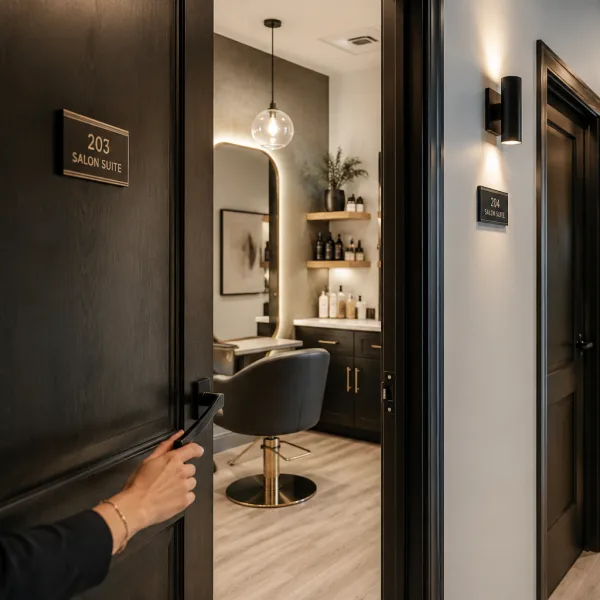
The most successful salon suites balance personality, function, and comfort. Megan Communale of My Salon Suite shares her best advice for designing a space that supports your business goals and leaves a lasting impression on every guest.

Square data shows that regular customers tip 11% higher and are shared across 32% of businesses in the same ZIP code, driving thousands of dollars in additional revenue per connection.
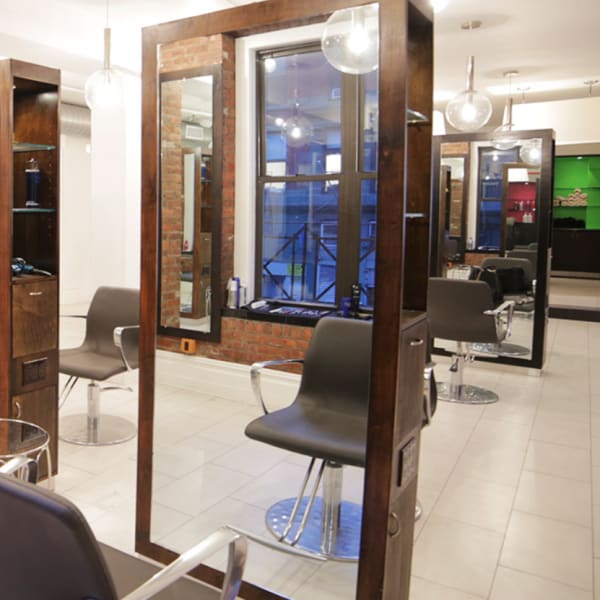
When Bowie Lau and Jeffrey Ching opened JBW Jeffrey Ching Salon in 2011, they weren’t just launching another luxury hair destination—they were building a business rooted in passion, artistry, and thoughtful growth.
Sponsored by Amex

Inside the Systems That Power an Elevated Salon Experience From seamless online booking to a team-first culture, J Gold Salon in Atlanta offers more than great hair—it delivers consistent, high-touch service with the help of partners like Boulevard and American Express.
Sponsored by Amex

Want to grow your career as a beauty professional? K18 Sales Manager Sabrina Sanborn shares advice on networking, mentorship, and self-advocacy—from attending hair shows to finding the right guidance to reach your goals.

A combination of clear policies, effective communication, and strong client relationships has helped me create a more reliable and efficient booking system.

Founded by Cleveland serial entrepreneur Shaura Rodgers, Nailtorious has grown to include a nail supply megastore, training facilities, and retail line for nail techs.

This period after the holidays can bring on a huge lull for hairstylists. We asked Cosmo Prof's team of professionals to offer their best advice on how to deal with the January-February slow period.

Key highlights include a push toward inclusive spaces for all abilities, an emphasis on maximizing livable square footage, and a continued love for modern farmhouse exteriors.

The busy holiday season is here, and with it comes jam-packed days, last-minute client requests and booming retail sales. For many salon owners, the highlight of the season is Small Business Saturday® (SBS). This year on Saturday, November 30, consumers can take their shopping into the small businesses in their communities.
Sponsored by Amex

Want to become savvy about your personal finances, but don't quite know where to start? Anna Manukyan identifies six important concepts for building a strong financial foundation.
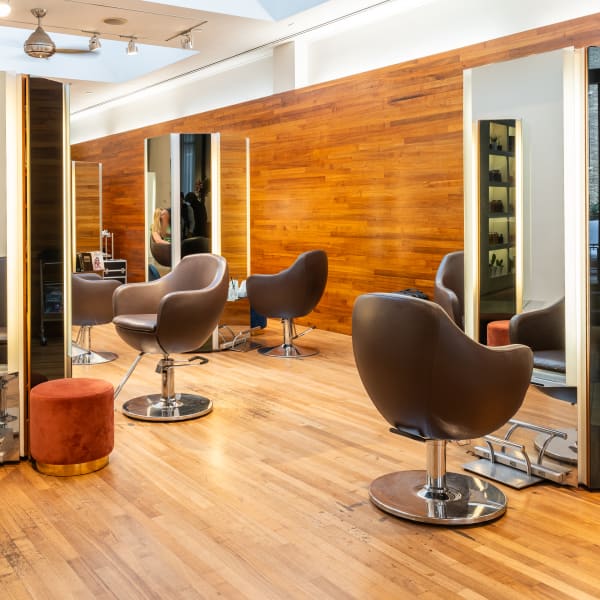
Salon owner Nuri Yurt had a dream of owning a salon on New York City’s Madison Avenue. "Through perseverance, hard work and stellar customer service, he and partner John Kaygisiz founded Toka Salon in 2007.
Sponsored by Amex

This guide is your one-stop shop for a plethora of technology tools, software and services created to keep your salon or spa thriving.

Anna Manukyan shares a breakdown of what different types of financial accounts should be used for.

Vagaro has consistently been at the forefront of salon software technology, helping businesses be more efficient, create more effective communication, and even improve company culture. Now, Connect by Vagaro, the platform’s two-way communication capability, and Vagaro’s new generative AI tools are giving owners new opportunities to grow and expand.
Sponsored by Vagaro

Young Nails' Greg, Habib, and Tracey discuss whether getting too close to clients can damage your business.