Keep a strict salon smoking policy to prevent fires, lawsuits, and unhappy clients.
by Lisa Baget, contributing writer
April 1, 1993
7 min to read
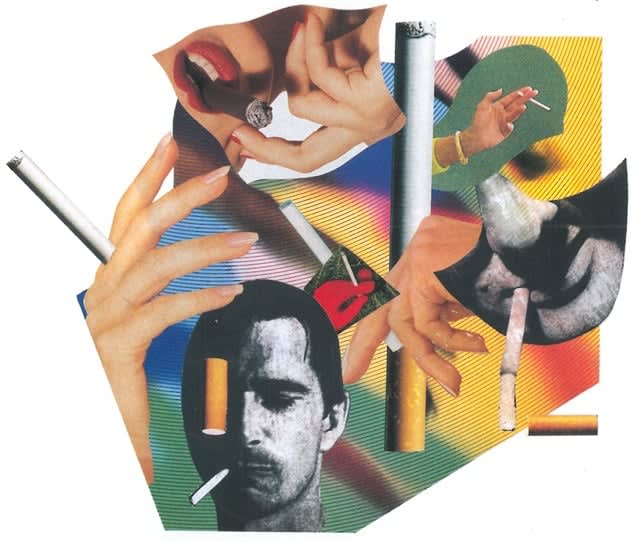
Smoking used to be glamorous. Movie stars, often photographed with cigarettes dangling from their mouths, used to seem oh-so-cool and sexy.
But today you’re more likely to see a glamorous actress or pop star promoting running shoes. The Marlboro Man may still be free to light up when he’s in the saddle, but in most restaurants, he’d have to sit in a separate section.
Ad Loading...
And in many other public places, like government buildings or domestic airplane flights, he wouldn’t be able to indulge in his habit at all.
Regulations on smoking have steadily increased since Surgeon General C. Everett Koop’s 1986 report on smoking and health informed the public that it’s hazardous to inhale other people’s smoke. Organizations like the American Cancer Society, the American Lung Association, the American Heart Association, and other non-profit groups concerned with the health of Americans agree that environment tobacco smoke (ETS), also referred to as passive or secondhand smoke (all defined as smoked inhaled by someone other than the smoker), is a health hazard, especially to pregnant women, children, people who suffer from allergies or asthma, and the elderly.
Reports issued by the Environmental Protection Agency (EPA) have concluded that secondhand smoke causes 2,500 to 3,000 lung cancer deaths in the United States every year. In a report released on June 25, 1992, the EPA proposed grouping ETS with other known human carcinogens such as asbestos. The report also recommended that employers provide enclosed, separately ventilated smoking rooms, along with establishing other comprehensive guidelines concerning cigarette smoke in the workplace.
SMOKING CAUSES HAZARDS
Despite all the publicity about smoking, it’s still possible to walk into a nail salon and find technicians working on clients while a cigarette burns in the ashtray on their table. Or, you might see a client holding a cigarette in her left hand while a technician is applying polish to her right one. You might even see a nail technician is applying polish to her right one. You might even see a nail technician polishing a client’s nails, a burning cigarette sticking like glue to her lipstick.
Ad Loading...
First of all, a business owner who allows cigarettes smoking to occur anywhere in the salon may be in violation of local city or state ordinances that ban smoking in public places – which may or may not include you salon. It would be wise to call your local governing body to find out.
Second, if you don’t have a written no-smoking policy in effect, you could be subject to a lawsuit from non-smoking technicians who are subjected to daily to breathing coworkers’ smoked.
Third, according to Douglas Schoon, executive director of the Chemical Awareness Training Service (CATS) in Irvine, Calif., allowing technicians and clients to smoke around nail products is in direct violation of OSHA regulations.
“Under their guidelines, anyone working with chemicals has to establish separate smoking areas from the products they work with,” he says. “The problem is technicians tend not to think of themselves as chemical or industrial workers, yet that is exactly what they are. And OSHA regulations specify that you cannot smoke around flammable chemicals.”
Another problem is that many technicians and salon owners don’t realize they work with a number of highly flammable materials.
Ad Loading...
“Technicians work with products that, when they come out of the bottle, form vapors that are heavier that air,” Schoon continues.
“These vapors will kind of float along your tabletop like an invisible chemical fuse until they find a cigarette. And when they find a cigarette, they’ll ignite and it will burn, just like a fuse, back to the bottle, which can result in a mini explosion on your table.”
Schoon says some products technicians work with are so flammable, they’re categorized as ultra-major extremely hazardous materials.
“Technicians work with materials that will catch fire and burn even if you freeze them,” he says. Nail dehydrators, for instance, will burn even if you cool them to five below zero because they have a low flashpoint, which is the temperature at which a substance will burn.
Schoon says further dangers arise because many technicians dump chemicals down the drain in a back room and think that’s the end of it. They don’t realize that their drain traps are filled with rapidly evaporating solvents that can emerge up another drain plate where someone is smoking – and it can cause a big fire.
Ad Loading...
Another potentially dangerous situation is when a technician wipes up a chemical spill and throws the towel in the garbage. “Along comes a client or coworker who dumps an ashtray with a smoldering cigarette,” Schoon says, “and poof! You have a fire in your trash can.”
Many technicians also underestimate the flammability of nail polish. “When you apply a fresh coat of polish to a client’s nails, their nails are highly flammable,” Schoon says. “I’ve seen people’s nails catch fire up to a few hours after a fresh coat of polish has been applied. Thinking their nails are dry, they light a cigarette.”
Besides smoking being a fire hazard, Schoon says tobacco and smoke can also cause lifting. “Smoke that comes from the tip of your cigarette consists of oily residues that can deposit on your tips and brush and make your work lift-prone,” he says. “Clients who hold a cigarette in their left hand while the technician works on their right are contaminating their hand with oily residues from smoke that can cause lifting.”
SMOKE GETS IN YOUR LUNGS
Additionally, Schoon says breathing cigarette smoke is bad enough without mixing it with the chemical-vapor laden atmosphere of a salon. “As you inhale, you are not only inhaling the typical cigarette combustion by-products from burning tobacco,” he says, “but in the salon, you’re also inhaling those by-products mixed with other chemical vapors from nail products.”
Ad Loading...
Aware of the health and fire hazards caused by smoking, many salon owners are declaring their salons smoke-free. Sharon Stringham, owner of Elegante Styling Salon in Tucson, Ariz., says she used to work in a salon that allowed smoking.
“A lot of customers were really unhappy because they would just get their hair washed and then a person sitting next to them would light up a cigarette and their hair wouldn’t smell fresh anymore,” she says. “So when I opened my own salon, I knew I wanted it to be smoke-free, especially after reading all the articles that say secondhand smoke is a health hazard. One of the reasons I chose this location was because it had an enclosed outdoor patio so that clients who need to smoke can sit outside and enjoy the birds and plants in a private area.”
Stringham says having a smoke-free environment has attracted several new clients. “I highlight the fact that we’re smoke-free in all of our advertisements,” she says. “And I’ve had nail clients call and come here specifically because of it.”
Since opening the salon, Stringham has had only one problem client. “She used to sneak in the bathroom to smoke,” Stringham says. “The first time it happened, I took her aside and explained nicely that we didn’t allow smoking in the salon. The next time she came in, she snuck in the bathroom and smoked again. So I posted a large no-smoking sign on the mirror where she could clearly see it. On her third visit, she lit up again. To solve the problem once and for all, I greeted her at the door before her next visit and said ‘If you need a cigarette, you’re welcome to go outside on the patio.’ I walked her out and showed her where to sit, and I’ve never had a problem since.”
While some smokers might object to their habit being banned, even for an hour, salon owners and technicians say most of them don’t mind. Gretchen Whitney, a smoker living in Tucson, Ariz., says she’s allowed to light up anywhere she wants in her salon. “But if they suddenly imposed a no-smoking policy and explained it was because of safety reasons, I would comply with it,” she says. “In fact, I’d rather they alert me to health and fire hazards my smoking might cause than wait for an accident to occur.”
Ad Loading...
BUSINESS ARE LIABLE
If you’re reading this at your workable while smoking a cigarette, you probably think this article doesn’t really apply to you. After all, you take proper precautions, right? You know what you’re doing. But no matter how careful you are, technicians and salon owners should be aware that they are liable for their actions.
Smoking is not only the cause of many salon fires, but the number of lawsuits against employers who fail to devise smoking policies is growing – and the employers are losing.
Non-smokers have sued and won unemployment compensation, disability payments, and other monetary awards because judges are uploading the common law that it’s up to the employer to ensure that their workplace is reasonably free from unnecessary health hazards.
It is wise to take the time to devise your own salon policy – now. Write a policy detailing where smoking, and is not, permitted and make sure each employee gets a copy. Post signs so clients are also aware of your smoking policy.
Ad Loading...
Make sure your salon is safe for technicians as well as your clients. It takes just two words to protect them against health and fire hazards: “No Smoking.”
Uncured gel polish and microscopic e-file dust contain active acrylates that penetrate the skin, triggering permanent contact dermatitis. Learn the chemistry behind these irritants and how to protect your clients and yourself.
The Good Patch is a leading wearable wellness patch brand, offering wellness and skincare patches that support everyday needs including energy, sleep, relaxation and more.
Orthopedic PT reveals three daily exercises plus ergonomic advice that can help salon professionals avoid the aches and injuries caused by standing, bending and repetitive overhead work.
From acrylic monomers to airborne bio-dust, the air inside a nail salon carries risks most professionals never see coming. Aerovex Systems reveals the source-capture and room-purification strategies that are setting a new standard for salon safety.
Working in beauty doesn’t have to hurt. Learn how Somatic Movement helps hairstylists, lash artists, and other beauty pros release tension, improve posture, and extend their careers.
As a spa or salon professional, your clients expect more than just beauty—they expect safety, hygiene, and peace of mind. Fungal infections like Athlete’s Foot and Nail Fungus are more common than you think, especially in environments where tools and footbaths are reused without proper sanitation. This blog covers how to stop these issues before they start, using proven infection prevention strategies for salons and spas.
A federal initiative aimed at studying chemical exposure in nail salons has ended due to staffing and budget changes. Here’s what the project set out to do—and what its conclusion means for salon professionals.
For many people, a pedicure is a relaxing beauty ritual. But what most don’t realize is that this simple service, if done without proper hygiene and sanitation, can cause serious infections and long-term health issues.
Onycholysis is the separation of the nail plate from the nail bed. While it may look painful, it typically isn’t—at least not at first. But without proper care, this common nail disorder can lead to infections, deformities, and long-term damage.
Mckenzie Kool, Psychologist, MC, RPsych provides us with guidance on what may or not be helpful in speaking with someone who has suffered a significant loss.
Clients come to you to feel their best—not leave with a viral souvenir. Warts and cold sores can spread fast in busy salons, but a few smart habits make all the difference. Let’s talk about what’s really lurking in your salon (and how to kick it to the curb).
As Earth Day approaches, The Green Beauty Community Foundation and the Green Spa Network invite beauty pros to step forward and embrace sustainability through the Green Pledge--a powerful initiative designed by and for beauty industry leaders.
Don’t cancel Valentine’s Day altogether, urges Jill Palmquist. Instead, think of it as a (frilly, flowery, Champagne-bubbly) wake-up call to fall deeply in love with your own life.
Life coach and Culture Ambassador of Sam Villa, Andrew Carruthers, outlines how to tell if your burnout is temporary - or if it's time to make a bigger career change.