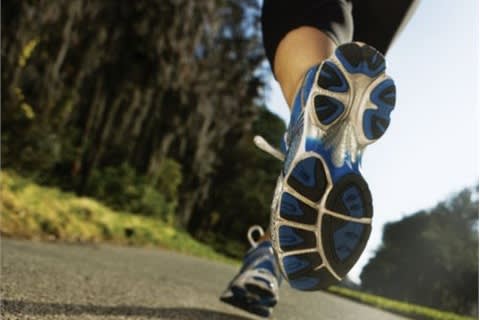
From ingrown toenails to calluses to sore feet, runners face specific challenges when it comes to foot care. Here are some common maladies these clients endure and some ideas for making sure they leave your salon happy and healthy.
> MUSCLE SORENESS: Whether your client has just taken up jogging or she’s an experienced athlete training for a marathon, she will likely experience muscle aches and pains. Considering that a runner’s foot strikes the ground an average of 800 times per mile, this isn’t surprising. To ease soreness, soak your client’s feet in a soothing bath of warm water and Dead Sea salts or Epsom salts, both of which contain high levels of magnesium. According to the Epsom Salt Industry Council, this mineral/electrolyte may reduce inflammation, which in turn relieves pain and soreness. When you massage your client’s feet and calves, be sure to start out gently, adding pressure only when she indicates you should do so.
> BRUISED/LOST/INGROWN TOENAILS: Many runners suffer from “runner’s toe,” a condition caused by the toe repeatedly hitting the toe box of the shoe. If you notice bruised or ingrown toenails, encourage your client to make sure her shoes are properly fitted, as too-small shoes will exacerbate the condition. In some instances, runners can even lose their toenails. If you see a damaged or missing nail, be sure to ascertain that the nail area is completely healed over before proceeding, as pedicuring on the vulnerable, thin bed epithelium can be risky. Keep your client’s toenails short; clip the nails straight across, then gently round the corners to avoid pressure when running.
Ad Loading...
> BLISTERS: Because of so much friction being applied to the skin of the feet, runners often form blisters — fluid that develops between layers of skin. If your client has blisters on her feet, you may pedicure very gently, provided the blisters are intact and not infected. Clients should be encouraged to seek medical attention if the blisters become painful or appear infected.
> CALLUSED FEET: Constant friction and pressure on a runner’s feet often causes calluses — areas of skin that have thickened. These calluses are the body’s attempt to protect itself by adding another layer of covering. The abnormal pressure can be caused by ill-fitting shoes or an underlying bone problem, such as a bone spur. Rather than completely removing the protective callus, you might simply reduce it and smooth the skin, depending on your client’s wishes. There is a fine line between having a bit of toughened skin to protect the foot and having a callus that threatens to form a blister underneath. Encourage your client to maintain her softened skin between salon visits with the proper products and tools for home care, such as a pumice stone and exfoliating scrub.
> PLANTAR FASCIITIS: Overtraining and imbalances can cause plantar fasciitis, a condition characterized by arch and heel pain caused by inflamed fascia (connective tissue that surrounds muscles, blood vessels, and nerves) in the sole of the foot. This pain may be most acute first thing in the morning. Runners may over pronate, causing feet to roll inward, or supinate, causing them to roll outward. Over-the-counter arch supports or custom orthotics may help to correct the structural imbalance. Gentle stretching may also help. You can incorporate specialized massage into your runners’ pedicures to help ease the pain of plantar fasciitis, and point clients in the direction of specialized products, such as plantar and Achilles stretching aids and compression foot sleeves.
Runner’s Rx
Look for products containing ingredients to cleanse, soothe, exfoliate, and moisturize.
Uncured gel polish and microscopic e-file dust contain active acrylates that penetrate the skin, triggering permanent contact dermatitis. Learn the chemistry behind these irritants and how to protect your clients and yourself.
The Good Patch is a leading wearable wellness patch brand, offering wellness and skincare patches that support everyday needs including energy, sleep, relaxation and more.
Orthopedic PT reveals three daily exercises plus ergonomic advice that can help salon professionals avoid the aches and injuries caused by standing, bending and repetitive overhead work.
From acrylic monomers to airborne bio-dust, the air inside a nail salon carries risks most professionals never see coming. Aerovex Systems reveals the source-capture and room-purification strategies that are setting a new standard for salon safety.
Working in beauty doesn’t have to hurt. Learn how Somatic Movement helps hairstylists, lash artists, and other beauty pros release tension, improve posture, and extend their careers.
As a spa or salon professional, your clients expect more than just beauty—they expect safety, hygiene, and peace of mind. Fungal infections like Athlete’s Foot and Nail Fungus are more common than you think, especially in environments where tools and footbaths are reused without proper sanitation. This blog covers how to stop these issues before they start, using proven infection prevention strategies for salons and spas.
A federal initiative aimed at studying chemical exposure in nail salons has ended due to staffing and budget changes. Here’s what the project set out to do—and what its conclusion means for salon professionals.
For many people, a pedicure is a relaxing beauty ritual. But what most don’t realize is that this simple service, if done without proper hygiene and sanitation, can cause serious infections and long-term health issues.
Onycholysis is the separation of the nail plate from the nail bed. While it may look painful, it typically isn’t—at least not at first. But without proper care, this common nail disorder can lead to infections, deformities, and long-term damage.
Mckenzie Kool, Psychologist, MC, RPsych provides us with guidance on what may or not be helpful in speaking with someone who has suffered a significant loss.
Clients come to you to feel their best—not leave with a viral souvenir. Warts and cold sores can spread fast in busy salons, but a few smart habits make all the difference. Let’s talk about what’s really lurking in your salon (and how to kick it to the curb).
As Earth Day approaches, The Green Beauty Community Foundation and the Green Spa Network invite beauty pros to step forward and embrace sustainability through the Green Pledge--a powerful initiative designed by and for beauty industry leaders.
Don’t cancel Valentine’s Day altogether, urges Jill Palmquist. Instead, think of it as a (frilly, flowery, Champagne-bubbly) wake-up call to fall deeply in love with your own life.
Life coach and Culture Ambassador of Sam Villa, Andrew Carruthers, outlines how to tell if your burnout is temporary - or if it's time to make a bigger career change.