Although structurally small, the cuticle plays an important role in maintaining the integrity and function of the nail and its surrounding tissues.
by Paul Kechiljian, M.D.
June 1, 1993
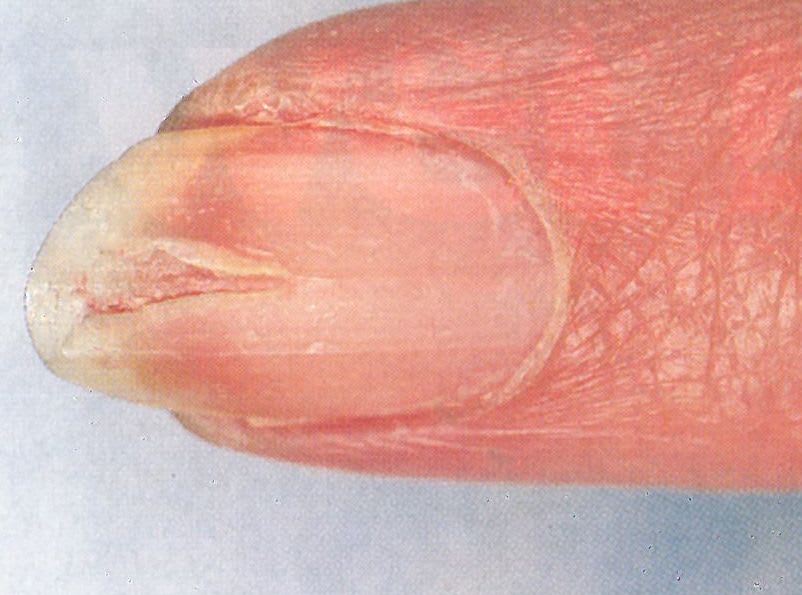
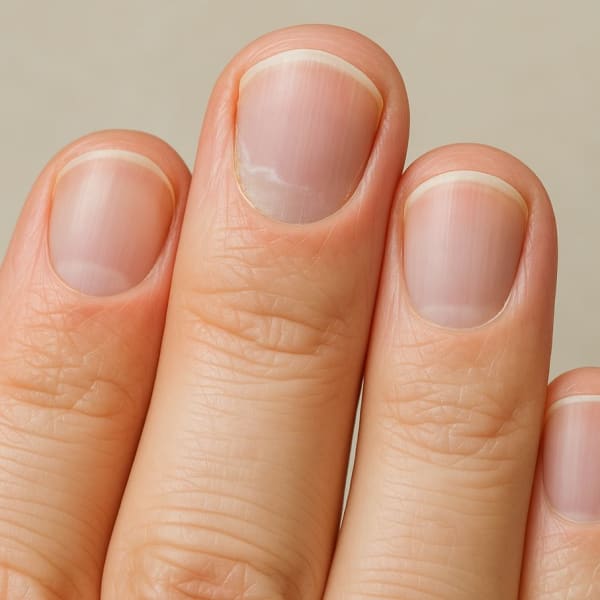
Although her nail is damaged, this patient has a healthy cuticle that is firmly attached to the nail plate.
4 min to read
Although her nail is damaged, this patient has a healthy cuticle that is firmly attached to the nail plate.
Formed by the proximal nail fold, the cuticle is comprised of keratin, which is a translucent protein. The cuticle extends from the nail fold onto the underlying nail plate. As the nail elongates, the cuticle and nail grow together for a short distance until the overlying cuticle gradually disappears. This overgrowth commonly is scraped or filed away by nail technicians during a manicure or in preparing the nail for extensions.
The cuticle varies in appearance among individuals and even among different fingers and toes in the same person. It may be barely visible on some nails, while on other nails its’ very thick.
Ad Loading...
Cuticles often crack, thicken and form hangnails. The various maneuvers that people use to remove these rough pieces of extra skin--biting, cutting or tearing- can cause pain, bleeding, swelling, and infection. Persons who repeatedly immerse their hands in water throughout the day – homemakers, waitresses, bartenders – frequently develop dry cracked cuticles as well as dry skin on the hands. The cuticles and hands can become fissured and painful from constant water exposure. Winter is the most troublesome time of year, even for people whose exposure to water is limited. Cold air and home heating dry the surrounding air and remove moisture from the hands, nails, and cuticles.
The best way to prevent skin and cuticle dryness in any season is the liberal use of emollient lotions. Moisturizing creams are helpful, particularly when applied immediately after washing and drying the hands. When a moisturizer is rubbed into the hands, the lubricants help trap absorbed water, thus keeping the skin, nails and cuticles soft and hydrated.
Properly used, rubber gloves are also helpful in protecting hands and cuticles from dryness caused by repeated immersion in liquids. Because rubber gloves don’t allow perspiration to evaporate, they should always be used with a separate pair of cotton gloves warn underneath, which will help absorb excess moisture from perspiration. This protective combination will help the skin, nail, and cuticles maintain their normal moisture levels.
Cotton gloves also provide a sanitary environment. Rather than placing one’s hands in gloves that are always damp and possible teeming with bacteria, cotton gloves protect the hands from coming in contact with the insides of rubber gloves, which are rarely cleansed properly. Wearing cotton gloves also prevents contamination of rubber gloves with bacteria, since the skin never touches the inside of the gloves.
It’s so easy to get caught up in how the cuticles look that we forget their important function. The nail is an enclosed anatomical unit. The hyponychium seals the nail to the tip of the finger. The lateral nail folds seal the sides of the nail apparatus and the cuticle seals the proximal nail fold to the nail plate. Whenever one of these “seals” is broken, the risk of infection is increased at that site.
Ad Loading...
Unfortunately, the cuticle’s seal is frequently broken by trauma and injury. When the cuticle is damaged, bacteria and moisture can enter the pocket between the proximal nail fold and the nail.
Liquids that leak into this cleft may also cause irritation, inflammation, and swelling. While this type of inflammation does not usually require antibiotics, the discomfort can be great and the recovery prolonged. Bacteria can cause infections of the nail fold. This infection is called paronychia. More severe bacterial infections involving the finger, cellulitis and bone osteomyelitis, can also occur. Infections are treated using antibiotics; in the case of osteomyelitis, intravenous antibiotics must be administered in the hospital. Clearly, maintaining the integrity of the cuticle is important.
While few nail technicians would dispute the fact that long, well-manicured nails greatly enhance the beauty of the hand, it is important to keep in mind that total removal of the cuticle may lead to infection or inflammation of the nail fold and finger. When performing a nail service, always leave at least a portion of the cuticle intact. First soften cuticles with warm water soak or a moisturizing lotion and use a gentle pushing motion.
Never jab the cuticle back or exert any more than light pressure on the nail plate. Recommend that clients liberally use moisturizers if they have dry skin or immerse their hands in water often. Keeping the cuticles well-moisturized and intact diminishes the likelihood of damage or infection later on.
Uncured gel polish and microscopic e-file dust contain active acrylates that penetrate the skin, triggering permanent contact dermatitis. Learn the chemistry behind these irritants and how to protect your clients and yourself.
The Good Patch is a leading wearable wellness patch brand, offering wellness and skincare patches that support everyday needs including energy, sleep, relaxation and more.
Orthopedic PT reveals three daily exercises plus ergonomic advice that can help salon professionals avoid the aches and injuries caused by standing, bending and repetitive overhead work.
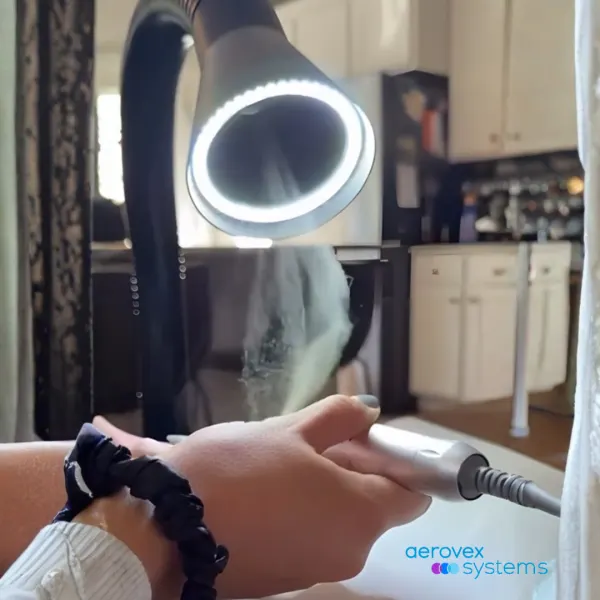
From acrylic monomers to airborne bio-dust, the air inside a nail salon carries risks most professionals never see coming. Aerovex Systems reveals the source-capture and room-purification strategies that are setting a new standard for salon safety.
Working in beauty doesn’t have to hurt. Learn how Somatic Movement helps hairstylists, lash artists, and other beauty pros release tension, improve posture, and extend their careers.
As a spa or salon professional, your clients expect more than just beauty—they expect safety, hygiene, and peace of mind. Fungal infections like Athlete’s Foot and Nail Fungus are more common than you think, especially in environments where tools and footbaths are reused without proper sanitation. This blog covers how to stop these issues before they start, using proven infection prevention strategies for salons and spas.
A federal initiative aimed at studying chemical exposure in nail salons has ended due to staffing and budget changes. Here’s what the project set out to do—and what its conclusion means for salon professionals.
For many people, a pedicure is a relaxing beauty ritual. But what most don’t realize is that this simple service, if done without proper hygiene and sanitation, can cause serious infections and long-term health issues.
Onycholysis is the separation of the nail plate from the nail bed. While it may look painful, it typically isn’t—at least not at first. But without proper care, this common nail disorder can lead to infections, deformities, and long-term damage.
Mckenzie Kool, Psychologist, MC, RPsych provides us with guidance on what may or not be helpful in speaking with someone who has suffered a significant loss.
Clients come to you to feel their best—not leave with a viral souvenir. Warts and cold sores can spread fast in busy salons, but a few smart habits make all the difference. Let’s talk about what’s really lurking in your salon (and how to kick it to the curb).
As Earth Day approaches, The Green Beauty Community Foundation and the Green Spa Network invite beauty pros to step forward and embrace sustainability through the Green Pledge--a powerful initiative designed by and for beauty industry leaders.
Don’t cancel Valentine’s Day altogether, urges Jill Palmquist. Instead, think of it as a (frilly, flowery, Champagne-bubbly) wake-up call to fall deeply in love with your own life.
Life coach and Culture Ambassador of Sam Villa, Andrew Carruthers, outlines how to tell if your burnout is temporary - or if it's time to make a bigger career change.