When a disease is as common as diabetes, it’s easy to forget that diabetic foot care is hardly a routine matter. Educate yourself on the serious issues that can result from a simple pedicure.
Opt for a gentle exfoliant, such as a mask, rather than a salt or sugar scrub, which can be abrasive on the skin.
7 min to read
Opt for a gentle exfoliant, such as a mask, rather than a salt or sugar scrub, which can be abrasive on the skin.
We don’t hear about the dangers of diabetes as often as we should, because, for the most part, it can be managed effectively through medicine. However, according to the 2010 National Diabetes Statistics Report, diabetes was the seventh leading cause of death in the U.S. In 2015, 1.5 million new cases of diabetes were diagnosed, half in adults ages 45-64.
Diabetes affects more than the body’s ability to metabolize sugary sweets. A multi-system disease, diabetes taxes the immune system, increases the risk of renal failure and arterial compromise, and creates issues with blood flow.
Ad Loading...
A client who suffers from diabetes may experience numbness in the feet (neuropathy), chronic swelling, discoloration in their skin, and changes in body temperature. Dr. Michael S. Kerzner, a podiatrist at Duke University Medical Center in Durham, N.C., says a difference in temperature can often be felt from the ankles to the toes. When circulation is poor, the toes are significantly colder.
All this means that when clients with diabetes sit down to get a pedicure, their body will respond differently to everything from water temperature to cuticle care. They won’t be as sensitive to discomfort as a healthy client would be, which means the onus of responsible care is on the nail tech. Know how to protect yourself and your client, because even a small nick or abrasion can develop into a serious health issue.
Proactive Protection
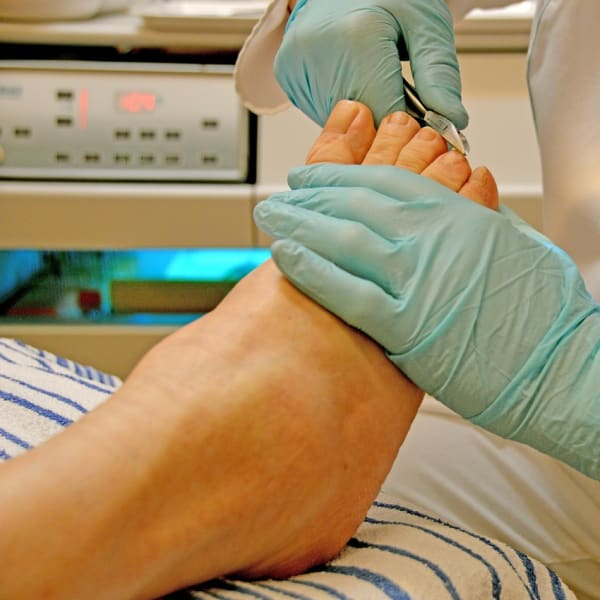
Pedicure risks are higher in clients with diabetes because the disease can cause a loss of sensitivity in the feet. A healthy client will reflexively pull away to warn a tech she’s being too rough. A diabetic client with neuropathy won’t. Any time a nail tech accidentally cuts the skin or breaks the cuticle seal, she increases a client’s risk of infection. But in a client with diabetes, small nicks and cuts can go unnoticed and untreated — and develop into much larger problems.
Nearly 10% of the U.S. adult population suffers from diabetes, a statistic that should motivate techs to educate themselves on proper anatomy and on the severity of their client’s condition.
Ad Loading...
“What we view as the half-moon of the big toe is actually the end of the long bone. In fact, if we were to peel back the eponychium of the big toe, we would see that bone,” says Dr. Kerzner. “Two to three times a year, I see patients in the high-risk population come in with bone infections. These patients have to be put on drugs that suppress the immune system. A bone infection becomes very hard to heal.”
Techs can learn to recognize silent signs that alert them to the severity of a client’s diabetic health. “Look for hair on the toes,” says Dr. Kerzner. “Absence of hair indicates a higher risk. Press on the skin. If the color doesn’t return in 3-5 seconds, it’s a sign of distal pooling, another risk.”
In clients with known diabetic conditions, ask about their health at each appointment. Don’t assume because they indicated they have diabetes on the intake form that the condition is static. Practice asking health questions so it becomes a natural part of the conversation: How have you been feeling? Is your sugar well controlled? Do you get cramping when you walk? Do you experience tingling or numbness in your toes?
Their answers warn you of risks. Cramping can indicate vascular compromise. Numbness and tingling are indicators of neuropathy. “More than 50% of wounds in diabetics will become infected,” says Dr. Kerzner. With statistics like that, it’s vital for nail techs to communicate with clients throughout the entire pedicure service.
Submerge your whole hand and wrist into the pedicure water to check that the foot bath is not too warm.
Communicating Safety
Ad Loading...
Once you know a client has diabetes, offer assurance that you’re educated about proper foot care. Let them know you’re committed to working with them to reduce risks and increase safety. Part of that is keeping the lines of communication open. Be comfortable asking about their health and providing tips to maximize their pedicure experience.
Let diabetic clients know you’re diligent about sanitizing all implements, files, buffers and bowls. Assure them absolute care and attention has been given to cleaning the bowl before their appointment. (This should be the standard regardless of whether the client has diabetes or not.)
Warn them to avoid shaving before a pedicure appointment. Give them the freedom to reschedule without consequence should they discover a cut or abrasion on their skin. Finally, let them know what precautions you will take as you provide the best care.
Neuropathy restricts a person’s ability to feel. That means your client might be unaware of discomfort from a deep massage, pain from a cut, or heat from the water temperature. Every step of the pedicure service can be modified to increase the comfort of a client with diabetes.
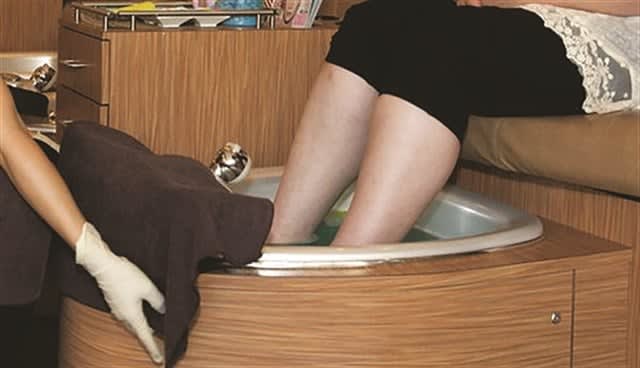
Choose a water temperature that is comfortable but not too warm. Submerge your whole hand and wrist into the water. Your fingertips may not give an accurate feel for the deeper water of the foot bath.
Smooth the skin using a less abrasive buffer rather than a pumice stone. Delicate skin could peel more easily than you realize. Be extraordinarily gentle, especially in seniors with diabetes.
Take special care when you shorten the nails and clean under the free edge. Work slowly to avoid digging too deep or cutting the nails too short. Often, a straight nail shape is preferred to an oval, to avoid any risk of the nail growing into or cutting the skin as it grows.
Avoid digging into the sidewalls of the nail. Use gentle pressure when you scrape the cuticle from the top of the nail plate. Do not push the cuticle back, as any compromise of the cuticle can cause serious health problems to develop.
Opt for a gentle exfoliant, such as a mask, rather than a salt or sugar scrub, which can be abrasive on the skin.
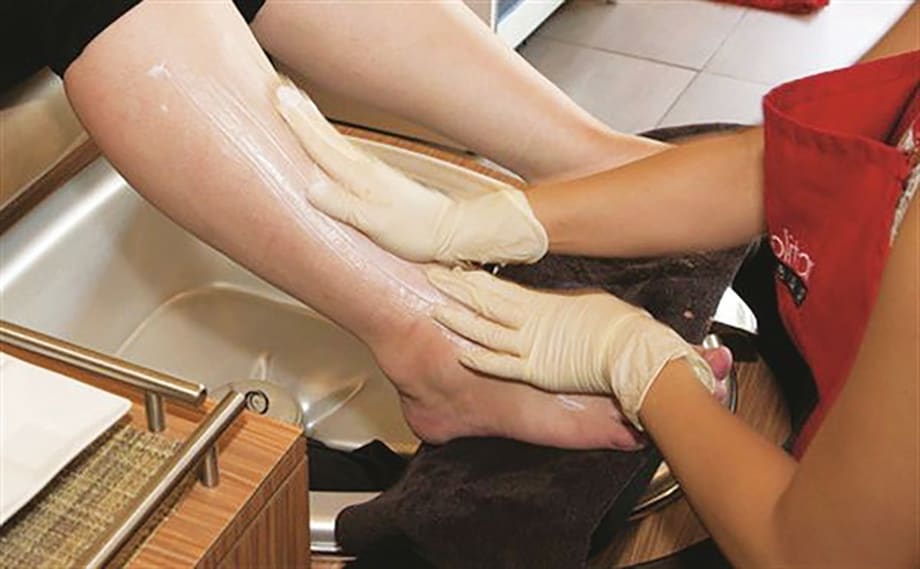
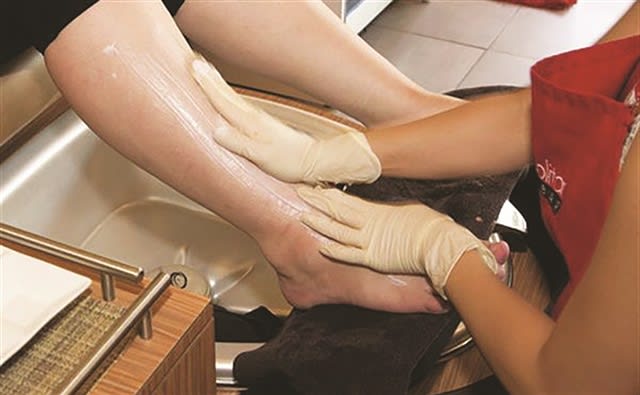
Use a smooth moisturizing cream that can spread easily with soft strokes during the massage. Avoid deep pressure, which could easily bruise the skin. Instead use a light, therapeutic touch.
Ad Loading...
Out of Scope
A visit to the salon can be an excellent alternative for elderly clients. A pedicure can be a welcome experience for those who have a difficult time bending over to cut their nails, or who have deteriorating eyesight that makes filing nails difficult. However, sometimes a client’s needs extend beyond the scope of a nail license.
It can be difficult to recognize when and how to decline a service. First, it’s understandable that a tech wouldn’t want to lose the income from the hour that’s been booked. Second, it can feel rude to refuse to care for a client. But the situation can be handled delicately to end with a win-win for both the client and the tech.
When a client has compromised skin, an open wound, or clear signs of infections, it’s important to set a precedent and inform the client of the need to reschedule the service. To continue puts the client at a health risk and you at risk for future liability issues. With gentle professionalism, let them know you can’t continue until the area has healed. In rare circumstances, you may want to require a physician’s release.
It would be easy for a client to feel insecure if a service is denied, so it’s important to make sure the client feels respected. One suggestion on how to ease the discomfort of rescheduling their appointment is to offer an alternative service. For example, if an infection is somewhere on the foot, offer to perform a manicure in place of a pedicure. The client will leave feeling validated and pampered, and you’ll have an opportunity to recoup part of the service price.
Ad Loading...
Positioned as a Professional
Offering diabetic pedicures is an excellent niche market that could help grow your business. Position yourself as a well-educated professional by creating specialty pedicure services for diabetics. Promote the services through brochures that explain the precautions you take for diabetic clients. Make the brochures available so clients can hand them out to friends. Stop by local podiatrists offices to introduce yourself and to drop off your brochures. Become the name podiatrists think of when their patients ask for a pedicure referral.
Special care is essential when clients with diabetes come to the salon for a pedicure. But rather than viewing the extra attention as too much work, use it as a way to stand out in a busy, competitive market. By positioning yourself as an expert, you’ll not only be able to grow your business, you’ll also be offering a much-needed service to customers who need — and appreciate — your expertise.
Take Your Pedicure Services to the Next Level
Learn more about servicing clients with health issues at the Foot Forward Summit 2019, taking place August 11-13 in Atlanta. Sponsored by NAILS, this event offers a unique opportunity for nail techs and salon owners who are serious about foot care to offer safe, effective services to diabetics, elderly clients, and others requiring specialized care.
Uncured gel polish and microscopic e-file dust contain active acrylates that penetrate the skin, triggering permanent contact dermatitis. Learn the chemistry behind these irritants and how to protect your clients and yourself.
The Good Patch is a leading wearable wellness patch brand, offering wellness and skincare patches that support everyday needs including energy, sleep, relaxation and more.
Orthopedic PT reveals three daily exercises plus ergonomic advice that can help salon professionals avoid the aches and injuries caused by standing, bending and repetitive overhead work.
From acrylic monomers to airborne bio-dust, the air inside a nail salon carries risks most professionals never see coming. Aerovex Systems reveals the source-capture and room-purification strategies that are setting a new standard for salon safety.
Working in beauty doesn’t have to hurt. Learn how Somatic Movement helps hairstylists, lash artists, and other beauty pros release tension, improve posture, and extend their careers.
As a spa or salon professional, your clients expect more than just beauty—they expect safety, hygiene, and peace of mind. Fungal infections like Athlete’s Foot and Nail Fungus are more common than you think, especially in environments where tools and footbaths are reused without proper sanitation. This blog covers how to stop these issues before they start, using proven infection prevention strategies for salons and spas.
A federal initiative aimed at studying chemical exposure in nail salons has ended due to staffing and budget changes. Here’s what the project set out to do—and what its conclusion means for salon professionals.
For many people, a pedicure is a relaxing beauty ritual. But what most don’t realize is that this simple service, if done without proper hygiene and sanitation, can cause serious infections and long-term health issues.
Onycholysis is the separation of the nail plate from the nail bed. While it may look painful, it typically isn’t—at least not at first. But without proper care, this common nail disorder can lead to infections, deformities, and long-term damage.
Mckenzie Kool, Psychologist, MC, RPsych provides us with guidance on what may or not be helpful in speaking with someone who has suffered a significant loss.
Clients come to you to feel their best—not leave with a viral souvenir. Warts and cold sores can spread fast in busy salons, but a few smart habits make all the difference. Let’s talk about what’s really lurking in your salon (and how to kick it to the curb).
As Earth Day approaches, The Green Beauty Community Foundation and the Green Spa Network invite beauty pros to step forward and embrace sustainability through the Green Pledge--a powerful initiative designed by and for beauty industry leaders.
Don’t cancel Valentine’s Day altogether, urges Jill Palmquist. Instead, think of it as a (frilly, flowery, Champagne-bubbly) wake-up call to fall deeply in love with your own life.
Life coach and Culture Ambassador of Sam Villa, Andrew Carruthers, outlines how to tell if your burnout is temporary - or if it's time to make a bigger career change.