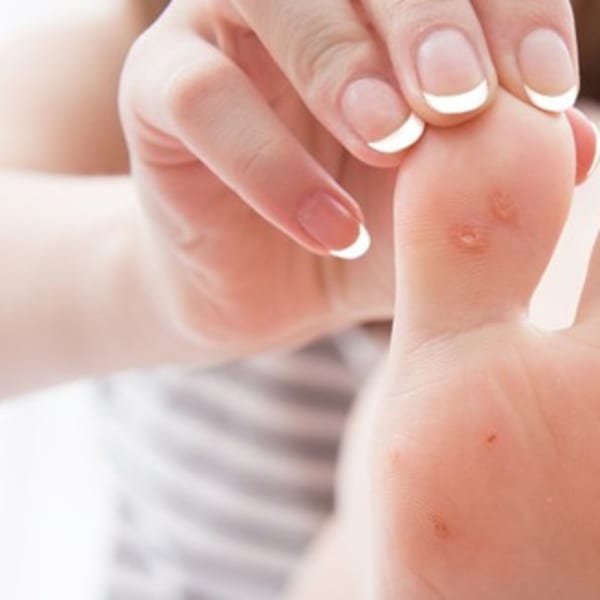
Feet are subject to more abuse than any other part of the body. For the most part, they withstand the abuse well, but sometimes you will see clients who have odd-colored or misshapen toenails. To help you distinguish which clients you can service and which ones you should refer to a dermatologist, I’ll explain the causes and treatments of common color and shape changes of toenails.
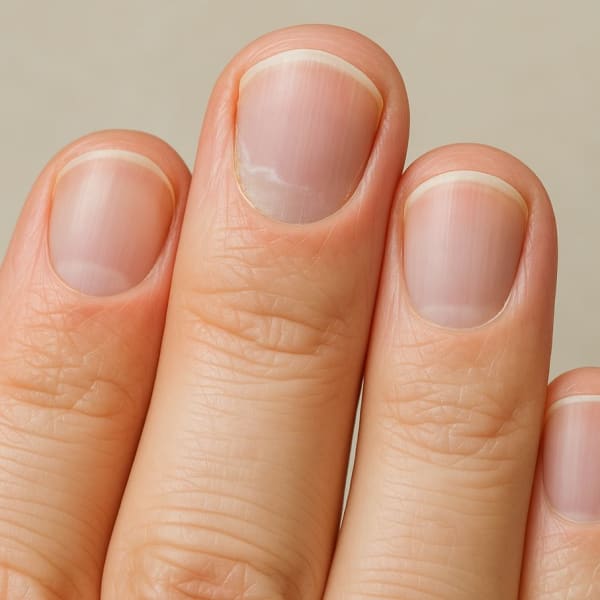
White Nails: Called leukonychia, true white nails have many causes, as discussed in this month’s Nail Doctor column (page 128). Sometimes, though, the nails only appear white. This condition is called apparent leukonychia and can be caused by anemia, cirrhosis of the liver, separation of the nail plate from the nail bed (called onycholysis), and fungal infections.
By far the most common causes of white toenails are minor injury, and onychosis. Minor injury to the matrix can cause white spots or lines to appear on the nail plate as it grows out. The white areas are usually small and rarely cover the entire nail.
If the entire nail appears white, it is most likely caused by fungal infection. Fungal infections of the toenails are most common on the big toe, although several or all of the toes can be affected. The nail will appear opaque and be much thicker than a normal toenail. If the infection is severe, the nail may appear white and crumbly.
A fungal infection can also cause the nail plate to separate from the nail bed, marketing the nail appear white. Onycholysis can also be caused by trauma to the nail plate or by an allergic reaction to nail product.
Black and Brown Nails: the medical term for a brown or black nails is melanonychia. A black or brown discoloration of the nail cause for concern because it could be caused by a subungal melanoma, also called a black mole. While rare, a subungal melanoma is a form of cancer that can be deadly if untreated. The condition is difficult to diagnose because it can be black or various shades of blue or brown; the edges may be faded out and irregular or well-defined.
Other causes of melanonychia include injuries to the nail that cause bleeding in the nail bed. Clients who stub their toes drop objects on them, or cram them into shoes that are too smaller can experience brushing under the nail. Joggers, too, commonly have black brown, and blue discolorations under their nail caused by their toes slamming into the toe box of their shoes when they run. Melanonychia can also be cause by a nonmalignant mole under the nail plate, stains from drugs or dyes, malnutrition, proteus bacterial infections of the nail bed, some fungal infections, and some nail enamels and hardeners. Gluteraldehyde, which is used in some disinfectant solutions, can cause a golden-brown discoloration. Finally, African-Americans can have a black streak running from the base of the nail to the free edge; this is normal and should not cause concern.
If you see any dark color changes under a nail that you or the client can’t explain, refer her to a physician immediately. The only way to diagnose a subungal melanoma is with a biopsy.
Green or Yellow Nails: A green discoloration under the nail usually indicates a pseudomonas bacterial infection. This is a difficult infection to cure and requires treatment by a doctor. Certain fungal infections of the nails can also cause a green discoloration and require treatment by a doctor.
Some bacterial infection can cause a small pockets of pus to form under as a yellow area on the nail. If in thinning the nail you see a yellow area or cause one to drain, apply an antiseptic and refer the client to a doctor immediately. Some systematic disorder, such as kidney disease, can cause yellow nail syndrome, in which the entire nail plate appears yellow.
Pincer Nail: The base of the nail at the cuticle is shaped normally, but the nail curves into the flesh as it grows toward the free edge tightens around the soft tissue, pinching them into the curve of the nail. If the nail grows beyond the end of the nail can touch and may even roll around each other, earning this deformity the nickname “trumpet nail.” Pincer nail can be caused by heredity, injury, inflammatory arthritis, a bone spur, old age, and improperly fitted shoes.
Tile-Shaped Nail: The C-curve is exaggerated on this type of nail. The condition is usually inherited but can stem from minor injury and some diseases such as yellow nail syndrome.
Plicatured Nail: The nail is flat on top but one or both sidewalls angle sharply into the soft tissue, forming vertical sidewalls. This condition can stem from injury to the nail or constriction of the nail from improperly fitted shoes. It can also be inherited.
These nail-shape deformities may or may not be painful. Pincer and plicatured nails tend to become in-grown more frequently than the tile-shaped nail. Tile-shaped nails are usually painful to women who wear shoe with pointed toes. Shoes that are too short can also cause pain.
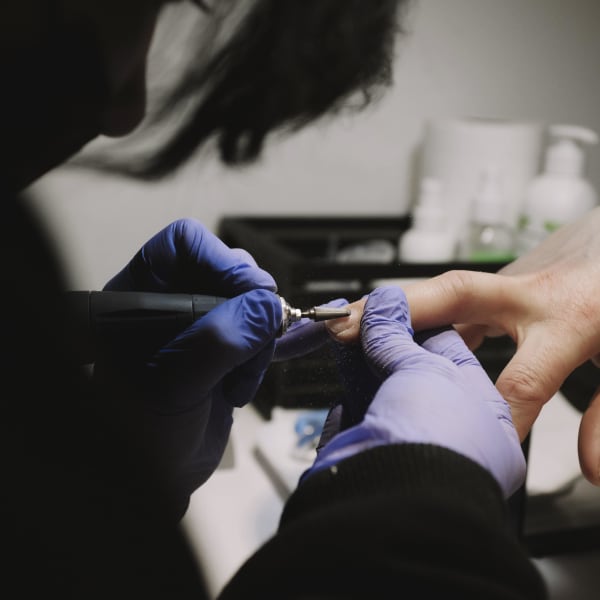
How the nails are cared for depends on how much discomfort the client is experiencing. If the nails are ingrown and infected, refer the client to a doctor. If the nails are causing discomfort and the skin is intact and there is no sign of infection, you can carefully trim away a portion of the nail to relieve pressure on the soft tissue. If any skin is attached to the nail, do not trim the nail because you can injure the tissue. After trimming the nail, clean out any debris. If the nail is also thickened, as it usually is with pincer nails, you should thin the natural nail by filing it with a medium grit file from the cuticle to the free edge.
In a perfect world you’d see only perfect feet. Because the world is far from perfect, expect to see some less-than-perfect feet. Instead of being turned off to pedicures by these feet, offer these clients the ultimate in service by helping their feet look and feel better. If you do, they’ll never let anyone else touch their feet.