The Nail Manufacturers’ Council offers nail professionals these basic tips to prevent or eliminate the injuries, pain, and discomfort sometimes associated with salon work. Working ergonomically can eliminate muscle strain, benefitting both your physical and psychological health.
Improving Body Ergonomics
Posture and position are important, whether you are sitting at the nail table or in front of your client giving a pedicure. Paying attention to how you perform these tasks can prevent many injuries (e.g., lower back, neck, wrist, and shoulder pain).
> Keep both the task and tools directly in front. Do not favor or lean to one side.
> Avoid reaching more than 12 inches and keep forearms parallel with the floor (neutral position) at the side.
> Choose a high-quality swivel chair with a seat at least one inch wider on each side than hips/thighs and properly padded so that it doesn’t create pressure points (behind the knees, for instance).
> When sitting, always keep the spine in a neutral position — at a 90-degree angle, not leaning forward or backward. The head, neck, and body should face forward without twisting or hunching. The backrest should provide support for the lower back.
> Avoid twisting the neck (for example, don’t cradle a cell phone with your head and shoulders). The head should be kept upright and shoulders relaxed.
> Avoid leaning too far forward while performing manicures or pedicures. Do not bend the back forward more than 30 degrees or the neck more than 45 degrees.
> Raise and position the client’s hands or legs and feet to prevent bending or stretching forward or supporting feet with your own body. A recliner chair works well and supports the client’s legs in the best position for servicing.
> Adjust chair height so your thighs are parallel to the floor with your feet flat. If necessary, use a footrest to keep the feet flat and don’t cross the legs or sit sideways in the chair.
> Wrist and hands should be kept straight, not bent or twisted sideways.
> When holding a client’s hand or finger, position it so that the pressure from grasping is minimized; a relaxed, minimal hold will lessen the strain.
> Gently move your client’s hand rather than tilting your head. In order to prevent neck strain, consider placing a client’s hand on a rest that elevates the hand to prevent forward tilt of the head and neck.
> Minimize pressure points, avoid placing arms on the edge of the table and use a foam tube/padding on the sharp edge of the nail table or as an arm or elbow rest. >>>
Preventing Lifting and Motion Injury
Understanding how to lift and move correctly are important keys to preventing injury. Repetitive motion or cumulative trauma disorders can be caused by using the same motions over and over, placing strain on the body, joints, muscles, nerves, tendons, ligaments, and soft tissue. Problems can also result from incorrect twisting.
> To prevent back injury, salon professionals should avoid lifting anything heavy (e.g., more than 15 lbs.).
> When lifting, tuck in the stomach and use the abdominal muscles and legs, instead of the back muscles.
> Avoid overextending the arms, for instance when reaching over your head to put something on a shelf. Use a step stool or ladder.
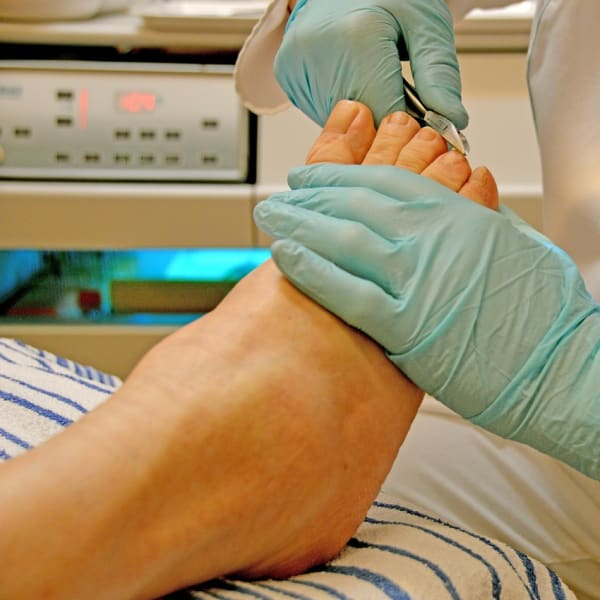
> Sit with the client’s foot directly in front of you and keep it close to the body when lifting.
> Use an adjustable pedi-chair or place the client’s foot on a pillow raised to just above elbow level.
> While performing a manicure or pedicure, minimal force should be used. If more force is needed, it should only be done for short time periods, then rest.
> When using tools, minimize strong gripping or pinching and take rest breaks. Use padded files and tools to decrease the need to use a hard pinch or grip.
> Equipment should properly fit the hand and be kept in optimal condition (e.g., sharpen nippers).
> Keep repetitive motions like filing to a minimum and take short rest breaks to prevent a repetitive motion disorder.
> Avoid repetitive flexing of the wrist by holding it straight. Bend elbows and shoulders rather than your wrist.
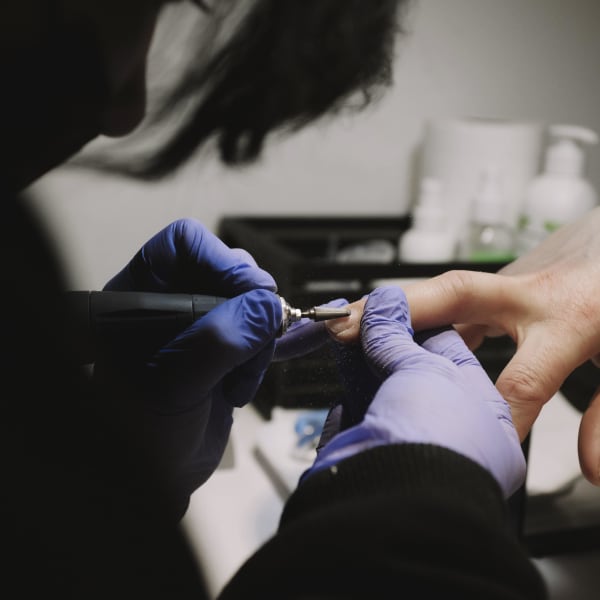
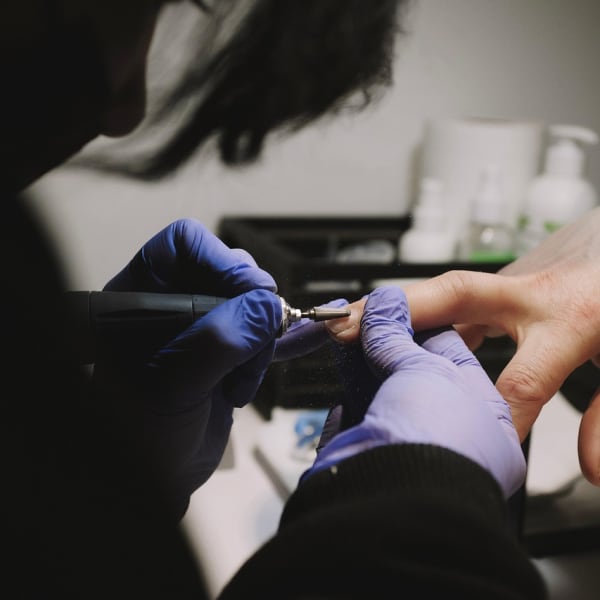
> Avoid using electric files for extended periods without rest breaks since even this minimum vibration can contribute to injury.
Other Important Points to Remember
> Using lighting bright enough for the task, but avoiding too much glare will
reduce eyestrain.
> Blink frequently or use eye drops to keep eyes moist and occasionally look away from subject to prevent eye fatigue.
> Take frequent breaks, change positions frequently, and don’t hold any posture or position for long periods.
> Use continual flowing movements when performing massage techniques to keep your muscles from tightening and becoming sore.
> When massaging, use the heel of your hand and pad of your thumb since they are stronger than your fingers and use both hands equally.
> Slow down, if necessary, to avoid injury, pain, or discomfort and eliminate unnecessary steps.
> Don’t over-apply artificial nail products; the more you apply, the more you have to file.
> Using a new file on each client will reduce your muscle strain and save time.
> If taking a break isn’t possible, do gentle stretching motions in between clients; stretch the neck, raise the arms and stretch, open the hands and stretch the fingers, stretch the back and rotate the wrists.
> Hand-washing between clients is considered a necessary break and a great time to stretch. Always pay attention to discomfort.
> Don’t ignore pain; take steps to alleviate it and develop a regular routine for stretching. Try stretching between clients, or change position between clients.
> If pain or discomfort continues, seek the advice of a medical professional.
> A regular exercise program that includes core stability exercises may reduce the risk of workplace injuries. Consult your physician before beginning an exercise program.