Does our environment change how we do nails? Do techs living in climates where it dips into double digits below zero work differently than techs who live where it’s nearly 100 degrees with 80% humidity?
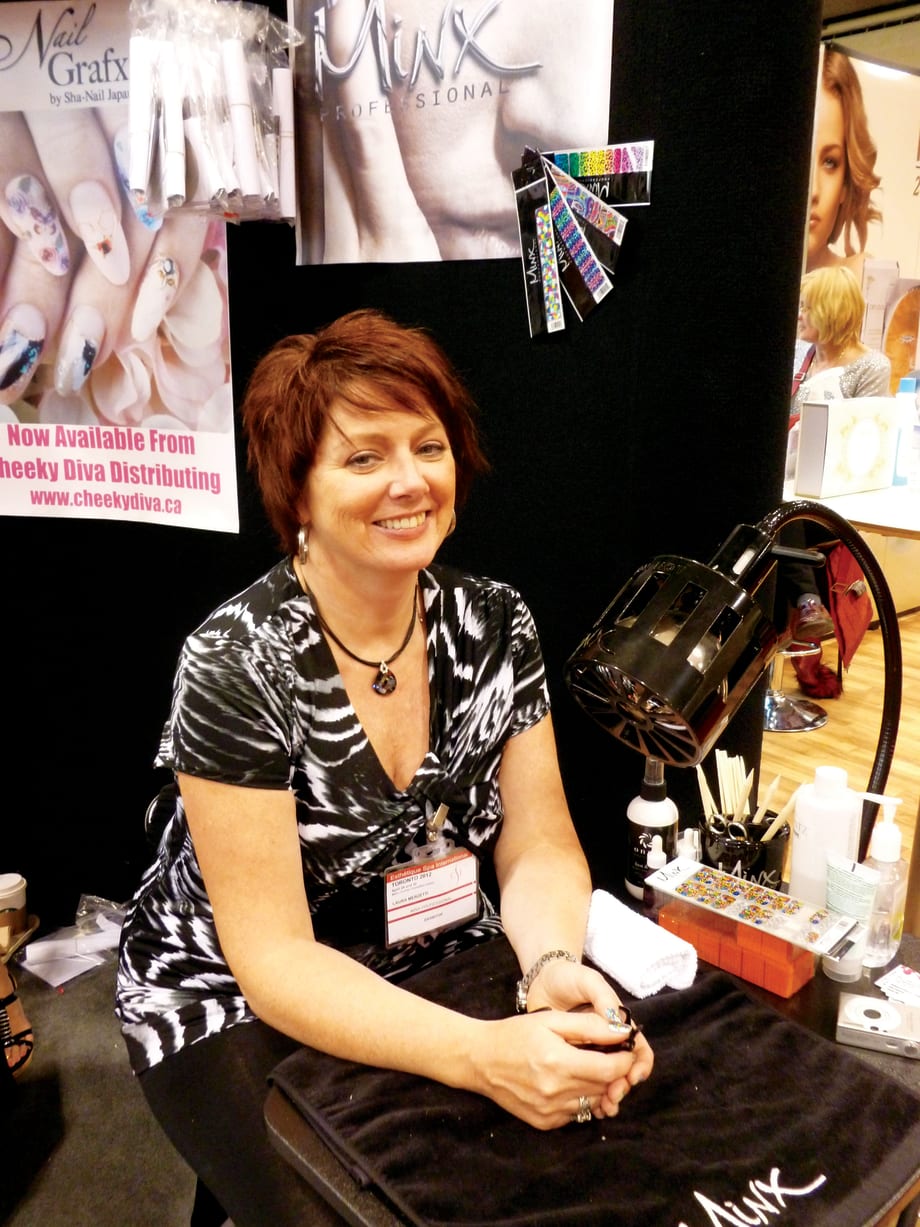
On cold winter days, Laura Merzetti sometimes needs to warm up products like builder white gels and soak-off gels so they aren’t so stiff.
8 min to read
While all of us are dependent on thermostats to keep our workplace at the ideal temperature, concessions must be made when the extremes of nature influence the atmosphere of the salon — and the body temperature of clients. Depending on conditions, clients’ hands and feet may be puffy, moist, and sweaty or cold, dry, and numb. A tech needs to know how to compensate for these changes so she can apply product to a consistent, stable nail surface each time.
Heat, cold, and humidity change not only the air and our body temperature, but also the products themselves. An inexperienced tech might wonder what unseen force is messing her up, but with experience (and a few tricks), techs can work around limitations in the product no matter what the season. The next time you’re wondering why the product is unmanageable and making your job so hard, check the thermostat.
Ad Loading...
Nail Polish
Nail polish is made up of solvents, resins, pigments, and a few additives. As nails are polished, the pigment imparts color and the solvents evaporate to create a vapor, explains Vivian Valenty, founder of VB Cosmetics. In low humidity with comfortable temperatures, the vapor dissipates into the air, moves out of the way, and the surface of the polish cools down and dries fully. In warmer temperatures, the solvents within the nail polish evaporate at different rates; some of the solvents evaporate even before the polish is complete, making the polish on the nail gummy. Add humidity to the equation, where the thick, stagnant air hangs without moving, and problems are compounded. The humidity stifles the air flow that moves the vapor out of the way, disrupting the drying process.
Typically, the drying rate for polish isn’t a problem for techs, since the humidity level and temperature is controlled in the salon. However, in humid areas, clients experience problems when they leave the salon too early. “I’ve had clients tell me their polish was still wet an hour and a half after they had left the salon,” says Vicki Adams, owner of Nail Mogul in Houston. “It’s not wet to the touch, but it can still be ruined because it’s soft underneath,” she explains.
To compensate for polish problems, Jim McConnell from Light Elegance suggests techs use a lamp with a warm fan to aid in the drying process. “A nail polish dryer is suggested, but a red heat bulb with a small fan would work very well,” says McConnell. The idea is to move the evaporating solvents out of the way so more can evaporate to complete the drying process. “Picture a gate at an amusement park,” says McConnell. “If a crowd of people are coming through the gate, but aren’t being moved out of the way, the people in line behind them aren’t going to be able get through the gate.” The same applies to the drying process for nail polish — you need to get the air moving around the fingernails so the rest of the solvents in the nail polish will be allowed to dry.
Acrylic
Ad Loading...
The chemical reaction that causes acrylic to set is sensitive to heat. The higher the temperature of the liquid, the faster the reaction, and the quicker the set time. Techs may find the product difficult to work with when it sets up too fast. Conversely, on colder mornings, techs may find the product runs more easily into the cuticle wells, takes longer to dry, and generally is more disagreeable.
To compensate for cool weather, make sure the liquid monomer is up to a working temperature before applying acrylic on the first client. If acrylic liquid has been in a salon where the overnight temperature was lowered to save energy, it needs to come up to a more pleasant 68°-72° to work well, says Fred Slack, co-founder and director of R&D at NSI. If the liquid is cold and clients have cold hands, it will be almost pointless to begin application. In this situation, try using a warming mat to raise the temperature of the liquid, which should take only a few minutes if you heat only the monomer in the liquid dispenser. Another handy source of heat that can help with the drying rate when the liquid is chilly? The bulb in your desk lamp. Place monomer under the lamp while you prep the client’s nails and it should be ready to go by the time you’re ready to apply.
For hot climates, techs may find success when they switch to an acrylic system with a slower-set time, instead of opting for a fast-setting system. In a slow-set system, explains McConnell, slower reacting monomers are used. Because of this, the monomer takes longer to find the peroxide and set, giving techs more time to work.
On cold winter days, Laura Merzetti sometimes needs to warm up products like builder white gels and soak-off gels so they aren’t so stiff.
Gel
Hot and cold temperatures also play a critical role in UV gel, not in the product’s effectiveness, but in the ease-of-use during the application. “Every degree, whether lower or higher, will change the viscosity of gel,” explains Slack. “If it becomes too hot, the gel becomes water-like and is totally unmanageable.” Slack compares the change in viscosity to what happens to honey. “If the temperature of the room is cool, the movement of the honey will be slower,” says Slack. “When the room warms up, the honey flows smoother and easier; it’s more fluid. In gels, we’re able to measure the chemistry and control it to some extent, but techs let us know they notice this reality in the salon.”
Ad Loading...
Laura Merzetti understands. As the owner of Scratch My Back Nail Studio in Ajax, Ontario, Canada, Merzetti has experienced the changes in a gel’s viscosity, and she knows how to handle them. “In the winter months, on extremely cold days, I sometimes need to warm up products like my builder white gels and my soak-off gels so they aren’t so stiff. I use a small candle/cup warmer at my station and am mindful of how quickly it works, only a minute or two is all that is needed. Then I give them a good stir or shake, and they are ready to go,” says Merzetti.
While techs do attest to fluctuation in the viscosity of gel because of temperatures, gel product is the least likely among the commonly used enhancement products to give techs trouble. One reason for this is, regardless of temperature, gel is able to “interface between the base material and the enhancement material before it bonds together,” explains McConnell. When we add the powder and liquid together in an acrylic enhancement, the bonding process begins immediately. The acrylic may not have a chance to interact with the base material (the nail) before it begins to set up. In a gel, the “setting up” doesn’t happen until it’s under the light, so it’s had plenty of time to make a connection with the nail.
Gel-Polish
Gel-polish will give you the least amount of trouble, which is one reason techs suggest clients opt for gel-polish over traditional polish. A few reminders for best results: Roll the bottle between your hands before each use and apply only a thin coat. Heat is released during the setting process under the light, so be aware of the temperature of your clients’ hands. If her internal temperature is already elevated, she may experience discomfort under the light as the product cures.
Working in the Elements
Ad Loading...
Karissa Olstad, manager of The Nail Bar Downtown in Fargo, N.D., says the salon offers clients warm neck wraps and blankets.
Biting Cold
Techs who have been in the business for a while will remember the days when crystallization was a concern. Today, acrylic formulas aren’t as sensitive to cold; nonetheless, cold temperatures do change the way the product handles, so techs have developed clever ways to keep clients’ hands warm so product isn’t applied to a cold surface. In Fargo, N.D., which appears on the Top 10 list of cold cities, clients can come in from freezing temperatures with uncomfortably cold hands — even if they wear gloves. Karissa Olstad, manager of The Nail Bar Downtown in Fargo, says the salon offers clients warm neck wraps and blankets to keep them warm.
Changes must be made for natural nails as well. “Nails in general are more brittle in the winter, which can increase breakage,” says Olstad. “Our answer is cuticle oil, cuticle oil, cuticle oil.” During pedicures, says Olstad, techs need to keep the water at a low temperature and then add warmer water gradually once the feet are soaking. Though it might seem odd to put cold feet in water that is only lukewarm, the truth is when the water is too warm on cold toes, it creates an unpleasant burning sensation.
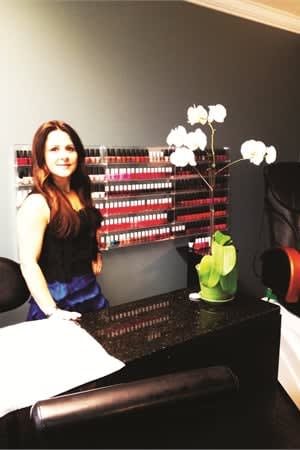
Ana Braun says in Florida clients’ heels are cracked because everyone is in open shoes.
Stifling Humidity
In addition to bitter cold, Fargo experiences extreme heat in the summer. Climate control keeps product problems in check, but clammy hands can be an issue. “We wrap hands and feet in warm towels,” says Olstad. “You’d be surprised at how quickly that removes the clammy feeling.”
Ad Loading...
“I see the biggest factor of temperature change being less about product application and more about the wear and tear of the elements between appointments,” says seasoned nail tech Ana Braun, owner of Ana Braun at Embody Wellness and Fitness Studio in Sarasota, Fla. Braun says when she did nails for 12 years in Rhode Island, clients had dry cuticles and brittle nails because of the cold weather, but their feet were usually in good condition because they were always covered. Now, a resident of Sarasota, Fla., where August temperatures hover in the 90s with 90% humidity, Braun says clients have healthy cuticles because of the warm, moist air, but their heels are cracked because everyone is in open shoes. Pedicures don’t last as long with pool and beach activities. “Up north, I would give clients cuticle treatments to apply every night; here I ask my clients to exfoliate their heels with a pumice stone and apply lotion,” says Braun.
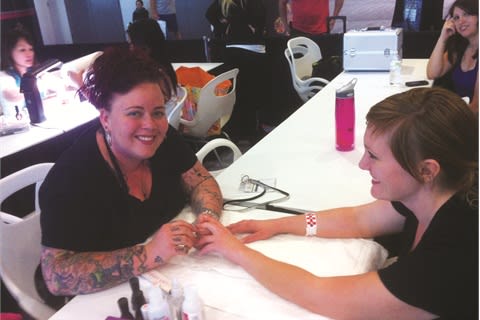
Air-conditioning leaves Amanda Lenher’s clients with cold hands so she rests them on warming mats during nail services.
Scorching Heat
Amanda Lenher is a Nubar educator and nail tech at Posare Salon in Las Vegas. Temperatures in her town can often break 100°, sweltering by anyone’s standards. She says most of the time the temperature is controlled by air conditioning, but still, there are ways she needs to compensate for the heat. “Clients come in and their hands are cold because they have been in air conditioning all day, plus they have an iced coffee in their hands,” explains Lenher. “I rest my clients’ hands on warming mats during nail services to raise the temperatures in their fingers.”
SPONSORED CONTENT: DeEnterprises offers a wide range of acrylic liquids and powders, each created with your specific professional needs in mind.
Uncured gel polish and microscopic e-file dust contain active acrylates that penetrate the skin, triggering permanent contact dermatitis. Learn the chemistry behind these irritants and how to protect your clients and yourself.
The Good Patch is a leading wearable wellness patch brand, offering wellness and skincare patches that support everyday needs including energy, sleep, relaxation and more.
Orthopedic PT reveals three daily exercises plus ergonomic advice that can help salon professionals avoid the aches and injuries caused by standing, bending and repetitive overhead work.
From acrylic monomers to airborne bio-dust, the air inside a nail salon carries risks most professionals never see coming. Aerovex Systems reveals the source-capture and room-purification strategies that are setting a new standard for salon safety.
Working in beauty doesn’t have to hurt. Learn how Somatic Movement helps hairstylists, lash artists, and other beauty pros release tension, improve posture, and extend their careers.
As a spa or salon professional, your clients expect more than just beauty—they expect safety, hygiene, and peace of mind. Fungal infections like Athlete’s Foot and Nail Fungus are more common than you think, especially in environments where tools and footbaths are reused without proper sanitation. This blog covers how to stop these issues before they start, using proven infection prevention strategies for salons and spas.
A federal initiative aimed at studying chemical exposure in nail salons has ended due to staffing and budget changes. Here’s what the project set out to do—and what its conclusion means for salon professionals.
For many people, a pedicure is a relaxing beauty ritual. But what most don’t realize is that this simple service, if done without proper hygiene and sanitation, can cause serious infections and long-term health issues.
Onycholysis is the separation of the nail plate from the nail bed. While it may look painful, it typically isn’t—at least not at first. But without proper care, this common nail disorder can lead to infections, deformities, and long-term damage.
Mckenzie Kool, Psychologist, MC, RPsych provides us with guidance on what may or not be helpful in speaking with someone who has suffered a significant loss.
Clients come to you to feel their best—not leave with a viral souvenir. Warts and cold sores can spread fast in busy salons, but a few smart habits make all the difference. Let’s talk about what’s really lurking in your salon (and how to kick it to the curb).
As Earth Day approaches, The Green Beauty Community Foundation and the Green Spa Network invite beauty pros to step forward and embrace sustainability through the Green Pledge--a powerful initiative designed by and for beauty industry leaders.
Don’t cancel Valentine’s Day altogether, urges Jill Palmquist. Instead, think of it as a (frilly, flowery, Champagne-bubbly) wake-up call to fall deeply in love with your own life.
Life coach and Culture Ambassador of Sam Villa, Andrew Carruthers, outlines how to tell if your burnout is temporary - or if it's time to make a bigger career change.