6 Ways Self-Love Will Help You Crush Your Goals
From breaking free of external validation to creating joy-based goals, discover a more sustainable and fulfilling path to success.
In the past autoclaves in the beauty industry were for the super clean-conscious. Now, they’re gaining ground in Texas as required equipment in nail salons. As this medical-grade machine makes its way into salons and spas, owners should know just what they are.


Autoclave? What’s That?
An autoclave is an apparatus that uses superheated steam under high pressure to sterilize instruments. Although dry heat and chemical vapor are forms of sterilization, these types of machines are not autoclaves. Autoclaves come in three common forms.
To view this article in a downloadable PDF format, click here.
Pressure-Pot Style
generally the least expensive of the autoclaves (about $350 to $1,200)
usually have gauges and dials that show information on the cycle
manual ones require careful observation of gauges and time
must be cleaned on a regular basis to keep build-up from accumulating inside
Cassette Style
can be more expensive than other styles, but depends on size chosen (starts at around $3,000)
fresh water is used with each cycle
run by a PC board that notifies users when something goes wrong
works well in a salon setting because you don’t have to watch it through the cycle
Round-Chamber Style
prices tend to run the gamut (from about $1,800 up to above $9,000)
water is reused between cycles
cycle times tend to be longer
automatic ones are run on a PC board that notifies users when something goes wrong
over time, may make hinges on instruments tighter
works well in a salon setting, because you don’t have to watch it through the cycle
Everything’s Bigger in Texas — Even Decontamination Laws
On May 18, the Texas Department of Licensing and Regulation (TDLR) sent out a press release stating that all salons and barbershops that provide manicure and pedicure services are required to sterilize all reusable instruments in an autoclave.
The press release follows a decision by the state’s attorney general that settled a conflict between two existing laws. Because Senate Bill 411 was the last passed of the two laws, its requirement that all salons use autoclaves took precedence.
Although many nail techs aren’t pleased with the decision, it was their fellow techs who pushed for the requirement. Shareen Larmond, general counsel for Sen. John Whitmire — one of the authors of Senate Bill 411 — says, “When we took testimony during sunset hearings, there was testimony that autoclave systems are the best form of sterilization.” Two of those testifying were Patti Ann Abrams and Annie Nguyen, nail techs from Houston. “They gave specific testimony that the autoclave should be used to sterilize reusable instruments,” she adds.
As Texas moves to include the new requirement into its implementation and enforcement of the law, TDLR has announced that it will not assess fines for autoclave violations before January 1, 2007.
Other points of note regarding Texas’ autoclave requirement:
If only disposable manicure/pedicure instruments are used, then the autoclave requirement would not apply.
The autoclave must be registered and listed with the Federal Food and Drug Administration.
The autoclave must be utilized in accordance with the manufacturer’s instructions.
How to Use One
Doug Braendle, product manager of SciCan Inc., a maker of autoclaves, gives the following directions for using autoclaves properly:
1. After the nail service, clean the instruments with soap, water, and a brush. Autoclaves will only sterilize clean instruments; if there is glue or polish on the instrument, it will not be sterilized.
2. Place the instruments on a towel to dry.
3. Load the instruments in the autoclave according to the manufacturer’s directions, making sure not to overload the unit.
4. Use “Steam Distilled” water to fill up the specified container.
5. After unloading instruments, make sure not to lay them down in dirty areas. Store in a clean, dry, labeled container.
Clean, Clean, Clean
The following are definitions put out by the Centers for Disease Control and Prevention (CDC).
Sanitation: to wash with soap and water to remove dirt and debris and to reduce the levels of microorganisms to a safe, acceptable level. Before implements or machines can be disinfected, they must first be sanitized.*
Disinfection: the use of a chemical procedure that eliminates virtually all recognized pathogenic microorganisms but not necessarily all microbial forms (e.g., endospores). (Microorganisms are living organisms — good and bad — that are invisible to the naked eye.) All implements and machines used on clients must be disinfected before use.
Sterilization: the use of a physical or chemical procedure to destroy all microbial life, including highly resistant bacterial endospores. (Endospores are thick-walled bodies formed within the vegetative cells of certain bacteria. They are able to withstand adverse environmental conditions for prolonged periods.)
*generally accepted definition
Would You Like Bagging Now or Bagging Later?
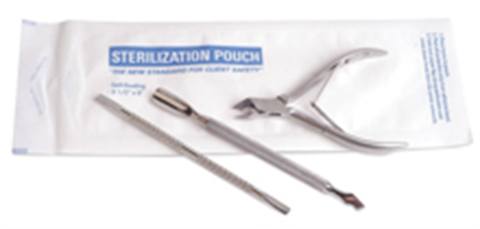
Autoclaves allow users to prepackage instruments before putting them in the units if they choose. Thus, the instruments stay sterile until they are opened in the salon. Some techs and owners, however, choose to package them up after they’ve been sterilized. Is this OK?
It’s perfectly fine to package implements after they’ve been sterilized, according to Braendle. “We are not working in a sterile field as you might find in a hospital, so any loose instruments or instruments opened chairside from packages, will be considered sterilized,” he says.
The key is in making sure whoever is handling them after sterilization has clean hands and is packaging them near the sterilizer and away from dirty areas. Sterilization in salons is in place to protect clients from client cross-contamination — not nail technician handling or airborne items — and that protection occurs the moment the instruments are properly sterilized.
Knowing this, some techs and owners choose to save time by packaging them after sterilization (pouches and packaging mean longer cycle times and a time allowance for drying).
Pouches Aren’t Indicators
Some techs and owners like to use the pouches beforehand because of the indicator strips on the pouches (these strips change colors after cycling through the autoclave). However, these strips are not to be used as a sole verification that the items have been properly sterilized. “All that is is a heat indicator,” says Braendle. “You could be fairly well-assured that when it changes color the items have been sterilized, but all it really says is it reached the specified heat.” It does not signify time or pressure requirements have been met, and proper temperature, time, and pressure must occur for sterilization in an autoclave.
The only way to be sure the autoclave is fully sterilizing instruments is by sending out test material on a regular basis to an outside third party. “Should there ever be a question about the unit, the third party could testify that every week for the past three years, the salon has passed the test,” says Braendle. He recommends SPS at (800) 722-1529.
Consider This
When looking for an autoclave, make sure to think about:

Registration — In Texas, the autoclave must be registered with the FDA; if other states begin requiring autoclaves, they’ll likely demand FDA registration as well; some companies that make FDA-approved autoclaves also have some models that have not yet been approved — make sure the specific model you purchase is registered.
Ease of Operation — The machine needs to be easy enough for everyone in the salon to operate.
Cycle Time — Cycle time will be a factor in determining your salon’s need to purchase new implements because you’ll always have to have sterile implements available while a set is in the machine.
Capacity — Capacity ranges from about 10-100; if you choose an autoclave with a short cycle time, the capacity can be lower; if the autoclave has a long cycle time, you would most likely want one with a large capacity — but this may require you buy quite a few more instruments.
Straight from the owners’ mouths
Here’s what three owners who already use autoclaves in their salons have to say:
“The clients are always very impressed that we’re doing this. We always show them the packaged tools. A lot of times they come in the back to see the autoclave. It’s a total advertising and marketing tool.
I love it. Everybody should have one. It would eliminate a lot of risks of infections if more salons would use them.”
Cassie Piasecki
The Nail Lounge
Costa Mesa, Calif.
“Ideally you don’t cut the skin, but the reality is people do get nipped; because of that possibility, I decided to purchase an autoclave that was effective enough for sterilization per FDA requirements for medical use.
It’s sad that even the top people who promote sanitary practices don’t even promote using an autoclave.”
Roula Nassar
Roula’s Nail Spa
Houston
“I’m a registered nurse, and I was very aware of infection control. Autoclaves come with instructions, and it’s pretty straight forward. You have to understand the principle first — that it’s the temperature, time, and pressure that make it work. If you cook and you use a pressure cooker, you probably understand. I’ve been in business eight years, and I’ve only had to replace one autoclave.”
Rosemary Weiner
The Brass Rose
Blairstown, N.J.
Shop ’til You Drop
If you search on your own for an autoclave, you can go to the FDA’s website to see if the model you’re looking at is registered through them. Log on to www.fda.gov/searches/databases.html and under “Medical Devices” click on “Device Listing.” Type in “FLE” for product code for a complete up-to-date list of all FDA-registered autoclaves, or enter a company’s name to find out which of theirs is registered.
To help you sort through all the options, here are a variety of companies offering FDA-registered autoclaves suitable for the salon.
Accutome Inc., (610) 889-0200, www.accutome.com
Alfa Medical Equipment Inc., (800) 762-1586, www.sterilizers.com
Midmark Corp., (800) MIDMARK, www.midmark.com
MOCOM Srl, (416) 580-5013, www.mocom.it
Pelton & Crane, (704) 588-2126, www.pelton.net
SciCan, (412) 494-0181, www.scican.com
Tuttnauer Co. Ltd., (631) 737-4850, www.tuttnauer.com
The Good, the Bad, and the Autoclave
The Good
They provide the highest form of decontamination and cut down on the risk of infecting clients.
Autoclaves are generally a one-time purchase, so you shouldn’t have to replace them often.
Using an autoclave is a marketing opportunity and can allay customers’ fears of getting an infection through nail services.
Some models are very easy to master, so learning to operate the new machines isn’t necessarily difficult.
The Bad
Autoclaves can be expensive; new ones generally range from a few hundred to a few thousand dollars.
Because they are not currently a part of the beauty industry, autoclaves are not readily available at your normal distribution outlets.
Some autoclaves have cycles that last nearly an hour.
Autoclaves have operating costs, including the distilled water that is used in every cycle and sterilization pouches (if used), which must be figured into weekly or monthly budgets.

From breaking free of external validation to creating joy-based goals, discover a more sustainable and fulfilling path to success.

From acrylic monomers to airborne bio-dust, the air inside a nail salon carries risks most professionals never see coming. Aerovex Systems reveals the source-capture and room-purification strategies that are setting a new standard for salon safety.
Sponsored by Aerovex Systems

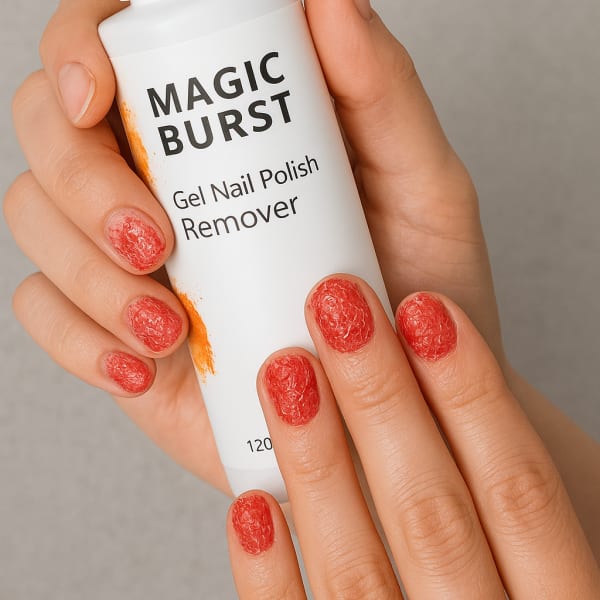
Products marketed as 'magic' or 'burst' gel removers may contain methylene chloride, a federally banned, highly toxic chemical.

Working in beauty doesn’t have to hurt. Learn how Somatic Movement helps hairstylists, lash artists, and other beauty pros release tension, improve posture, and extend their careers.

As a spa or salon professional, your clients expect more than just beauty—they expect safety, hygiene, and peace of mind. Fungal infections like Athlete’s Foot and Nail Fungus are more common than you think, especially in environments where tools and footbaths are reused without proper sanitation. This blog covers how to stop these issues before they start, using proven infection prevention strategies for salons and spas.

A federal initiative aimed at studying chemical exposure in nail salons has ended due to staffing and budget changes. Here’s what the project set out to do—and what its conclusion means for salon professionals.

For many people, a pedicure is a relaxing beauty ritual. But what most don’t realize is that this simple service, if done without proper hygiene and sanitation, can cause serious infections and long-term health issues.

Onycholysis is the separation of the nail plate from the nail bed. While it may look painful, it typically isn’t—at least not at first. But without proper care, this common nail disorder can lead to infections, deformities, and long-term damage.

Mckenzie Kool, Psychologist, MC, RPsych provides us with guidance on what may or not be helpful in speaking with someone who has suffered a significant loss.

Clients come to you to feel their best—not leave with a viral souvenir. Warts and cold sores can spread fast in busy salons, but a few smart habits make all the difference. Let’s talk about what’s really lurking in your salon (and how to kick it to the curb).

As Earth Day approaches, The Green Beauty Community Foundation and the Green Spa Network invite beauty pros to step forward and embrace sustainability through the Green Pledge--a powerful initiative designed by and for beauty industry leaders.

Don’t cancel Valentine’s Day altogether, urges Jill Palmquist. Instead, think of it as a (frilly, flowery, Champagne-bubbly) wake-up call to fall deeply in love with your own life.

Life coach and Culture Ambassador of Sam Villa, Andrew Carruthers, outlines how to tell if your burnout is temporary - or if it's time to make a bigger career change.

Cancer treatment can create very specific challenges for your guest when it comes to hair, skin, and also nails. Here are some tips for working with your salon client who is going through cancer treatment to help you provide a relaxing, enjoyable, and also safe experience.

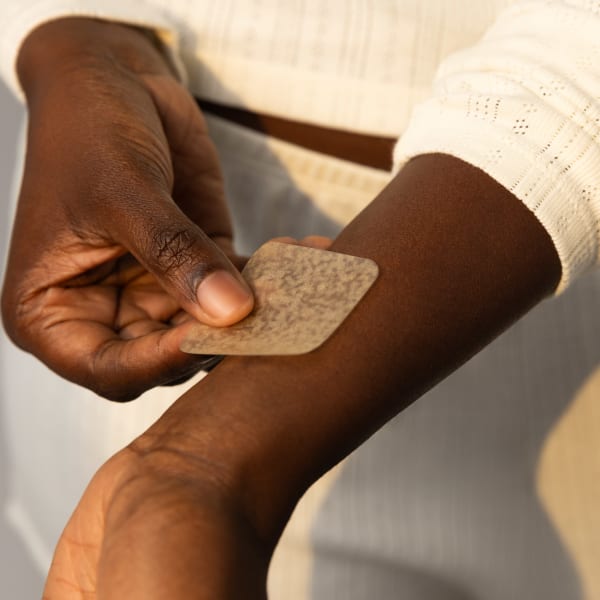
For those clients concerned about exposure from UV lamps, the Sun Patch might be a solution. Sun Patches are waterproof, reusable (up to 10 wears) block 98% of UVA/UVB rays, and maintain their UPF 50+ rating all day long.

One of the most common conditions that affects the nail is onycholysis, which is the separation of the nail plate from the nail bed. Onycholysis occurs as a result of or along with a great variety of nail traumas and disorders. Probably the most common cause of onycholysis is a fungal infection of the nail.

Hairdressing is a physically taxing career integrating simple stretches into your daily routine can reduce the strain repetitive motion puts on your body, help you stay flexible and strong and eventually prolong your career.