Are your clients’ hands revealing their age? Educate your clients about the latest cosmetic procedures for turning back the clock and learn which topical treatments can help them combat age spots, crepey skin, prominent veins, and more.
Your clients come to you for beautiful nails, and by extension, beautiful hands. You can apply gorgeous color and stunning art to their nails, but unless the health and beauty of the skin is maintained, hands will show their age.
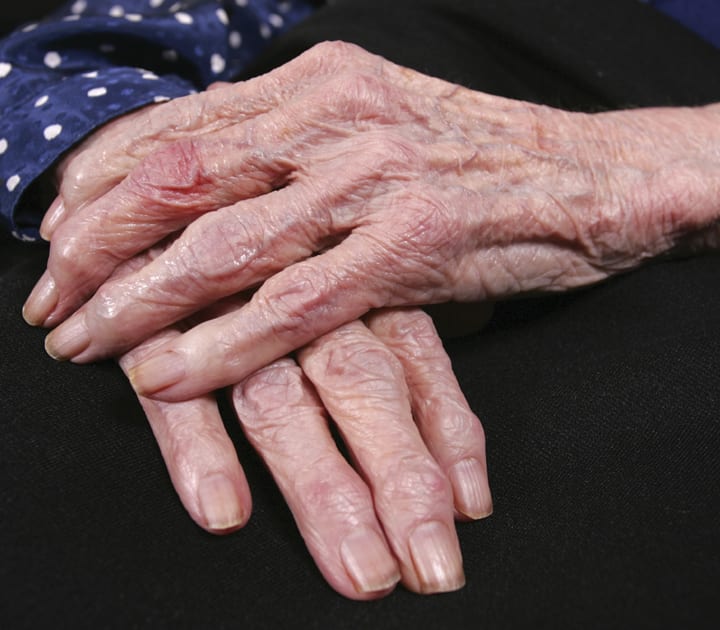
It’s easy to recognize the telltale signs of aging on the hands. Thinning of the skin and volume loss is a hallmark of aging skin and will happen faster when combined with chronic sun exposure. The loss of plumpness (subcutaneous fat) in the skin causes the hands to have a more ‘bony’ or ‘skeletal’ appearance. Blood vessels and tendons become more visible and the texture of the skin is more ‘crepey,’ (like crepe paper). In addition, sun spots — brown spots on the tops of the hands (lentigos) from chronic sun exposure in years past — come out as we age.
“Hand rejuvenation is becoming more and more popular,” says diplomat of the American Board of Dermatology, Lorrie Klein, MD. “Like our face, our hands show our age and how much sun exposure we’ve had. People spend time and money on improving how their face looks, but often neglect their hands. You can hide your age when people see your face, but if you don’t treat your hands as well, you’re still revealing your age to others.”
Klein explains that, like facial rejuvenation, a combined approach works best to combat aging hands because skin ages in several ways: It thins and becomes dry, lax, and fragile; brown spots develop, and it becomes more transparent, making blood vessels visible. Cosmetic procedures exist to address all of these issues.
Cosmetic Rejuvenation
Ad Loading...
Klein’s treatment protocol combines three to four different treatments, including lasers, Intense Pulsed Light (IPL), and fillers.
For smoothing wrinkles and scars and lightening brown spots, lasers and IPL work wonders. The laser’s light energy penetrates the top layers of the skin to resurface it and stimulates collagen growth. Laser treatments usually last between 15-45 minutes. Because the laser treatment works with your body’s natural skin cells, results take 1-3 weeks. IPL, a technology similar to laser, is good for eliminating age spots and small blood vessels. The light energy penetrates the top skin layers and destroys the pigment (age spots) or blood vessels, and the body’s natural repair mechanism eliminates the damaged tissue. These treatments run anywhere from $200-500 per treatment, and several might be needed. If you don’t keep getting sun exposure, Klein says, the results from lasers and IPL can be permanent or last for years.
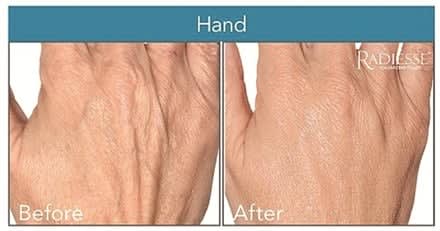
Often the most dramatic cosmetic benefit is with injectable dermal fillers. These fillers can hide blood vessels and plump skin. For volume loss, Klein uses Radiesse and Voluma Juvederm. Radiesse is a calcium-based injectable gel that replenishes skin’s lost volume and stimulates collagen growth. Voluma Juvederm is a thicker injectable hyaluronic acid gel that works similarly and instantly adds volume. These treatments run $1,000 to $2,000 and will need to be redone every nine to 24 months.
Hands treated with Radiesse
But what about side effects? “There are always risks with procedures,” explains Klein. “But they’re rare with good technique and a good device.” With lasers, Klein says there is the possibility of burns, discolorations, and scarring. With fillers, it’s possible to experience bruising, bumps, and swelling. “There are other rare side effects that could come as a result of poor technique,” she says. “That’s why it’s always important to go to a specialist, such as a cosmetic dermatologist or plastic surgeon who is very skilled.”
Topical Alternatives
What if your clients don’t have the money or inclination to visit a cosmetic dermatologist or plastic surgeon for hand rejuvenation? Fortunately, topical products have come a long way in the past few years, and there’s a lot you can do to address your clients’ concerns right in the salon.
“Products need to address multiple factors of aging in the hands, primarily volume loss and pigmentary changes,” explains board-certified dermatologist and nail specialist, Chris Adigun, MD. “Volume-restorative products can act to address volume loss in the upper layer of the skin. Key components here will be products that are hydrating to restore the ‘plumpness’ that has been lost.” Adigun suggests using products with hyaluronic acids and ceramides (proteins that assist in maintaining moisture). Hyaluronic acid is a naturally occurring substance in the human body that maintains skin’s elasticity and moisture. It creates a moisture barrier on the skin when used topically. Ceramides are lipid molecules that are found in high concentrations within cell membranes. In skincare products, ceramides strengthen the skin’s natural barrier, protect it from environmental factors, and restore moisture.
Adigun explains that other volume-restorative products focus on collagen stimulation in the deeper layers in the skin. These components will restore volume loss that makes underlying veins and tendons more prominent. Look for alpha hydroxyl acids (AHAs), retinols, and antioxidants. AHAs are derived from milk and fruit sugars. Lactic acid and glycolic acid are the most common alpha hydroxyl acids. They penetrate the skin very well and are available in various concentrations; the stronger concentrations are used in chemical peels. Retinol, a form of vitamin A, is a powerful exfoliant that stimulates the production of hyaluronic acid and collagen. Retinols are extremely effective at reversing sun damage, treating acne, and firming the skin. According to WebMD, research has found that antioxidants, specifically vitamins C and E and selenium, can help protect the skin against sun damage and skin cancer. In fact, some of the discoloration and wrinkles associated with aging may actually be reversed with the use of antioxidants, as they work by hastening the skin’s natural repair systems and preventing further damage.
And what about those brown spots? “Products that focus on skin pigment alterations will be more exfoliative, as many of the pigmentary changes from aging and sun exposure cause superficial pigment deposition,” Adigun says. “These products can lead to significant improvement. These include: plant extracts, alpha hydroxyl acids (AHAs), retinols, bleaching agents such as hydroquinone and kojic acid, among others.” Plant extracts are naturally derived substances that gently exfoliate the skin. Look for fruit enzymes such as bromelain (from pineapple), papain (from papaya), Emblica (Indian gooseberry), and pumpkin. Both hydroquinone (a chemical compound) and kojic acid (derived from several species of fungi) work to lighten melasma (skin darkening), brown spots, and freckles by inhibiting tyrosinase, an enzyme needed to make melanin.
Of course, having well-groomed nails and a beautiful manicure is a great way to make hands look more youthful. “Keep it classy, clean, and chic,” says Jan Arnold, co-founder and style director of CND. “If you’re going for a natural look, stick with clean and warm, flattering pinks. If you prefer nail color, go bright and cheerful versus grayed or neutral. A bright, flattering nail color steals the eye away from an aging hand and conveys a youthful spirit in the attitude of the wearer.”
The bottom line is that it’s important to pay as much attention to our hands as we do our face. Klein suggests using the same rejuvenation products on hands that you would use on your face, moisturizing often, and using sunscreen, reapplying it throughout the day.
Adigun agrees that UV protection is key. “If your clients are especially concerned with aging hands, offer to let them use a UPF glove of some kind when getting gel manicures,” she suggests. “And recommend UPF gloves if they drive a lot (UVA rays are in nail lamps and penetrate windshields without obstruction). Everyone should start using these restorative products before the aging becomes extensive. Prevention is always easier than intervention!”
Uncured gel polish and microscopic e-file dust contain active acrylates that penetrate the skin, triggering permanent contact dermatitis. Learn the chemistry behind these irritants and how to protect your clients and yourself.
The Good Patch is a leading wearable wellness patch brand, offering wellness and skincare patches that support everyday needs including energy, sleep, relaxation and more.
Orthopedic PT reveals three daily exercises plus ergonomic advice that can help salon professionals avoid the aches and injuries caused by standing, bending and repetitive overhead work.
From acrylic monomers to airborne bio-dust, the air inside a nail salon carries risks most professionals never see coming. Aerovex Systems reveals the source-capture and room-purification strategies that are setting a new standard for salon safety.
Working in beauty doesn’t have to hurt. Learn how Somatic Movement helps hairstylists, lash artists, and other beauty pros release tension, improve posture, and extend their careers.
As a spa or salon professional, your clients expect more than just beauty—they expect safety, hygiene, and peace of mind. Fungal infections like Athlete’s Foot and Nail Fungus are more common than you think, especially in environments where tools and footbaths are reused without proper sanitation. This blog covers how to stop these issues before they start, using proven infection prevention strategies for salons and spas.
A federal initiative aimed at studying chemical exposure in nail salons has ended due to staffing and budget changes. Here’s what the project set out to do—and what its conclusion means for salon professionals.
For many people, a pedicure is a relaxing beauty ritual. But what most don’t realize is that this simple service, if done without proper hygiene and sanitation, can cause serious infections and long-term health issues.
Onycholysis is the separation of the nail plate from the nail bed. While it may look painful, it typically isn’t—at least not at first. But without proper care, this common nail disorder can lead to infections, deformities, and long-term damage.
Mckenzie Kool, Psychologist, MC, RPsych provides us with guidance on what may or not be helpful in speaking with someone who has suffered a significant loss.
Clients come to you to feel their best—not leave with a viral souvenir. Warts and cold sores can spread fast in busy salons, but a few smart habits make all the difference. Let’s talk about what’s really lurking in your salon (and how to kick it to the curb).
As Earth Day approaches, The Green Beauty Community Foundation and the Green Spa Network invite beauty pros to step forward and embrace sustainability through the Green Pledge--a powerful initiative designed by and for beauty industry leaders.
Don’t cancel Valentine’s Day altogether, urges Jill Palmquist. Instead, think of it as a (frilly, flowery, Champagne-bubbly) wake-up call to fall deeply in love with your own life.
Life coach and Culture Ambassador of Sam Villa, Andrew Carruthers, outlines how to tell if your burnout is temporary - or if it's time to make a bigger career change.