At first she thought she might have a cold or the flu, but when her symptoms persisted, and then it got worse, Bricker visited her doctor. After many visits, she was finally diagnosed.
Tired all the time? Aches and pains everywhere? You could be one of the 6 million Americans suffering from fibromyalgia.
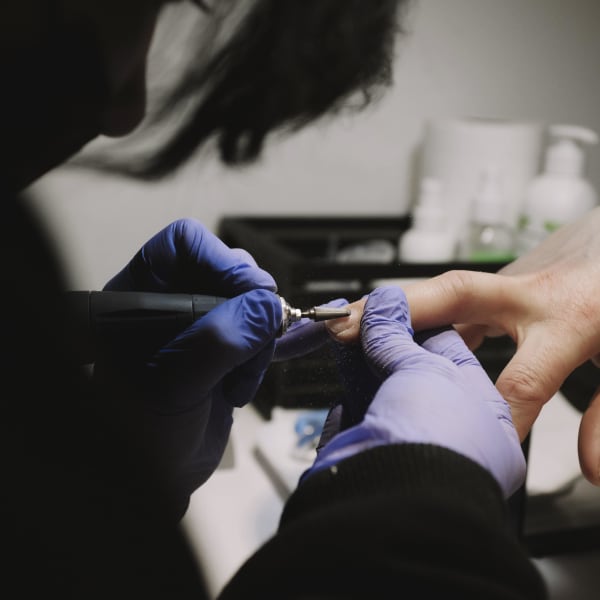
Two years after she started working as a nail technician, Anna Bricker began having sinus and throat problems: headaches, sore throats, sinus congestion, and nasal drainage. At about the same lime, she noticed the muscles in her neck, shoulder and arms would ache and become stiff while working. Then the achiness and stiffness moved to her hips. She was, in a word, miserable.
At first she thought she might have a cold or the flu, but when her symptoms persisted, and then it got worse, Bricker visited her doctor. He, too, dismissed it as the flu, but when the sinus problems and muscle pain worsened, she saw a different doctor, and from there started making the rounds. "I just got one diagnosis after another, and prescription after prescription," she says.
In the meantime, Bricker had no choice but to keep working, even when her sinus problems got so bad that she started having nosebleeds at work. "I was single and supporting myself," she explains. "And it wasn't even the money so much as my integrity. I didn't want to live off of my family.
"I couldn't afford for the pain to slow me down, so 1 worked as hard as I could through it," she remembers. "1 became very adept at running a constant nosebleed down my throat. No one knew 1 was sick or hurting -I just remember pushing and pushing through the pain."
Bricker knew she'd developed an allergy to the linen wrap products she used, but that didn't explain all the pain in her muscles. When no doctor could explain it either, she wrote it off as overuse of the muscles as well as stress. "I would just hurl all over, and the more 1 hurt, the more stressed 1 got," she says.
Between the allergies and the pain, Bricker decided it was time to find another job, so she went to school full time while she kept working as a nail technician. But soon after starting a new career as a pharmacy technician she had to quit. "My arms hurt so much that I could not reach above my head to grab medications off the shelf to fill a prescription, and I had other things, like an irritable bowel system, that made it impossible for me to work," she says. "I felt like a huge failure."
Five years after the symptoms started, Bricker had plenty of diagnoses, but still no answers. "I saw so many doctors and had so many tests," she says. She's been told she has HIV, herpes, lupus, Lyme disease, Epstein Barr, immunodeficiency-related problems, stress colitis, depression, fat intolerance, and a pulled muscle. One doctor even said she must be a battered wife. None of the diagnoses were correct.
In fact, it took 14 years and countless doctors to find the right answer. Her symptoms, she was finally told in December 1997 by a doctor who was familiar with the condition, pointed to fibromyalgia.
What Is Fibromyalgia?
Fibromyalgia, a rheumatic condition that is marked by widespread, chronic muscle pain, is officially defined as "pain in the muscles and fibrous connective tissues (i.e. the ligaments and tendons)."
Like most people, Bricker had never heard of fibromyalgia before she was diagnosed. But fibromyalgia is by no means a rare condition: It is estimated that 2% to 4% of the population have it, "and that may be a real conservative estimate," adds Dr. Doyt L. Conn, vice president of medical affairs for the Arthritis Foundation in Atlanta, Ga.
The condition, which primarily affects women of child-bearing age, is the second most common arthritis-related condition (the most common is arthritis). The diseases differ in that arthritis is a degeneration of a joint, while fibromyalgia is a form of soft-tissue or muscular rheumatism (pain and stiffness of the joints, muscles, and bones). And as if widespread, chronic pain weren't enough, people with fibromyalgia usually present a host of other symptoms.
"Patients with fibromyalgia usually ache all over, sleep poorly, are stiff on waking, and are tired all day," says David A. Nye, M.D., a fibromyalgia specialist at the Midelfort Clinic in Eau Claire, Wis. "They are prone to headaches, memory and concentration problems, dizziness, numbness and tingling, itching, fluid retention, crampy abdominal or pelvic pain, and diarrhea."
Yet with all of these symptoms, doctors can find nothing physiologically wrong with the patient. In fact, the diagnosis of fibromyalgia comes after all other avenues have been exhausted, as with Bricker.
"Because fibromyalgia symptoms can mimic other disorders, people go through batteries of tests to rule out other conditions before a diagnosis of fibromyalgia can be confirmed," Dr. Conn says. "Even then, people with the condition often may look healthy, and their test results are normal."
For example, numbness and tingling in the wrists and hands can indicate carpal tunnel syndrome, while chronic fatigue and widespread pain can indicate hypothyroidism. When tests for these and other conditions come back negative, however, that can point to fibromyalgia. There is no test for fibromyalgia itself.
While doctors are becoming more aware of fibromyalgia, many patients with the condition express frustration at how long it takes to get the correct: diagnosis. They also complain of the difficulty in finding a physician who is both knowledgeable about treating the condition and empathetic to people who suffer from it.
"Most fibromyalgia specialists are rheumatologists or physiatrists (physical medicine rehabilitation specialists), but you can't assume that any given rheumatologist or physiatrist will be knowledgeable and helpful," Nye notes. Your best bet in finding a doctor knowledgeable of the condition is to request a list of recommended physicians from one of the national fibromyalgia organizations (see "For More Information” above).
Stretching and De-Stressing
In addition to daily gentle aerobic exercise, Dr Nye recommends these stretching exercises to help keep muscles limber, They are beneficial to anyone (not just fibromyalgia sufferers) who suffers from stiff, sore muscles.
Dr. Nye recommends these stretching exercises before aerobic exercise or any time during the day when you start feeling stiff. Each exercise takes just 20 seconds per side. For the last three exercises, use the back of a chair or the wall for support.
Shrug your shoulders in a circular motion.
Reach one arm over your head and slowly bend your torso to the opposite side. Repeat with your other arm.
Bend forward from the hips, keeping your legs straight.
Pull one foot toward your buttocks with your hand while standing on the other leg. Repeat with your other foot.
With your feet flat on the ground and one foot placed ahead of the other lean forward as though you were taking a step, bending just at the front knee.
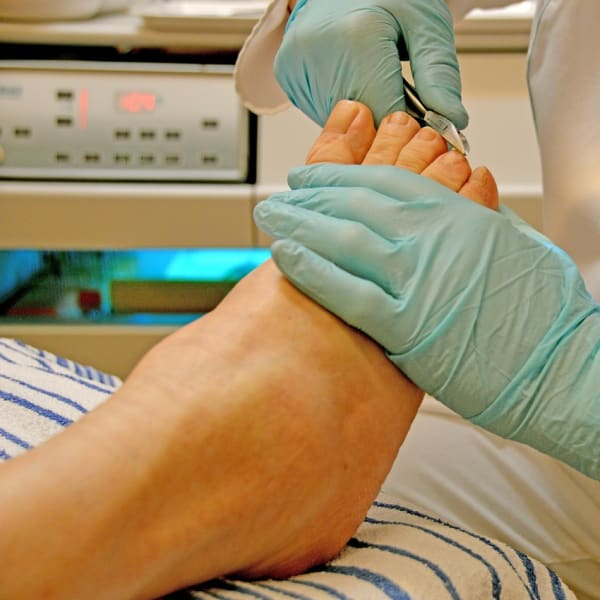
Nail technicians with fibromyalgia need to take extra special care of themselves. This means taking frequent breaks between clients, never overbooking or trying to play catch-up when you are running behind, and quickly ridding yourself of rude or exploitative clients.
Still Searching for a Cause
When the condition was first given a name in the early 19th century, researchers thought it was an inflammatory condition much like arthritis. As more research was done, however, the muscles were found to be normal, and the medical community labeled it a psychiatric condition. Some doctors still consider it psychiatric due to depression, but Nye says any depression associated with fibromyalgia tends to be a result of having the condition.
"Patients with fibromyalgia are no more likely to be depressed than patients with other chronic painful disorders such as rheumatoid arthritis," says Nye. "We still don't know exactly what causes fibromyalgia, but we know much more than we did a few years ago.
"One leading theory links fibromyalgia with an abnormality of deep sleep. Fibromyalgia patients often note that sleeping poorly makes their symptoms worse the next day. Abnormal brain waves have been found in deep sleep in many fibromyalgia patients," adds Dr. Nye.
The National Institute of Arthritis and Musculoskeletal and Skin Diseases (NIAMS) is just one of many organizations conducting research to gain a better understanding of the specific abnormalities that cause and accompany fibromyalgia. Research efforts have not been unfruitful. For example, recent NIAMS research shows that abnormally low levels of the hormone Cortisol may be associated with fibromyalgia, while other research involving brain scans has shown that fibromyalgia patients sometimes suffer oxygen depletion in both the brain and muscles. A lack of oxygen to the brain, for example, may be responsible for the memory lapses and concentration problems of some patients, while a lack of oxygen to the muscles can make them more likely to be injured from normal use, as well as take longer to heal.
Still, Dr. Conn is not entirely convinced fibromyalgia is a biological disorder. "Are these findings something intrinsically abnormal, or are they the body's reaction to the pain?" he asks. "It may be a condition of our time, with all the hustle and bustle and stress and demands. I think it results from the whole environment of the person."
Medical evidence shows that fibromyalgia sufferers have more intense pain (based on higher levels of substance P, which is the body's primary pain neurotransmitter), or abnormal regional blood flow in their brains. "I don't think there's any question that there are a number of identifiable problem areas," Dr. Conn explains. "The real question is, do these biological abnormalities predispose them to the condition, or are they a result of a chronic pain problem?"
The answers to this and other questions are still unknown.
A Change in Lifestyle
Not surprisingly, relief from the debilitating symptoms is of paramount interest to fibromyalgia patients. While the symptoms range in severity, most fibromyalgia patients always have some degree of pain. Yet both Dr. Nye and Dr. Conn say the condition is, to a certain degree, manageable. The first step, they both agree, is education. "Many times these patients go from physician to physician and imagine terrible things, which aggravates their symptoms," Dr. Conn says. "Once you make the diagnosis and educate and reassure them, most of them will do better.
Whether a cause or a result of fibromyalgia, a lack of deep sleep definitely contributes to fibromyalgia, says Dr. Nye. Fibromyalgia patients need to be evaluated for all sleep disorders, such as sleep apnea or restless leg syndrome, and those disorders need to be treated. Even if the person doesn't have a sleep disorder, a regular bedtime that allows adequate rest time coupled with medications to help improve deep sleep, are critical. There are several antidepressant medications that, taken in low doses before bedtime, improve the quality of sleep.
Medication alone, however, won't offer patients much relief, cautions Dr. Nye. "Successful treatment demands the patient's active involvement as well as lifestyle changes," he says. In addition to self-education, a regular bedtime and avoidance of stimulants like alcohol and caffeine, fibromyalgia patients need to develop a daily exercise program.
"While patients who try to do too much exercise too soon will make themselves worse, most patients who don't begin a daily aerobic exercise regimen will never notice much improvement." Dr. Nye emphasizes that exercise must be done daily for patients to realize any benefits. "It may require trying several different kinds of exercise before finding one that works for you. Popular choices include walking, a water exercise program, bicycling, using exercise equipment such as a stationary bike, and gentle aerobic dance," he adds.
And because stress can worsen the symptoms, both Dr. Nye and Dr. Conn recommend reducing it whenever possible. While stress is a sometimes unavoidable factor in our lives, attitude means everything. Just as most people would benefit from the other lifestyle changes recommended for fibromyalgia patients (who couldn't use a little more sleep and a regular exercise program?), a more positive and accepting outlook of other people and daily situations can defuse a fibromyalgia flare-up.
"While fibromyalgia is not curable, most patients — with a little effort — can make it to the point where they feel substantially better most of the time," Dr. Nye says. "Occasional relapses are common, perhaps caused by staying up late, skipping your exercise for a day, a disruption in your daily routine, increased stress, or for no apparent reason. You will do best it you give in to it when this happens and try to get some extra rest."