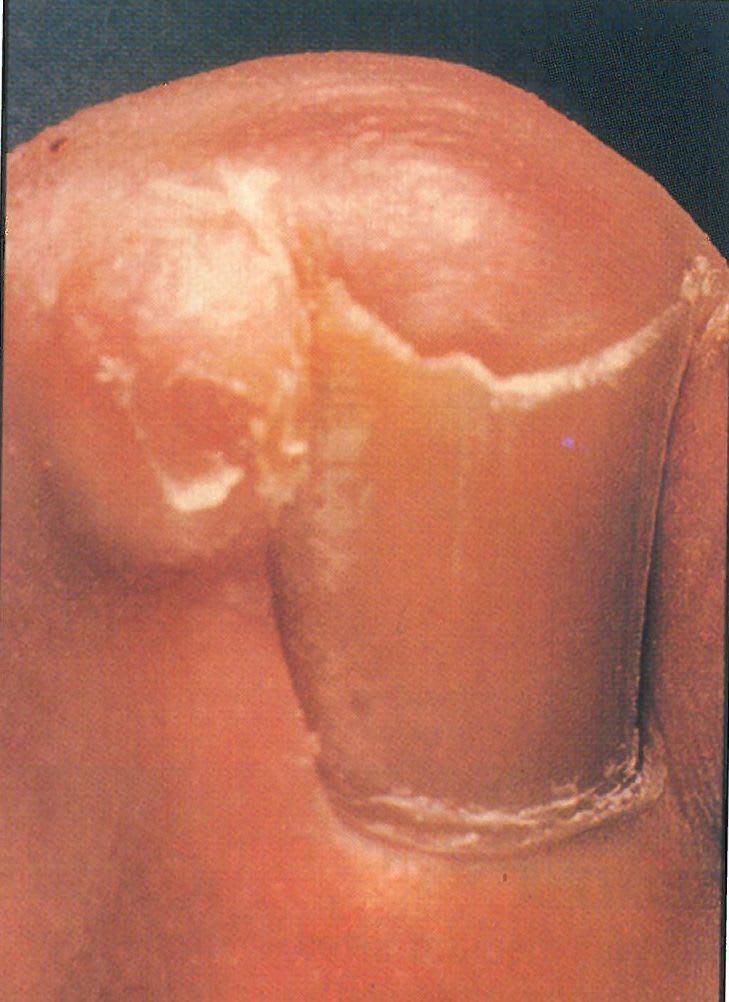
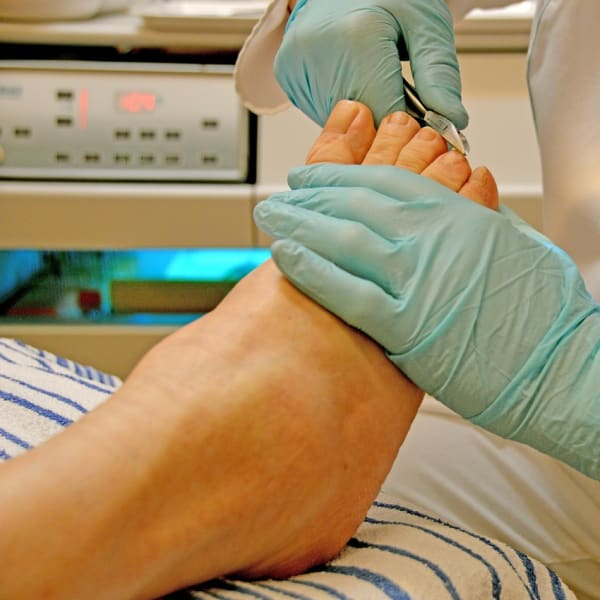
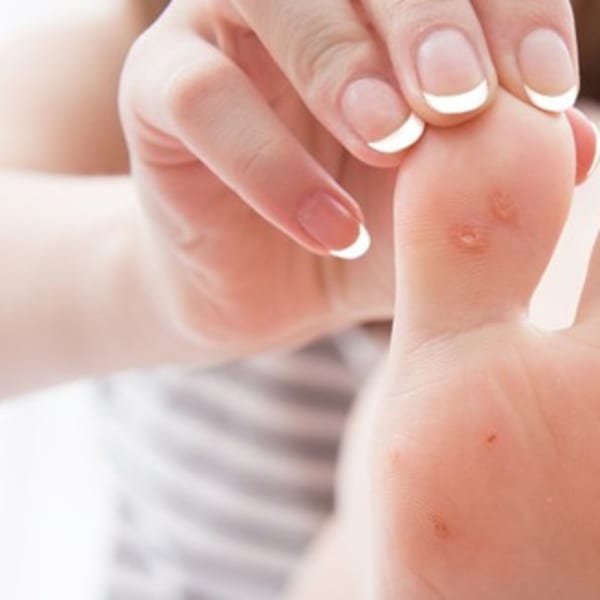
Ingrown nails are most common on the big toes because people wear tight shoes that press on the skin around the big toe, jamming it into the side of the nail.
by Orville J. Stone, M.D.
June 1, 1992
5 min to read
The most common toenail ailment, by far, is the ingrown toenail. Take a survey of your clients and you’ll surely find that most: of them have suffered from an ingrown toenail at least once. While an ingrown nail is not life-threatening, left untreated it can become a painful, chronic infection.
Ingrown nails are most common on the big toes because people wear tight shoes (by choice or because their feel are structurally different and standard sizes just don’t lit their feet) that press on the skin around the big toe, jamming it into the side of the nail. This causes the leading edge of the nail to be pushed into the surrounding tissue as it grows out. Even without tight shoes, the simple act of standing can also cause surrounding tissue to press against the nail. Once a roughened edge of the nail starts to dig into the distal lateral nail fold, the tissue swells, increasing pressure on the site.
Ad Loading...
Some people are more prone to ingrown nails than others because of the shape of their nails. If the nail has a minimal C-curve, the ingrown nail can be treated In- wearing better fitting shoes, which will remove the pressure, because the nail doesn’t naturally grow into the tissue. Nails with a more pronounced C-curve are more difficult because they often are so curved they pinch the nail bed tissue. Additionally, the sharp C-curve is a major factor in inducing and perpetuating the ingrowth.
While some nails are more prone to ingrowth than others, there are other factors besides tight shoes that can cause- it. Trimming the nails too short or peeling the nail in an attempt to shorten it are frequent causes of ingrown toenails. The nail can also grow into the skin when a new nail is growing to replace one that fell off because of injury or surgical removal for example, it takes one to one and a half years for a new nail to grow from the matrix to the free edge. This is ample time for the nail bed to contract, forcing the wider nail plate into the surrounding tissue.
While ingrown nails can occur on the fingers or smaller toes, they are uncommon and minor because there’s no pressure forcing the nail into the skin. Pincher-type nails are also uncommon on the fingers, although they do occur.
When the nail is pressed into the surrounding skin, the tissue becomes irritated and responds by producing more tissue, part of the natural healing process. Since the wound is constantly irritated, the tissue continues to proliferate. The repeated pressure and irritation cause the skin to break and ooze. The broken skin and moisture create the ideal conditions for bacteria to grow and produce pus.
In the early stages, the infection only occurs because of the tissue injury. After the ingrown toenail becomes established, the infection self-perpetuates.
Ad Loading...
To prevent ingrown nails, encourage clients to wear better fitting shoos or open-toed shoes. Tight shoes can be stretched by hand, or most shoe repair shops can stretch shoes. To stretch, apply pressure with a blunt object like a wooden spoon handle where tightness is felt. If the shoe is leather, clients can apply a commercial leather stretcher beforehand to soften the material.
Treatment of an ingrown nail depends on the nail’s shape and how large the lesion is. On a normal-shaped nail with minimal excess tissue, the ingrowth can be arrested and corrected by pushing a small amount of cotton under the distal lateral nail with a thin slick. Tell the client to change the cotton each day and push it a little farther back. This painless treatment prevents contact between the nail and the lateral nail fold until the roughened edge grows out. Advise the client to clean the area several times a day with an antiseptic, alcohol, or hydrogen peroxide. Do not try this treatment if the skin is broken or infected.
If the nail is firmly ingrown but the skin hasn’t proliferated and is not broken, you can carefully trim the lateral edge of the nail back into its normal margin. Be careful not to cut too far back and don’t leave any sharp edges to cause future problems. This treatment usually must be’ followed by using cotton daily to help the nail glide past the trembled area.
If the skin is broken or the tissue is greatly overgrown refer the client to a dermatologist or podiatrist.
Unless the nail is severely curved into the tissue, I try conservative treatments first. My first choice is to inject a cortisone medicine into the tissue next to the ingrown nail. This shrinks the tissue and decreases the pressure. My second choice is to remove the lateral edge of the nail far enough back to get a normal nail edge. Even in the case of a severely deformed pincher nail, I surgically destroy the matrix to prevent the nail from growing back only if the patient is having significant discomfort.
Ad Loading...
There are a large number of surgical procedures that can be used on ingrown nails. The fact that there are so many is a good indication that no one procedure is perfect.
Many ingrown nails could be prevented with proper foot care. Take a few minutes at each pedicure to show clients how to trim their nails properly and talk about the importance of choosing comfortable, properly filling shoes. If the nail does start to grow into the tissue, take steps to correct it before it embeds in the skin and causes a painful infection. When it comes to ingrown toenails, there’s no gain from the pain.
Orville J. Stone, M.D., is a dermatologist practicing in Southern California. He has taught at medical schools for 30 years and has published 150 scientific papers. His first paper on nail disorders appeared in 1962.
Uncured gel polish and microscopic e-file dust contain active acrylates that penetrate the skin, triggering permanent contact dermatitis. Learn the chemistry behind these irritants and how to protect your clients and yourself.
The Good Patch is a leading wearable wellness patch brand, offering wellness and skincare patches that support everyday needs including energy, sleep, relaxation and more.
Orthopedic PT reveals three daily exercises plus ergonomic advice that can help salon professionals avoid the aches and injuries caused by standing, bending and repetitive overhead work.
From acrylic monomers to airborne bio-dust, the air inside a nail salon carries risks most professionals never see coming. Aerovex Systems reveals the source-capture and room-purification strategies that are setting a new standard for salon safety.
Working in beauty doesn’t have to hurt. Learn how Somatic Movement helps hairstylists, lash artists, and other beauty pros release tension, improve posture, and extend their careers.
As a spa or salon professional, your clients expect more than just beauty—they expect safety, hygiene, and peace of mind. Fungal infections like Athlete’s Foot and Nail Fungus are more common than you think, especially in environments where tools and footbaths are reused without proper sanitation. This blog covers how to stop these issues before they start, using proven infection prevention strategies for salons and spas.
A federal initiative aimed at studying chemical exposure in nail salons has ended due to staffing and budget changes. Here’s what the project set out to do—and what its conclusion means for salon professionals.
For many people, a pedicure is a relaxing beauty ritual. But what most don’t realize is that this simple service, if done without proper hygiene and sanitation, can cause serious infections and long-term health issues.
Onycholysis is the separation of the nail plate from the nail bed. While it may look painful, it typically isn’t—at least not at first. But without proper care, this common nail disorder can lead to infections, deformities, and long-term damage.
Mckenzie Kool, Psychologist, MC, RPsych provides us with guidance on what may or not be helpful in speaking with someone who has suffered a significant loss.
Clients come to you to feel their best—not leave with a viral souvenir. Warts and cold sores can spread fast in busy salons, but a few smart habits make all the difference. Let’s talk about what’s really lurking in your salon (and how to kick it to the curb).
As Earth Day approaches, The Green Beauty Community Foundation and the Green Spa Network invite beauty pros to step forward and embrace sustainability through the Green Pledge--a powerful initiative designed by and for beauty industry leaders.
Don’t cancel Valentine’s Day altogether, urges Jill Palmquist. Instead, think of it as a (frilly, flowery, Champagne-bubbly) wake-up call to fall deeply in love with your own life.
Life coach and Culture Ambassador of Sam Villa, Andrew Carruthers, outlines how to tell if your burnout is temporary - or if it's time to make a bigger career change.