After almost three decades, a rare diagnosis prompts one nail tech to ask the question, “Is this related to my work?” In an effort to shed some light on difficult questions, we did some digging and asked some questions of our own.
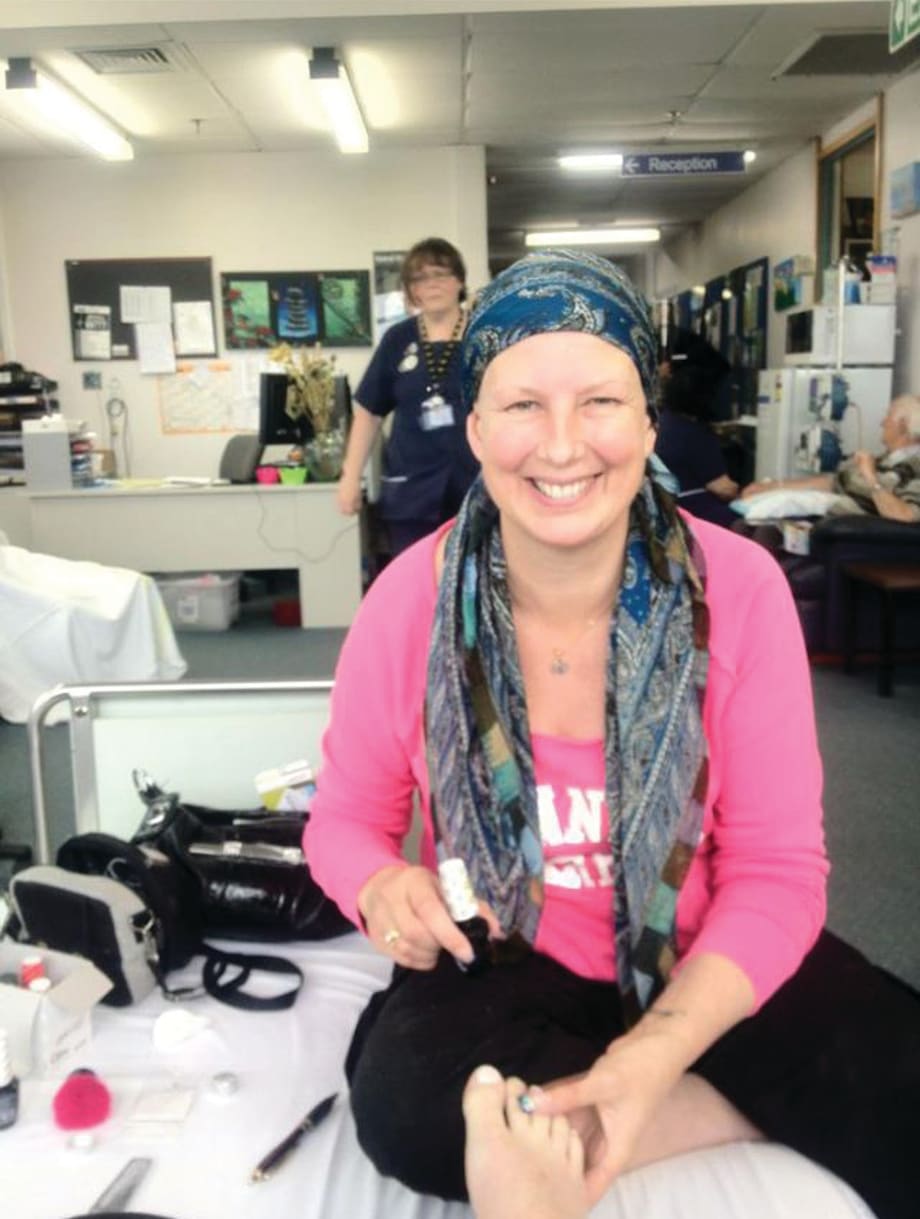
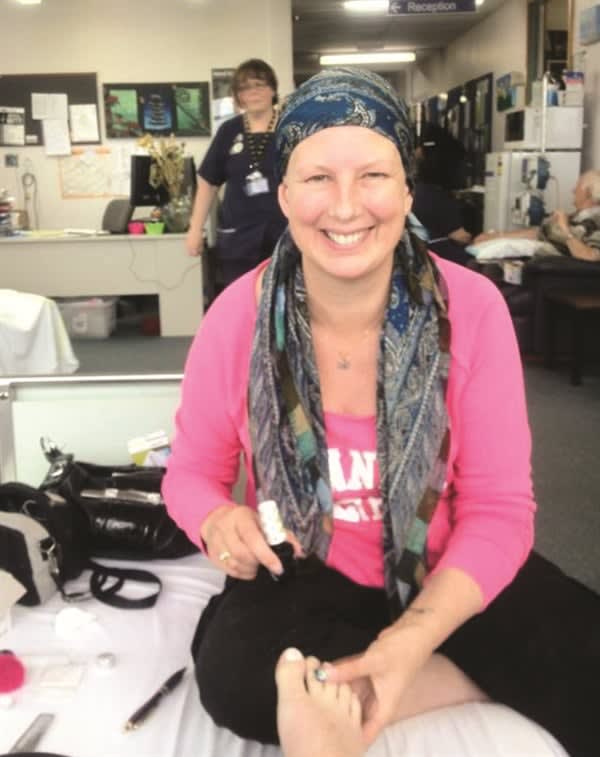
After two cancer diagnoses and treatment, New Zealand-based nail tech Debbie Casson is back at work.
5 min to read
After two cancer diagnoses and treatment, New Zealand-based nail tech Debbie Casson is back at work.
Debbie Casson has a passion for nails. At 16 years old, she got her nails done and instantly knew it was for her. She approached the owner of the salon and she was soon on her way to fulfilling her new dream. For almost three decades, Casson lived the dream, working five to six days a week, eight to 12 hours a day as a successful nail professional.
On March 12, 2012, a rare diagnosis of olfactory neuroblastoma (also known as esthesioneuroblastoma) would shake her world. Three short days later, a breast cancer diagnosis would follow. Surgeries, radiation, and chemotherapy followed after that. At first, Casson struggled to figure out how her family would survive financially. She had no insurance to cover her lost wages and doing nails was all she knew.
Ad Loading...
A year post-chemo, Casson is now questioning, “Have I just been unlucky or are there more of us out there?” Her specialists are adamant there must be a link between her work and her situation. She’s also asking, “Was this caused by the older MMA products, or am I still at risk today? Two other nail techs I trained with were diagnosed with cancer of the mouth.”
Researchers have been searching for answers. What causes cancer? Can it be thwarted? And how can it be cured? Pinpointing causes can be difficult because people live a life of variety. We start out life with a variety of DNA factors, differences in lifestyle, recreational habits, geographic factors…the list truly goes on and on. Isolating a single cause can be daunting — the rarer the diagnosis, the smaller the sample of people to follow and study. Esthesioneuroblastomas are very rare.
To put it into perspective, one must look at the overall (absolute) risk we face of developing cancer. According to the American Cancer Society, males have a lifetime risk of one in two (43.92%) and females of one in three (38%) to develop some type of invasive cancer. Odds like that are eye-popping. A woman’s risk of developing a cancer of the brain or nervous system is one in 182, breast cancer risk is one in eight. According to New York Presbyterian, between 1978 and 1990, only 84 esthesioneuroblastomas were reported in the U.S. The U.S. National Cancer Institute’s Surveillance Epidemiology and End Results Database results show one in four men and one in five women die of cancer. General risk factors may be genetics or family history, age, gender, smoking, infections (HPV), weight, sun exposure, etc. These risk factors affect relative risk. Risk factors help medical professionals determine if a person is at increased or reduced risk within the general population. These factors may also guide in the administering of diagnostic testing. Research has led to many clues and effective treatments but has yet to yield a definitive answer as to why some with many risk factors never develop cancer and some with few develop invasive cancers.
The California Breast Cancer Research Program funded community research into health problems in nail salon workers. Studies ask workers about their jobs through surveys and focus groups. They compare the general public to manicurists to see if there may be a stronger incidence in salon workers. They do exposure assessments to measure chemical exposures in the salon. In one study (AHS-NCCC Community-Research Project 2007-2010), Vietnamese nail salon workers wore an air monitor to work and answered questionnaires. Drawbacks of this study included the lack of documenting risk factors such as race, smoking, or family history.
At one point licensee records (1970-2005) were linked to general population results and revealed that a majority of the cancer cases occurred in nail professionals who first became licensed in the ’80s and ’90s. Though there was a small spike in lung cancer, there was no overall excess among manicurists. The number of years licensed appeared to be a factor in incidence but many people keep a license active when they move on to other careers. There was no way to know how much exposure existed and to what chemicals.
Ad Loading...
While Casson is based in New Zealand, her story correlates to many in the U.S. in that over the course of her career, she used different products as technology evolved, and began to employ different measures in how she completed her daily tasks. Cancer can take years to develop and it can be hard to pinpoint what triggered it.
As nail salons have become a staple in the beauty landscape, more and more emphasis has been placed on health and chemical safety. Even companies such as Grainger, which once weren’t seen as part of the beauty industry, have jumped in. A visit to www.grainger.com reveals tip sheet #281 which delves into nail salon safety and encompasses exhausting vapors to the outside air.
Unfortunately, esthesioneuroblastomas are rare, and though first documented in 1924, there have not been enough studies to conclude what the risk factors are. A rare malignant tumor of the neuroectodermal, this cancer has an average onset age of 53 and has a ratio of 55:45 male to female predominance. This cancer of the nerve cells along the roof of the nose and portions of the brain above it most commonly exhibits initial symptoms of nasal obstruction, nose bleeds, or pain. According to University of Virginia Health, “83% of patients already have a tumor extending beyond the nose (into the brain or other areas of the body) at the time of diagnosis. Signs the tumor has spread may include loss of smell, vision loss, eye pain or tearing, ear pain and severe headaches. There are no known causes or risk factors for esthesioneuroblastoma.”
While completed studies fail to identify causes or specific risk factors, that doesn’t mean they don’t exist. There is yet much to learn about human DNA and chemical exposure (as well as other potential risk factors). The California Healthy Nail Salon Collaborative advises nail professionals to close bottles of nail product when not using them, keep lids on trash cans, never eat or drink in treatment areas, use good extraction ventilation, don’t use products containing MMA, and avoid exposure to toluene, formaldehyde, and DBP. Casson emphasizes that professionals should know what products they work with, only work with good ventilation, and perhaps limit the hours of exposure.
Casson’s prognosis is positive. She will be followed yearly for the next 20 years to identify any reoccurrence. She had a rare complication from the breast reconstruction and is currently waiting to have a new reconstruction. She is moving forward and beginning her nail career again, this time utilizing a special filter and extractor unit, and occasionally masks (though she finds this difficult to work in). She is still wondering, “Should I really still do nails?” and is forging ahead.
Uncured gel polish and microscopic e-file dust contain active acrylates that penetrate the skin, triggering permanent contact dermatitis. Learn the chemistry behind these irritants and how to protect your clients and yourself.
The Good Patch is a leading wearable wellness patch brand, offering wellness and skincare patches that support everyday needs including energy, sleep, relaxation and more.
Orthopedic PT reveals three daily exercises plus ergonomic advice that can help salon professionals avoid the aches and injuries caused by standing, bending and repetitive overhead work.
From acrylic monomers to airborne bio-dust, the air inside a nail salon carries risks most professionals never see coming. Aerovex Systems reveals the source-capture and room-purification strategies that are setting a new standard for salon safety.
Working in beauty doesn’t have to hurt. Learn how Somatic Movement helps hairstylists, lash artists, and other beauty pros release tension, improve posture, and extend their careers.
As a spa or salon professional, your clients expect more than just beauty—they expect safety, hygiene, and peace of mind. Fungal infections like Athlete’s Foot and Nail Fungus are more common than you think, especially in environments where tools and footbaths are reused without proper sanitation. This blog covers how to stop these issues before they start, using proven infection prevention strategies for salons and spas.
A federal initiative aimed at studying chemical exposure in nail salons has ended due to staffing and budget changes. Here’s what the project set out to do—and what its conclusion means for salon professionals.
For many people, a pedicure is a relaxing beauty ritual. But what most don’t realize is that this simple service, if done without proper hygiene and sanitation, can cause serious infections and long-term health issues.
Onycholysis is the separation of the nail plate from the nail bed. While it may look painful, it typically isn’t—at least not at first. But without proper care, this common nail disorder can lead to infections, deformities, and long-term damage.
Mckenzie Kool, Psychologist, MC, RPsych provides us with guidance on what may or not be helpful in speaking with someone who has suffered a significant loss.
Clients come to you to feel their best—not leave with a viral souvenir. Warts and cold sores can spread fast in busy salons, but a few smart habits make all the difference. Let’s talk about what’s really lurking in your salon (and how to kick it to the curb).
As Earth Day approaches, The Green Beauty Community Foundation and the Green Spa Network invite beauty pros to step forward and embrace sustainability through the Green Pledge--a powerful initiative designed by and for beauty industry leaders.
Don’t cancel Valentine’s Day altogether, urges Jill Palmquist. Instead, think of it as a (frilly, flowery, Champagne-bubbly) wake-up call to fall deeply in love with your own life.
Life coach and Culture Ambassador of Sam Villa, Andrew Carruthers, outlines how to tell if your burnout is temporary - or if it's time to make a bigger career change.