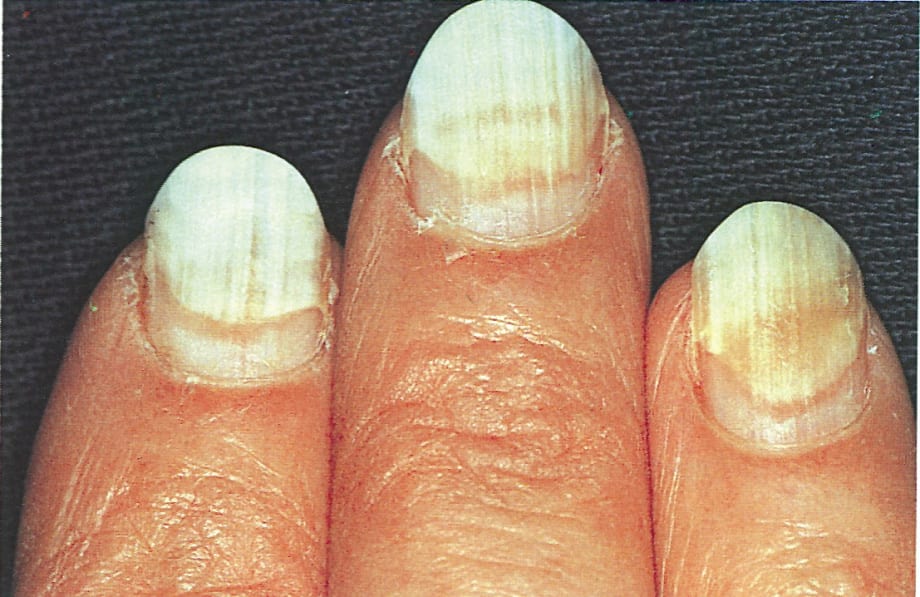
Onycholysis - separation of the nail plate from the nail bed - may appear innocuous at first, but caution clients against a “wait and see” approach. While you can’t diagnose the condition or its cause, arm yourself and your clients with information.
by Suzette Hill
June 1, 2003
8 min to read
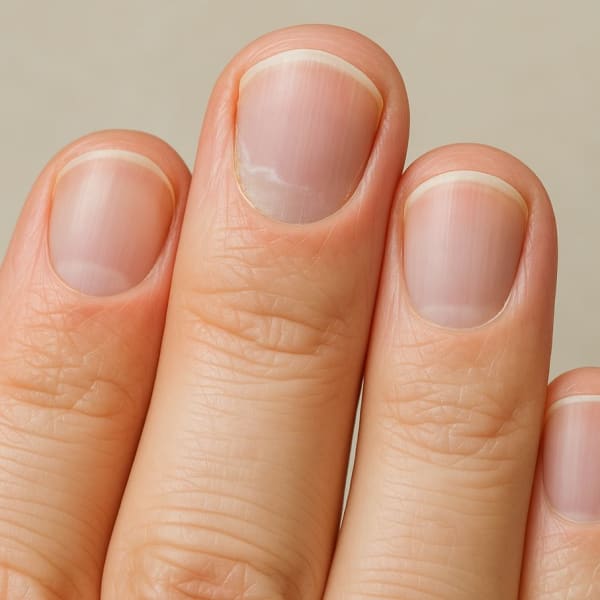
Onycholysis - separation of the nail plate from the nail bed - is a painless yet insidious condition. Beginning most often at the free edge, the nail plates separates from the nail bed. As the small space grows - signified by an opaque section of nail that stands in stark contrast to the healthy pink of a secure attachment - client distress claims exponentially as she fears the nails will completely fall off.
While no one appears to have calculated the incidence of onycholysis in the U.S. Population, the American Osteopathic College of Dermatology (AOCD) tags onycholysis as a “common problem.” The cause, however, isn’t always as apparent as the problem. According to researchers, onycholysis has been linked to multiple mechanical and chemical causes as well as a plethora of skin and systemic disease and the medications used to treat them.
Ad Loading...
Fortunately, most nails reattach in time with proper diagnosis and correction of the cause. “Once the diagnosis is made and the client is treated for the disorder, it usually takes anywhere from three to six months for the nails to reattached, depending upon the extent of the lifting,” said Richard K. Scher, M.D., during his tenure as Nail Doctor.
According to Dr. Scher, prompt treatment provides the best - and fastest - results. “If the cause of the lifting is allowed to continue affecting the nail, it can eventually create a scar on the nail bed, and the nail won’t be able to reattached,” he advises.
Immediately refer clients with onycholysis to their physician for diagnosis and treatment. But don’t make yourself a scapegoat in the process: Caution clients against accepting a diagnosis of allergic reaction to nail products or a fungal infection (often blamed on artificial extensions) without a through exam that includes a detailed history, scrapings of the nail plate and bed, patch testing, and whatever else it takes to effect a cure. And if nail products are proved as the problem, offer these clients solution-oriented services tailored to make them feel as good as they look.
Onychomycosis: Fungi Favor Nails
Most nail techs know that onychomycosis (fungal infection of the nail) appears first as onycholysis. Dermatologist estimate these fungal infections account for 50% of all nail disorders they treat. Recent studies suggest that as much as 13% of the U.S. population has a fungal infection of one or more nails. Onychomycosis is much more common on the toenails, and often is accompanied by tineapedis, also known as athlete’s foot. As the fungal infection advance, the separated nail nail appears yellow and opaque, then appears crumbled and can brown.
Ad Loading...
Key Indicator: In addition to being the most common cause of onycholysis, onychomycosis also is the most easily diagnosed. All that’s required to make the call is a skin scraping that can be mounted in KOH solution and examined under the microscope in the doctor’s office.
The fix: As recently as three years ago, many physicians encouraged their patients to regard onychomycosis as a cosmetic problem because the medications to cure them were more harmful than beneficial. Today, however, dermatologist and podiatrist have several effective oral and topical treatments that, particularly in combination, affect a cure in more than 90% of patients, with few side effects. (See “Getting a Step Ahead on Onychomycosis” in NAILS’ April 2003 issue.)
Trauma: the Insult of Injury
In addition to servings as a first line of defense against threat, the nails protect the nerve-rich tips of finger and toes from injury. Because they appear so hardy, it’s easy to forget their vulnerability to injury. But even tiny traumas can, over time, result in onycholysis.
On the hands, the most common insults result from typing and finger tapping. Toenails, on the other hand, take much abuse from shoes that are too small or too big and from active sports such as swimming. When the free edge extends beyond the fingertip or end of the toe, the nails take the brunt of the pressure over time, this can result in separation of the nail plate from the nail bed. Other minor traumas include habitual finger sucking, nail biting, and using the nails as tools Over-vigorous manicuring around the cuticles and under the free edge and excessive filing also can result in separation of the nail plate from the nail bed.
Ad Loading...
Blunt trauma, of course, is a more obvious cause: Whether forcibly torn from the nail bed or smashed in a door or window, these painful injuries leave no doubt as to the cause for separation.
Key Indicators: Minor, repetitive traumas can be the most difficult to diagnose. According to the maker of prescription antifungal Sporanox, a normal, non-hyperkeratonic (not thickened) nail bed makes trauma - not a fungal infection - the more likely culprit.
The Fix: Start by taking a close look at your client’s lifestyle. Longer nails are more prone to injury, and even so called active-length nails can’t keep up with some clients. Clients who type, tap, garden, or engage in any activity that puts a lot of stress on their hands should wear their nails no longer than fingertip length.
If more than one client suffers from onycholysis, take an objective look at your techniques (better yet, ask an experienced peer to observe your work). Inexperienced technicians, in particular, may file too aggressively or manicure too vigorously. The pros favor cuticle removers and exfoliants over mechanical measure and the lightest-grit files and buffers files and buffers on natural nails.
Chemical Irritants and Allergies laugh if you will when industry chemist Doug Schoon says that even water is harmful in large enough amounts, but dermatologist say water is the most common chemical irritant of nails. Our world is filled with chemicals, many of which irritate skin and nails or cause an allergic reaction in sensitive people. Over-exposure to water (from frequent hand washing and “wet” work), soaps and detergents, solvents, cleaning agents, and artificial nail products are just a few of the common things your clients encounter in the course of the day that can result in onycholysis as an irritant or allergic reaction.
Ad Loading...
Key Indicators: Onycholysis itself differs in appearance regardless of the cause (with the exception of the crumbled appearance of a nail with advanced onychomycosis). Accompanying skin irritations, however, can point to contact or allergic dermatitis as the cause. According to the American Academy of Dermatology (AAD), dermatitis is marked by dry, chapped skin or patchy, red, scaly, and inflamed skin.
The Fixed: Identifying the culprit can be challenging, to say the least. When the result of irritating or allergic reactions to nail of irritant or allergic reactions to nail products, onycholysis may be preceded by redness or irritation. Most dermatologists will advise patients to first remove all nail products, while at the time advising them to minimize their exposure to water and other common irritants that can promulgate skin and nail symptoms even after the primary irritant or allergen is removed.
If symptoms improve and resolve soon after nail products are removed, one or more ingredients in a product most likely was the cause. If the client choose and her physician supports her, you may work with the client to reintroduce nail services and products to determine what she can and products to determine what she can continue to enjoy and what she’ll need to rule out. Some clients, for instance, may no longer be able to wear certain artificial extension products, while other may be allergic to nail polish, but able to wear pink-and-white acrylics.
If skin problems don’t clear or the nails don’t reattached after several months free-and-clear of nail products, the clients should continue to work with her doctor to uncover the cause. Just as onycholysis cab cause scarring that results in permanent nail separation, dermatitis can become a chronic skin condition if the cause isn’t quickly eliminated.
When Diseases Extend to Nails In addition to manifesting as a primary symptoms of allergy or irritation, onycholysis also can appear as just one of many possible secondary symptoms of systemic disease (such as hyperthyroidism) and skin disease (such as psoriasis and lichen planus). Additionally, numerous medication - with tetracyclines by far the most common - can promote nail separation.
Ad Loading...
Key indicators: When caused by a skin disease, onycholysis typically is one of many symptoms that manifest on the skin and nails. More than half of patients with psoriasis experience pitting and thickening of the nail, multiple longitudinal ridges, and subungual hyperkeatosis. Complicating matters is that some skin disease manifest similarly on the nails. Lichen planus, for example, also can cause onycholysis, nail pitting, and multiple longitudinal ridges.
Accordingly, most physicians base third diagnosis on primary symptoms of the skin itself. Psoriasis, for example, typically manifest as raised, thickened patches of red skin with silvery scales on the scalp, elbows, knees, hands, feet, and genitals. A patient history typically reveals telling symptoms of disease to physicians. For example, complaints of a “racing” heartbeat, extreme sensitivity to heat, thinning hair, and itching are telling signs of hyperthyroidism.
The fix: it all depends on the cause. Psoriasis, for example, is a chronic condition for which treatment focuses on managing symptoms rather than curring the disease. Medication or surgery, on the other hand, can correct hyperthyroidism and resolve the symptoms.
When the focus is on disease management, let the physician act as your guide. Some dermatologists, for example, support patients’ desire for regular manicure and may even suggest nail polish as a way to mask nail polish as a way to mask nail deformities.
Uncured gel polish and microscopic e-file dust contain active acrylates that penetrate the skin, triggering permanent contact dermatitis. Learn the chemistry behind these irritants and how to protect your clients and yourself.
The Good Patch is a leading wearable wellness patch brand, offering wellness and skincare patches that support everyday needs including energy, sleep, relaxation and more.
Orthopedic PT reveals three daily exercises plus ergonomic advice that can help salon professionals avoid the aches and injuries caused by standing, bending and repetitive overhead work.
From acrylic monomers to airborne bio-dust, the air inside a nail salon carries risks most professionals never see coming. Aerovex Systems reveals the source-capture and room-purification strategies that are setting a new standard for salon safety.
Working in beauty doesn’t have to hurt. Learn how Somatic Movement helps hairstylists, lash artists, and other beauty pros release tension, improve posture, and extend their careers.
As a spa or salon professional, your clients expect more than just beauty—they expect safety, hygiene, and peace of mind. Fungal infections like Athlete’s Foot and Nail Fungus are more common than you think, especially in environments where tools and footbaths are reused without proper sanitation. This blog covers how to stop these issues before they start, using proven infection prevention strategies for salons and spas.
A federal initiative aimed at studying chemical exposure in nail salons has ended due to staffing and budget changes. Here’s what the project set out to do—and what its conclusion means for salon professionals.
For many people, a pedicure is a relaxing beauty ritual. But what most don’t realize is that this simple service, if done without proper hygiene and sanitation, can cause serious infections and long-term health issues.
Onycholysis is the separation of the nail plate from the nail bed. While it may look painful, it typically isn’t—at least not at first. But without proper care, this common nail disorder can lead to infections, deformities, and long-term damage.
Mckenzie Kool, Psychologist, MC, RPsych provides us with guidance on what may or not be helpful in speaking with someone who has suffered a significant loss.
Clients come to you to feel their best—not leave with a viral souvenir. Warts and cold sores can spread fast in busy salons, but a few smart habits make all the difference. Let’s talk about what’s really lurking in your salon (and how to kick it to the curb).
As Earth Day approaches, The Green Beauty Community Foundation and the Green Spa Network invite beauty pros to step forward and embrace sustainability through the Green Pledge--a powerful initiative designed by and for beauty industry leaders.
Don’t cancel Valentine’s Day altogether, urges Jill Palmquist. Instead, think of it as a (frilly, flowery, Champagne-bubbly) wake-up call to fall deeply in love with your own life.
Life coach and Culture Ambassador of Sam Villa, Andrew Carruthers, outlines how to tell if your burnout is temporary - or if it's time to make a bigger career change.