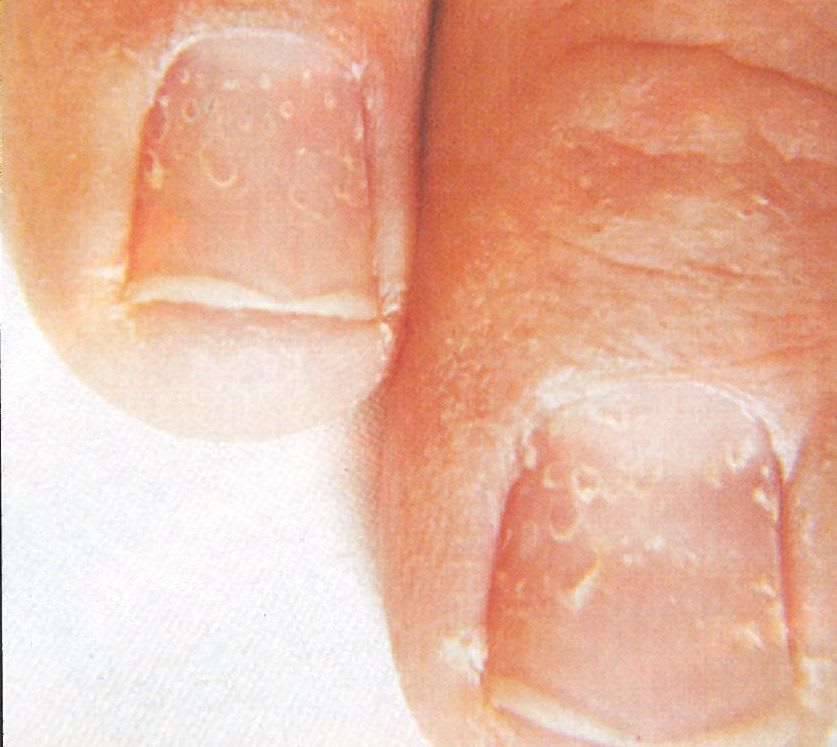
Nail technicians may perpetuate the myth of diet-caused nail problems by encouraging clients with these complaints to take vitamin supplements to strengthen their nails. But nutrition is a much overrated factor in the nails’ condition.
by Orville J. Stone, M.D.
September 1, 1991
4 min to read
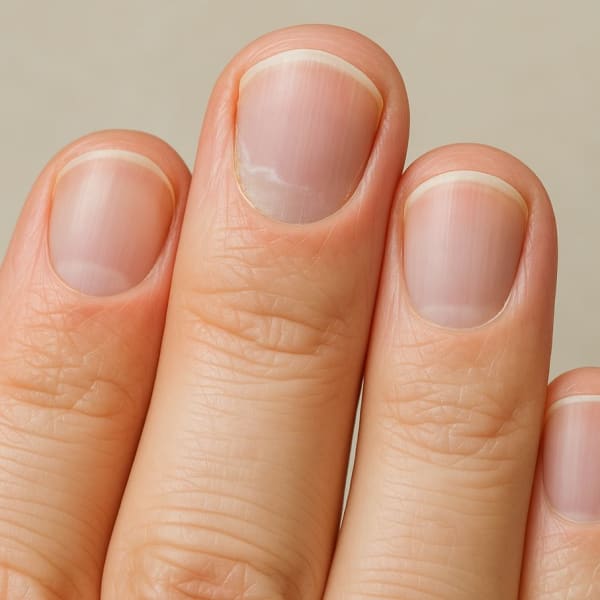
A client with dry, brittle nails will, nine times out of 10, blame the condition on her diet. She’ll claim, “I don’t eat right” or “I don’t get enough vitamins.” Nail technicians may perpetuate the myth of diet-caused nail problems by encouraging clients with these complaints to take vitamin supplements to strengthen their nails.
But nutrition is a much overrated factor in the nails’ condition.
Ad Loading...
The nail is composed of keratin, a form of protein found naturally in the nails. Nails are protein, which cannot be made from vitamins or minerals. The skin, liver, heart, and brain are all different organs, but they do not each use one specific vitamin. The nails are no different. Vitamin supplements have no specific therapeutic effect on the nail, unless a person is suffering from an extremely rare case of vitamin deficiency.
There are isolated illnesses or physical conditions that may be reflected in the nails’ condition. For example, patients on starvation diets and patients taking anti-cancer or immunosuppressive drugs will often have dry and brittle nails.
Also, patients losing large quantities of protein due to kidney disease will exhibit pale nail beds caused by swelling under the nails. But those individuals don’t need to look to their nails for clues about their health. They already know they have kidney disease by the time it’s severe enough to affect their nails.
Persons with severe anemia and malnutrition can develop spoon nails, though this is rare. I have seen congenital-, traumatic-, and disease-induced spoon nails, but I have never seen a case of spooning due to anemia or malnutrition. This severe malnutrition is most commonly found in the poorest Third World countries. I am not saying Americans have perfect nutrition; rather, the quality of their nutrition does not play a significant role in nail problems.
A person who has suddenly lost a significant amount of weight may have dry and brittle nails. Once the person stops dieting and resumes eating well-balanced meals, the nails return to normal.
Ad Loading...
Another popular myth is that either calcium or gelatin supplements will strengthen the nails. Calcium is a mineral that makes the bones hard and strong. But just because nails are hard doesn’t make them related to bone. Unlike bones, which are about 67% calcium, nails are two parts calcium per thousand, and calcium supplements will not make them stronger or harder.
Gelatin is another ‘wonder drug.’ Gelatin has been anecdotally recommended in medical literature for years but all scientifically controlled studies show that it has no effect on nails. The notion probably originated because some doctor didn’t want to says, “I don’t have the answer.” Admittedly, the nails’ condition will vary from time to time, influenced by seasons or changing habits. Gelatin gains its ongoing support from those cases where there is no other readily apparent explanation for the change.
Yet, no one argues when told their nails are in poor condition because of a vitamin deficiency. Americans love to take vitamins to be good to themselves. (They have the richest urine in the world.) But there are no specific vitamins to treat the nails; any multiple vitamin can be a nail vitamin, or a hair vitamin, liver vitamin, sex vitamin – or whatever you wish.
I don’t believe any health problems could occur from persons taking a regular mixture of vitamins, but I caution against large doses of any specific vitamin. Because vitamins are available without prescription, they can be abused. Many vitamins become chemicals, or even toxic agents, when taken in large doses.
When a patient comes to me with dry skin, I cannot cure it with diet. I can achieve therapeutic benefits with creams and by advising the patient to avoid overbathing, but I cannot change the dryness. Every 20 to 30 years I might see a patient with hypothyroidism whose resulting dry skin can be helped by thyroid medication, but I must accept that I cannot change the basic nature of dry skin.
Ad Loading...
Likewise, you should accept that nutrition, except in extreme cases, has nothing to do with the nails. Many people have dry or brittle nails. Sometimes the condition of the nails changes for no apparent reason, perhaps returning to normal after a few months. The medical profession doesn’t know why the changes occur, but we do know they are not caused by poor diet.
Instead of advising the client to take vitamin supplements such as calcium or gelatin, treat the symptoms of dry and brittle nails. Many nail treatments containing protein or amino acids are available. These do not eliminate the problems, but they do offer a protective coating that artificially strengthens the nails.
Orville J. Stone M.D., is a dermatologist practicing in Southern California. He has taught at medical schools for 30 years. He has published 150 scientific papers; his first paper on nail disorders appeared in 1962.
The opinions expressed in this column are the author’s. We invite you to write us with any questions about nail health for discussions in a future column.
Uncured gel polish and microscopic e-file dust contain active acrylates that penetrate the skin, triggering permanent contact dermatitis. Learn the chemistry behind these irritants and how to protect your clients and yourself.
The Good Patch is a leading wearable wellness patch brand, offering wellness and skincare patches that support everyday needs including energy, sleep, relaxation and more.
Orthopedic PT reveals three daily exercises plus ergonomic advice that can help salon professionals avoid the aches and injuries caused by standing, bending and repetitive overhead work.
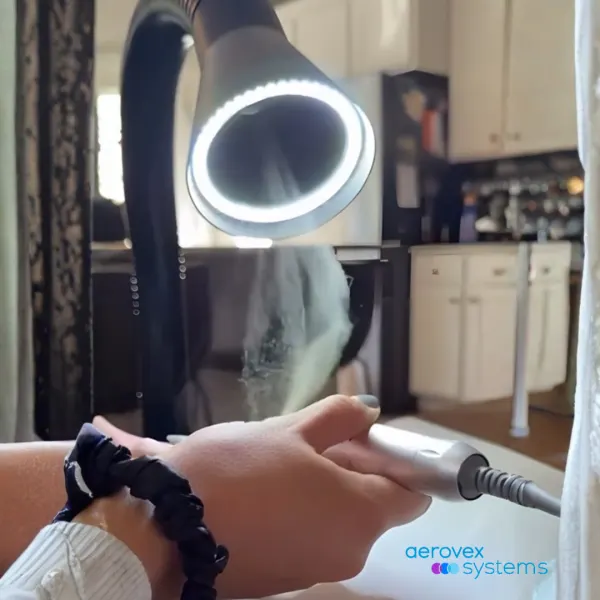
From acrylic monomers to airborne bio-dust, the air inside a nail salon carries risks most professionals never see coming. Aerovex Systems reveals the source-capture and room-purification strategies that are setting a new standard for salon safety.
Working in beauty doesn’t have to hurt. Learn how Somatic Movement helps hairstylists, lash artists, and other beauty pros release tension, improve posture, and extend their careers.
As a spa or salon professional, your clients expect more than just beauty—they expect safety, hygiene, and peace of mind. Fungal infections like Athlete’s Foot and Nail Fungus are more common than you think, especially in environments where tools and footbaths are reused without proper sanitation. This blog covers how to stop these issues before they start, using proven infection prevention strategies for salons and spas.
A federal initiative aimed at studying chemical exposure in nail salons has ended due to staffing and budget changes. Here’s what the project set out to do—and what its conclusion means for salon professionals.
For many people, a pedicure is a relaxing beauty ritual. But what most don’t realize is that this simple service, if done without proper hygiene and sanitation, can cause serious infections and long-term health issues.
Onycholysis is the separation of the nail plate from the nail bed. While it may look painful, it typically isn’t—at least not at first. But without proper care, this common nail disorder can lead to infections, deformities, and long-term damage.
Mckenzie Kool, Psychologist, MC, RPsych provides us with guidance on what may or not be helpful in speaking with someone who has suffered a significant loss.
Clients come to you to feel their best—not leave with a viral souvenir. Warts and cold sores can spread fast in busy salons, but a few smart habits make all the difference. Let’s talk about what’s really lurking in your salon (and how to kick it to the curb).
As Earth Day approaches, The Green Beauty Community Foundation and the Green Spa Network invite beauty pros to step forward and embrace sustainability through the Green Pledge--a powerful initiative designed by and for beauty industry leaders.
Don’t cancel Valentine’s Day altogether, urges Jill Palmquist. Instead, think of it as a (frilly, flowery, Champagne-bubbly) wake-up call to fall deeply in love with your own life.
Life coach and Culture Ambassador of Sam Villa, Andrew Carruthers, outlines how to tell if your burnout is temporary - or if it's time to make a bigger career change.