The chances of contracting AIDS or tuberculosis in the salon are slim to none. It’s the little, everyday illnesses—like the flu and the common cold—nail technicians need to watch out for.
With all of the media hype about diseases like HIV/AIDS and tuberculosis, it’s understandable that nail technicians and their clients are concerned about exposure to them in the salon. But the transmission of these diseases, and even the far more benign ones, such as fungal infections of the nails, are highly unlikely in the salon. In feet, a spokesperson for the Centers for Disease Control (CDC) and Prevention in Atlanta, Ga., says it’s so unlikely that the CDC hasn’t even done any studies in a “casual contact” setting (such as a nail salon) since 1985, when the causes of HIV/AIDS were not yet understood.
As for tuberculosis (TB) being transmitted in the salon, “The chance of getting infected is quite small,” says Carl Schieffelbin, a TB specialist with the CDC. “We’re talking about large rooms with a limited number of walled-in areas. And if the longest exposure is about an hour or so there’s not much chance of exposure except for the coworkers of an employee who has it.
“TB is not transmitted from objects such as plates and dishes. A few years ago hospitals had to use special precautions with dishes used by TB patients. But the normal precautions you would take against the transmission of other diseases are adequate because TB is an airborne disease,” concludes Schieffelbin.
And while fungal infection has become a catchall term for nail infections of any kind, Ronald Bronow, M.D., a dermatologist in Los Angeles, Calif., says that less than 1% of the patients he sees with nail disorders have a true fungal infection. Most of the time they have onycholysis (nail separating from the nail bed) or a yeast infection.
This is not to say that nail technicians shouldn’t abide by the “universal precautions.” Handwashing and disinfecting work surfaces and implements are extremely important in preventing the spread of the common cold, the flu, strep throat - the everyday illnesses that can sweep through a community. “Influenza -this is why we disinfect,” asserts Bronow. “It’s easy to start a flu epidemic. The flu is transmitted by hands, phone receivers, money, coughing, and sneezing.”
There are certain settings where communicable diseases have a higher chance of spreading. A childcare center, for example, is at greater risk for spreading germs simply became children are more likely to touch each other, eat off of dirty surfaces or with someone else’s fork, or put dirty objects (or their own dirty hands) in their mouth. A salon, on the other hand, is not singled out as a place where risk is unusually high. In other words, your chance (or your clients’ chances) of catching a cold are no better (or worse) than the supermarket, bank, or other casual contact setting.
So go ahead, disinfect thoroughly and make sure you and your clients wash their hands before each service — it may prevent you from coming down with something.
This is a list of 14 diseases, common and uncommon, that nail technicians seem concerned about Each one has a description, including how it is transmitted, the risk level, and measures to take to avoid contracting it Keep in mind that your role as a nail technician is not to diagnose disease, but to recognize possible symptoms and to err on the side of caution. It cannot hurt (and can only help) to be extra careful with handwashing and overall salon sanitation whether or not your clients are actually ill.
A weakened immune system that allows other serious infections to occur You cannot tell by looking at a person whether he has: AIDS.
HIV/AIDS is spread by exposure to HIV infected blood or body fluids, such as is spread during sexual intercourse, by sharing dirty needles, or from mother to baby HIV is rarely contracted by getting stuck by a needle or by getting Hood or other infected body fluids onto a mucous membrene or onto broken skin. Bisk of infection in the salon is virtually non-existent (no cases of AIDS have ever been reported contracted in a salon).
Small, painful bumps on the lips or mouth that turn into blisters or open sores
Direct contact with the sores; can be transmitted by touching an infected person’s hands after she touches a sore. Risk of infection in the salon: moderate (not impossible, but highly unlikely).
Sneezing, scratchy throat, runny nose, headache, cough, low- grade fever.
Breathing the air of an infected person; personal contact with an infected person or items touched by an infected person. Risk of infection in the salon: high (the same risk as in any other “casual contact” setting).
Redness, irritation of the eye; itchiness of the eyes; dear or yellow discharge from the eye.
Contact with the tears or discharge from the eyes of an infected person. Risk of infection in the salon: high (the same risk as in any other “casual contact’ setting).
Headache, chills, dry cough, body aches, fever; sore throat, nasal congestion, fatigue.
Breathing the air of an infected person, personal contact with an infected person or items touched by an infected person. Risk of infection in the salon: high (the same risk as in any other “casual contact” setting).
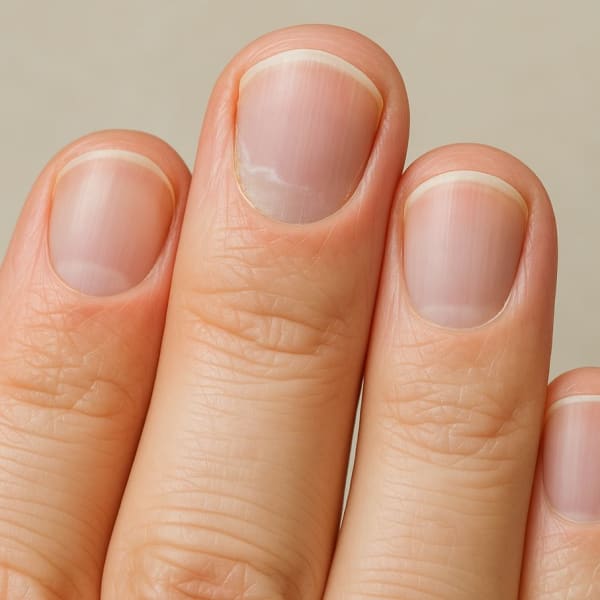
A thickened nail separated from the nail bed by thick, crumbly debris that pushes the nail away from the bed.
A fungal infection can be transmitted by direct contact with the organism, either by touching the infected area or contact with improperly disinfected implements or work surfaces. A fungal infection can penetrate the skin by a “portal of entry” such as a detached cuticle or nail plate separated from the nail bed. Risk of infection in the salon; extremely low.
Also called athlete’s foot, jock itch, or ringworm, depending on where it appears, a fungal infection of the skin appears as a patch of red bumps and lines.
See Fungal Infection of the Nail. A fungal infection of the skin often has a “portal It of entry” such as a cut in the skin or a detached cuticle. Athlete’s Foot also has a strong genetic factor involved so some people are more likely to get it than others. Risk of infection in the salon: low.
Hepatitis A B, and C are infections of 1he liver characterized by jaundice, tea-colored urine, diarrhea, fever; loss of appetite, and stomach pains. Not everyone who carries one of the viruses gets sick, but any carrier can spread it to cithers.
Can be spread by contact with a carrier who doesn’t wash hands after using the bathroom or by food handled by a carrier. Risk of infection in the salon: extremely low.
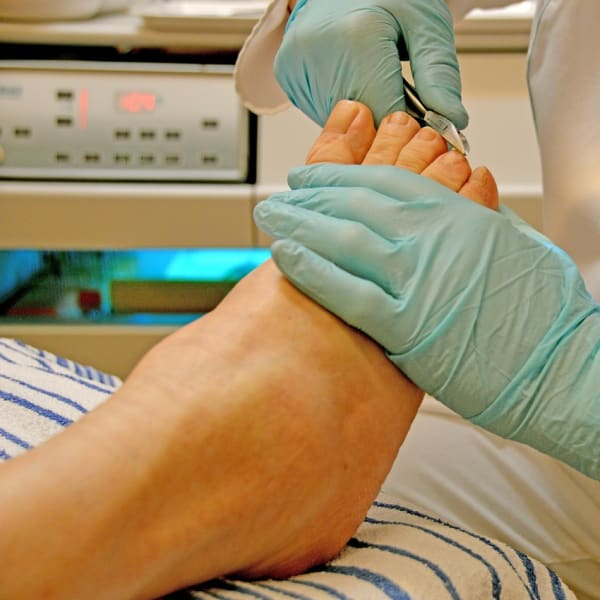
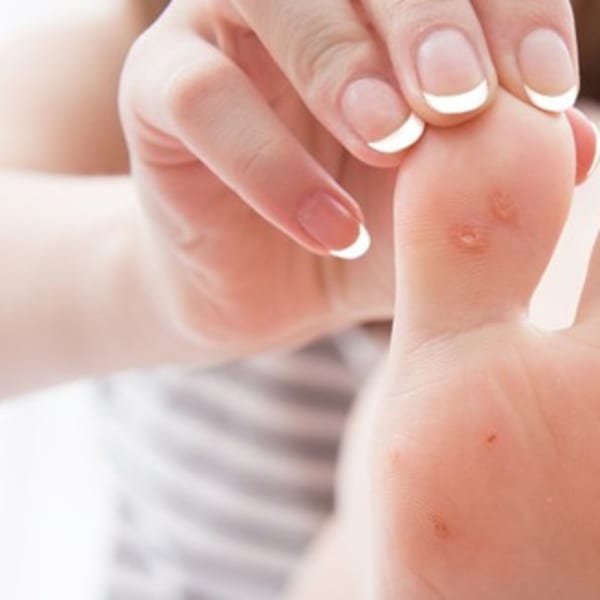
A red, round rash that may ooze fluid. It can occur as small blisters containing pus-like material that may break and form a flat, honey-colored crust. Here it is shown on the foot; however it is most commonly seen on the face and around 1he mouth.
Spread through .direct contact with infected skin. Risk of infection in the salon: high (the same risk as in any other “casual contact” setting).
A type of yeast infection, the affected area (usually the cuticle and nail folds) appears red and puffy. Yeast and bacteria can also grow under the nail, appearing as a green stain.
Yeast spores live everywhere. Yeast infections often arise from clients biting a hangnail and putting a bandage on it which gives the organism entry into the skin and a warm, dark environment in which to breed and multiply Can also be caused by cutting the cu- tide or pushing back the cuticle too vigorously causing it to separate from the nail plate. Risk of infection in the salon: high (the same risk as in any other “casual contact” setting).
A type of bacterial infection that can appear r combination with paronychia under the nail plate with an artificial nail, causing a greenish-brown discoloration, or on the cuticle and nail folds as a swollen, red area often oozing pus.
Entry into broken skin or between the natural nail plate and a lifted artificial nail. Risk of infection in the salon: moderate (not impossible, but highly un-likely).
An itching rash of red bumps or tiny blisters that form a line; on the lands, scabies usually appears as tiny scabs between the fingers or on the wrist.
Spread by dose personal contact, such as touching or holding hands with a person who has scabies. Risk of infection in the salon: high (the same risk as in any other “casual contact” setting).
Fever; sort throat, tender and swollen neck glands. Some people carry the bacterium without ever feeling sick.
Spread through the air by coughs or sneezes. Risk of infection in the salon: high (the same risk as in any other”casu3l contact’ setting).
Low-grade fever; night sweats, fatigue, weight loss, and a persistent cough. Some people have no obvious symptoms.
Spread though the air Infection usually only occurs after prolonged, close contact m dosed areas. Risk of infection in the salon: extremely low.