Why do natural nails get thick? Why do they change colors? Why do some natural nails become painful or infected?
by Dr. Godfrey Mix
March 1, 1995
5 min to read
Why do natural nails get thick? Why do they change colors? Why do some natural nails curve into the surrounding skin and become painful or infected? This article will address these problems and the care needed for them.
First we will deal with how the nail plate becomes thickened (hypertrophic nail plate), a condition that affects the nail matrix. Then we will look at those entities that cause the tissues under the nail plate (hyponychium or nail bed) to thicken or form a “subungual hyperkeratosis” (a buildup of callus-like tissue under the nail). In many cases it is difficult to separate these two different problems because some conditions, such as psoriasis, can cause a thickening of the nail plate as well as thickening of the nail bed.
Ad Loading...
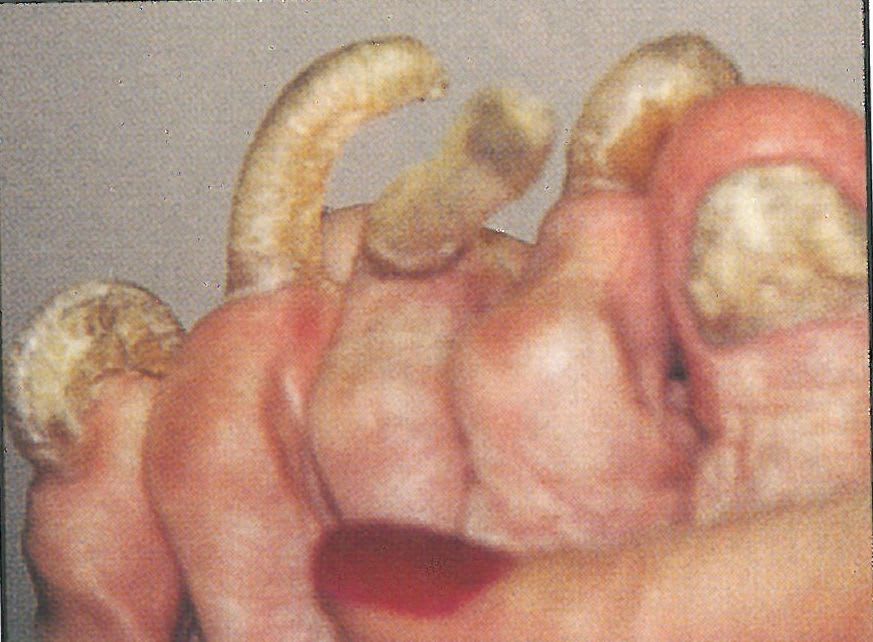
A normal nail is approximately 0.5 mm thick. If it becomes any thicker, the nail, particularly toenails, may become uncomfortable. Onychogryphosis (ram’s horn nail) is one of the more commonly seen thickenings of the nail plate.
Causes of this nail deformity can be generally classified in five groups: local, general, regional, dermatological, and idiopathic (occurring without known cause). Local causes are conditions such as repeated minor injuries (for example, hammertoes). General conditions are such things as old age, lack of proper care and hygiene, and diseases of the central nervous system. Regional factors include varicose veins, thrombophlebitis (inflammation of a vein caused by a blood clot), and hardening of the arteries. Dermatologic diseases include icthyosis (increased keratin formation resulting in dryness roughness, and scaliness of the skin or nails), psoriasis, and fungal infections. Idiopathic causes are genetic or hereditary dispositions.
Other conditions that can cause thick nails include chronic infections (systemic or localized), diabetes, Darier’s disease (keratosis follicularis, characterized by horny plaques of skin that may become crusted and secondarily infected in the seborrhetic skin areas of the body), constant eczema, and lichen planus (another skin disease in which small firm papules set very close together are screen).
Ventral (underneath) or subungual pterygium is a condition where the hyponychium or nail bed is attached to the entire undersurface of the nail, thereby eliminating the distal nail groove. Subungual pterygium can cause thickening of the nail bed and may be associated with conditions such as scleroderma, injury, peripheral neuropathy, and Raynaud’s disease ( a condition in which the arteries of the hands and feet constrict, causing pain or a prickling sensation).
As you can see, there is no single cause of thick nails or thickening of the hyponychium or nail bed. Arriving at a proper diagnosis of why the nails have thickened is important. If you are professionally associated with a podiatrist or dermatologist, it will be easy for you to assist your client in this phase of her care. After the diagnosis is made, and particularly if there is no medical treatment or cure for the condition, you will be able to follow up with the routine manicures, overlays, or pedicures that will give your client long lasting comfort.
Ad Loading...
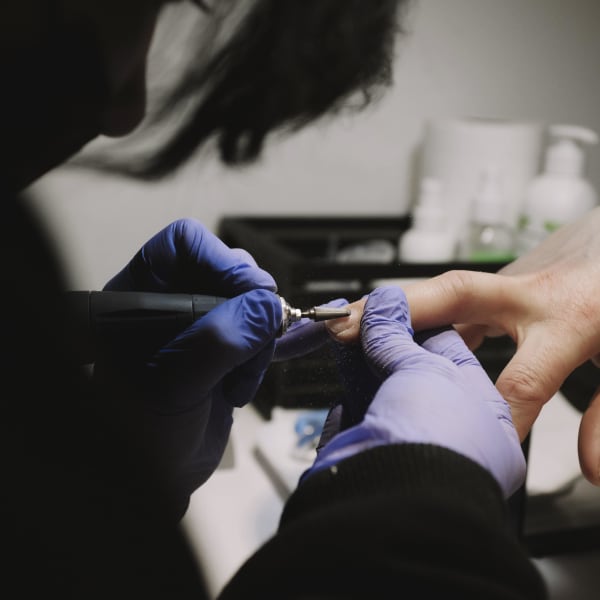
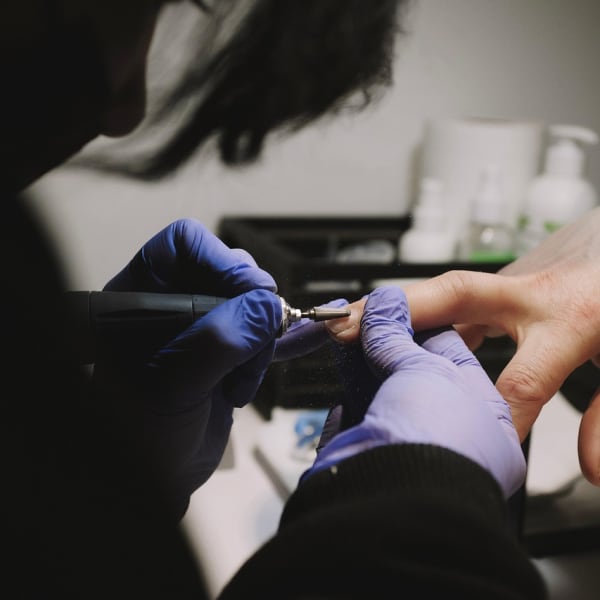
The care of thick nails should be directed toward thinning them. In my office I use an electric drill for this purpose. Depending on the laws of your state, and your training and competence in the use of the drill, I recommend you do the same. If, for some reason, you cannot use a drill you should refer the client to the doctor for treatment of thickened nails. You will then be able to follow up with nail care to keep the client comfortable.
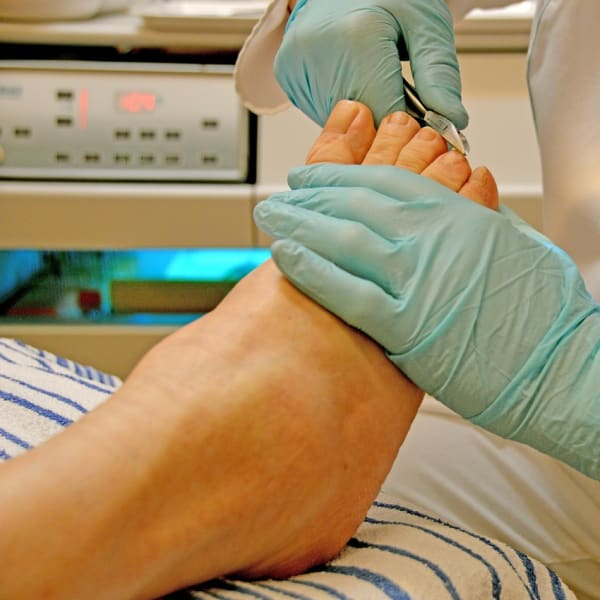
The care of a ram’s horn nail starts with manual trimming. This may seem like a formidable task, but if properly done it is quite easy. This trimming must be done only with a pointed nail clipper with large jaws. Do not use the squeeze-type toenail nipper. The jaws of the squeeze nipper will not open large enough to do the job properly. You will notice there are transverse lines or ridges across the nail plate. These areas of the nail are weak and should be where one starts to trim the nail. Following a simple cleaning of the area, the length of the nail is reduced by trimming. I usually start at one of the transverse lines that is well beyond the end of the soft tissue. Do not try to cut across the entire nail in one bite. By cutting across the nail through this line as if you were using scissors, you will find that about halfway across it will break off entirely through this weak area.
Once you have manually removed as much of the nail length as you can, clean out the debris under and around the nail. It is this accumulation of dead skin, soap, lint, dirt, and anything else the client has been around that is adding to the pressure and discomfort in the area.
A standard file may be used to thin the nail, but it is a time-consuming process. A low-speed, high-torque drill is better advised for this job. The cutting burr should be the roughest cutting surface you are comfortable using. I use a carbide cutting burr that could also be used in woodcarving. I do not recommend the diamond burrs for thinning a thick nail because they do more polishing than cutting and they produce more heat. You can use a very coarse diamond burr, however. Whichever burr you use, keep it moving over the nail surface with only enough pressure to cut off a thin layer of nail at a time. Too much pressure or moving too slowly across the nail causes excessive heat that can cause injury to the underlying tissues. When you have completed thinning the nail to the desired thickness, use the manual file to smooth any sharp edges. Finish the job by using the nail brush to remove any remaining loose debris from around the nail. Use a mask that covers your nose so you don’t inhale the dust.
Most thick nails also have callus or skin buildup under the nail. As the nail is reduced more of this buildup will easily be removed as well. In those cases where it is attached to the nail bed or nail, the client should be instructed that she will have to become more involved in the care of this area. Advise her to use a nail brush during bathing to remove loose material. Have her apply cuticle oils or various other cuticle treatments to the nail and surrounding tissues.
Ad Loading...
Make clients aware that regular follow-up nail care is necessary to prevent the problem from recurring.
Uncured gel polish and microscopic e-file dust contain active acrylates that penetrate the skin, triggering permanent contact dermatitis. Learn the chemistry behind these irritants and how to protect your clients and yourself.
The Good Patch is a leading wearable wellness patch brand, offering wellness and skincare patches that support everyday needs including energy, sleep, relaxation and more.
Orthopedic PT reveals three daily exercises plus ergonomic advice that can help salon professionals avoid the aches and injuries caused by standing, bending and repetitive overhead work.
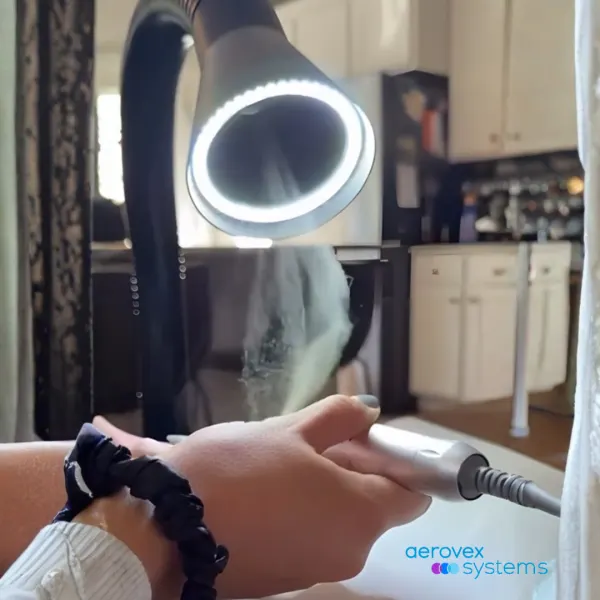
From acrylic monomers to airborne bio-dust, the air inside a nail salon carries risks most professionals never see coming. Aerovex Systems reveals the source-capture and room-purification strategies that are setting a new standard for salon safety.
Working in beauty doesn’t have to hurt. Learn how Somatic Movement helps hairstylists, lash artists, and other beauty pros release tension, improve posture, and extend their careers.
As a spa or salon professional, your clients expect more than just beauty—they expect safety, hygiene, and peace of mind. Fungal infections like Athlete’s Foot and Nail Fungus are more common than you think, especially in environments where tools and footbaths are reused without proper sanitation. This blog covers how to stop these issues before they start, using proven infection prevention strategies for salons and spas.
A federal initiative aimed at studying chemical exposure in nail salons has ended due to staffing and budget changes. Here’s what the project set out to do—and what its conclusion means for salon professionals.
For many people, a pedicure is a relaxing beauty ritual. But what most don’t realize is that this simple service, if done without proper hygiene and sanitation, can cause serious infections and long-term health issues.
Onycholysis is the separation of the nail plate from the nail bed. While it may look painful, it typically isn’t—at least not at first. But without proper care, this common nail disorder can lead to infections, deformities, and long-term damage.
Mckenzie Kool, Psychologist, MC, RPsych provides us with guidance on what may or not be helpful in speaking with someone who has suffered a significant loss.
Clients come to you to feel their best—not leave with a viral souvenir. Warts and cold sores can spread fast in busy salons, but a few smart habits make all the difference. Let’s talk about what’s really lurking in your salon (and how to kick it to the curb).
As Earth Day approaches, The Green Beauty Community Foundation and the Green Spa Network invite beauty pros to step forward and embrace sustainability through the Green Pledge--a powerful initiative designed by and for beauty industry leaders.
Don’t cancel Valentine’s Day altogether, urges Jill Palmquist. Instead, think of it as a (frilly, flowery, Champagne-bubbly) wake-up call to fall deeply in love with your own life.
Life coach and Culture Ambassador of Sam Villa, Andrew Carruthers, outlines how to tell if your burnout is temporary - or if it's time to make a bigger career change.