As a nail tech or salon owner, you already know that a client comes to you not only to look beautiful, but also for pampering and relaxation. The best way to achieve this is to engage as many of her senses as possible — sight, sound, touch — and also her sense of smell. Our reaction to scent is powerful and immediate, and can influence everything from mood to memory to our immune systems. Take advantage of the power of essential oils to give your clients an aromatic and unforgettable experience that will keep them coming back for more.
What Are Essential Oils?
Ad Loading...
By definition, an essential oil is a highly volatile substance extracted, usually distilled, from an odoriferous plant of a single botanical species (leaves, woods, flowers, etc.). Each essential oil has unique properties and can be used alone or combined with other oils to create specific effects. Added to a manicure or pedicure service, aromatherapy with essential oils can relieve various ailments, relax or energize, or simply create or enhance a mood.
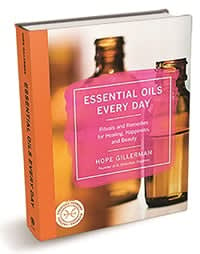
“Essential oils are more than just ‘scent,’” explains Hope Gillerman, founder of H. Gillerman Organics Essential Oils Remedies and author of Essential Oils Every Day. “Their micro-particles are absorbed into the body through the skin, nasal passages, and lungs, where they travel into the blood stream, through the lymphatic system, and through the organs, finally exiting the body through the liver and kidneys. Although we all love appealing scents, essential oils are the only scents that are proven to offer healthy solutions and even alternatives to some over-the-counter medications.” She also asserts that essential oils are tailor-made for nail care, as they are naturally anti-bacterial and antiviral (even against MRSA), and some are powerful anti-fungal and anti-microbial agents when used topically or added to cleaning solutions.
In an industry where hygiene is a big concern, essential oils should be a welcome addition to any nail salon. And more and more nail techs are incorporating aromatherapy into their services simply because their clients love it. Reina Santos, a freelance nail artist with the Los Angeles agency Nailing Hollywood, works on television and film sets and routinely uses aromatherapy in her services to calm her clients when they are feeling nervous before a shoot.
“My clients love when I use essential oils.They tell me it feels wonderful and it puts them in a relaxed mood where they can zone out and enjoy my entire service,” she says. “I love how essential oils are natural and organic. It makes me feel good to know that oils found in plants can heal and have immediate therapeutic benefits. When I don’t feel well, I reach for my essential oils before medicine. I think everyone should!”
Student A’Kia Warrior learns to mix her own aromatherapy products in class.
Cosmetology schools are catching on to the idea that aromatherapy is becoming a more requested — and even expected — service than in years past, and are incorporating it into their curriculum. A’Kia Warrior, a student in the Nailcare Program at the International School of Skin, Nailcare & Massage Therapy in Atlanta, recently blogged about her experience learning about essential oils. “I learned that making my own products using essential oils gives me the opportunity to differentiate myself in the market,” she says. “I was able to mix my own blend of jasmine and eucalyptus essential oils into a foot soak, scrub, and a moisturizer, and t was so peaceful and calming. I’m looking forward to using essential oils to create a unique experience for my clients in the future when I obtain my license and own my own salon.”
Basics With few exceptions, essential oils should never be applied directly to the skin; they should be diluted, usually with a carrier oil such as coconut, almond, safflower, or jojoba. Recipes vary, but the general rule is that you want to achieve a 5% dilution. Use about 15 drops of essential oil for every ounce of carrier oil. If you’re using multiple oils, remember to split them up so the total amount is 15 drops. Gillerman warns not to over dilute. “If you can’t smell it, then your client can’t either and there is not enough essential oil to benefit.” she explains. “If you are using a product with eucalyptus, for example, smell what this oil is like as a product in a health food store. If the salon product doesn’t remind you of the oil you smelled there, then it’s too diluted.”
Gillerman suggests starting with one product, and once you see how you like using it in the service and how your clients respond, you will feel confident to add another essential oil-based product. She recommends using up to two essential oil-based products in a single service. Here are the best ways to use aromatherapy in the nail salon, according to Gillerman:
Scrubs: By removing dead skin and opening pores, the scrub will allow a deeper, healing absorption of essential oils (as well as the minerals and herbal nutrients in the scrub) and allow for more benefits like reducing swelling and edema, relaxing muscles, energizing, and detoxifying. Scrubs made with a fine sea salt, powdered herbs, clay, aloe vera, and honey are great natural mediums for an essential oil scrub.
Ad Loading...
Foot baths: Using any kind of heat with essential oils helps your body absorb them; therefore, foot baths are a great option. Plus you can take advantage of the anti-microbial, antisceptic, anti-fungal aspect of essential oils during the initial cleaning phase. Just putting a few drops in the foot bath is not the best way to do it, however. Essential oils do not dissolve in water; the drops will not disperse properly and will glom onto parts of the skin and miss others and could possibly irritate skin. Instead, apply the essential oils directly to the nail bed at the beginning of the treatment. This will stimulate circulation and offer antiseptic and healing properties. You can do this after the client has submerged her feet; just ask her to lift her feet briefly and put a drop of tea tree, basil, or lemon on a cotton swab and run it over the cuticles. This will also be safer for your jets. Another option is to mix essential oils in a sea salt base, then adding a spoonful of that to the foot bath.
Body/massage oils: For massage, use a body oil instead of a lotion because it does a much better job of hydrating the skin and won’t wash off if your client goes swimming after her service. Essential oils quickly and easily dissolve in fatty oils (as opposed to lotions). The best oil for salon use would be fractionated coconut oil (FCO). This is a light oil that has a long shelf life, so it doesn’t require toxic preservatives, and is a natural antioxidant and anti-bacterial. Plus, FCO absorbs very quickly so your clients won’t get that oily feeling, yet it will hydrate even the driest skin and keep it hydrated for hours. It’s easy to make a body oil on site: Simply pour 3% essential oils into your FCO and tip the bottle up and down until it is mixed, or pour the FCO in a clean bowl, add the oils, and then pour back in the bottle.
Caution Is Essential Gillerman believes all salons should provide some basic training on essential oils before allowing techs to use them on clients. “Essential oils are powerful liquids that are absorbed into your body, so they should be treated as such,” says Gillerman. “Applied topically, essential oils are absorbed deeply into the dermis, and then the blood stream, and then the whole body.” Because essential oils are so powerful, Gillerman advises asking your client if she is on a medication (this should be on your intake form) and if she is pregnant. Essential oils should not be used on women in the first trimester of pregnancy; diabetics; those on medication, especially chemotherapy; or people suffering from a kidney or liver disease. “After the first trimester, pregnant women can use essential oils like lavender, orange, lemon, grapefruit, geranium, chamomile, neroli, sandalwood, rose, geranium, palmarosa, and ylang ylang,” says Gillerman. “However, it’s important to have your pregnant client smell the essential-based product first, as each woman will react differently.”
Gillerman advises always testing a product first by asking your client to smell it, and if she doesn’t like it, switch to another option before applying. For any adverse reactions like redness, stinging, or if your client simply doesn’t like the product, remove it immediately with soap and water. Certain oils can also irritate the skin, according to Gillerman, and should be avoided in the salon. These include camphor, cinnamon, clove, black pepper, lemongrass, ginger, oregano, thyme, and sage.
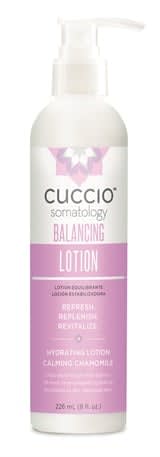
Olfactory Options If using essential oils in the salon appeals to you, but the idea of buying supplies and creating your own concoctions seems overwhelming, there are other options. Many companies are jumping on the aromatherapy bandwagon by offering ready-made, ready-to-use products that require no measuring and mixing. Bio Creative Labs offers a SPA 4-Step System including Massage Cream, Moisture Mask, Salt Soak, and Sugar Scrub made with essential oils such as lavender, mint, and spearmint, while Tammy Taylor offers AromaSpa Manicure and Pedicure Kits made with pure essential oils such as rose hip, wild mint, eucalyptus, and tea tree. Cuccio Somatology, a new brand offering healthy lifestyle products, offers an aromatherapy oil and lotion.
Cuccio Somatology Balancing Lotion nourishes with aloe vera, lavender, rose, and chamomile.
“The beauty of our products is that they can be applied directly to the skin,” says CEO Danielle Cuccio. “As a yoga instructor and skin expert, I wanted nourishing, yet convenient products, but I had a hard time finding ones that were diluted and not so potent.” Cuccio Somatology’s Balancing Oil can be applied straight from the bottle, is great for hydrating the cuticles, and has a sanitation-friendly dropper cap. The Balancing Lotion, made with aloe vera, lavender, rose, and chamomile, can also be directly applied to the skin. “The Balancing Lotion calms the skin and is great for massage during a manicure, pedicure, or after yoga class,” says Cuccio. “Both products are perfect for making clients want to come back to feel that relaxed feeling they should get every time they come see you.”
To learn more about essential oils, check outA Guide to Essential Oils, a 14-page NAILS Magazine e-book.
Uncured gel polish and microscopic e-file dust contain active acrylates that penetrate the skin, triggering permanent contact dermatitis. Learn the chemistry behind these irritants and how to protect your clients and yourself.
The Good Patch is a leading wearable wellness patch brand, offering wellness and skincare patches that support everyday needs including energy, sleep, relaxation and more.
Orthopedic PT reveals three daily exercises plus ergonomic advice that can help salon professionals avoid the aches and injuries caused by standing, bending and repetitive overhead work.
From acrylic monomers to airborne bio-dust, the air inside a nail salon carries risks most professionals never see coming. Aerovex Systems reveals the source-capture and room-purification strategies that are setting a new standard for salon safety.
Working in beauty doesn’t have to hurt. Learn how Somatic Movement helps hairstylists, lash artists, and other beauty pros release tension, improve posture, and extend their careers.
As a spa or salon professional, your clients expect more than just beauty—they expect safety, hygiene, and peace of mind. Fungal infections like Athlete’s Foot and Nail Fungus are more common than you think, especially in environments where tools and footbaths are reused without proper sanitation. This blog covers how to stop these issues before they start, using proven infection prevention strategies for salons and spas.
A federal initiative aimed at studying chemical exposure in nail salons has ended due to staffing and budget changes. Here’s what the project set out to do—and what its conclusion means for salon professionals.
For many people, a pedicure is a relaxing beauty ritual. But what most don’t realize is that this simple service, if done without proper hygiene and sanitation, can cause serious infections and long-term health issues.
Onycholysis is the separation of the nail plate from the nail bed. While it may look painful, it typically isn’t—at least not at first. But without proper care, this common nail disorder can lead to infections, deformities, and long-term damage.
Mckenzie Kool, Psychologist, MC, RPsych provides us with guidance on what may or not be helpful in speaking with someone who has suffered a significant loss.
Clients come to you to feel their best—not leave with a viral souvenir. Warts and cold sores can spread fast in busy salons, but a few smart habits make all the difference. Let’s talk about what’s really lurking in your salon (and how to kick it to the curb).
As Earth Day approaches, The Green Beauty Community Foundation and the Green Spa Network invite beauty pros to step forward and embrace sustainability through the Green Pledge--a powerful initiative designed by and for beauty industry leaders.
Don’t cancel Valentine’s Day altogether, urges Jill Palmquist. Instead, think of it as a (frilly, flowery, Champagne-bubbly) wake-up call to fall deeply in love with your own life.
Life coach and Culture Ambassador of Sam Villa, Andrew Carruthers, outlines how to tell if your burnout is temporary - or if it's time to make a bigger career change.