Although this skin condition cannot be cured, there are ways to keep it under control. Keeping hands, feet, and nails well moisturized and well groomed can help alleviate the itchiness and scaliness associated with psoriasis.
by by Patricia Oropeza
September 1, 2005
6 min to read
psoriasis
n. ( s r¯i / s s) a chronic noncontagious skin disease characterized by inflammation and white scaly patches; can appear in the form of pitting and thickening on the nails.
Ad Loading...
What It Is
Psoriasis is an equal opportunity offender, says Lucia Kaineg, a patient educator with the National Psoriasis Foundation (NPF). This lifelong, non-contagious skin condition can occur on any part of the body, from the scalp to the soles of the feet. According to the NPF, more than 4.5 million adults in the United States suffer from this condition.
According to Kaineg, psoriasis most commonly appears on the knees, elbows, and scalp, but it also frequently appears on the hands and nails, which is of most concern to nail technicians.
“Nails are one of the most difficult areas to treat because the nail plate makes it difficult for the medication to get to the psoriasis and treat it,” says Kaineg.
Symptoms
Ad Loading...
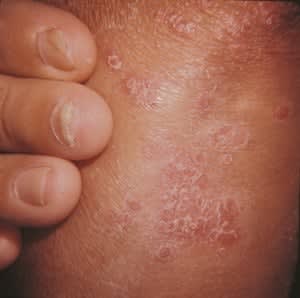
Although there are five types of psoriasis, the most common one is plaque psoriasis. About 80% of people suffering from psoriasis have this form. It is characterized by raised, inflamed, red lesions covered by a silvery white scale and is typically found on the elbows, knees, scalp, and lower back, although it can occur on any area of the skin.
Besides its unattractive appearance, people with psoriasis also may suffer from dry, itchy skin. “It can be painful. If the skin is severely dry it can crack and bleed, which can lead to infection,” says Kaineg.
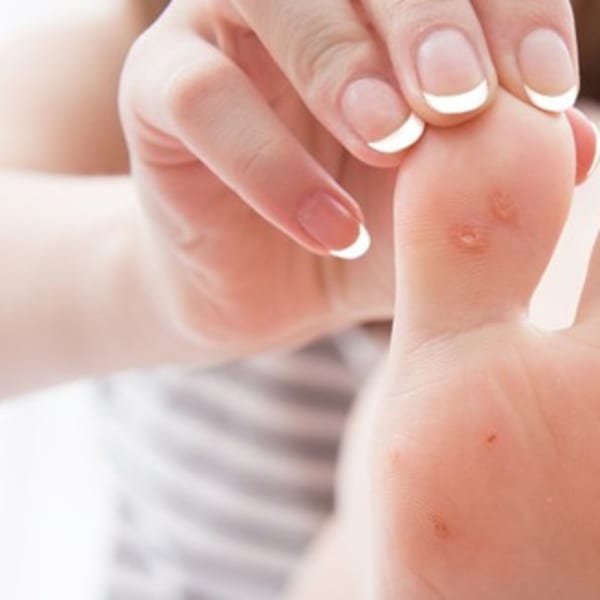
Another form of this condition, pustular psoriasis, can appear on the palms and soles. It’s characterized by red plaques with scaling and swelling up to a quarter inch in size. In some places, the pustules are dried to a brownish crust. These lesions can be painful and disabling.
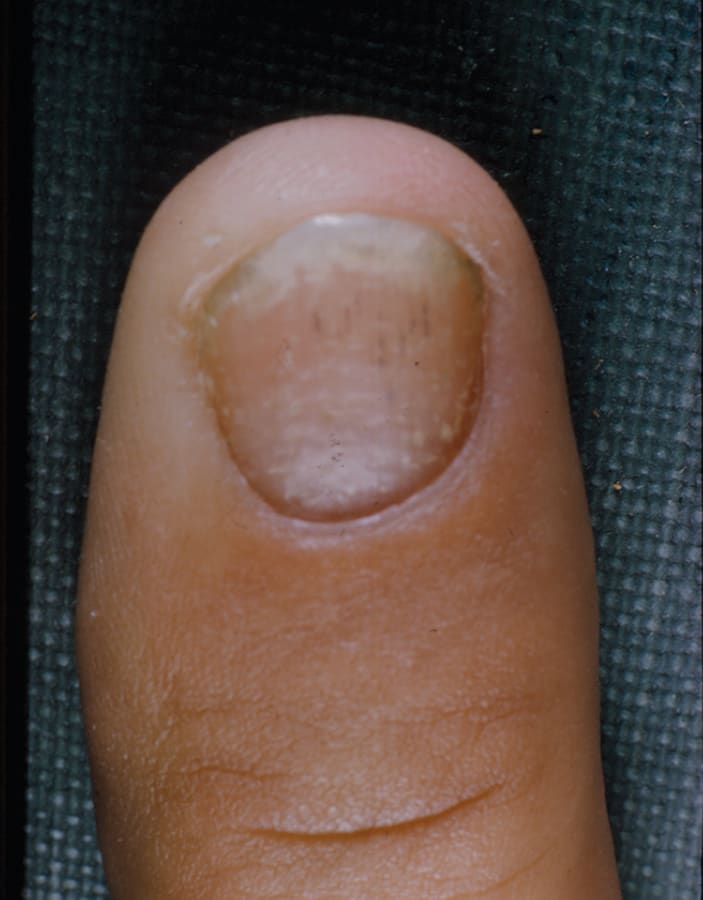
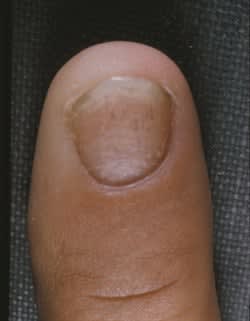
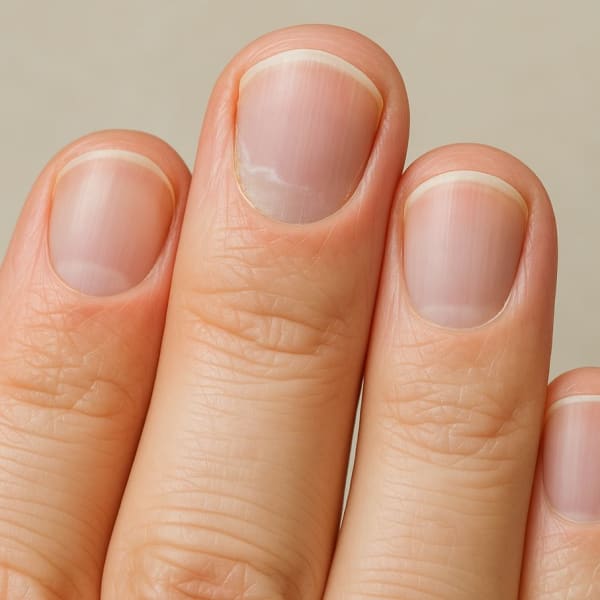
When psoriasis affects the nail matrix, it can show up in different forms. If it affects the most proximal portion of the matrix, psoriasis shows up as small dents on the surface of the nail plate, which can look like pock marks or pits.
Any damage to the nail matrix can cause a white spot, also known as leukonychia. If the distal portion of the nail matrix (the part farthest away from the body, including the lunula) is affected, it causes onycholysis (separation of the nail plate from the nail bed).
Ad Loading...
Although it is not common, if the nail psoriasis is severe enough to affect all three parts of the nail matrix the nail plate can crumble and be lost completely.
If the psoriasis affects the nail bed instead of the matrix, a reddish-brown discoloration resembling a small drop of oil will appear on the nail bed.
Nail psoriasis can often occur with psoriatic arthritis, which affects the fingers and is usually accompanied by swelling and redness.
Causes
Psoriasis occurs when faulty signals in the immune system cause skin cells to grow too quickly — every three to four days instead of the usual 30-day cycle — causing extra skin cells to build up on the skin’s surface. These extra skin cells form “plaques,” the red, flaky, scaly patches that appear on the skin.
Ad Loading...
According to the NPF, this condition is measured in terms of its physical and emotional impact. Physically, if less than 2% of the body is involved, the case is considered mild. Most people have a mild case of psoriasis. Between 3% and 10% is considered moderate and more than 10% is severe. One percent of the skin is equal to the size of a palm.
Because of their genes, certain people are more likely to develop it, but a trigger is usually necessary to make psoriasis appear. Emotional stress, injury to the skin, some types of infection, and reaction to certain drugs can all trigger psoriasis.
How to Treat It
Unfortunately, there is no cure for psoriasis. However, it can be controlled. “Therapy depends on the severity of the condition,” explains Kaineg. “It all boils down to appropriate therapy for the type of psoriasis and the severity.”
Because psoriasis affects the nail when it is being formed, it can be difficult to treat. Injections with steroids into the nail bed or matrix (which are oftentimes painful) have been used with varying results. The major treatments for nail psoriasis include topical treatments such as corticosteroids.
Ad Loading...
Psoriasis can appear on any part of the body, including the nails and elbows.
A type of phototherapy known as PUVA, which is an acronym for psoralen (a light-sensitive medication) combined with exposure to ultraviolet light A, has brought relief to many psoriasis sufferers. PUVA slows down the excessive cell reproduction of psoriasis and can clear the symptoms for varying periods of time.
Some people may even require cosmetic surgery if their nails have been badly deformed by psoriasis.
People suffering from psoriasis on the hands and feet may find relief by using moisturizers, mild soaps, and soap substitutes. Traditional topical treatment of palm and sole psoriasis such as tar, salicylic acid, and steroids can also help control this condition. A combination of the three may offer more relief if used in conjunction.
When directed by a doctor, some topical medications may be used with occlusion, intensifying the effect of the cream or ointment. Cotton or plastic gloves can be worn over creams or moisturizers on the hands. Socks, or special occlusive foot covers can be used on the feet. Soaking the hands or feet in warm water will help speed the penetration of medications and moisturizers.
Although there may be no cure for psoriasis, advancements have been made that seem promising, says Kaineg. Unlike traditional medications, which are created by combining chemicals, biologic drugs are made from human or animal proteins. The medications made from these proteins are specifically designed to help correct the body’s process that causes psoriasis and psoriatic arthritis. Currently, four types of biologics have been approved by the FDA.
Ad Loading...
Considerations for Nail Techs
Psoriasis is not contagious so nail technicians do not have to fear that they will get it if they’re working with a client suffering from the condition. “It’s a big misconception,” says Kaineg. “You won’t catch it from a client with skin lesions. It’s a condition of the immune system.”
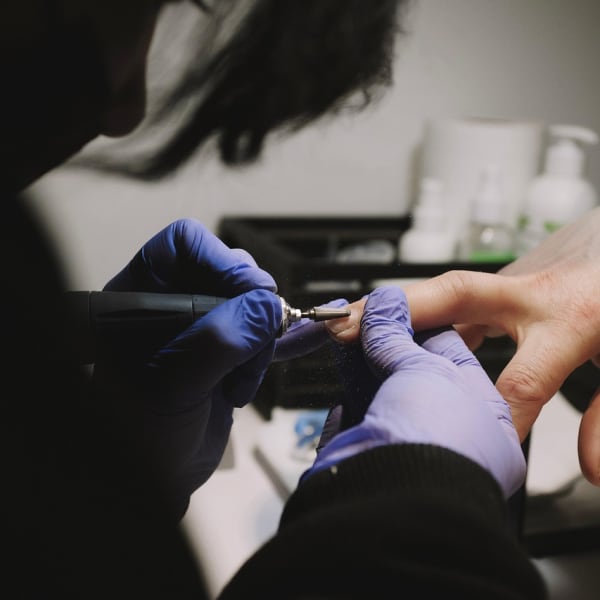
It is possible to work on hands, nails, and feet with psoriasis — just be gentle. Vigorous cleaning, scraping, or scrubbing can lead to further psoriasis lesions — something your client surely won’t appreciate.
Thick nails may be filed down and pitted nails can be buffed and polished. In some cases, clients can even wear enhancements, although Kaineg warns there may be a reaction to the chemicals in the nail products. “Some doctors are for it, others are not. It depends on the person. Just proceed with caution,” she suggests.
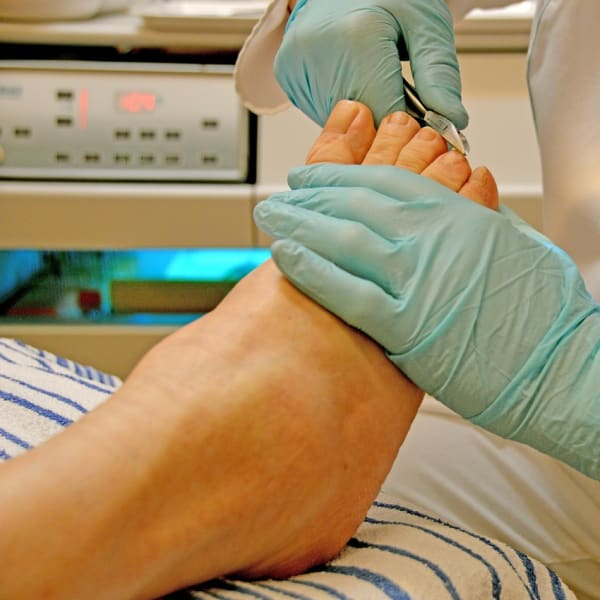
According to the NPF, toenails can be improved by soaking the feet for 10 minutes in a tub of warm water, gently filing the thickened part of the toenail with an abrasive file, and using good clippers to cut off a small piece at a time. The aim is to cut straight across the toenail to help keep it from becoming ingrown.
Ad Loading...
Also, remind clients of the importance of keeping the skin well moisturized. Suggest they wear gloves if they’ll be working a lot with their hands.
As a nail tech, you’re in a good position when it comes to dealing with clients suffering from psoriasis. Offer them gentle, soothing services that will help bring relief and make their hands and nails look that much more attractive and you’re practically guaranteed a client for life.
Psoriasis can appear on any part of the body, including the nails and elbows.
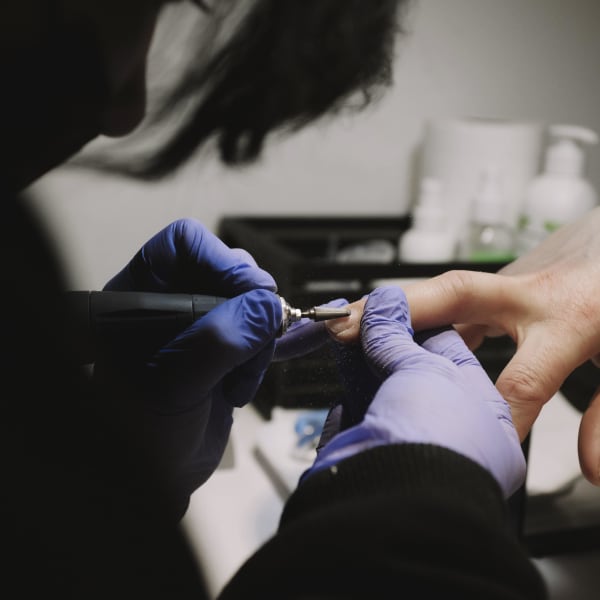
Uncured gel polish and microscopic e-file dust contain active acrylates that penetrate the skin, triggering permanent contact dermatitis. Learn the chemistry behind these irritants and how to protect your clients and yourself.
The Good Patch is a leading wearable wellness patch brand, offering wellness and skincare patches that support everyday needs including energy, sleep, relaxation and more.
Orthopedic PT reveals three daily exercises plus ergonomic advice that can help salon professionals avoid the aches and injuries caused by standing, bending and repetitive overhead work.
From acrylic monomers to airborne bio-dust, the air inside a nail salon carries risks most professionals never see coming. Aerovex Systems reveals the source-capture and room-purification strategies that are setting a new standard for salon safety.
Working in beauty doesn’t have to hurt. Learn how Somatic Movement helps hairstylists, lash artists, and other beauty pros release tension, improve posture, and extend their careers.
As a spa or salon professional, your clients expect more than just beauty—they expect safety, hygiene, and peace of mind. Fungal infections like Athlete’s Foot and Nail Fungus are more common than you think, especially in environments where tools and footbaths are reused without proper sanitation. This blog covers how to stop these issues before they start, using proven infection prevention strategies for salons and spas.
A federal initiative aimed at studying chemical exposure in nail salons has ended due to staffing and budget changes. Here’s what the project set out to do—and what its conclusion means for salon professionals.
For many people, a pedicure is a relaxing beauty ritual. But what most don’t realize is that this simple service, if done without proper hygiene and sanitation, can cause serious infections and long-term health issues.
Onycholysis is the separation of the nail plate from the nail bed. While it may look painful, it typically isn’t—at least not at first. But without proper care, this common nail disorder can lead to infections, deformities, and long-term damage.
Mckenzie Kool, Psychologist, MC, RPsych provides us with guidance on what may or not be helpful in speaking with someone who has suffered a significant loss.
Clients come to you to feel their best—not leave with a viral souvenir. Warts and cold sores can spread fast in busy salons, but a few smart habits make all the difference. Let’s talk about what’s really lurking in your salon (and how to kick it to the curb).
As Earth Day approaches, The Green Beauty Community Foundation and the Green Spa Network invite beauty pros to step forward and embrace sustainability through the Green Pledge--a powerful initiative designed by and for beauty industry leaders.
Don’t cancel Valentine’s Day altogether, urges Jill Palmquist. Instead, think of it as a (frilly, flowery, Champagne-bubbly) wake-up call to fall deeply in love with your own life.
Life coach and Culture Ambassador of Sam Villa, Andrew Carruthers, outlines how to tell if your burnout is temporary - or if it's time to make a bigger career change.