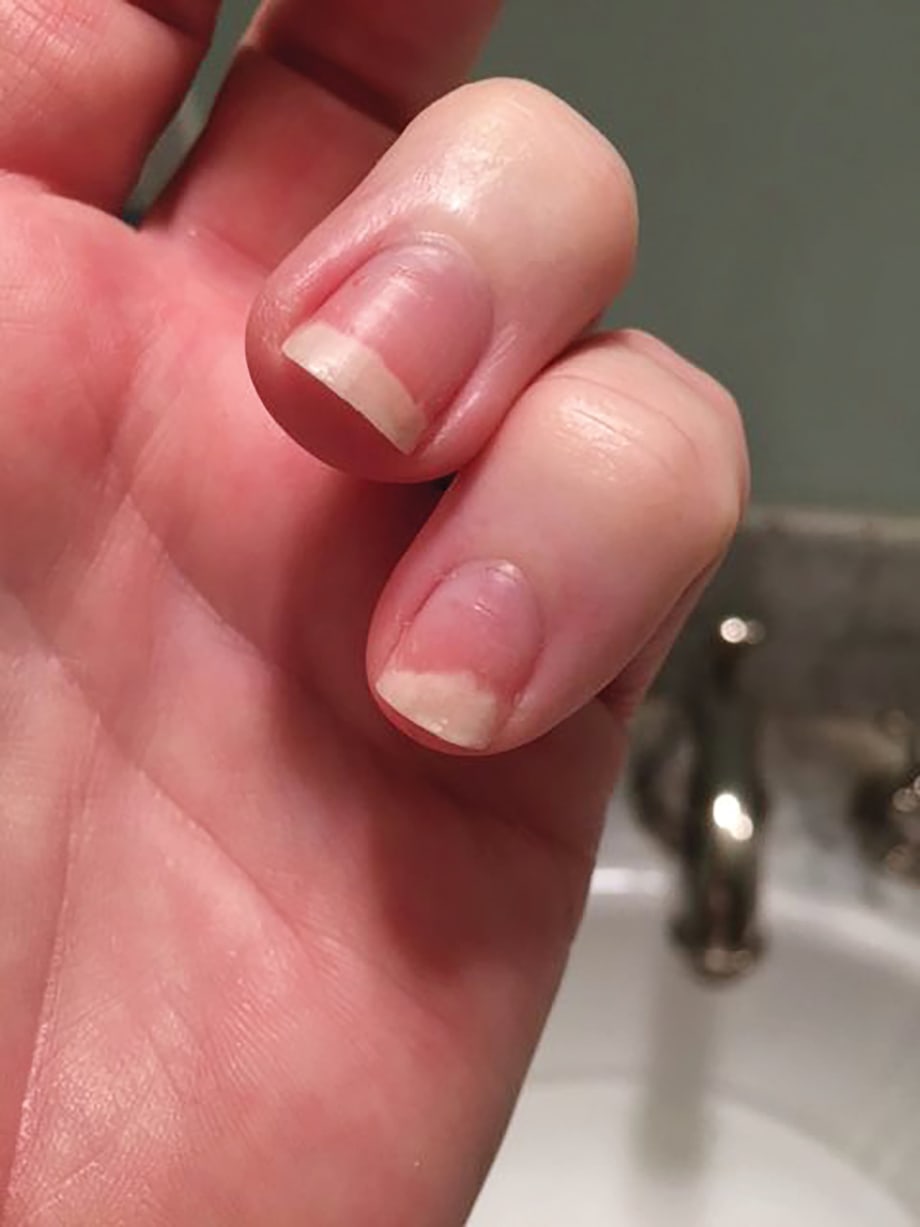
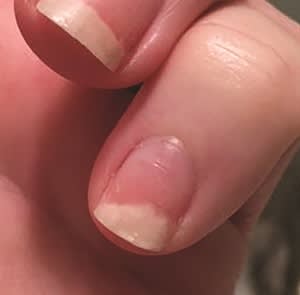
Onycholysis is a relatively common condition where the nail plate separates from the nail bed. Sometimes the only treatment required is a gentle touch and a little bit of patience.
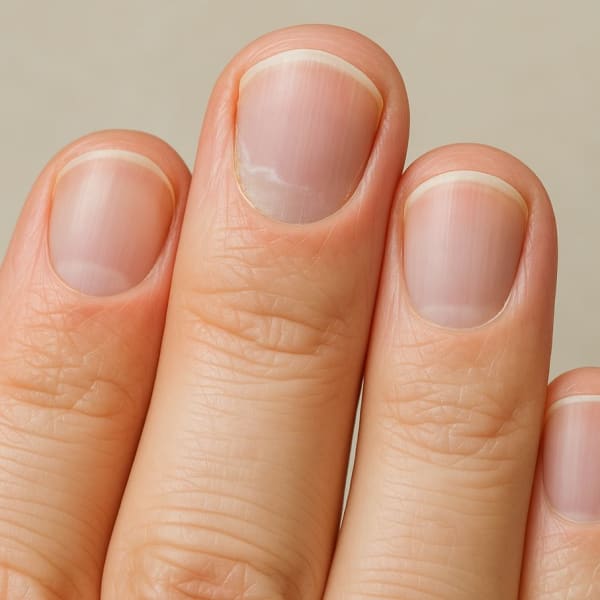
Under our nail plate, at what might be described as a “border” between the free edge and our fingertip, is the hyponychium. It works as a protective seal between the nail bed and the nail plate. If that seal is broken, the nail separates from the bed, causing onycholysis. The detached nail often has a whitish hue rather than a soft, healthy pink.
Many factors can cause onycholysis. Some are as commonplace as repeated typing, tapping, biting, or picking. Repeated pressure against the nail tip breaks the seal and causes the plate to pull away. Techs may even contribute to the problem with aggressive filing or buffing, or by breaking the hyponychium’s seal when they clean under the nail. Another culprit could be prolonged and repeated exposure to allergens in nail products. This happens when the product isn’t cured correctly or is applied too wet and runs onto the skin.
Ad Loading...
Separation of the nail plate can occur as a secondary condition to another nail disease, or be the result of age, psoriasis, or a systemic, internal health issue. This compromise in the bond between the nail plate and the nail bed can lead to a bacterial infection or yeast infection. As nail techs, it’s our job to notice any nail abnormalities and let clients know when to seek a doctor’s assessment. That conversation could go something like this:
You: This nail is separated from the nail bed at the free edge. Did you notice this?
Client: Oh yes! I think I did that. I was trying to clean under my nails, and I think I went too deep. It really hurt!
You: I’m going to shorten this nail close to the free edge so it doesn’t catch on anything. It’s clean and dry, so you should be fine. As your nail grows, this unattached area will become of part of the free edge.
Client: What do you mean, “I should be fine”? Could it be a problem?
Ad Loading...
You: Actually, the condition is known as onycholysis. Onycholysis can be a problem if a significant amount of your nail detaches or if it appears on multiple nails. The separation puts you at risk of water and debris getting trapped under the nail. If I saw any black, green, or yellow, or if the skin on the nail bed was thick, flaky, or even wet and “soggy,” I’d recommend you go see a doctor. You would want to confirm you didn’t have a larger health issue.
Client: Yes. I’ve seen nails like that! Is this how it starts?
You: When the seal under the nail or at the cuticle is compromised, a problem can definitely develop, but when we see advanced cases of onycholysis and discolored nails, it’s usually not the result of something as harmless as someone poking themselves too hard. Those situations indicate a larger problem and require the attention of a doctor. The good thing is, as a licensed nail tech, I can alert people if I ever see the early stages of these problems on a client’s fingernails or toenails.
Client: Do you see this on toenails too?
You: Our toenails are often moist from our feet sweating, plus they get crushed in shoes and banged around when we run and exercise. That type of trauma can also cause onycholysis. Clients often don’t notice because they don’t check — or can’t see — their toes that closely. That’s one reason regular pedicures are so important. I can assess your toenails every month and notice small changes before they develop into larger issues.
Uncured gel polish and microscopic e-file dust contain active acrylates that penetrate the skin, triggering permanent contact dermatitis. Learn the chemistry behind these irritants and how to protect your clients and yourself.
The Good Patch is a leading wearable wellness patch brand, offering wellness and skincare patches that support everyday needs including energy, sleep, relaxation and more.
Orthopedic PT reveals three daily exercises plus ergonomic advice that can help salon professionals avoid the aches and injuries caused by standing, bending and repetitive overhead work.
From acrylic monomers to airborne bio-dust, the air inside a nail salon carries risks most professionals never see coming. Aerovex Systems reveals the source-capture and room-purification strategies that are setting a new standard for salon safety.
Working in beauty doesn’t have to hurt. Learn how Somatic Movement helps hairstylists, lash artists, and other beauty pros release tension, improve posture, and extend their careers.
As a spa or salon professional, your clients expect more than just beauty—they expect safety, hygiene, and peace of mind. Fungal infections like Athlete’s Foot and Nail Fungus are more common than you think, especially in environments where tools and footbaths are reused without proper sanitation. This blog covers how to stop these issues before they start, using proven infection prevention strategies for salons and spas.
A federal initiative aimed at studying chemical exposure in nail salons has ended due to staffing and budget changes. Here’s what the project set out to do—and what its conclusion means for salon professionals.
For many people, a pedicure is a relaxing beauty ritual. But what most don’t realize is that this simple service, if done without proper hygiene and sanitation, can cause serious infections and long-term health issues.
Onycholysis is the separation of the nail plate from the nail bed. While it may look painful, it typically isn’t—at least not at first. But without proper care, this common nail disorder can lead to infections, deformities, and long-term damage.
Mckenzie Kool, Psychologist, MC, RPsych provides us with guidance on what may or not be helpful in speaking with someone who has suffered a significant loss.
Clients come to you to feel their best—not leave with a viral souvenir. Warts and cold sores can spread fast in busy salons, but a few smart habits make all the difference. Let’s talk about what’s really lurking in your salon (and how to kick it to the curb).
As Earth Day approaches, The Green Beauty Community Foundation and the Green Spa Network invite beauty pros to step forward and embrace sustainability through the Green Pledge--a powerful initiative designed by and for beauty industry leaders.
Don’t cancel Valentine’s Day altogether, urges Jill Palmquist. Instead, think of it as a (frilly, flowery, Champagne-bubbly) wake-up call to fall deeply in love with your own life.
Life coach and Culture Ambassador of Sam Villa, Andrew Carruthers, outlines how to tell if your burnout is temporary - or if it's time to make a bigger career change.