For many nail techs, busy days filled with caring for clients leaves little time for self-care. But with a little know-how and a bit of planning, you can boost your energy and dramatically improve your health by eating right.
by Tracy Rubert
February 13, 2014
7 min to read
Experts agree: We should think of food as fuel. When we eat bad fats, too much sugar, too many simple carbohydrates — empty calories — we’re sabotaging ourselves by creating a vicious cycle of lethargy, cravings, and overconsumption. But when we ditch the junk food and eat healthy foods consistently, our blood sugar stabilizes and our energy soars. “Just as higher grade gasoline makes your car run better, higher quality food is better for your body,” says G. Douglass Anderson D.C., C.C.N. “From your heart to your immune system, and your muscles to your skin, better food helps build and maintain better function and better form.”
But what should we be eating? It seems everyone is on some sort of diet these days, be it low-carb, gluten-free, or vegan. It can be confusing and hard to understand the best way to obtain the vitamins and minerals we need to sustain energy. David L. Katz, M.D., Yale University Prevention Research Center Director and author of Disease Proof and The Flavor Full Diet, advises simply focusing on a variety of wholesome foods. “If you consistently choose vegetables, fruits, beans, lentils, nuts, seeds, whole grains, lean meats/fish/seafood, and non-fat dairy, your macronutrient ratios tend to take care of themselves.”
THE SPECIFICS Carbohydrates are the main source of energy for muscle function. In recent years, carbs have played the dietary villain, but the truth is that everyone who depends on having enough energy to get through a workday should maintain a diet of approximately 60%-70% carbohydrates. Most sweets, cereals, grains, fruits, and vegetables are categorized as carbs, but they aren’t all created equal, so the trick is choosing the right ones. Choose complex carbs over simple carbs, e.g., an apple instead of a candy bar; brown rice, spelt, or quinoa instead of white rice or pasta; whole grain bread instead of processed white bread. Complex carbs will sustain you through hours of close, detailed nail work and dealing with clients. A slab of red velvet cheesecake will give you a jolt, but it will quickly send you crashing.
Ad Loading...
Protein is imperative for muscle growth and repair. Quality proteins include nuts, seeds, and legumes; non-GMO tofu, seitan, and tempeh; organic, low-fat dairy and eggs; fish (wild- caught salmon is especially nutrient-dense); and lean, grass-fed, free-range poultry and meat. If you’re a vegan or vegetarian and/or also working out and trying to build a bit more muscle, try adding one serving per day of a quality protein powder, such as hemp, pea, or whey. Protein should constitute 10%-20 % of your diet.
Don’t be afraid of fat! The right kind of fat is vital for health. Quality fats will help to reduce sugar cravings, burn body fat, improve digestion, and increase stamina. Your diet should be 15%-25 % unsaturated, quality fats from sources such as avocados, nuts, and fish oils. Most Americans do not get enough of a specific group of fats called omega-3s, so it’s a good idea to supplement and/or eat foods high in these essential fats. Fatty fish such as salmon and albacore tuna, walnuts, olive oil, beans, hemp seeds, and flaxseeds are all good omega-3 sources. Remember: The combination of complex carbohydrates, lean protein, and quality fat at every meal steadies blood sugar levels, which in turn, keeps your appetite in check.
THE SKINNY If you want to lose a few pounds, try fitting in 30 to 40 minutes of cardiovascular exercise daily. If this isn’t possible, sneak in a little exercise whenever you can: Take the stairs instead of the elevator, choose parking spots far from the store, or do sit-ups in front of the TV in the evening. According to Dr. Katz, most women will maintain their weight at between 1,800 and 2,000 calories per day. Lowering calorie intake by 500 calories per day should result in a loss of a pound or so a week. Do keep in mind that energy levels, mental focus, and mood will suffer if you take in too few calories. You don’t want to risk being cranky with clients and co-workers. Most women should never drop their calories below 1,200 per day.
THE SUPPLEMENTS Nobody’s perfect. Sometimes we forget to eat our veggies, sometimes we’re stressed out from work and splurge on junk, and sometimes we hit one too many happy hour gatherings. A good multivitamin/mineral formula can act as insurance. What to look for? “My universal shortlist for women is vitamin D (about 1000 IU); calcium (about 1000 mg) in many cases; probiotics; and omega-3 (1 to 2 grams daily),” says Dr. Katz. A good quality supplement should also include extra antioxidants, vitamin C, magnesium, and essential fatty acids. You might want to supplement with iron as well, especially if you’re vegan/vegetarian. “The best dietary source of iron is red meat,” says Andersen. “Many women do not eat much red meat, but they do lose iron-rich blood each month. If the iron is not replaced when it is lost, deficiency will develop over time.” If you have symptoms of iron deficiency — low energy, cold hands and feet, brain fog, hair loss, leg-twitching at night — have your iron levels checked by a doctor before supplementing, as too much iron can also be harmful.
FORTY WINKS AND EIGHT TO TWELVE DRINKS Of water, that is. The human body is made up of 75% water, so it’s important to hydrate adequately. The typical recommendation is eight to 12 eight-ounce glasses of water per day. But you may need more on hot or dry days, or on days you opt to work out. Drink eight to 10 ounces 10 to 15 minutes before exercising and at least that much afterward to replace any fluid losses.
Likewise, aim for seven to nine hours of quality sleep each night. During sleep, our bodies repair damaged tissues, process memories and new learning, and ward off disease. Sleep deprivation impairs immunity and can cause the stress hormone cortisol to be released; cortisol stimulates hunger and can cause belly-fat storage. And lack of sleep actually ages us faster, according to research published in Medical News Today. Growth hormones that build muscle, smooth wrinkles, and strengthen hair and nails are activated during deep states of sleep.
EVERYTHING IN MODERATION Finally, don’t feel guilty about occasional splurges. Sunday brunches, birthdays, holidays — these are the times to indulge ourselves a bit more than usual. “There are 21 meals in a week,” says Andersen. “If 18 of them are healthy, you are eating better than most people.”
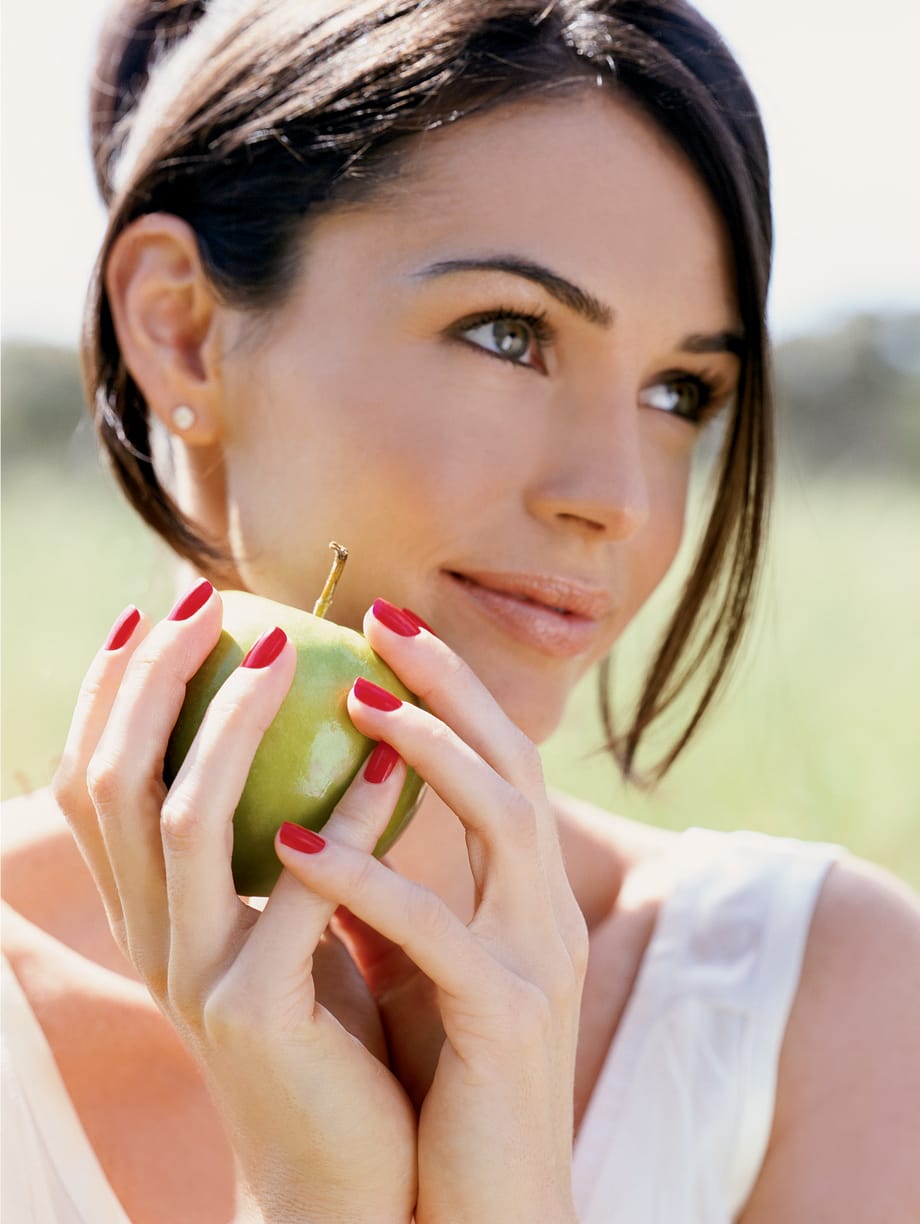
BE PREPARED When we’re tired, busy, and there’s no healthy food on hand, it’s far too easy to grab a bag of chips or binge on those donuts your colleague brought to the salon. Your best defense is preparation. “Take a snack pack with you everywhere, so you have nutritious foods at your fingertips whenever you get hungry,” says Dr. Katz. “This can be as simple as raw almonds or walnuts, or as involved as a bean salad or hummus wrap. Let an apple be your umbrella.”
Here’s how to make it easy:
> Set aside a little time on Sunday afternoons for shopping and prepping food for the week. If you have kids, a trip to the farmers’ market can make a nice family outing, and it’s a good way to teach them about healthy eating.
> Wash, peel, and cut fruits and vegetables for snacks. Store in individual plastic baggies or containers. Good choices are carrot, celery, or jicama sticks, and apple slices, which are all good for dipping in hummus, organic peanut butter, or low- fat Greek yogurt. Wash, cut, and store veggies such as kale, broccoli, cauliflower, and red pepper so you can use them in soups, salads, or to steam for side dishes.
> Prepare good quality proteins and refrigerate them so they will be available to include with every meal. Roast a whole organic chicken; cube tofu, seitan, or other vegan proteins; have cans of tuna, or chickpeas and other legumes at the ready.
> Soups and stews are great make-ahead meals because they are easily transported and re-heated for lunches or dinners, and you can make extra to freeze.
> It’s smart to have a ready-to-eat, complex carbohydrate-based dish on hand. Consider keeping a big pot of cooked brown rice or quinoa in the fridge for a quick side dish. Combine with a quality protein such as cubed tofu or roasted chicken and some steamed veggies, and you have a perfect, complete portable meal.
> Have easy grab-and-go, nutritious breakfast choices on-hand such as boiled eggs, low-fat Greek yogurt, whole grain toast with peanut butter or avocado slices, or protein smoothies.
> Take a cooler to work every day that contains good-for-you snacks, such as string cheese, fruit, cottage cheese, and veggies and hummus. Be sure to include a nutritious lunch, such as vegetable salad with a low-fat protein and olive oil dressing, a savory vegetable soup, or a brown rice or quinoa dish.
Ad Loading...
SESAME QUINOA PILAF
2 cups vegetable or chicken stock
1 cup quinoa, rinsed
1/4 cup toasted sesame seeds
2 tablespoon toasted sesame oil
Ad Loading...
2-3 scallions, choppped
1 cup steamed kale, chopped
Combine the quinoa and broth in a medium saucepan and bring to a boil. Reduce heat to simmer, cover, and cook 15-20 minutes until liquid is absorbed. Remove from heat and stir. Allow to cool 10 minutes, then stir in remaining ingredients. Serve warm or cold.
Uncured gel polish and microscopic e-file dust contain active acrylates that penetrate the skin, triggering permanent contact dermatitis. Learn the chemistry behind these irritants and how to protect your clients and yourself.
The Good Patch is a leading wearable wellness patch brand, offering wellness and skincare patches that support everyday needs including energy, sleep, relaxation and more.
Orthopedic PT reveals three daily exercises plus ergonomic advice that can help salon professionals avoid the aches and injuries caused by standing, bending and repetitive overhead work.
From acrylic monomers to airborne bio-dust, the air inside a nail salon carries risks most professionals never see coming. Aerovex Systems reveals the source-capture and room-purification strategies that are setting a new standard for salon safety.
Working in beauty doesn’t have to hurt. Learn how Somatic Movement helps hairstylists, lash artists, and other beauty pros release tension, improve posture, and extend their careers.
As a spa or salon professional, your clients expect more than just beauty—they expect safety, hygiene, and peace of mind. Fungal infections like Athlete’s Foot and Nail Fungus are more common than you think, especially in environments where tools and footbaths are reused without proper sanitation. This blog covers how to stop these issues before they start, using proven infection prevention strategies for salons and spas.
A federal initiative aimed at studying chemical exposure in nail salons has ended due to staffing and budget changes. Here’s what the project set out to do—and what its conclusion means for salon professionals.
For many people, a pedicure is a relaxing beauty ritual. But what most don’t realize is that this simple service, if done without proper hygiene and sanitation, can cause serious infections and long-term health issues.
Onycholysis is the separation of the nail plate from the nail bed. While it may look painful, it typically isn’t—at least not at first. But without proper care, this common nail disorder can lead to infections, deformities, and long-term damage.
Mckenzie Kool, Psychologist, MC, RPsych provides us with guidance on what may or not be helpful in speaking with someone who has suffered a significant loss.
Clients come to you to feel their best—not leave with a viral souvenir. Warts and cold sores can spread fast in busy salons, but a few smart habits make all the difference. Let’s talk about what’s really lurking in your salon (and how to kick it to the curb).
As Earth Day approaches, The Green Beauty Community Foundation and the Green Spa Network invite beauty pros to step forward and embrace sustainability through the Green Pledge--a powerful initiative designed by and for beauty industry leaders.
Don’t cancel Valentine’s Day altogether, urges Jill Palmquist. Instead, think of it as a (frilly, flowery, Champagne-bubbly) wake-up call to fall deeply in love with your own life.
Life coach and Culture Ambassador of Sam Villa, Andrew Carruthers, outlines how to tell if your burnout is temporary - or if it's time to make a bigger career change.