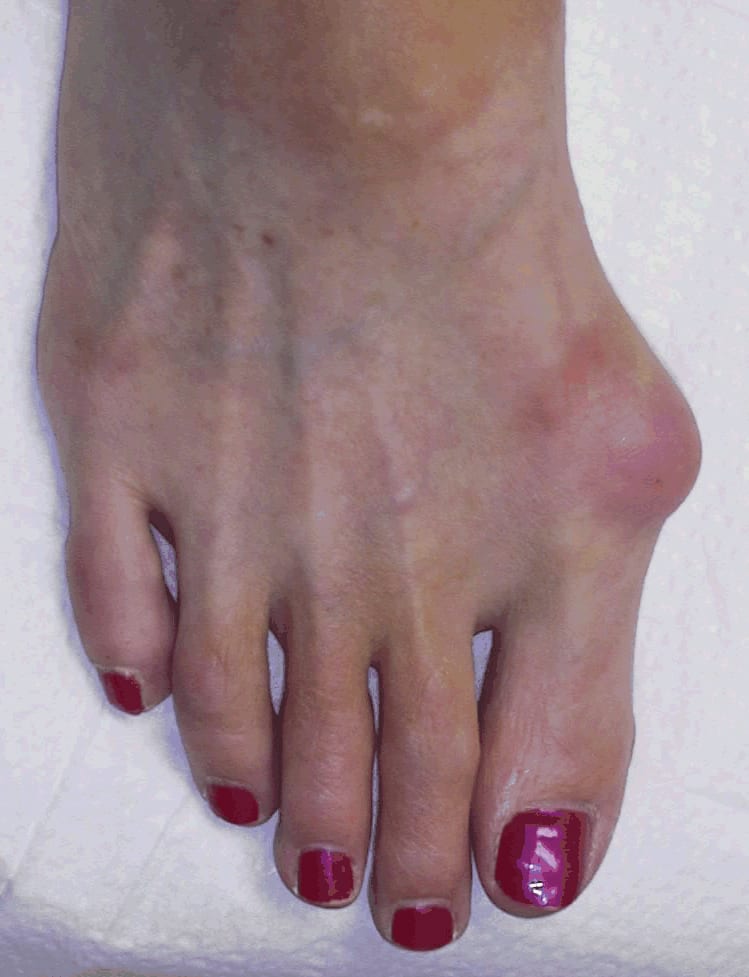
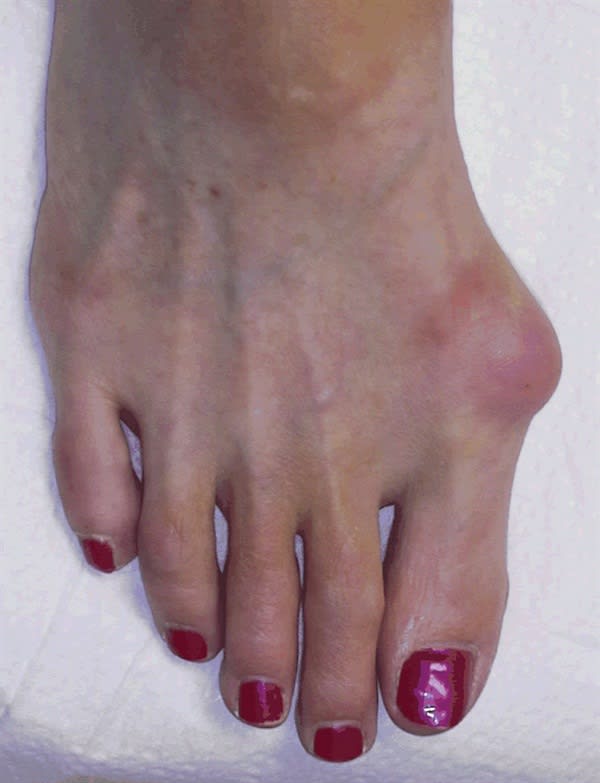
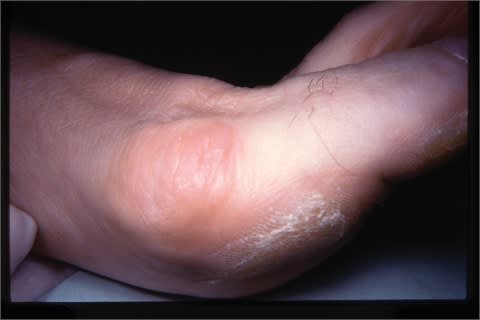
Bunions are one of the most common foot ailments, with women suffering from them at a higher rate than men. Although they don’t disappear once they form, there are ways to alleviate the pain and swelling, including surgery in some cases.
by Patricia Oropeza
April 1, 2006
5 min to read
Bunion (bˇun’ y n)
n. A bony, often painful, deformity of the first metatarsophalangeal joint — the joint where the big toe meets the foot.
Ad Loading...
What They Are
According to The American Orthopaedic Foot & Ankle Society (AOFAS), more than half of American women have a bunion — a bony deformity of the first metatarsophalangeal joint, the joint where the big toe meets the foot.
“There seems to be a higher predilection in women,” says Dr. Michael Cornelison, a Cupertino, Calif.-based podiatrist who is board-certified in foot surgery by the American Board of Podiatric Surgery, a fellow of the American College of Foot and Ankle Surgeons, and president of the Santa Clara Valley Podiatric Medical Society. “This has long been attributed to shoe gear, but I believe anatomy has something to do with it as well. Women tend more frequently to have rounded first metatarsal heads rather than flat. It’s sort of like comparing a hip to a knee. The round joint allows the toe to buckle inward, while a flat joint would resist it.”
Symptoms
If the joint that connects the big toe to the foot has a swollen, sore bump, chances are it’s a bunion. And with a bunion often comes pain.
Ad Loading...
“Pain is certainly a symptom, but not just from the bunion itself,” says Dr. Cornelison. “I often see primary pain at the joint behind the second toe — instability of the first metatarsal allows the pressure it normally absorbs to be transferred to the second. This often leads to a hammertoe deformity of the second toe as well.”
With a bunion, the base of the big toe gets larger and sticks out. The skin over it may be red and tender. Wearing any type of shoe may be painful. This joint flexes with every step you take. The bigger the bunion gets, the more it hurts to walk. The big toe may angle toward the second toe, or even move all the way under it. The skin on the bottom of the foot may become thicker and painful. Pressure from the big toe may force your second toe out of alignment, sometimes overlapping the third toe. An advanced bunion may make the foot look grotesque. If the bunion gets too severe, it may be difficult to walk. The pain may become chronic and may develop into arthritis.
Other symptoms may increase restricted motion of the big toe, as well as corns and other skin irritations between the first and second toes.
Causes
Foot specialists agree that while you can inherit the faulty foot mechanics that make some people more prone to developing bunions, most bunions can be directly related to frequent wearing of tight or ill-fitting shoes.
Ad Loading...
According to the AOFAS, nine out of 10 women wear shoes that are too small, which can lead to all sorts of foot problems, bunions included.
“Bunions have a multifactorial etiology, meaning several factors contribute to their development,” says Dr. Cornelison. “The underlying issue is usually hypermobility of the forefoot, most often caused by over-pronation. Pronation is the natural movement of the foot that allows it to absorb shock and adapt to the ground surface as the foot lands on it.
He continues, “The end result is the forefoot stays flexible, allowing outward and upward motion of the first metatarsal. This sets into motion a chain of events that leads to buckling of the big toe inward toward the other toes.”
Other environmental factors, including activity level, weight, posture, and, as mentioned before, shoes, can accelerate the process.
How to Treat Them
Ad Loading...
“The three important aspects of bunion treatment are to eliminate pain, fix the deformity, and address the underlying foot mechanics to prevent recurrence,” says Dr. Cornelison.
Most bunions are treatable without surgery. However, there are no appliances, pads, or creams that will make them smaller. Doctors can recommend several options, such as pressure-relieving pads, arch supports, and orthotic devices, to ease pressure, alleviate pain, and maybe slow or stop the progression of bunions. Bunion pads, anti-inflammatory medications, ice packs, and ultrasound therapy can also provide relief.
To minimize the chances of devel-oping a bunion, never force your foot into a shoe that doesn’t fit. Choose shoes that conform to the shape of your feet. Opt for shoes with wide insteps, broad toes, and soft soles. Avoid shoes that are short, tight, sharply pointed, or with too high a heel.
If a bunion has already developed, wear shoes that are roomy enough so there is no pressure on it. This should relieve most pain.
If the bunion has progressed to the point where you have difficulty walking, or experience pain despite wearing accommodating shoes, you may need surgery.
Ad Loading...
Bunion surgery realigns bone, ligaments, tendons, and nerves so the big toe can be brought back to its correct position. “The goal of surgery is to appropriately align the joint, not simply remove the bunion ‘bump,’” says Dr. Cornelison.
Many bunion surgeries are done on a same-day basis using an ankle-block anesthesia. Patients are oftentimes capable of going back to work within a day or two of the surgery, though they must wear a surgical shoe for a few weeks. Dr. Cornelison recommends taking a week off from work, when possible, to minimize pain and swelling.
Considerations for Nail Techs
“Nail technicians are in a particularly valuable position as foot health screeners,” says Dr. Cornelison.
He says that aside from the most obvious clues that a bunion should be evaluated by a foot specialist, there are other things a nail tech can observe. These include calluses and pain under the second toe joint, calluses under the medial side of the great toe itself, hammertoe deformity of the second toe, flat feet, and another family member with a symptomatic bunion.
Ad Loading...
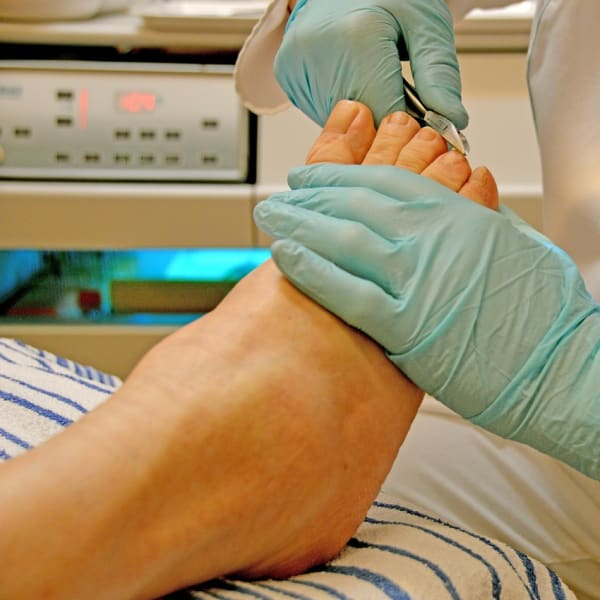
Clients with bunions can enjoy pedicures and benefit from the skin and nail care. Take care to avoid applying pressure on the bunion or manipulating the deformed joint. Doctors also recommend keeping water on the cool side. Heat can magnify inflammation.
Uncured gel polish and microscopic e-file dust contain active acrylates that penetrate the skin, triggering permanent contact dermatitis. Learn the chemistry behind these irritants and how to protect your clients and yourself.
The Good Patch is a leading wearable wellness patch brand, offering wellness and skincare patches that support everyday needs including energy, sleep, relaxation and more.
Orthopedic PT reveals three daily exercises plus ergonomic advice that can help salon professionals avoid the aches and injuries caused by standing, bending and repetitive overhead work.
From acrylic monomers to airborne bio-dust, the air inside a nail salon carries risks most professionals never see coming. Aerovex Systems reveals the source-capture and room-purification strategies that are setting a new standard for salon safety.
Working in beauty doesn’t have to hurt. Learn how Somatic Movement helps hairstylists, lash artists, and other beauty pros release tension, improve posture, and extend their careers.
As a spa or salon professional, your clients expect more than just beauty—they expect safety, hygiene, and peace of mind. Fungal infections like Athlete’s Foot and Nail Fungus are more common than you think, especially in environments where tools and footbaths are reused without proper sanitation. This blog covers how to stop these issues before they start, using proven infection prevention strategies for salons and spas.
A federal initiative aimed at studying chemical exposure in nail salons has ended due to staffing and budget changes. Here’s what the project set out to do—and what its conclusion means for salon professionals.
For many people, a pedicure is a relaxing beauty ritual. But what most don’t realize is that this simple service, if done without proper hygiene and sanitation, can cause serious infections and long-term health issues.
Onycholysis is the separation of the nail plate from the nail bed. While it may look painful, it typically isn’t—at least not at first. But without proper care, this common nail disorder can lead to infections, deformities, and long-term damage.
Mckenzie Kool, Psychologist, MC, RPsych provides us with guidance on what may or not be helpful in speaking with someone who has suffered a significant loss.
Clients come to you to feel their best—not leave with a viral souvenir. Warts and cold sores can spread fast in busy salons, but a few smart habits make all the difference. Let’s talk about what’s really lurking in your salon (and how to kick it to the curb).
As Earth Day approaches, The Green Beauty Community Foundation and the Green Spa Network invite beauty pros to step forward and embrace sustainability through the Green Pledge--a powerful initiative designed by and for beauty industry leaders.
Don’t cancel Valentine’s Day altogether, urges Jill Palmquist. Instead, think of it as a (frilly, flowery, Champagne-bubbly) wake-up call to fall deeply in love with your own life.
Life coach and Culture Ambassador of Sam Villa, Andrew Carruthers, outlines how to tell if your burnout is temporary - or if it's time to make a bigger career change.