Editor’s note: In December 1999, the Food and Drug Administration approved a new preparation for the topical treatment of onychomychosis, which is by definition a fungus infection of the nail and would include both fingernails and toenails. The product, named Penlac Nail Lacquer Topical Solution 8%, was developed by Europe’s Aventis Pharma and is being marketed in the United States by Pensylvania-based Dermik Laboratories, a unit of Aventis. At press time, manufacturers said the prescription drug would begin selling this spring. Since up until the approval of this drug the FDA had prohibited companies from claiming topical antifungals worked on nails, we asked Dr. Richard Scher to comment on the approval of the first topical treatment approved for treating fingernail and toenail fungus in the United States.
Penlac Nail Lacquer Topical Solution 8% has been tested in two separate clinical trials in the United States and several clinical trials in Europe. The active ingredient is called ciclopirox, which is an antifungal agent in the hydroxyl pyridine family. It is not an azole or an allylamine, which are the products currently being used for the treatment of nail fungus.
These clinical trials demonstrated that the prescription nail lacquer does penetrate the nail lacquer does penetrate the nail, enabling it to get to the fungus, which begins and is active in the skin underneath the nail bed. This type of infection, also known as distal subungal onychomychoisis, makes up over 90% of fungal nail infections and usually begins at the tip of the finger or toe and then invades toward the body in what is called a proximal direction. This advance in treatment is extremely important because onychomychosis is a very common infection and is responsible for approximately 50% of all nail disorders.
The reason that the nail lacquer is shown to be effective in mild to moderate cases is because the active ingredient (ciclopirox) has been put into a transungual delivery system. In simple terms, this means that the nail lacquer is able to get the ciclopirox through the nail and into the nail bed where the fungus is most active. It is interesting to note that ciclopirox has been available in a cream and lotion form for many years for the treatment of skin fungus but it has never been approved for use in the nails. We know that creams and lotions can’t penetrate the nails, which is why they have been ineffective.
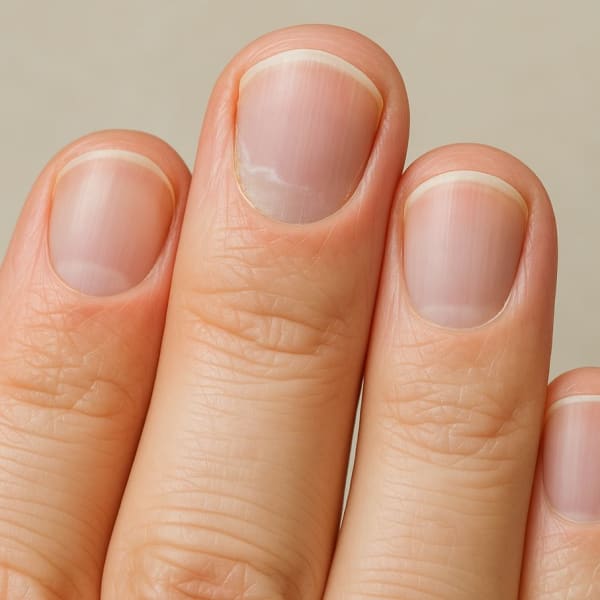
This product is also very significant because it comes in the form of a nail lacquer so that it can be used as a nail polish would be used. It should be pointed out that Penlac Nail Lacquer will be recommended for what is called mild to moderate fungal nail infections and will not be recommended for the more severe type. This means that it will probably be indicated for nail fungus that affects less than 50% of the nail plate. It is also important to remember that it will not be effective against nail fungus that affects the nail growth center (or matrix), or lunula (or moon). When these parts of the nail are affected, this product will not be able to cure the nails. However, it may at least help to contain the fungus and slow down its spread, but for that type of fungal infection an internal medication will be required.
Many of the current antifungals that are being used (both the topical and systemic ones) interfere with the synthesis of ergosterol, which is required for the fungal cell membrane. In order for the fungus to survive, the fungal cell membrane must remain intact, which is how most of the current preparations work. But ciclopirox works by inhibiting certain enzymes in the fungus that require metals such as iron. Therefore it works differently. Medications previously available over the counter have not been subject to clinical trials and their effectiveness is not clearly established. Other products that dermatologists use for fungal nails topically have been approved for skin fungus and found to have some additional benefit to nail fungus, but because of their lack of penetrability, the effectiveness has not been great.
The studies with ciclopirox lasted 48 weeks. In patients who were cured, there was a follow-up period of 24 weeks. However, in the majority of patients, the fungus did not clear totally, although there was a significant improvement. These patients did not continue in the follow-up treatment after the initial 48-week period. Since the most common cause of onychomychosis is the group of fungus organisms known as dermatophytes (this group of fungi causes well over 90% of nail fungus), the ciclopirox it effective against this particular type of fungus. It is also been shown to be effective against some yeast and what I refer to as non-dermatophyte moulds, as well as some bacterial organisms.
Penlac Nail Lacquer has been found to be totally safe with no internal or systemic effect and no significant localized allergic reactions. It should also be stated that it is anticipated that there will be a significant relapse rate of fungus even if this preparation is used and even if it is able to clear the nail of fungus. This is because patients who get a fungal infection usually have a high susceptibility to this and even if they are cured there is at least a 25% chance that the fungus will reoccur, especially in the toenails.
The efficacy of this nail lacquer is not great, that is only a small percentage of the patients in the trials were totally cured and those who were totally cured required a six to 12 month period of time for this to happen. Daily applications of the product will be recommended. However, this product may reduce the cost of treating nail fungus because with a topical agent fewer doctor visits will be required. Patients may be able to have the product renewed by telephone from their physicians without coming in for periodic and regular observation.
There are other ramifications for the topical nail antifungal. If Penlac is used in conjunction with systemic antifungals, it is possible that this may shorten the time that the systemic antifungal is required. And it may be that once the fungus infection is clear, let’s say with the systemic antifungal, then by using the topical afterwards, perhaps on a less frequent basis, it may go a long way toward preventing the nail fungus from relapsing.
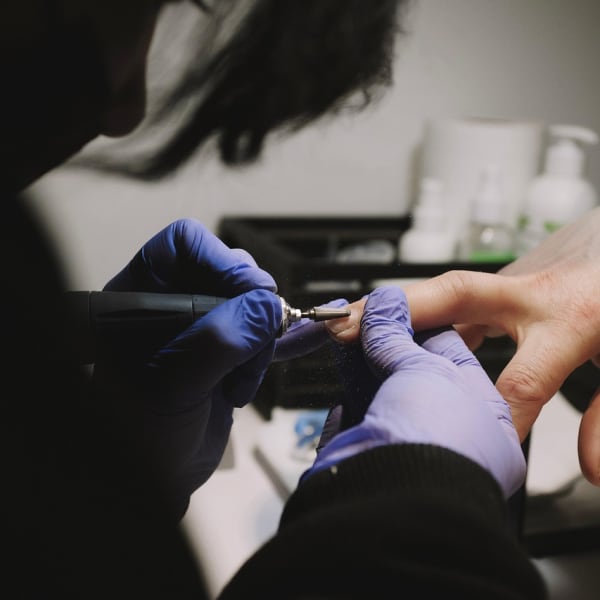
Nail technicians will not be able to recommend this product directly to their clients because it is a prescription medication. However, nail technicians can advise their clients to see a dermatologist who would be able to prescribe this medication. It is always good for nail techs to recommend that their clients see a dermatologist because many abnormal nail that look like fungal infections are in fact another nail condition altogether. The dermatologist will take samples from the nails to determine what it is, and then prescribe proper medications.
This medication is also very important because one of the fastest-growing population groups in the United States is the elderly age group, in whom fungus infection of the nails is much more common. (it can be as high as 25-50% of these individuals.) This is probably true because as on ages, the nails grow more slowly making it much easier for fungus to get into the nail and to continue to grow and flourish. Whereas in young individuals nails grow much faster, making it more difficult for the fungus to survive. It is also signification because in the elderly population, who are often taking many medications, systemic antifungal therapy is contraindicated because of interactions with other medications that they are taking or other illnesses that could be adversely affected by a systemic drug. In addition, trauma, which plays a role in the susceptibility to fugal infections, is even more significant in the elderly population. And because of arthritis and bony abnormalities (particularly in the feet), the elderly population is even more susceptible to fungus.