






The Beauty Pro Book Club: 4 Reads to Inspire Growth and Success
Four publications for beauty industry professionals to enhance their leadership skills, financial awareness, professional growth, and joy!
by Anne Moratto


 MENU
MENU SEARCH
Creating a perfect experience for your clients is an admirable goal, but it could be a liability if taken to an extreme. Is perfectionism preventing you from profits?


Being a nail tech is an excellent career choice for a perfectionist. Attention to detail is arguably the single most important factor that separates an exceptional tech from an average one. But if you’re going to work every day with the goal of making money, you’ll need to balance perfectionism with the profitability of staying on schedule.
“A high level of achievement is healthy, but if it interferes with accomplishing tasks, it’s time to stop and take a look inward,” explains Ian Hembry, an education psychologist and researcher at MetaMetrics in Durham, N.C.
If you’re not sure if you qualify as a perfectionist, ask yourself a few questions. What is your motivation for success? What is your response to failure? Do goals motivate and excite you — or do you feel weighed down because you’re scared you won’t succeed? Do you stall when you have the opportunity to try something new because you’re waiting for the timing to be perfect? Do you feel dissatisfied when you succeed because you think you could have done even better? Do you beat yourself up over past mistakes?
Hembry says perfectionists recognize these common symptoms:
Procrastination. Perfectionists may be slow to start a project because they fear not being able to finish it perfectly. This might prevent a salon owner from expanding to a larger location, adding staff, or even implementing new software.
Extreme thinking. This is where there’s no gray area in terms of outcomes, and thinking is black and white. For example, fearing the loss of a client if you make a small mistake or if you have to say no.
Control. Micromanaging your own and everyone else’s tasks, or overreacting to your own or others’ mistakes. This could show up in how you respond to coworkers or in how you react if a client no-shows or leaves the salon.
Obsession. This might present as being preoccupied with having the newest and best tool in the industry or spending an extraordinary amount of time and energy worrying about the competition.
In the salon environment, perfectionism can show up in a variety of ways. Maybe you spend an excruciating amount of time prepping, filing, or polishing nails. Or maybe you come in on your day off because you don’t want to disappoint a client. Perfectionism could prompt you to appease difficult clients, or, conversely, cause you to react defensively when you think a client isn’t happy. It could be that in your quest for perfection, you set unrealistic standards for your staff and become too hard on them when those standards aren’t met.

You can indulge your perfectionism during the prep phase.
While perfectionism may be easy to recognize, pinpointing the cause is difficult. “Most often, it’s a learned behavior,” says Hembry. It may be the result of being raised in an environment with very high expectations or even result from trauma, where a loss of control gives rise to perfectionism.
In adults, perfectionism usually manifests itself through hidden insecurities where a person’s self-worth is attached to another person’s praise or pleasure. For a nail tech, this could become a problem; a successful tech could easily have over 100 regular clients whose approval she seeks. Without understanding how to manage perfectionism, a tech could quickly become overwhelmed.
Managing the Perfectionist
“If perfectionism is interfering with your day-to-day happiness and productivity, seek out a medical professional,” says Hembry. He also recommends these self-management techniques:
Pay attention to your thought patterns. Notice negative self-talk, especially when you make a mistake. Note when you can’t accept a compliment or when you hear yourself chanting the dreaded trifecta of “shoulda, woulda, coulda.” Slowing down to pay attention to your thoughts is extremely beneficial, says Hembry.
Practice reframing your negative thinking and praise yourself for your positive attributes, such as being detail-oriented, organized, and determined.
Meditate with a mantra. Start your day with liberating and affirming thoughts, then repeat them throughout the day and during times of stress. It’s OK to make mistakes. I don’t have to be perfect. I don’t have to make everyone happy. I’m in charge of my response.
Learn negative visualization. When we devote a small amount of time each day to visualizing possible mistakes, we will be better prepared should they actually occur. “The key to this approach is keeping it regimented,” says Hembry. “On my drive to work, I think of things that could go wrong and how I will handle them. But once I step out of the car, I won’t give those thoughts another minute of energy.”
Improve time management. Analyze how much time you spend on each task. As a professional, you should see continued improvement in your efficiency and learn when “good” is good enough.

The pointer and the ring finger will likely take the same size tip.
Learn to Let Go — a Little
Any seasoned tech knows compromising in the wrong place could mean broken nails, chipped polish, and dissatisfied clients. But with experience, it’s possible to move through the technical aspect of a nail service almost as though you’re on auto pilot. That doesn’t mean quality suffers. But it does mean you can complete an excellent job in less time because of your skill, experience, and expertise. Learn to trust yourself as a professional so you can relieve pressure in the following areas:
In the salon:

Make your life easier by limiting the number of refreshment options.
Limit the number of freebies you’re giving to clients. You don’t need to have a dozen refreshments and snacks for them to enjoy. Instead, make your life easier by offering a few select choices.
Limit your retail brands. You don’t need to compete with Amazon. Choose your favorite products from among your favorite brands and sell them well and often.
Limit your service options. Know who you are and excel at your specialty. Better to perfect a few services than to struggle with self-doubt on services you aren’t passionate about.
With clients:
Practice saying no. You can be uncompromising in your customer service while still saying no to unrealistic demands. Examples include reapplying a full set when someone is scheduled for a fill, completing a full service when a person is prohibitively late, fixing nails or doing polish changes for free, etc.
Stick to the schedule. Commit to taking a lunch break, days off, and vacations. You can’t be all things to all people. Make your health a priority.
Accept the truth. When a client raves about you, enjoy it. When a client offers a suggestion, learn from it. Both types of feedback are opinions that neither increase nor detract from your self-worth. Appreciate the accolades and grow from the criticisms.
In your technique:
Let it be noted that there is no place in your technique where you can slack and it will be good enough. The technical part of your job is the place to embrace perfectionism. However, as a professional, you should be able to move past obsessing over your work. Technical ability should become second nature to you. If your perfectionism prevents you from trusting yourself, practice positive self-talk about your level of expertise. Allow yourself to accept that you’re an expert. Here are a few common places techs can learn to stop being compulsive about their technique:
Prepping the nail plate. You can indulge your perfectionism during the prep phase because if the base isn’t perfect, you’ll have trouble with lifting. However, overprepping the nail can cause its own trouble, so discipline yourself to fix it and forget about it. Remove the dead cuticle from the nail plate and leave it alone. What sets you apart from the novice tech is your ability to efficiently complete the job in a shorter amount of time.
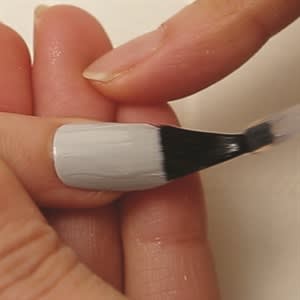
Hyper focusing on polishing could cause more problems than it fixes.
Selecting tips. Trust the averages and accept that for the majority of people, the pointer and the ring finger take the same size tip. Once you measure one, you’re done with four. Move on.
Polishing. Listen, the polish needs to be perfect. Clients often cite the quality of the paint job as the distinguishing factor when it comes to what they love about their nails. Once you’ve learned to polish beautifully, obsessing actually creates problems. Hyper focusing on polish could cause you to cover the same area twice, drag partially dried lacquer, or apply the polish too thick, resulting in clumps, mishaps, and extended drying times. This goes for gel-polish, too. Avoid polishing and re-polishing the surface of the nail. The magic of a beautiful paint job, whether it’s traditional or gel, is in its smooth, thin layers.
Painting a French manicure. Use confident, sweeping strokes when you apply a French manicure. Using timid strokes and obsessing over minutiae means you’ll have more touch points at the tip. That could leave marks that need to be blended and result in a thick, clumpy line that will drive you — and the client — crazy.

Use confident, sweeping strokes when you apply a French manicure.
In a way, perfectionism is an ironic condition. It’s not possible to be perfect, so the only thing this unrealistic standard accomplishes perfectly is failure. Relief begins by acknowledging you’ve set up an unachievable standard. Then, if recognition and reformatting your self-talk doesn’t help, search out a professional who can help.
Once you remove perfection as the standard, you’ll be able to set expectations you can achieve so you can better enjoy your life — and all the mistakes that come with it.
Four publications for beauty industry professionals to enhance their leadership skills, financial awareness, professional growth, and joy!

The most successful salon suites balance personality, function, and comfort. Megan Communale of My Salon Suite shares her best advice for designing a space that supports your business goals and leaves a lasting impression on every guest.

Square data shows that regular customers tip 11% higher and are shared across 32% of businesses in the same ZIP code, driving thousands of dollars in additional revenue per connection.

When Bowie Lau and Jeffrey Ching opened JBW Jeffrey Ching Salon in 2011, they weren’t just launching another luxury hair destination—they were building a business rooted in passion, artistry, and thoughtful growth.
Sponsored by Amex

Inside the Systems That Power an Elevated Salon Experience From seamless online booking to a team-first culture, J Gold Salon in Atlanta offers more than great hair—it delivers consistent, high-touch service with the help of partners like Boulevard and American Express.
Sponsored by Amex

Want to grow your career as a beauty professional? K18 Sales Manager Sabrina Sanborn shares advice on networking, mentorship, and self-advocacy—from attending hair shows to finding the right guidance to reach your goals.

A combination of clear policies, effective communication, and strong client relationships has helped me create a more reliable and efficient booking system.
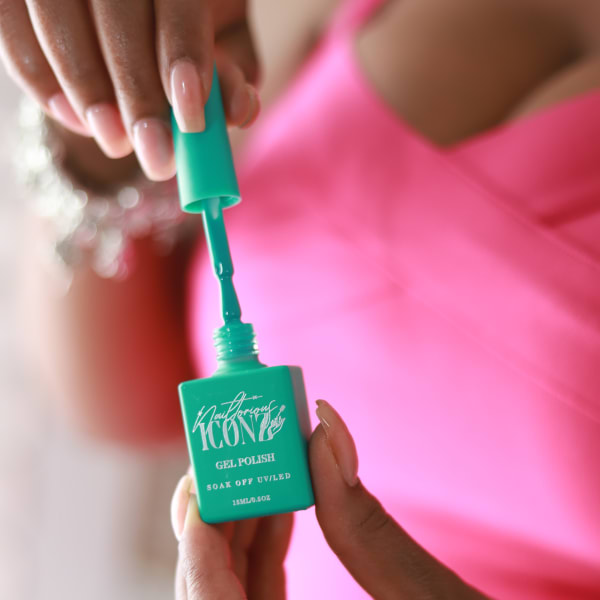
Founded by Cleveland serial entrepreneur Shaura Rodgers, Nailtorious has grown to include a nail supply megastore, training facilities, and retail line for nail techs.

This period after the holidays can bring on a huge lull for hairstylists. We asked Cosmo Prof's team of professionals to offer their best advice on how to deal with the January-February slow period.

Key highlights include a push toward inclusive spaces for all abilities, an emphasis on maximizing livable square footage, and a continued love for modern farmhouse exteriors.

The busy holiday season is here, and with it comes jam-packed days, last-minute client requests and booming retail sales. For many salon owners, the highlight of the season is Small Business Saturday® (SBS). This year on Saturday, November 30, consumers can take their shopping into the small businesses in their communities.
Sponsored by Amex

Want to become savvy about your personal finances, but don't quite know where to start? Anna Manukyan identifies six important concepts for building a strong financial foundation.

Salon owner Nuri Yurt had a dream of owning a salon on New York City’s Madison Avenue. "Through perseverance, hard work and stellar customer service, he and partner John Kaygisiz founded Toka Salon in 2007.
Sponsored by Amex

This guide is your one-stop shop for a plethora of technology tools, software and services created to keep your salon or spa thriving.

Anna Manukyan shares a breakdown of what different types of financial accounts should be used for.

Vagaro has consistently been at the forefront of salon software technology, helping businesses be more efficient, create more effective communication, and even improve company culture. Now, Connect by Vagaro, the platform’s two-way communication capability, and Vagaro’s new generative AI tools are giving owners new opportunities to grow and expand.
Sponsored by Vagaro

Young Nails' Greg, Habib, and Tracey discuss whether getting too close to clients can damage your business.