Corns can cause even the most confident person to hide her toes in shame, so it’s good to know that these pesky toe calluses can be eliminated. Nail professionals can do their part in the salon by helping to smooth down these sometimes-painful hardened areas of skin.
by Patricia Oropeza
February 1, 2006
4 min to read
Corn
n. (kôrn) A hard thickening of the skin, usually on or near a toe.
Ad Loading...
What It Is
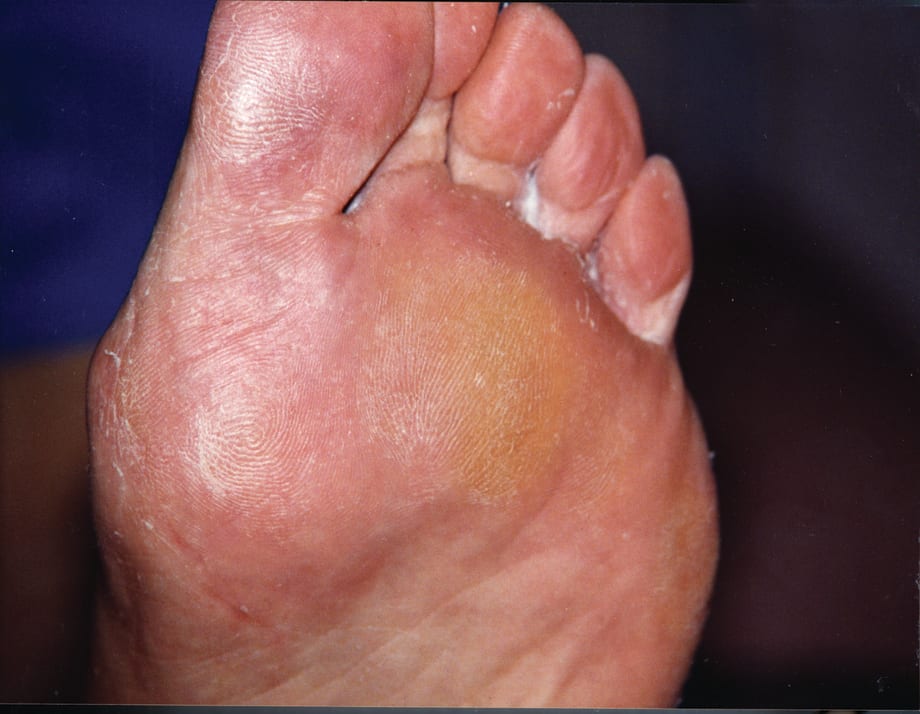
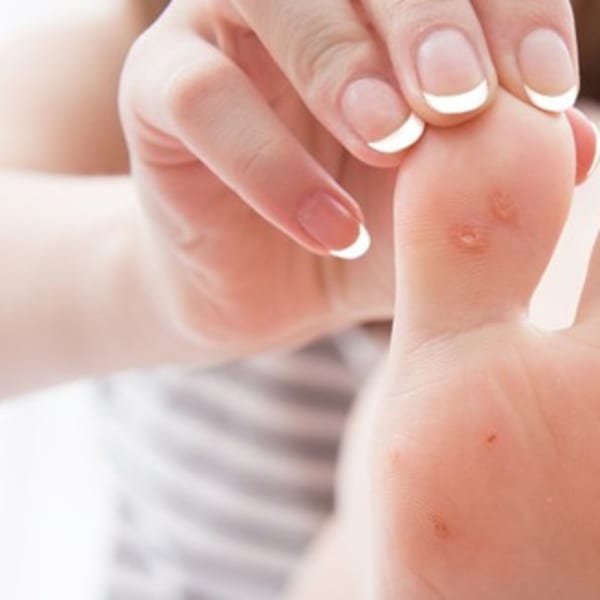
Technically, they’re known as hyperkeratosis, but you might know them by their common name, corns. Corns develop from an accumulation of dead skin cells on the foot, forming thick, hardened areas. They contain a cone-shaped core with a point that can press on a nerve below, causing pain.
“Effectively, they are calluses on the toes,” says Patti Glick, a nurse educator based in Cupertino, Calif., who speaks about foot protection, safety, and comfort. “The tissue is darker around the core area and sometimes can become discolored. In people with darker pigmented skin, corns will often be paler in contrast to their normal skin color.”
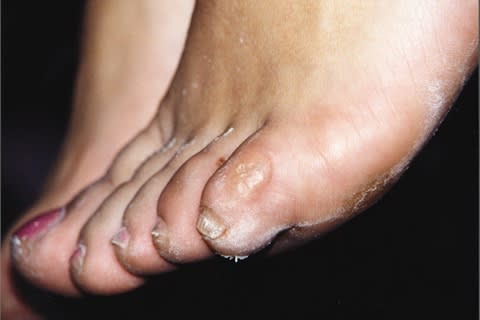
Corns are common, and usually form on the tops and sides of the toes.
Symptoms
Ad Loading...
Various types of corns exist, characterized by their size and position.
Hard corns are the most common type of corn, appearing on the tops of the toes, on the bottom of the foot, between the toes, and even under the nail or sides of the nail.
Soft corns are the same as hard corns, but are made soft by sweaty or wet feet. They almost always appear between the toes and are white, soggy, and rubbery due to moisture.
Vascular corns are either hard or soft corns, but have blood vessels within the strata of the corn. The blood vessels are forced into the growing corn by the squeezing or pinching effect of shoes.
Neuro-vascular corns are like vascular corns, with the added presence of nerve tissue as well as blood vessels forming within the growing corn.
Ad Loading...
Intracable plantar keratoma are unlike other types of corns. They are not caused by pressure or friction, but rather by plugged sweat glands on the sole of the foot, combined with excessive pressure due to foot structure in the ball of the foot.
“Corns can be painful, especially where the shoe rubs or where one toe rubs against another toe with a bone spur,” says Glick. “They don’t usually hurt unless they have pressure on them. The longer or tighter the pressure, the more they hurt.”
Causes
Corns can be caused by several different factors, but the most common one is improperly fitting shoes. If shoes are too tight, they can squeeze the feet, increasing pressure. If they are too loose, the feet may slide and rub against the shoes, creating friction.
Toe deformities, such as hammer toe or claw toe, or even socks that don’t fit properly, can also cause corns to develop.
Ad Loading...
How to Treat Them
“In my opinion, corns are best treated by a podiatrist,” says Glick. “The best form of treatment is to treat the underlying problem. If the corn is caused by a bone spur, it’s usually a simple office procedure that removes the source of irritation using a small surgical incision. For corns on top of the toes, a podiatrist can reduce the bulk in several different ways [including shaving the dead layers of skin off with a scalpel] under sterile conditions.”
Most podiatrists advise against using corn removing solutions and medicated pads, which can be purchased over the counter. These solutions can sometimes increase irritation and discomfort. Diabetics and people with poor circulation should never use any chemicals to remove corns.
If it’s a question of shoe fit, says Glick, buying shoes in the proper length and width can make a huge difference. “Getting your feet measured professionally by a salesperson who knows the difference between the arch and toe length and how to adjust the width to accommodate the girth or arch of a person’s foot, is the best preventive action,” says Glick.
Corns can be made more comfortable by using a corn pad, which is usually a circular foam stick-on pad with a hole cut in the middle. This helps to take the pressure off the corn, says Glick. Corns can also be managed by using a silicone gel pad between the toes or on top of the toe to provide cushioning.
Ad Loading...
Considerations for Nail Techs
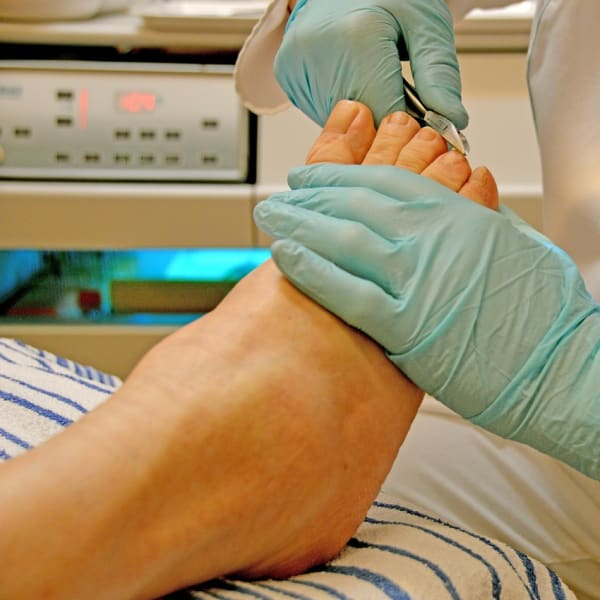
When working on a client with corns, Glick recommends lightly pumicing the culprits to reduce some of the thickness. “Taking too much off can actually create discomfort where there wasn’t any before,” she says.
Blades should never be used on corns except by a podiatrist. Most states don’t allow nail techs to cut clients’ skin.
If you have a client with diabetes, take extra care when working on her feet. Glick recommends possibly referring her to a podiatrist. Avoid being aggressive with a pumice stone or foot file; this can lead to a possible ulceration and ultimately an infection and even the loss of a toe or foot.
Uncured gel polish and microscopic e-file dust contain active acrylates that penetrate the skin, triggering permanent contact dermatitis. Learn the chemistry behind these irritants and how to protect your clients and yourself.
The Good Patch is a leading wearable wellness patch brand, offering wellness and skincare patches that support everyday needs including energy, sleep, relaxation and more.
Orthopedic PT reveals three daily exercises plus ergonomic advice that can help salon professionals avoid the aches and injuries caused by standing, bending and repetitive overhead work.
From acrylic monomers to airborne bio-dust, the air inside a nail salon carries risks most professionals never see coming. Aerovex Systems reveals the source-capture and room-purification strategies that are setting a new standard for salon safety.
Working in beauty doesn’t have to hurt. Learn how Somatic Movement helps hairstylists, lash artists, and other beauty pros release tension, improve posture, and extend their careers.
As a spa or salon professional, your clients expect more than just beauty—they expect safety, hygiene, and peace of mind. Fungal infections like Athlete’s Foot and Nail Fungus are more common than you think, especially in environments where tools and footbaths are reused without proper sanitation. This blog covers how to stop these issues before they start, using proven infection prevention strategies for salons and spas.
A federal initiative aimed at studying chemical exposure in nail salons has ended due to staffing and budget changes. Here’s what the project set out to do—and what its conclusion means for salon professionals.
For many people, a pedicure is a relaxing beauty ritual. But what most don’t realize is that this simple service, if done without proper hygiene and sanitation, can cause serious infections and long-term health issues.
Onycholysis is the separation of the nail plate from the nail bed. While it may look painful, it typically isn’t—at least not at first. But without proper care, this common nail disorder can lead to infections, deformities, and long-term damage.
Mckenzie Kool, Psychologist, MC, RPsych provides us with guidance on what may or not be helpful in speaking with someone who has suffered a significant loss.
Clients come to you to feel their best—not leave with a viral souvenir. Warts and cold sores can spread fast in busy salons, but a few smart habits make all the difference. Let’s talk about what’s really lurking in your salon (and how to kick it to the curb).
As Earth Day approaches, The Green Beauty Community Foundation and the Green Spa Network invite beauty pros to step forward and embrace sustainability through the Green Pledge--a powerful initiative designed by and for beauty industry leaders.
Don’t cancel Valentine’s Day altogether, urges Jill Palmquist. Instead, think of it as a (frilly, flowery, Champagne-bubbly) wake-up call to fall deeply in love with your own life.
Life coach and Culture Ambassador of Sam Villa, Andrew Carruthers, outlines how to tell if your burnout is temporary - or if it's time to make a bigger career change.